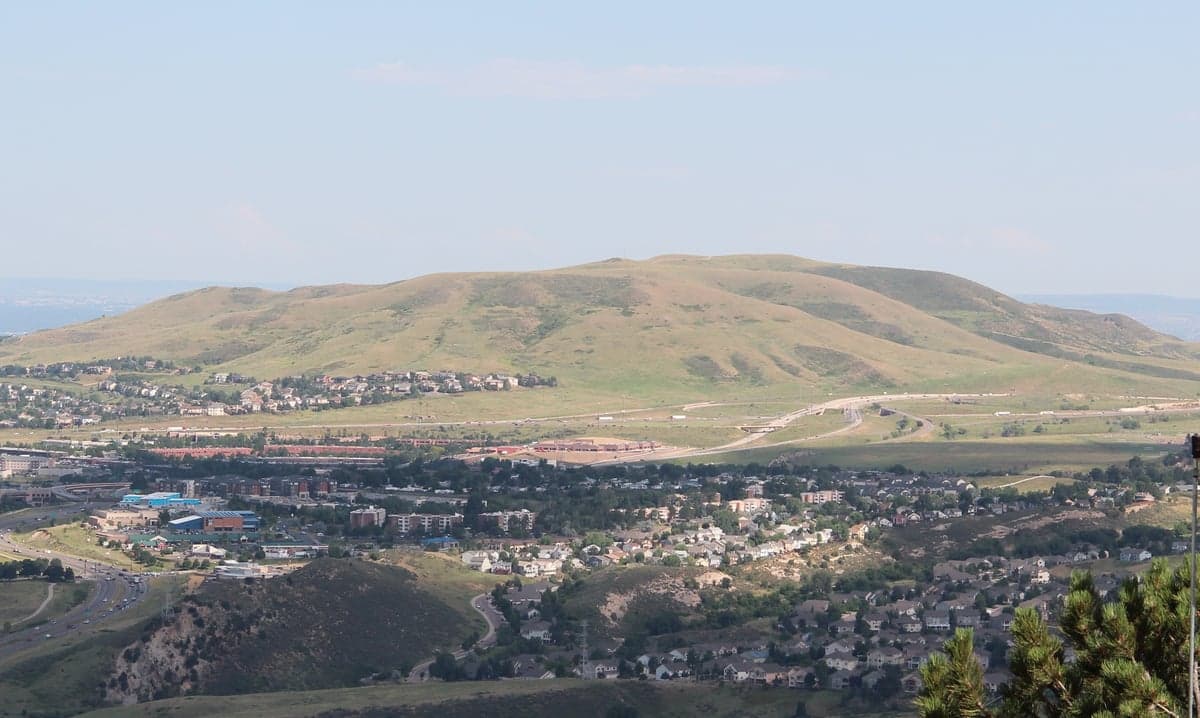
Photo: Wikipedia
Personal Sovereignty in Lakewood, CO
Viable for self-reliance. Generally workable, though some barriers may limit total independence.
What does Personal Sovereignty tell us?
Personal Sovereignty measures your capacity for self-reliance and independence with minimal government friction. Higher scores mean fewer barriers between you and the way you want to live... but it assumes you have the space you need and good neighbors.
What does this tell us?
Personal Sovereignty measures your capacity for self-reliance and independence with minimal government friction. Higher scores mean fewer barriers between you and the way you want to live... but it assumes you have the space you need and good neighbors.
State Policy
Energy independence: Net exporter (110% of energy produced in-state)
Personal Liberty
Homesteading

Personal Liberty Analysis
Lakewood, Colorado, presents a mixed picture for those prioritizing personal sovereignty, where a generally permissive state framework on certain liberties is increasingly tempered by aggressive local and state-level regulatory overreach. While Colorado’s constitutional protections for self-defense and property rights offer a baseline of autonomy, the Denver metro area—including Lakewood—has seen a steady creep of mandates, taxes, and land-use restrictions that erode the kind of self-reliant, low-interference lifestyle many conservative-leaning individuals and families seek. For a survivalist or prepper evaluating this suburb, the core tension is clear: the state’s natural resources and relative geographic isolation from coastal chaos are attractive, but the political machinery in Jefferson County and Denver is actively working to centralize control, particularly over energy, housing, and personal health decisions. This analysis breaks down the specific factors that determine whether Lakewood can serve as a viable base for maintaining personal freedom in an increasingly uncertain national landscape.
Tax burden and regulatory posture: how much of your income and choices stay yours
Colorado’s state-level tax structure is relatively favorable, with a flat income tax rate of 4.4% and a state sales tax of 2.9%, but Lakewood layers on its own local sales tax of 3.5%, bringing the combined rate in many areas to around 8.5%—a significant bite for anyone trying to stockpile supplies or invest in self-sufficiency. Property taxes are low by national standards, typically around 0.5% of assessed value, which is a plus for landowners, but the state’s Gallagher Amendment repeal in 2020 has led to reassessments that are slowly pushing those numbers upward. The regulatory posture in Lakewood is where the real friction emerges for the sovereignty-minded. The city has aggressively pursued green energy mandates, including building codes that effectively ban natural gas hookups in new construction—a direct hit to off-grid energy independence and a signal that local government is willing to dictate household infrastructure choices. Additionally, Jefferson County’s land-use planning is heavily centralized, with strict zoning that limits rural-style homesteading within city limits. For a prepper, the takeaway is that while the state doesn’t confiscate your income at punitive rates, the local regulatory apparatus is designed to steer you toward a grid-dependent, high-compliance lifestyle, making it harder to quietly build resilience without bureaucratic friction.
Self-defense and gun law specifics: what you can carry and where you can carry it
Colorado is a shall-issue state for concealed carry permits, and Lakewood does not impose its own additional restrictions beyond state law, meaning that with a permit, you can carry a concealed firearm in most public spaces. However, the state has moved leftward on gun control in recent years, passing red flag laws (Extreme Risk Protection Orders) in 2019 that allow law enforcement or family members to petition a court to temporarily seize firearms from an individual deemed a risk—a mechanism that preppers view as a vulnerability, as it can be weaponized by bad actors or overzealous officials. Magazine capacity is limited to 15 rounds for handguns and 10 for long guns under state law, which directly impacts the utility of standard defensive rifles like the AR-15. Lakewood itself has not enacted local gun bans, but the city council has shown sympathy for further restrictions, and the proximity to Denver means that any future state-level bans on certain firearms (like the proposed assault weapons legislation) would apply here. For the self-defense-minded, the legal landscape is workable but deteriorating: you can still defend your home and person, but the state is actively narrowing the tools and legal protections available, and the red flag law creates a chilling effect on anyone who might be reported by a neighbor or estranged family member.
Self-reliance and homesteading viability: lot sizes, zoning, and off-grid feasibility
Lakewood is a dense, suburban environment where the typical lot size is a quarter-acre or less, and zoning codes strictly prohibit the kind of rural homesteading activities—raising livestock, keeping chickens beyond a small limit, or constructing outbuildings for storage and workshop space—that are central to a self-reliant lifestyle. The city’s municipal code limits backyard chickens to four hens with no roosters, and beekeeping requires a permit and neighbor notification, reflecting a regulatory mindset that prioritizes suburban aesthetics over personal food sovereignty. Off-grid feasibility is essentially zero within city limits: the building code mandates connection to municipal water and sewer, and solar panel installations require permits and inspections that can be delayed or denied based on neighborhood compatibility reviews. For those serious about prepping, the reality is that Lakewood is a bedroom community, not a homesteading destination. The best option for a survivalist is to look at unincorporated Jefferson County or further west toward the foothills, where lot sizes increase to 1-5 acres and zoning is more permissive. Within Lakewood itself, the focus should be on urban prepping—stockpiling, community networking, and securing a defensible suburban home—rather than expecting to achieve any meaningful degree of land-based self-sufficiency.
Personal liberties: parental rights, medical autonomy, speech, and property
Colorado has a mixed record on parental rights. The state mandates comprehensive sex education in public schools, and parents do not have a blanket opt-out for specific lessons—only for the entire curriculum, which creates a tension for families who want to control what their children are taught. Medical autonomy has been under sustained assault: Colorado was one of the first states to mandate COVID-19 vaccines for school attendance (though that mandate has since been relaxed), and the state has a robust vaccine registry that raises privacy concerns for those who wish to keep their medical decisions off the grid. On the positive side, Colorado is a strong property rights state, with no statewide rent control and relatively straightforward eviction processes for landlords, which matters for those who want to control their own housing without government interference. Free speech is protected under the First Amendment, but local governments in the Denver metro have shown a willingness to enforce noise ordinances and permit requirements for public gatherings, which can be used to suppress unsanctioned political expression. The overall trajectory is concerning: the state is actively eroding the boundary between personal medical decisions and government mandates, and Lakewood’s local government has shown no resistance to these trends. For a parent or individual who values the right to make health and education choices without state interference, Lakewood requires constant vigilance and a willingness to engage in local politics to push back.
In the broader landscape of American personal sovereignty, Lakewood ranks as a location where you can still exercise many freedoms—carry a firearm, keep a modest garden, and avoid state income tax on retirement income—but only within a narrowing corridor of government tolerance. Compared to rural Texas or Idaho, where property rights and self-defense are more robustly protected, Lakewood feels like a place where the state is watching and waiting for an excuse to tighten the screws. For the survivalist or prepper, the calculus is simple: if you need to be near Denver for work or family, Lakewood is a manageable compromise, but it is not a sanctuary. The smart play is to treat it as a base of operations while maintaining a secondary property or bug-out location in a less regulated county, because the political winds in Colorado are blowing toward more control, not less, and Lakewood is squarely in their path.

* Values derived from national, state, county, city and local statistics and may differ in a specific area. Last updated: 2026-05-01T08:54:37.000Z
Narrative content on this page is AI-generated and may contain mistakes. Verify any details that matter before acting on them.
ReloMaps may earn a commission from affiliate links at no extra cost to you.

