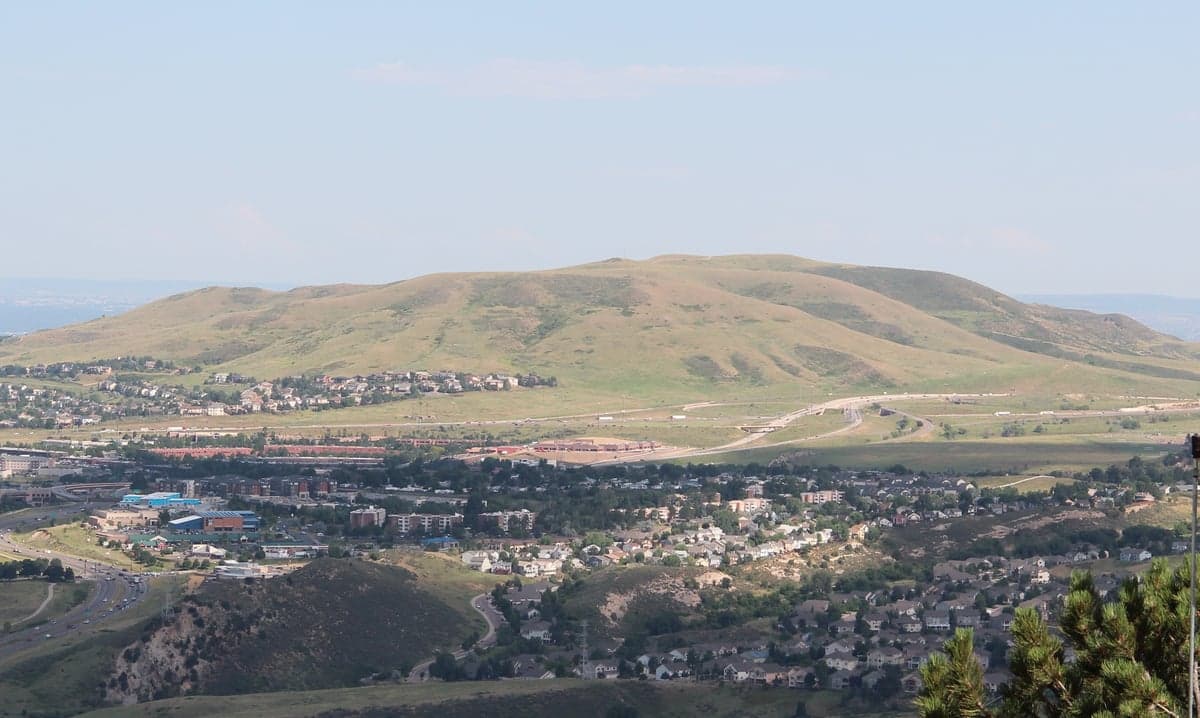
Photo: Wikipedia
Strategic Assessment of Lakewood, CO
Multiple tactical vulnerabilities. Population density, target proximity, or disaster risk are likely compounding. A retreat property and exit planning is required.
What does the Strategic Assessment tell us?
Our Strategic Assessment grades tactical survivability of an area. Major population centers, military targets, fallout zones, natural disasters, and border exposure all drive risk — lower exposure means a more defensible position in a crisis.
This is heavily inspired by Joel Skousen's Strategic Relocation book. Highly recommended you checkout the book ($)What does this tell us?
Our Strategic Assessment grades tactical survivability of an area. Major population centers, military targets, fallout zones, natural disasters, and border exposure all drive risk — lower exposure means a more defensible position in a crisis.
This is heavily inspired by Joel Skousen's Strategic Relocation book. Highly recommended you checkout the book ($)Strategic Pillars

Key Distances
Regional Safe Places
Below is our recommended "safe zones" in Colorado and the surrounding area based on our strategic heuristics. For most people, it's unrealistic to live in a “safe zone” full-time due to work, family or other personal reasons. They tend to be more rural. However, many of these areas are perfect for second homes and retreat properties that double as a vacation home or even a short-term rental.
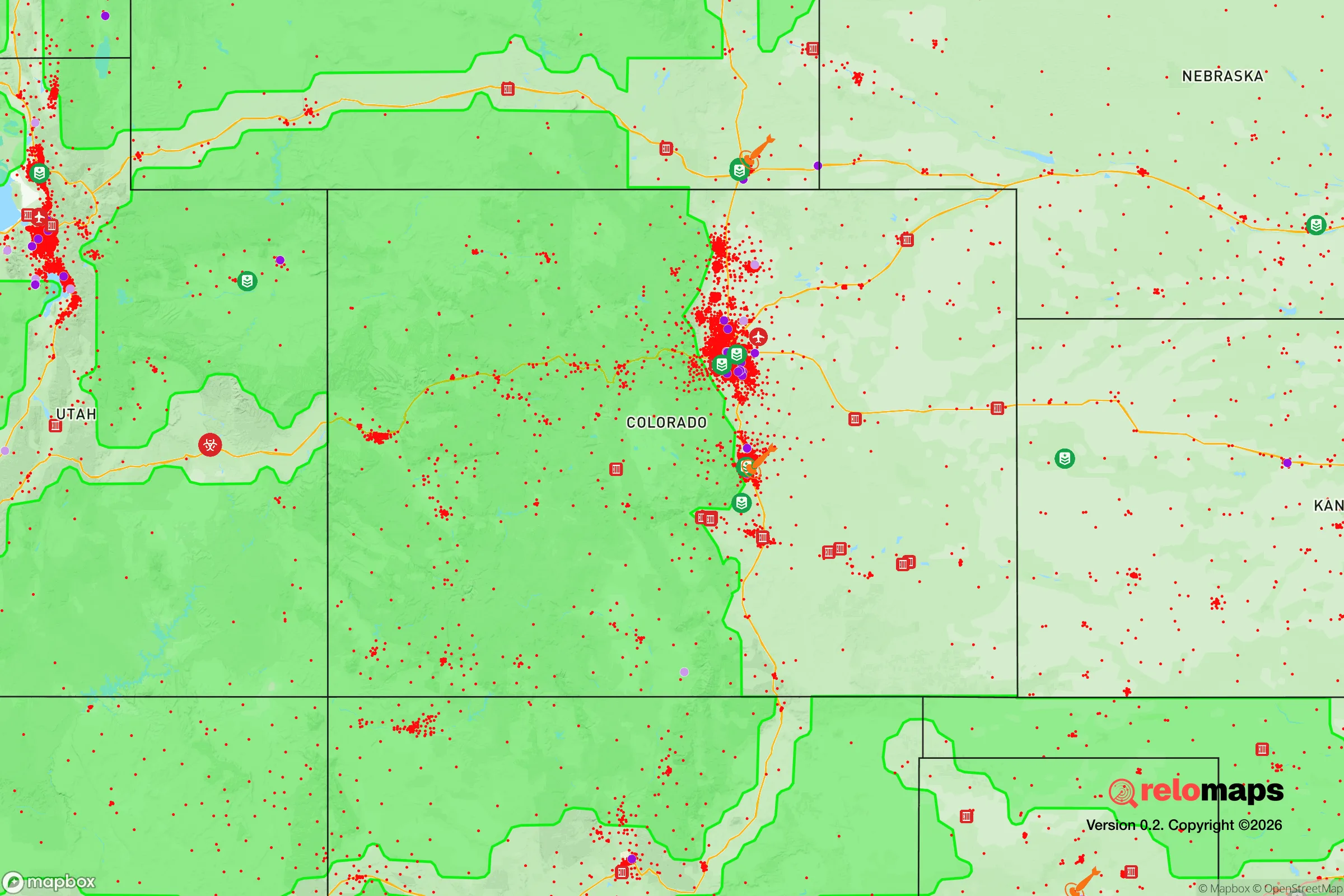
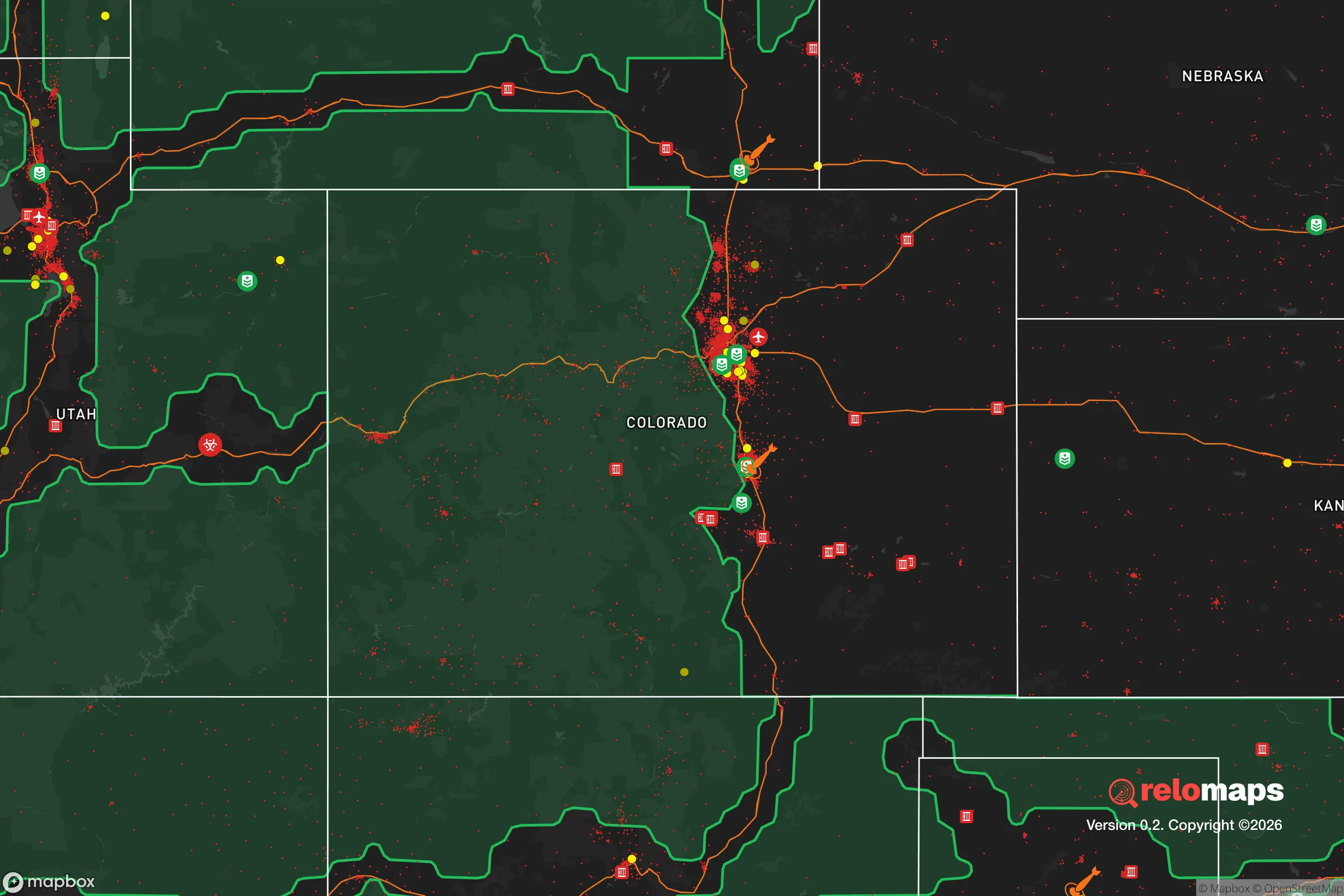


Important Note: For informational purposes only. This does not mean nothing bad ever happens in the green zones. Please use common sense. This is based on public data and modeled with AI. We tried to take a conservative approach but mistakes happen. We update this regularly as new information becomes available.
Solar Generator Recommendations
Backup power matters more here than in safer locations. We've picked three solar generators across budgets and capacity tiers — start with the budget unit if you only need a few essentials, or step up if you want to run a fridge and HVAC for days at a time.

Jackery Portable Power Station Explorer 300
Budget OptionPower on the Go: Weighing only 11 lbs, it's convenient to set up and store with book-sized foldable solar panels

BLUETTI Portable Power Station AC180
Designed for both indoor and outdoor scenarios, AC180 is highly capable as it has a robost capacity and continuous output power.

EF ECOFLOW DELTA Pro Ultra Power Station
Upgraded PickEcoFlow DELTA Pro Ultra is a whole-home energy system designed to grow with your family. Integrated with the Smart Home Panel 2, it scales to meet your evolving energy needs — keeping your home powered, intelligent, and secure through every stage of life.
We earn a commission, at no additional cost to you.
Strategic Assessment Analysis
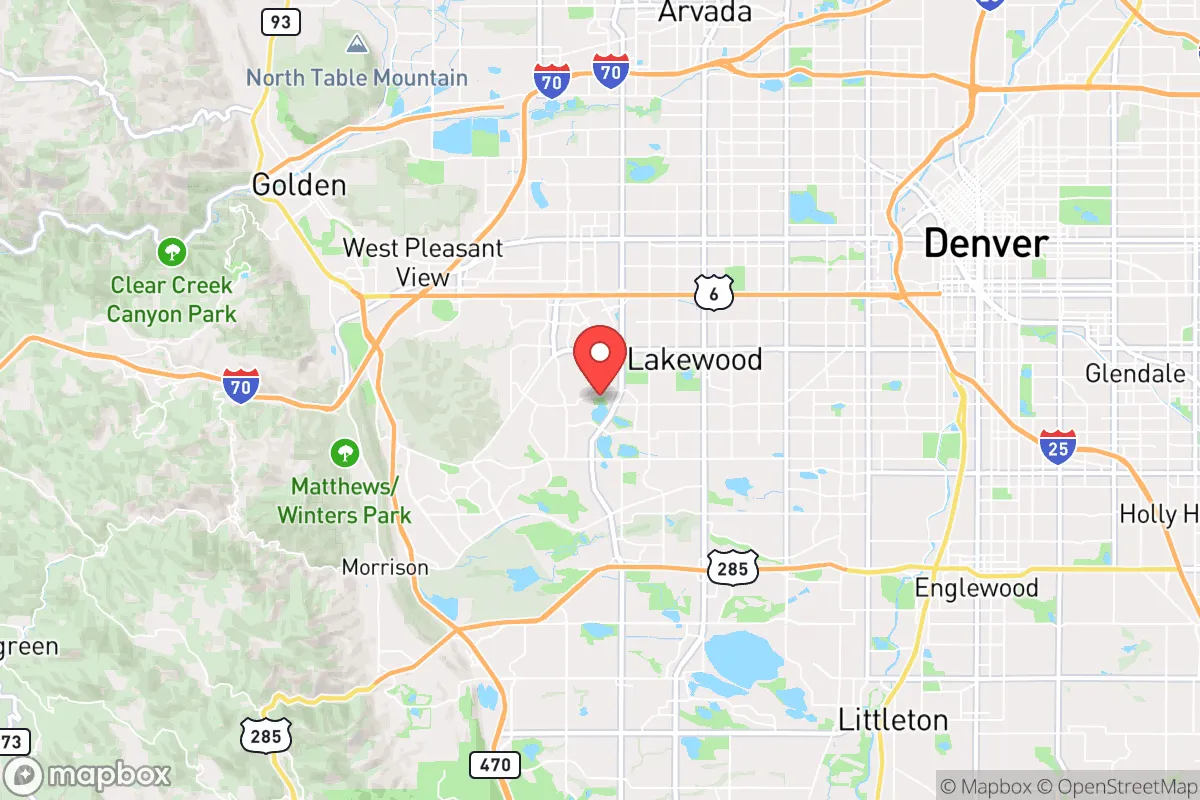
Lakewood, Colorado, presents a complex strategic picture for the conservative prepper. Its position as the sixth-largest city in the state, with a population hovering around 160,000, offers the economic and logistical benefits of a major metro area while retaining a distinct suburban character. However, from a survivalist perspective, its primary advantage is not isolation but positioning as a resilient secondary hub—close enough to Denver to access critical resources and infrastructure, yet far enough to avoid the worst of a cascading urban collapse. The city’s location along the Front Range urban corridor, with direct access to I-70 and US 6, provides a critical egress route into the Rocky Mountains, a factor that cannot be overstated for anyone planning a bug-out scenario. The real question is whether Lakewood’s proximity to high-value targets and its own population density outweigh its geographic and logistical strengths.
Geographic position and natural advantages for long-term survival
Lakewood sits at the eastern edge of the Rocky Mountain foothills, giving it a unique blend of high plains and mountain access. The city’s elevation—roughly 5,500 feet—provides a natural buffer against many lower-altitude threats, including the worst of tornado alley activity, though severe thunderstorms and hail remain common. The area’s semi-arid climate means fewer mold and rot issues for stored supplies, and the low humidity is a genuine asset for long-term food and equipment preservation. The proximity to the Denver Basin aquifer system offers a theoretical groundwater source, though most of Lakewood’s municipal water comes from surface reservoirs fed by mountain snowmelt. For a relocator, the key natural advantage is the immediate access to the Pike National Forest and Arapaho National Forest to the west, providing hunting, foraging, and remote retreat options within a 30- to 60-minute drive. The South Platte River and Bear Creek run through the area, offering additional water sources, though both are heavily impacted by urban runoff and agricultural use. The terrain itself—rolling hills with occasional rocky outcroppings—offers decent defensibility for a well-chosen property, especially in the western neighborhoods near Green Mountain or along the hogbacks.
Risks, exposures, and proximity to fallout-relevant landmarks
This is where Lakewood’s strategic calculus gets dicey. The city lies less than 10 miles from Denver International Airport (DIA), a major transportation hub that would be a primary target in any coordinated attack or a focal point for civil unrest during a national emergency. Additionally, the Federal Center in Lakewood—a massive complex housing numerous federal agencies, including the U.S. Geological Survey and the Department of Energy—is a high-value government target that could draw secondary effects from a strike or become a flashpoint for anti-government violence. The city is also within the blast radius of the Rocky Flats National Wildlife Refuge, a former nuclear weapons production site that, while cleaned up, still carries a psychological and residual contamination risk. For the prepper, these factors mean that a direct hit on Denver or the Federal Center would likely render large portions of Lakewood uninhabitable or impassable for days to weeks. The I-70 corridor, while a vital escape route, would become a parking lot during an evacuation, as seen during the 2013 floods and the 2021 Marshall Fire evacuations. The city’s population density—roughly 3,500 people per square mile—is high enough that civil unrest or resource shortages could trigger rapid neighborhood-level violence, particularly in the more densely packed apartment and condo areas east of Wadsworth Boulevard.
Practical resilience for a relocator: food, water, energy, and defensibility
For someone serious about self-sufficiency, Lakewood requires a deliberate, property-specific approach. The city’s water supply is almost entirely dependent on the Denver Water system, which draws from reservoirs like Dillon and Gross. A prolonged power outage or a deliberate contamination event would leave residents reliant on stored water or nearby streams, which are heavily regulated and often polluted. Installing a private well is possible in some western neighborhoods but is expensive and subject to strict permitting. Food resilience is better: the growing season runs from May to September, and many homes have enough yard space for raised beds or small greenhouses, though the clay-heavy soil requires amendment. The city’s zoning allows for backyard chickens and, in some areas, dwarf goats, but larger livestock is generally prohibited. Energy resilience is a mixed bag. Lakewood gets over 300 days of sunshine annually, making solar a viable option, but the city’s building codes and HOA restrictions can be a headache for off-grid setups. Natural gas is the primary heating fuel, which is a vulnerability if the grid goes down, though propane backup systems are common in the foothills neighborhoods. Defensibility varies dramatically by neighborhood. The areas west of Kipling Street, with larger lots, cul-de-sacs, and natural terrain features, offer far better security than the grid-like streets east of Sheridan Boulevard. For a relocator, the ideal property is a single-family home on at least a quarter-acre lot, with good sightlines, a basement for shelter, and a garage or outbuilding for gear storage. The city’s police and fire response times are generally good—under 10 minutes in most areas—but during a widespread event, you cannot count on them.
The overall strategic picture for Lakewood is one of calculated risk with significant upside for the prepared individual. It is not a bug-out location; it is a staging ground. The city’s strengths—mountain access, economic stability, a relatively low crime rate compared to Denver proper, and a politically moderate-to-conservative population in the western neighborhoods—make it a viable base for someone who wants to be near the action without being in the kill zone. The weaknesses—proximity to high-value targets, dependence on centralized infrastructure, and moderate population density—are manageable with proper planning. For the conservative prepper, Lakewood works best as a Phase 1 location: a place to build skills, store supplies, and establish a network before moving to a more remote property in the mountains or on the Western Slope. If you are looking for a place to ride out the next decade with one eye on the horizon and a foot out the door, Lakewood is a solid, if imperfect, choice. Just make sure your bug-out bag is packed and your vehicle has a full tank of gas at all times.

* Values derived from national, state, county, city and local statistics and may differ in a specific area. Last updated: 2026-05-01T08:54:37.000Z
Narrative content on this page is AI-generated and may contain mistakes. Verify any details that matter before acting on them.
ReloMaps may earn a commission from affiliate links at no extra cost to you.

