Photo: Wikipedia
Demographics of Lakewood, CO
Affluence Level in Lakewood, CO
A middle-class area roughly in line with national averages across income, home values, education, and employment.
People of Lakewood, CO
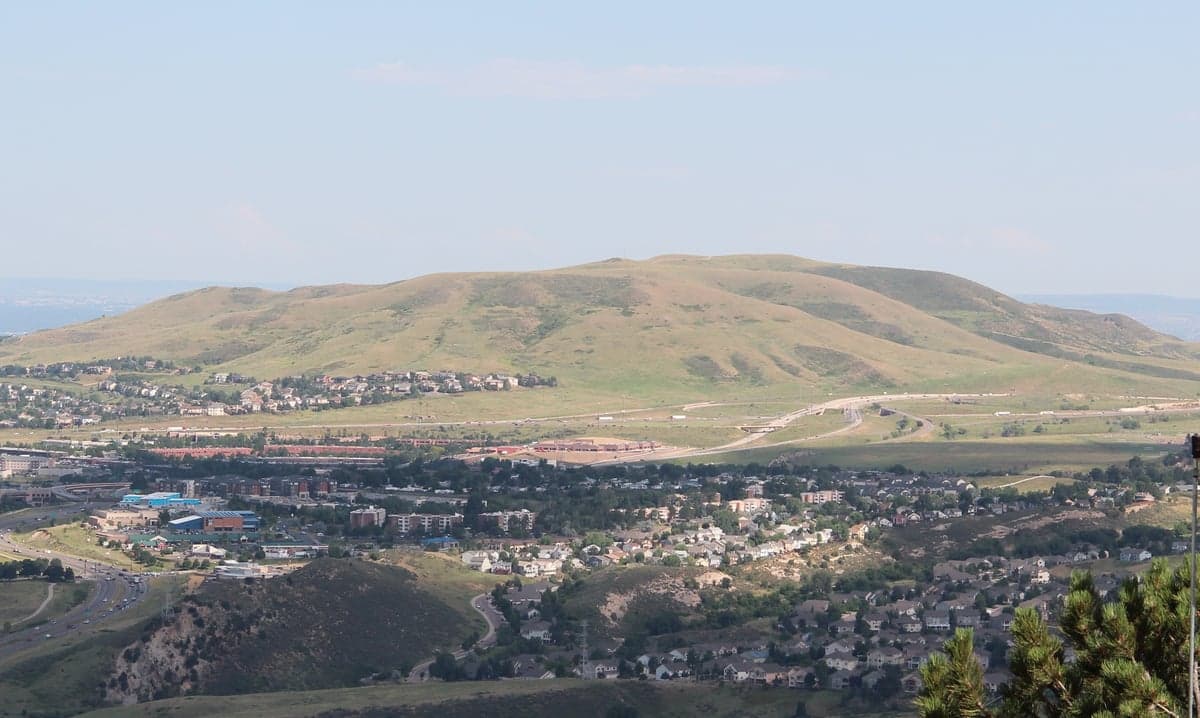
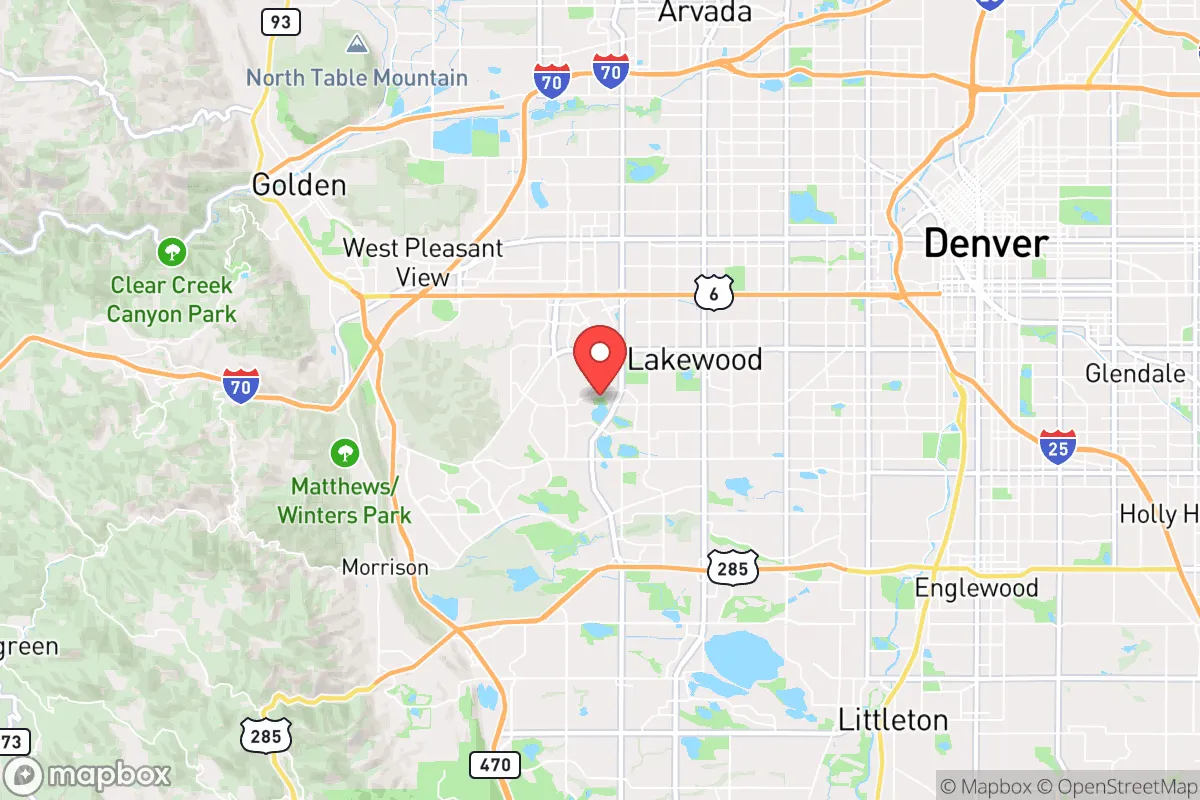
The people of Lakewood, Colorado, today number 156,309, forming a dense, middle-ring suburb that feels more like a self-contained city than a bedroom community. Its population is notably less diverse than the Denver metro average, with a white population of 68.1% and a Hispanic population of 22.3%, while foreign-born residents make up just 4.3%—roughly half the national suburban average. The city’s identity is shaped by a strong sense of local place, anchored by Belmar’s walkable town center and the sprawling Federal Center, and its residents tend to be older, more settled, and more politically moderate than those in Denver proper.
How the city was settled and grew
Lakewood’s human history begins not with a frontier town but with a 20th-century land rush. The area was originally part of the 640-acre Brown’s Ranch homestead, and for decades it remained a patchwork of truck farms and dairy operations supplying Denver, six miles east. The first real population wave came after World War II, when returning veterans and their families sought affordable housing on the prairie. Developers platted unincorporated Jefferson County with cheap, single-family homes, and by 1950 the area had roughly 10,000 residents. The defining event was the 1951 opening of the Denver Federal Center, a sprawling 670-acre campus of federal offices that drew thousands of white-collar government workers and their families. These early residents—overwhelmingly white, native-born, and middle-class—settled in neighborhoods like Green Mountain and Applewood, where ranch-style homes on large lots became the norm. Lakewood incorporated as a city in 1969, largely to control its own zoning and avoid annexation by Denver, cementing its identity as a deliberately suburban, homeowner-driven community.
Modern era (post-1965)
The post-1965 immigration reforms had a muted effect on Lakewood compared to Denver or Aurora. The city’s foreign-born share peaked at roughly 6% in 2000 and has since declined to 4.3%, reflecting a population that is more settled than replenished by new arrivals. The most significant demographic shift has been the growth of the Hispanic population, which rose from roughly 8% in 1990 to 22.3% today. This wave was driven by domestic migration from other Colorado towns and the Southwest, not by recent immigration, and it concentrated in the city’s older, more affordable eastern neighborhoods—particularly Villa Park and the area around Wadsworth Boulevard. East and Southeast Asian communities (3.2%) are small but visible, with families drawn to the Bear Creek area for its good schools and mid-century housing stock. The Indian-subcontinent population (0.7%) is even smaller and more dispersed, with no single ethnic enclave. Meanwhile, the white population has aged in place, particularly in Green Mountain and Applewood, where many original homeowners remain. The city’s college-educated share (45.3%) is high for a suburb of its age, reflecting a gradual replacement of retiring federal workers with younger professionals priced out of Denver.
The future
Lakewood’s population is heading toward a slow homogenization by age and income, rather than a dramatic ethnic or cultural shift. The Hispanic share is likely to plateau near 25% as younger families move to more affordable exurbs like Thornton or Brighton. The white population will continue to age, with the 65-plus cohort growing faster than the under-18 cohort. The city is not tribalizing into distinct ethnic enclaves; instead, it is becoming a place where Belmar and the West Colfax Avenue corridor attract younger, more diverse renters, while the western hill neighborhoods remain predominantly white and older. The foreign-born share is unlikely to rise significantly, as Lakewood lacks the entry-level jobs and cheap housing that draw new immigrants to Aurora or Denver. The next decade will likely see the city become more educated and more expensive, with a growing share of childless professionals and empty-nesters, and a shrinking share of traditional families.
For someone moving in now, Lakewood is becoming a stable, middle-aged suburb with a strong sense of local identity and a population that is more homogeneous than the region around it. It offers a predictable, low-crime environment with good schools and ample parks, but it is not a place of rapid demographic change or cultural dynamism. The city’s future is one of slow, incremental replacement—older white homeowners selling to younger white professionals, with Hispanic families holding steady in the eastern neighborhoods. It is a safe, comfortable choice for those who value stability over diversity, and who want a suburban lifestyle within 15 minutes of downtown Denver.

* Values derived from national, state, county, city and local statistics and may differ in a specific area. Last updated: 2026-05-01T08:54:37.000Z
Narrative content on this page is AI-generated and may contain mistakes. Verify any details that matter before acting on them.
ReloMaps may earn a commission from affiliate links at no extra cost to you.

