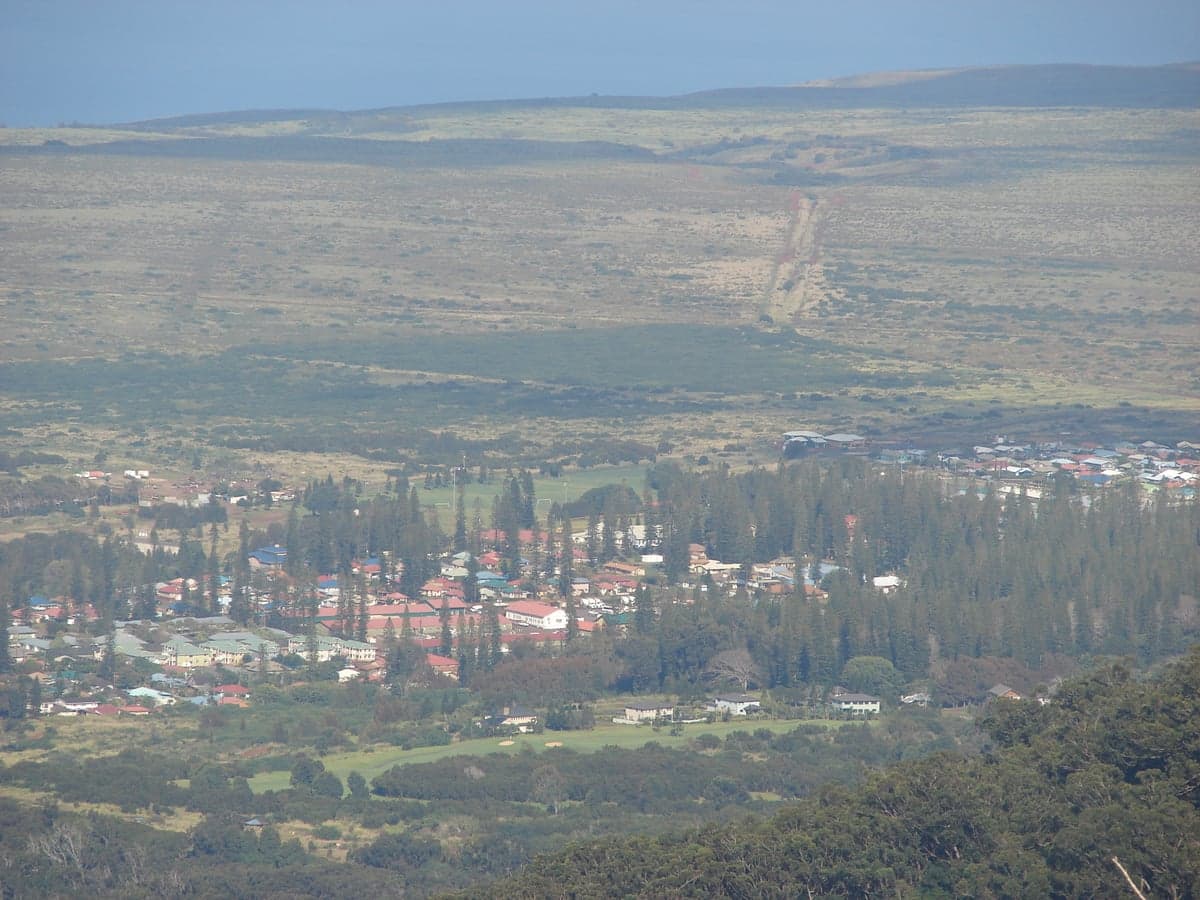
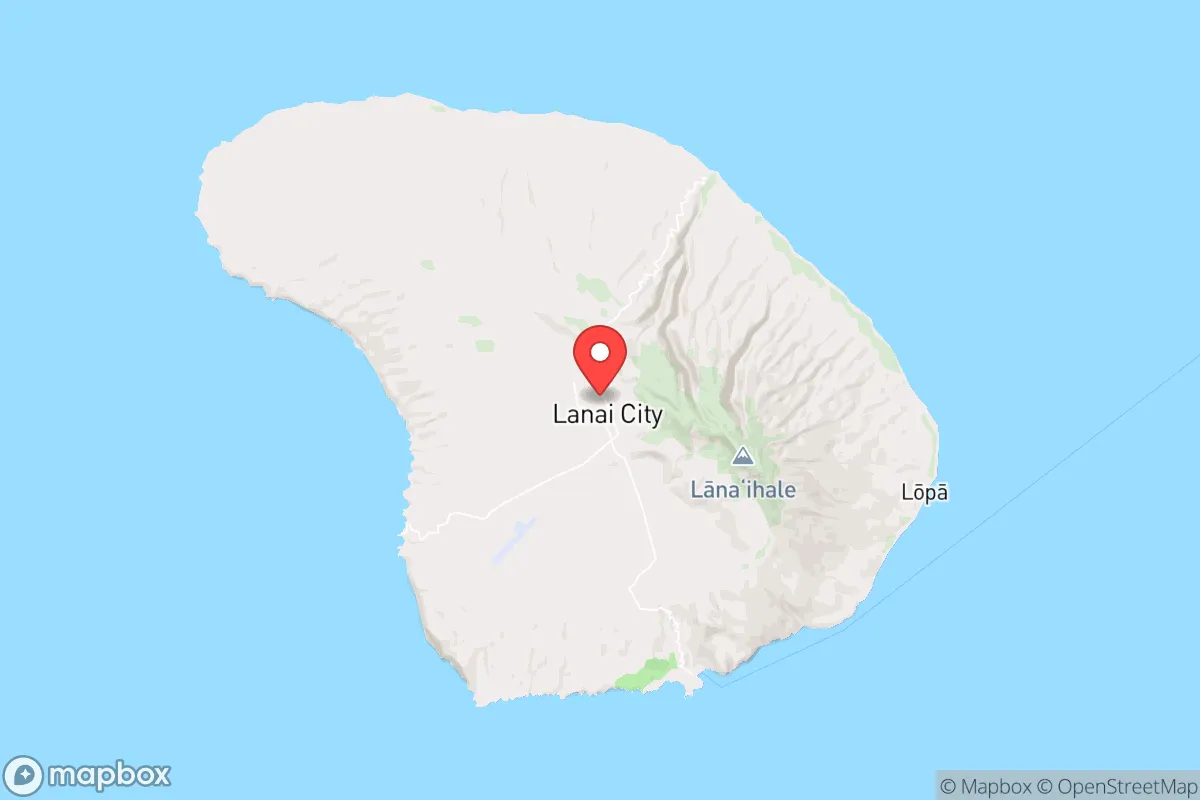
Photo: Wikipedia
Demographics of Lanai City, HI
Affluence Level in Lanai City, HI
A middle-class area roughly in line with national averages across income, home values, education, and employment.
People of Lanai City, HI
The people of Lanai City, Hawaii, today form a tight-knit, predominantly Asian community of 3,283 residents, with East and Southeast Asian groups—primarily of Filipino and Japanese ancestry—making up 48.9% of the population. The city is notably homogeneous: White residents account for just 9.3%, Hispanic residents 7.2%, and the Black and Indian subcontinent populations are effectively zero. A foreign-born share of 10.6% and a college attainment rate of 25.0% reflect a working-class, family-oriented community shaped by a single dominant industry—pineapple—and its plantation-era legacy. This is a place where multi-generational roots run deep, and newcomers are rare.
How the city was settled and grew
Lanai City was not settled organically by waves of immigrants; it was built as a company town in the early 20th century by the Hawaiian Pineapple Company (later Dole Food Company). The city's founding dates to 1924, when Dole began developing the island of Lanai as the world's largest pineapple plantation. The original population was drawn almost entirely by plantation labor recruitment. The first major wave consisted of Japanese and Filipino laborers, who arrived in the 1920s and 1930s to work the fields. These groups built the city's earliest neighborhoods, including Kaumalapau (the harbor area where workers disembarked) and Lapana, a residential district near the old plantation mill where Filipino families clustered. A smaller wave of Portuguese and Chinese workers also arrived, but their numbers were always dwarfed by the Japanese and Filipino majority. By the 1950s, Lanai City's population peaked at around 3,500, almost entirely plantation employees and their families, living in company-owned housing arranged by ethnicity in distinct neighborhoods.
Modern era (post-1965)
The post-1965 era brought no major new immigration wave to Lanai City. The 1965 Hart-Cellar Act liberalized U.S. immigration, but Lanai's plantation economy was already in decline, and the island's remote location discouraged new arrivals. Instead, the modern era has been defined by out-migration and demographic aging. Dole phased out pineapple operations on Lanai in the 1990s, and the population shrank from its peak. The Asian share—still overwhelmingly Filipino and Japanese—remained dominant, but the city saw a modest influx of White retirees and second-home buyers, concentrated in the newer Manele area near the Four Seasons Resort, and in the Palawai district, where larger lots attracted mainland transplants. Hispanic residents, now 7.2%, arrived primarily as service workers for the resort industry in the 2000s, settling in the central Lanai City core around Seventh Street. The Black and Indian subcontinent populations remain at zero, reflecting the island's historical isolation and lack of economic pull for those groups.
The future
Lanai City's population is heading toward further homogenization and gradual decline. The Asian majority is aging, with younger generations leaving for Oahu or the mainland for education and jobs. The foreign-born share (10.6%) is plateauing, as few new immigrants choose a remote island with limited employment beyond tourism and healthcare. The Hispanic share is likely to grow slowly, driven by resort-sector demand, but will remain a small minority. The White population, concentrated in Manele and Palawai, may increase slightly as luxury tourism expands, but these are seasonal or part-time residents, not permanent community members. No new immigrant enclaves are forming; the city is not tribalizing into distinct new ethnic neighborhoods but rather consolidating around its aging Asian core. The college-educated share (25.0%) is below the state average, and without a major economic shift, the population will likely continue to shrink slowly.
For someone moving in now, Lanai City is a place where community is defined by deep, multi-generational ties rather than diversity or growth. New residents—especially those not of Filipino or Japanese ancestry—will find a welcoming but insular small town where fitting in requires patience. The city is not becoming more cosmopolitan; it is becoming quieter, older, and more dependent on tourism. For a conservative-leaning individual or family seeking a stable, low-crime, family-oriented environment with strong social bonds, Lanai City offers that—but with the understanding that it is a shrinking, not growing, community.

* Values derived from national, state, county, city and local statistics and may differ in a specific area. Last updated: 2026-05-15T21:54:32.000Z
Narrative content on this page is AI-generated and may contain mistakes. Verify any details that matter before acting on them.
ReloMaps may earn a commission from affiliate links at no extra cost to you.

