Photo: Wikipedia
Political ClimatePolitical Climate in Lanai City, HI
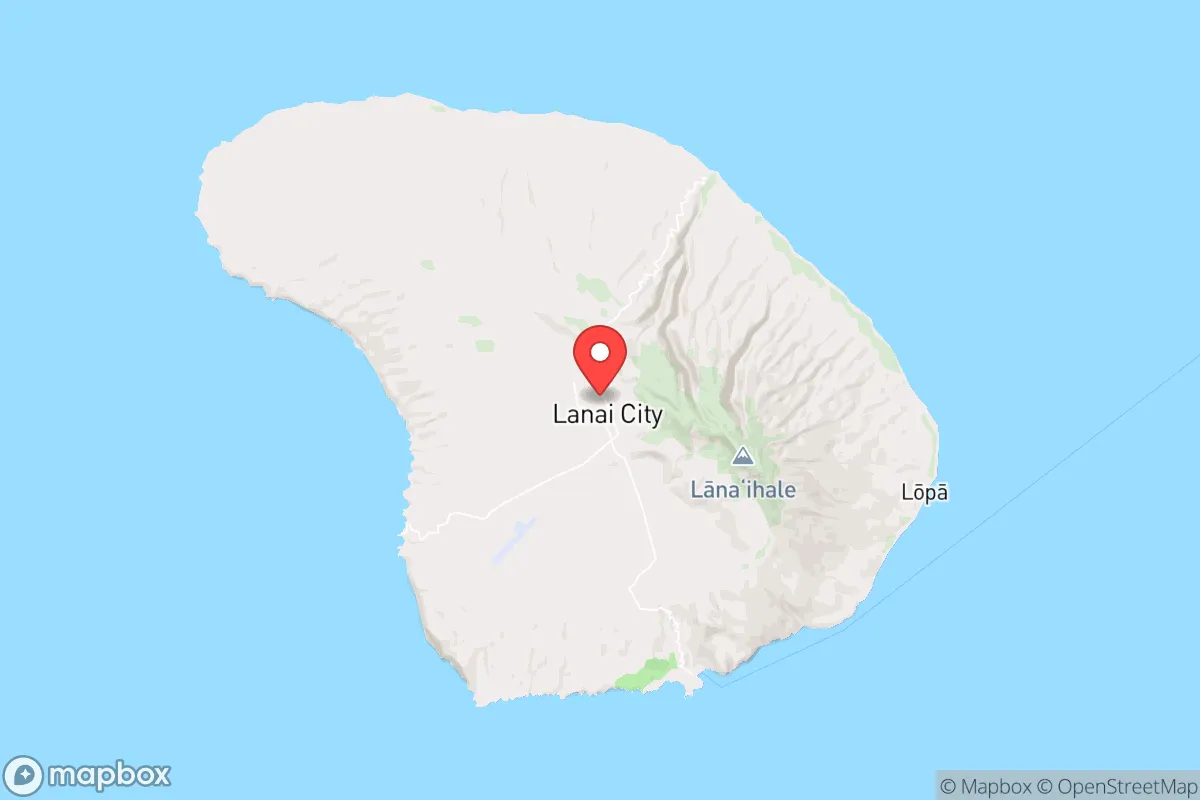
District shown is the primary district for this city’s centroid. Cities may span multiple districts.
Local Political AnalysisPolitical Analysis of Lanai City, HI
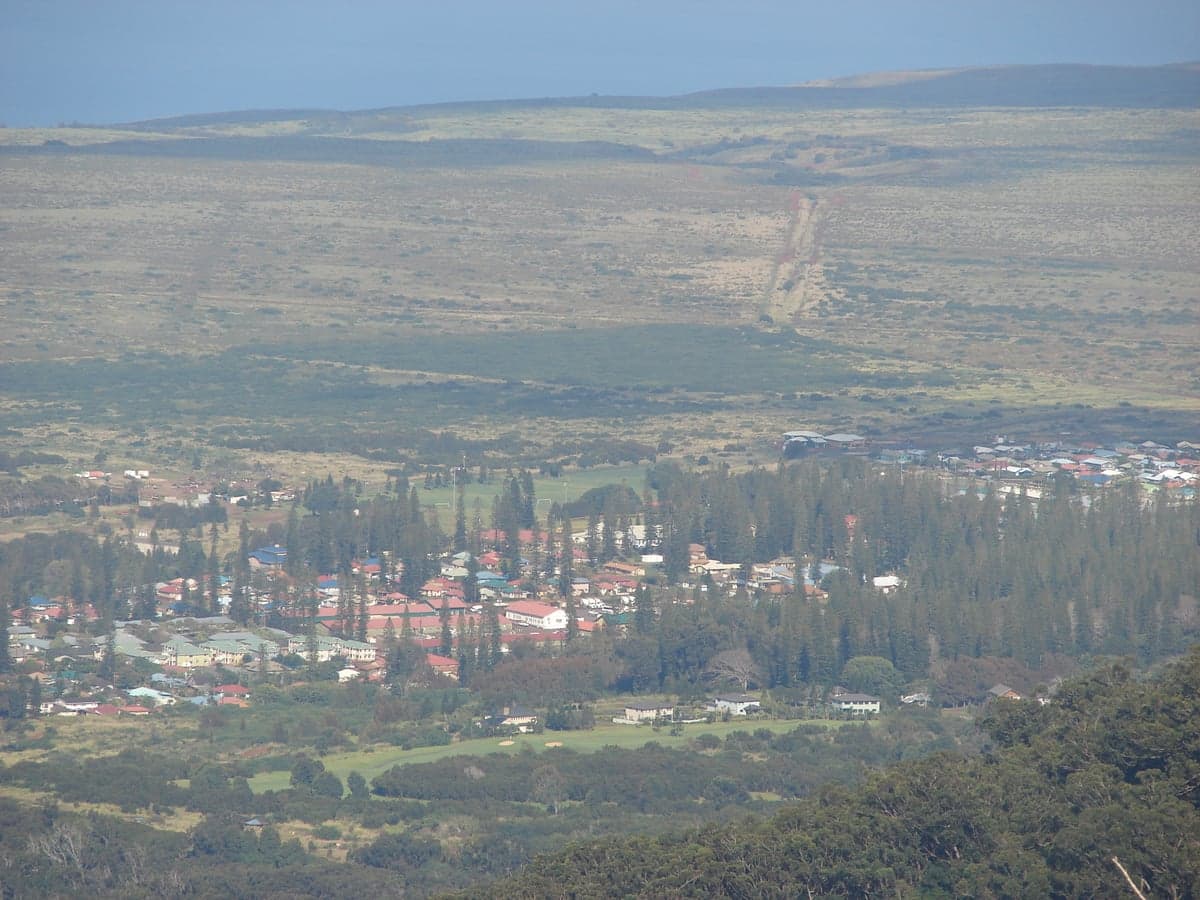
Lanai City, the only real town on the island of Lanai, has historically been a quiet, tight-knit community where folks value their privacy and independence. Politically, it leans solidly Democratic, with a Cook PVI of D+12, matching the state of Hawaii exactly. But don’t let that label fool you—this isn’t the same brand of politics you’d find in Honolulu or on Maui. The local vibe here is more about keeping government out of your business, and there’s a growing unease as progressive policies from the state capital start to creep into daily life on the island.
How it compares
On paper, Lanai City and the broader state of Hawaii share the same D+12 PVI, but the reality on the ground is different. In Honolulu or even Kahului on Maui, you’ll find a more vocal progressive push—think stricter environmental regulations, higher taxes, and mandates that feel like they’re written by people who’ve never lived off-grid. Here on Lanai, the population is small—around 3,000 people—and many residents are former plantation workers, ranchers, or retirees who just want to be left alone. The contrast is stark when you look at nearby towns like Lahaina on Maui, which has seen a surge in activist-driven housing and tourism policies. Lanai City, by comparison, is more conservative in practice, even if the voting numbers don’t show it. People here are wary of overreach, whether it’s from the county or the state, and there’s a quiet resistance to the kind of top-down planning that’s become common elsewhere in Hawaii.
What this means for residents
For those living here, the political climate translates into a daily tug-of-war between local autonomy and state mandates. You’ll see it in things like building permits—getting approval for a simple addition to your home can take months because of bureaucratic red tape that feels designed to discourage private property rights. The push for renewable energy and electric vehicles sounds good in theory, but when the state starts mandating solar panels on every new home or banning gas stoves, it hits hard in a community where many rely on older, affordable infrastructure. There’s also the issue of vacation rentals—the state has been cracking down on short-term rentals, which hurts locals who depend on that income to make ends meet. It’s a classic case of government overreach: policies crafted in Honolulu that don’t account for the unique, rural character of Lanai. Longtime residents worry that these trends will only accelerate, squeezing out the independent spirit that’s kept this place special.
Culturally, Lanai City still holds onto a more traditional, family-oriented way of life. You won’t find the same level of activism or protest culture here as you would in Hilo or on Oahu. The local economy is dominated by two resorts and a handful of small businesses, so there’s less room for ideological battles. But the long-term trajectory is concerning—if the state continues to centralize control over land use, energy, and housing, Lanai could lose its character entirely. For now, the best advice is to keep your head down, know your neighbors, and vote in local elections where your voice actually counts. The island’s isolation is both a blessing and a curse: it protects us from the worst of the mainland’s political chaos, but it also makes us an easy target for policies that don’t fit our way of life.

State Political ClimatePolitical Climate in Hawaii
State Political AnalysisPolitical Environment in the State
Hawaii has been a one-party Democratic stronghold for decades, with a Cook PVI of D+12, meaning it votes about 12 points more Democratic than the national average. The dominant coalition is a mix of unionized government workers, Native Hawaiian rights activists, and progressive transplants from the mainland, but the state’s political trajectory over the last 10-20 years has been a steady march leftward—away from its once-moderate, pro-business roots and toward a more activist, high-tax, regulatory-heavy model. If you’re a conservative considering a move here, you need to understand that the Aloha State’s politics are not just blue; they’re a deep, institutionalized shade of progressive control that touches nearly every aspect of daily life.
Urban vs. rural divide
The political map of Hawaii is starkly divided between the dense urban core of Honolulu on Oahu and the more rural, less populated outer islands. Honolulu and its suburbs—places like Kailua, Waipahu, and Pearl City—drive the state’s Democratic lean, with precincts routinely delivering 70-80% of the vote for Democratic candidates. The rest of Oahu, particularly the windward side and the North Shore, is also reliably blue, though with pockets of libertarian-leaning sentiment among surfers and farmers. On the Big Island, the divide is sharper: Hilo is a progressive stronghold, while Kona and the Puna district have more independent and even conservative-leaning voters, especially among the growing number of mainland transplants seeking lower taxes and more land. Maui County leans left overall, but Kihei and Lahaina are more moderate than the ultra-progressive Paia. Kauai is the most consistently rural and conservative-leaning of the major islands, though still votes Democratic due to union influence. The rural-urban split here isn’t as dramatic as in mainland states—there are no deep-red counties—but the difference between Honolulu’s high-density, government-dependent economy and the outer islands’ agricultural and tourism-based economies is real and growing.
Policy environment
Hawaii’s policy environment is a case study in progressive governance. The state has the highest combined state and local tax burden in the nation, with a general excise tax (GET) of 4% that applies to nearly all goods and services, plus high property taxes on non-owner-occupied homes. There is no state income tax on wages, but the GET effectively functions as a hidden sales tax. The regulatory posture is heavy: housing construction is notoriously slow due to strict land-use laws, environmental reviews, and the powerful Office of Hawaiian Affairs (OHA), which controls significant land and resources. Education policy is dominated by a single statewide school district—the Hawaii Department of Education—which has been criticized for low test scores and bureaucratic inefficiency. Healthcare is heavily regulated, with the state’s Prepaid Health Care Act mandating employer-provided insurance for most workers. Election laws are among the most progressive: Hawaii has universal mail-in voting, same-day registration, and no voter ID requirement, which conservatives argue opens the door to fraud. The state also has a “sanctuary” policy that limits cooperation with federal immigration enforcement. For a conservative, the policy environment feels like a one-size-fits-all approach that prioritizes government control over individual choice.
Trajectory & freedom
Hawaii is becoming less free by nearly any measure. Recent legislation has expanded government power at the expense of personal liberty. In 2023, the state passed a sweeping gun control package (Act 52) that bans the open carry of firearms, raises the minimum age to purchase a rifle to 21, and requires registration of all firearms—a direct response to the Bruen decision. Parental rights have been eroded by the state’s strong support for LGBTQ+ curriculum in schools, with no opt-out provisions for parents who object. Medical autonomy took a hit with the 2022 passage of Act 2, which codified abortion access and removed parental consent requirements for minors. Property rights are constrained by the state’s powerful land-use commission and the “county-level” zoning boards that can block development for years. On the taxation front, the state legislature has repeatedly rejected proposals to lower the GET or cap property tax increases. The only bright spot for freedom advocates is the state’s relatively low property tax rate on owner-occupied homes (about 0.3%), but that’s cold comfort when everything else is expensive and regulated. The trajectory is clear: more mandates, more taxes, and less room for individual choice.
Civil unrest & political movements
Hawaii has a history of civil unrest, much of it tied to Native Hawaiian sovereignty movements and land rights. The Thirty Meter Telescope (TMT) protests on Mauna Kea from 2015-2019 were a major flashpoint, with activists blocking construction and clashing with police. These protests were a coalition of Native Hawaiian groups, environmentalists, and left-wing activists, but they also revealed deep distrust of government and corporate power. On the right, there is a small but vocal conservative movement centered around Hawaii Gun Coalition and Hawaii Family Forum, which advocate for gun rights and parental rights, respectively. Immigration politics are relatively quiet due to the state’s geographic isolation, but the sanctuary policy has drawn criticism from conservatives who argue it attracts illegal immigration. Election integrity is a growing concern: the 2020 and 2022 elections saw no major scandals, but the lack of voter ID and the universal mail-in system have fueled skepticism among conservatives. The most visible flashpoint for a new resident would be the constant tension between development and preservation—every new housing project or hotel faces organized opposition from environmental and cultural groups, making it hard to build anything.
Projection
Over the next 5-10 years, Hawaii’s political trajectory is likely to continue leftward, driven by demographic shifts and in-migration patterns. The state is losing its moderate, older residents to lower-cost mainland states like Texas and Nevada, while gaining younger, more progressive transplants from California and the Pacific Northwest. The Native Hawaiian population, which tends to vote Democratic, is growing, and the state’s reliance on federal funding (about 20% of the budget) makes it resistant to fiscal conservatism. The housing crisis will likely force some policy changes—maybe modest zoning reforms—but don’t expect a tax revolt or a shift toward libertarianism. If you move here now, expect to find in a decade a state that is even more regulated, more expensive, and more culturally progressive. The only wildcard is a potential economic downturn that could force the state to reconsider its high-tax, high-regulation model, but that’s a long shot.
For a conservative new resident, the bottom line is this: Hawaii offers unmatched natural beauty and a unique culture, but you’ll pay for it with high taxes, heavy regulation, and a political climate that is hostile to traditional values. If you value personal freedom, low taxes, and minimal government interference, this is not the place for you. If you can tolerate the trade-offs—and you have the income to absorb the costs—you’ll find a community of like-minded conservatives in places like Kona, Kihei, and Kauai, but you’ll always be swimming against the tide. Choose wisely.
* Values derived from national, state, county, city and local statistics and may differ in a specific area. Last updated: 2026-05-15T21:54:32.000Z
Narrative content on this page is AI-generated and may contain mistakes. Verify any details that matter before acting on them.
ReloMaps may earn a commission from affiliate links at no extra cost to you.

