Photo: Wikipedia
Strategic Assessment of Lanai City, HI
Strong survivability profile. Good buffer from population centers, with manageable environmental and tactical risks.
What does the Strategic Assessment tell us?
Our Strategic Assessment grades tactical survivability of an area. Major population centers, military targets, fallout zones, natural disasters, and border exposure all drive risk — lower exposure means a more defensible position in a crisis.
This is heavily inspired by Joel Skousen's Strategic Relocation book. Highly recommended you checkout the book ($)What does this tell us?
Our Strategic Assessment grades tactical survivability of an area. Major population centers, military targets, fallout zones, natural disasters, and border exposure all drive risk — lower exposure means a more defensible position in a crisis.
This is heavily inspired by Joel Skousen's Strategic Relocation book. Highly recommended you checkout the book ($)Strategic Pillars

Key Distances
Regional Safe Places
Below is our recommended "safe zones" in Hawaii and the surrounding area based on our strategic heuristics. For most people, it's unrealistic to live in a “safe zone” full-time due to work, family or other personal reasons. They tend to be more rural. However, many of these areas are perfect for second homes and retreat properties that double as a vacation home or even a short-term rental.

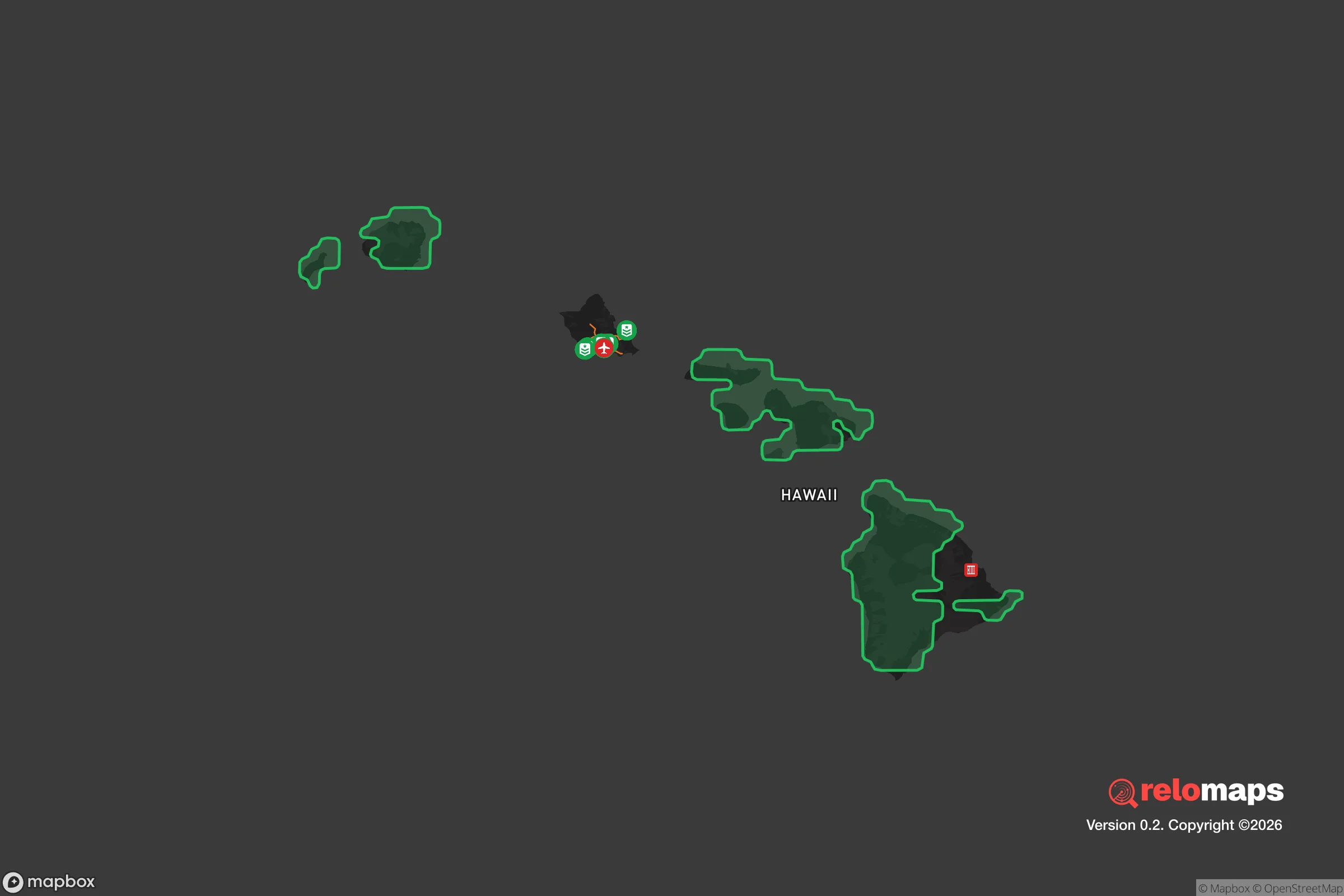


Important Note: For informational purposes only. This does not mean nothing bad ever happens in the green zones. Please use common sense. This is based on public data and modeled with AI. We tried to take a conservative approach but mistakes happen. We update this regularly as new information becomes available.
Solar Generator Recommendations
Backup power matters more here than in safer locations. We've picked three solar generators across budgets and capacity tiers — start with the budget unit if you only need a few essentials, or step up if you want to run a fridge and HVAC for days at a time.

Jackery Portable Power Station Explorer 300
Budget OptionPower on the Go: Weighing only 11 lbs, it's convenient to set up and store with book-sized foldable solar panels

BLUETTI Portable Power Station AC180
Designed for both indoor and outdoor scenarios, AC180 is highly capable as it has a robost capacity and continuous output power.

EF ECOFLOW DELTA Pro Ultra Power Station
Upgraded PickEcoFlow DELTA Pro Ultra is a whole-home energy system designed to grow with your family. Integrated with the Smart Home Panel 2, it scales to meet your evolving energy needs — keeping your home powered, intelligent, and secure through every stage of life.
We earn a commission, at no additional cost to you.
Strategic Assessment Analysis
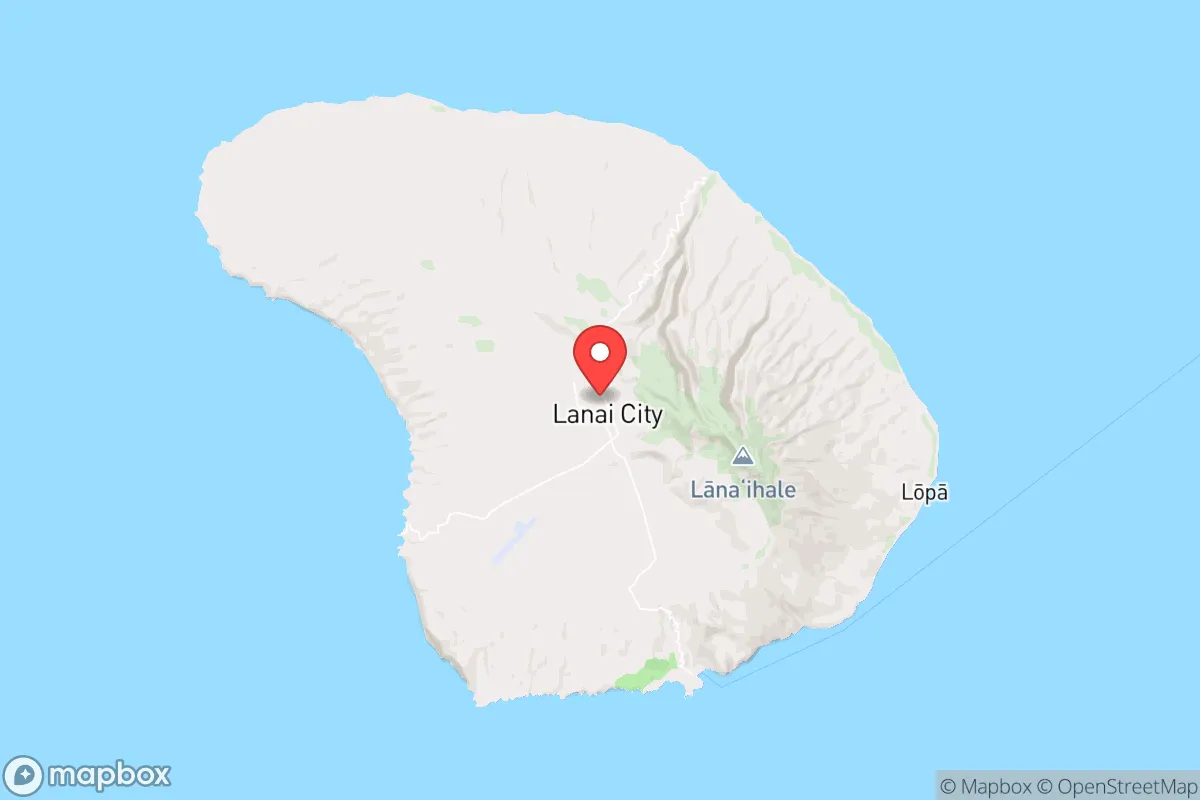
Lanai City, the only real population center on the island of Lanai, offers a unique strategic proposition for those seeking deep physical and societal isolation. Its primary resilience advantage is its location: 60 miles of open Pacific Ocean separate it from the nearest major population center (Honolulu on Oahu), and the island itself has a permanent population of roughly 3,200 people. For a prepper or survivalist, this means you are already operating in a post-collapse density scenario—the risk of mass civil unrest, viral outbreaks, or supply chain chaos reaching your doorstep is dramatically lower than on any of the main Hawaiian islands. The trade-off is that you are also 60 miles from the nearest hospital, major port, and any form of federal backup, so self-reliance is not optional; it is the baseline condition of life here.
Geographic position and natural advantages for long-term survival
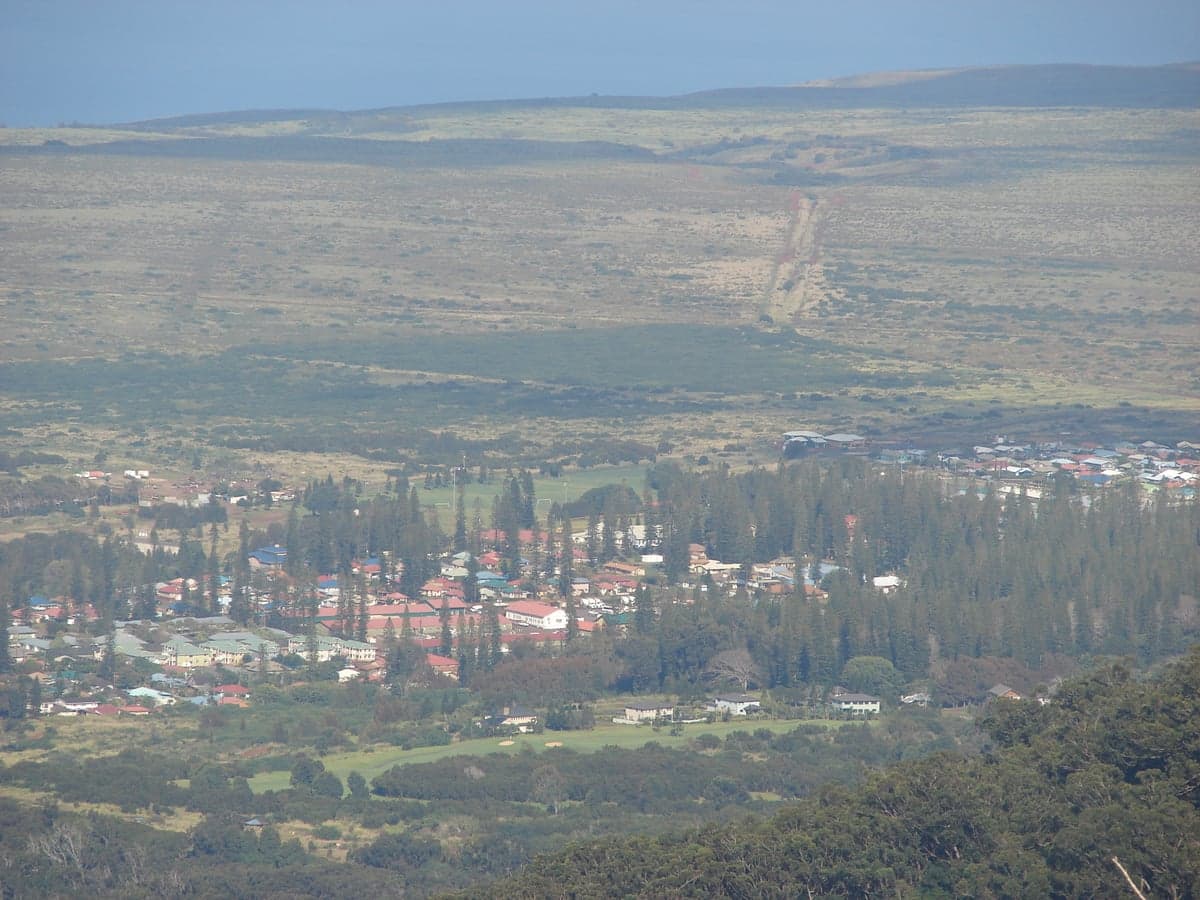
Lanai City sits at 1,600 feet elevation on the central plateau of the island, which gives it a distinct microclimate advantage over the coastal resorts. The higher elevation means cooler temperatures—typically 10–15°F cooler than sea level—which reduces heat stress and water evaporation. The island's geography is dominated by the extinct volcano Lanaihale, which creates a rain shadow effect; the city receives about 30–40 inches of rain annually, enough to support catchment systems and small-scale agriculture without the oppressive humidity of lower elevations. The surrounding terrain is a mix of former pineapple fields (now fallow) and dryland forest, which provides open sightlines and defensible perimeters. The island has only one paved road network, and the main highway (Kaumalapau Highway) is a single two-lane road that can be easily monitored or blocked. For a relocator, this means you can control access to your immediate area with minimal effort—there are no secondary routes, no backcountry trails that bypass the city, and no bridges to worry about. The natural harbor at Kaumalapau is the only deepwater port, and it is small, exposed, and easily observed from the bluffs above.
Risks, exposures, and proximity to fallout-relevant landmarks
The most significant risk for Lanai City is its complete dependence on external supply chains for fuel, medical supplies, and manufactured goods. The island has no functioning airport for cargo (the small Lanai Airport handles only passenger flights), and the barge from Honolulu is the sole lifeline for everything from gasoline to canned food. In a national emergency or a major disruption to Oahu's port operations, Lanai would feel the effects within two weeks. The island is also directly downwind of the Pacific Missile Range Facility on Kauai, roughly 150 miles to the northwest. While this is not a ground-zero risk, any atmospheric nuclear event or radiological release from that facility could deposit fallout across the central Pacific, and Lanai's exposed plateau offers little shielding. The island's volcanic soil is also prone to erosion and landslides after heavy rain, which can cut the single road to the port for days. On the positive side, Lanai City is far from any major military target, naval base, or population center that would attract a kinetic strike. The nearest target of strategic value is Pearl Harbor on Oahu, 60 miles away—close enough to feel a blast wave or tsunami, but far enough that direct fallout would be minimal if prevailing winds are from the east. The island's small population also means that a disease outbreak would burn through the community quickly, but containment is feasible because there is only one way on or off the island.
Practical resilience for a relocator: food, water, energy, and defensibility
Water is the most critical resource on Lanai, and the city's supply comes from a combination of groundwater wells and rainwater catchment. The island's aquifer is finite and is already managed by the Lanai Water Company, which means a relocator cannot simply drill a well without navigating a complex permitting process. The practical solution is to install a large-capacity catchment system (at least 10,000 gallons) and a filtration setup, which is standard practice for off-grid homes on the island. Food production is viable but limited: the fallow pineapple fields can be reclaimed for dryland crops like sweet potatoes, taro, and beans, but the soil is depleted and requires significant amendment. Fishing is the most reliable protein source, with the waters around Lanai known for ono, mahi-mahi, and tuna, but you need a boat and the skills to operate in open ocean conditions. Energy is a weak point: the island's grid is powered by diesel generators, and fuel is barged in weekly. Solar is the obvious alternative, but the island's frequent cloud cover (especially in winter) reduces panel efficiency. A hybrid system with battery storage and a backup propane generator is the minimum viable setup. Defensibility is excellent: the city is a compact grid of streets on a flat plateau, with only two roads leading in and out. The surrounding terrain is open and offers clear fields of fire, and the small population means that any unfamiliar face is immediately noticed. The local police force is tiny (fewer than a dozen officers), so community self-policing is the de facto security model. For a relocator, this means you need to integrate into the existing social fabric—being an outsider in a small, tight-knit community is a vulnerability, not a strength.
The overall strategic picture for Lanai City is one of extreme isolation with correspondingly extreme trade-offs. It is arguably the most defensible location in Hawaii for a survivalist, because the low population density and single-point access make it nearly impossible for a large group to overwhelm. However, that same isolation means you cannot survive here without a pre-established infrastructure: you need your own water catchment, your own power system, your own food production, and a stockpile of critical supplies that can last at least six months. The island's economy is almost entirely dependent on two luxury resorts (the Four Seasons at Manele Bay and the Sensei Lanai), and if those resorts shut down—which they would in any major crisis—the local job market and supply chain would collapse overnight. For a conservative-leaning relocator who values self-reliance and wants to be as far from the chaos of the mainland as possible, Lanai City offers a viable but demanding option. It is not a place to bug out to; it is a place to already be, with your systems in place and your community established. If you are willing to make that investment, you will be living in one of the most secure, low-profile, and strategically sound locations in the Pacific. If you are not, the island will become a trap rather than a refuge.

* Values derived from national, state, county, city and local statistics and may differ in a specific area. Last updated: 2026-05-15T21:54:32.000Z
Narrative content on this page is AI-generated and may contain mistakes. Verify any details that matter before acting on them.
ReloMaps may earn a commission from affiliate links at no extra cost to you.

