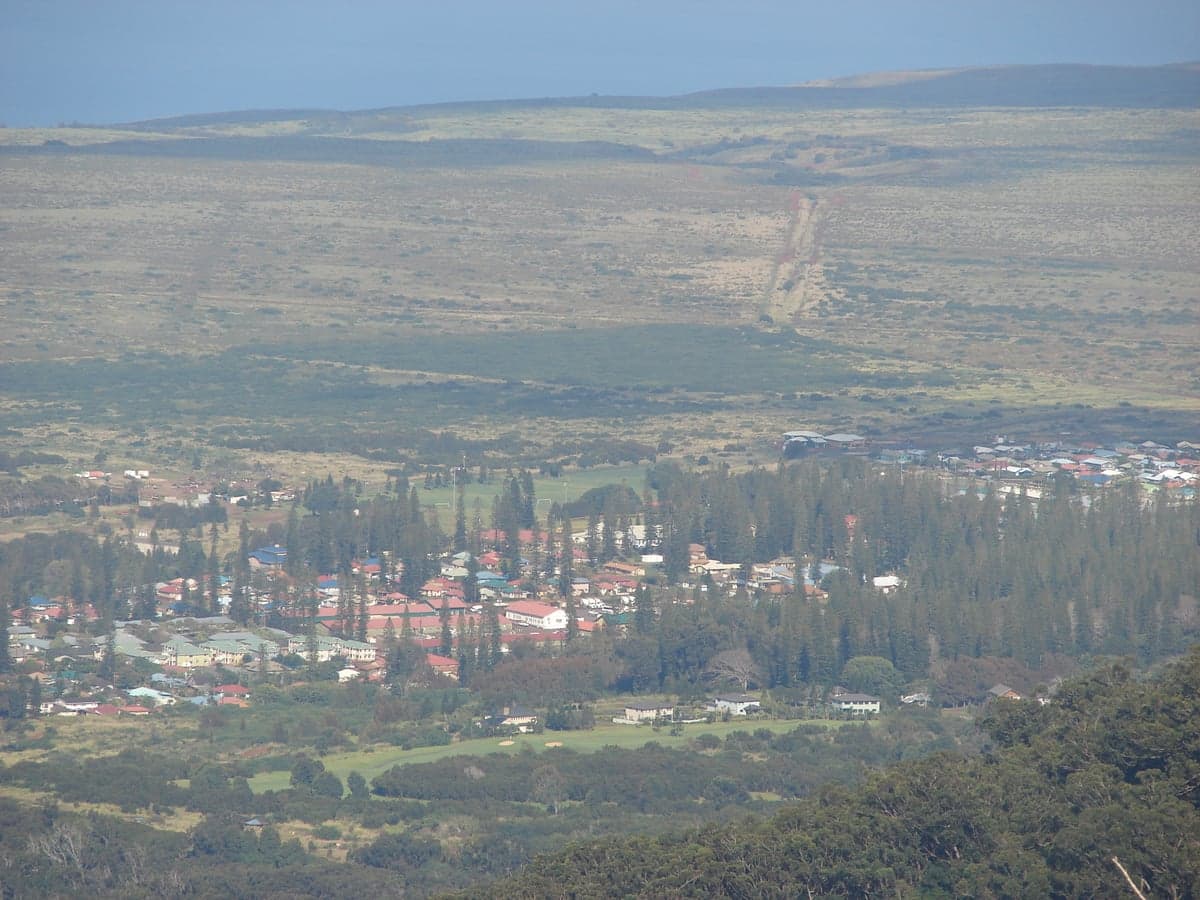
Photo: Wikipedia
Personal Sovereignty in Lanai City, HI
Moderate friction. Expect trade-offs in some aspect of personal liberty and independence.
What does Personal Sovereignty tell us?
Personal Sovereignty measures your capacity for self-reliance and independence with minimal government friction. Higher scores mean fewer barriers between you and the way you want to live... but it assumes you have the space you need and good neighbors.
What does this tell us?
Personal Sovereignty measures your capacity for self-reliance and independence with minimal government friction. Higher scores mean fewer barriers between you and the way you want to live... but it assumes you have the space you need and good neighbors.
State Policy
Energy independence: Importer (2% of energy produced in-state)
Personal Liberty
Homesteading

Personal Liberty Analysis
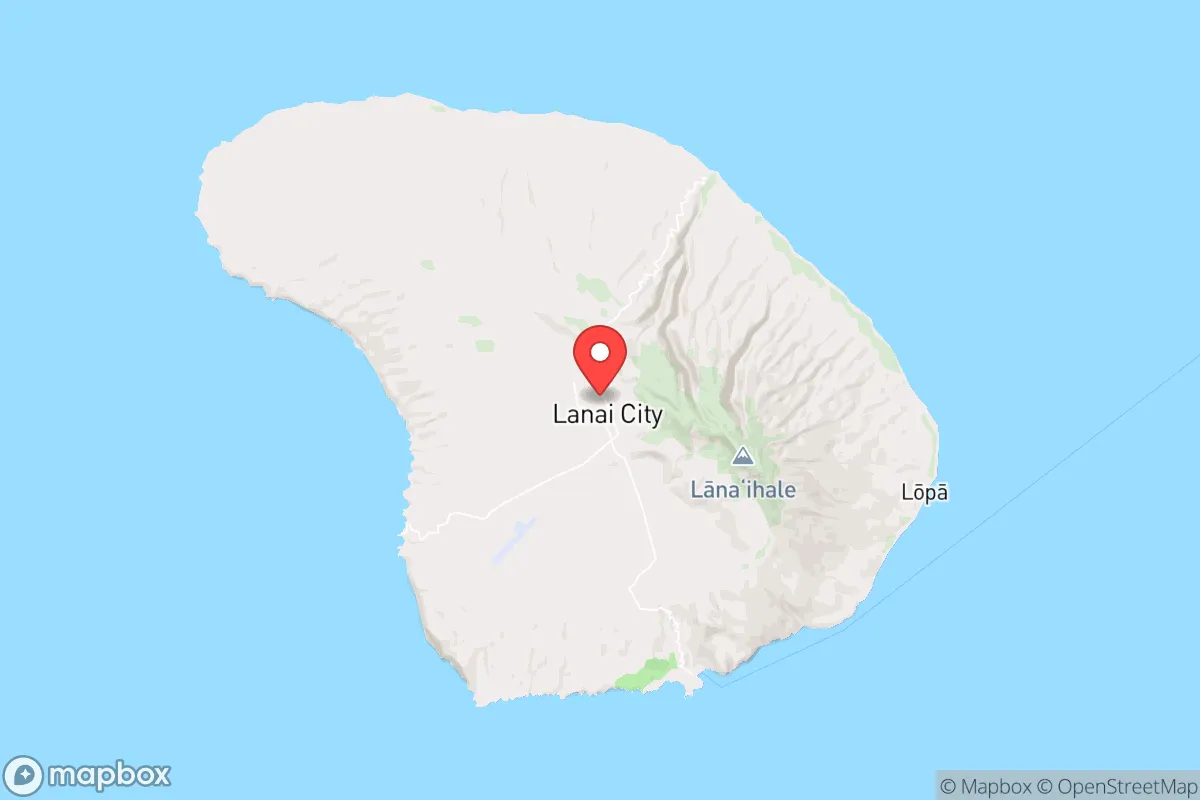
Lanai City, the sole population hub on the privately-owned island of Lanai, presents a deeply contradictory picture for the sovereignty-minded individual. While its extreme isolation and tiny population (roughly 3,200 residents) offer a rare degree of physical separation from the mainland's political turmoil, the legal and regulatory environment is entirely dictated by the State of Hawaii—a state with some of the most restrictive laws in the nation regarding self-defense, property rights, and personal autonomy. For a prepper or conservative strategist, Lanai City is less a bastion of freedom and more a remote cage with a beautiful view, where the trade-offs between isolation and state overreach must be weighed with extreme care.
Tax burden and regulatory posture for individuals and families
Hawaii's tax structure is a significant drag on personal sovereignty. The state imposes a general excise tax (GET) of 4% on nearly all goods and services, including groceries and medical services, which effectively functions as a hidden sales tax that hits every transaction. There is no local income tax on Lanai, but the state income tax is progressive and steep, with rates ranging from 1.4% to 11% for top earners—among the highest in the nation. Property taxes in Maui County (which includes Lanai) are relatively low for owner-occupied homes, around 0.35% of assessed value, but this is a small consolation. The regulatory posture is hostile to individual enterprise: starting a home-based business or engaging in any trade requires navigating Hawaii's complex licensing and land-use bureaucracy, which is heavily influenced by the state's powerful tourism and environmental lobbies. For a survivalist looking to operate a small farm or repair shop, the permitting process alone can be a years-long ordeal. The state's heavy-handed approach to land use, combined with the fact that nearly all of Lanai is owned by a single private entity (Pulama Lanai, controlled by Larry Ellison), means that personal economic freedom is severely constrained from the outset.
Self-defense and gun law specifics in Hawaii
This is the most critical sovereignty issue, and the news is grim. Hawaii has some of the strictest gun control laws in the United States, and Lanai City offers no refuge from them. Carrying a concealed firearm in public is effectively impossible for ordinary citizens; the state is a "may-issue" jurisdiction where local police chiefs have near-total discretion to deny permits, and they routinely do so. Open carry is illegal. Even owning a firearm for home defense requires a permit to acquire, a registration process, and a waiting period. The state maintains a firearm registry, and there are restrictions on magazine capacity (10 rounds) and certain types of firearms. For a prepper, this means that the ability to defend one's home and family is heavily dependent on compliance with a system designed to limit access. Stand-your-ground laws do not exist in Hawaii; the state imposes a "duty to retreat" before using deadly force, even in one's own home in some interpretations. The practical reality is that Lanai City residents must rely on the Maui County Police Department, which has a substation on the island but response times can be significant given the island's size and limited resources. For anyone serious about self-defense, this legal environment is a deal-breaker unless they are willing to operate entirely outside the system—a high-risk proposition in a small, tightly-knit community.
Self-reliance and homesteading viability on Lanai
The dream of off-grid self-sufficiency collides hard with Hawaii's regulatory reality. Lanai's zoning is predominantly agricultural and conservation, but typical residential lots in Lanai City are small—often 5,000 to 10,000 square feet—making substantial food production difficult. Larger agricultural parcels exist outside town, but they are subject to state agricultural district rules that restrict building types and require proof of active farming. Off-grid systems like solar panels and rainwater catchment are common and legally permissible, but the state's building codes and county permitting processes add layers of cost and delay. Composting toilets and greywater systems are allowed but require permits and inspections, and the state's health department has strict standards. The island's water supply is managed by a private utility, and drilling a private well is a costly and uncertain process. For a prepper, the biggest hurdle is land access: since Pulama Lanai controls nearly all property, there is no free market in land. Leases are the norm, and lease terms can be restrictive. The climate is forgiving—year-round mild temperatures and decent rainfall—but the regulatory overhead makes true homesteading a bureaucratic battle rather than a simple act of self-reliance.
Personal liberties: parental rights, medical autonomy, speech, and property
Hawaii's state-level policies consistently prioritize government authority over individual choice. Parental rights are significantly eroded: the state has universal vaccination requirements for school attendance with very narrow exemptions, and during the COVID-19 era, Hawaii imposed some of the longest-lasting and most restrictive mandates in the country, including travel quarantines and vaccine passports for indoor activities. Medical autonomy is similarly constrained; the state tightly regulates alternative medicine and has a limited scope for direct primary care arrangements. Free speech is constitutionally protected, but the small, insular community of Lanai City means that social and economic pressure can be a powerful silencer—speaking out against local authorities or the dominant landowner can have real consequences for employment and housing. Property rights are the weakest link: because almost all land is leased, residents have no fee-simple ownership and thus no true control over their property. Lease terms can be changed, and non-renewal is a constant threat. For a conservative individualist, this lack of property sovereignty is the foundational flaw. You cannot build a life of freedom on land you do not own.
In the broader landscape of American sovereignty, Lanai City ranks near the bottom for personal autonomy. Its isolation is a double-edged sword: it offers physical distance from mainland chaos but traps residents within a state regulatory framework that is actively hostile to self-defense, property ownership, and parental rights. For a prepper or survivalist, the trade-off is stark: you gain a remote, low-crime environment with a mild climate, but you surrender nearly every tool of individual sovereignty—guns, land, medical choice, and economic freedom—to a state that views those tools as threats. Compared to rural areas in the mainland West or Southeast, where land can be owned outright and firearms are constitutionally protected, Lanai City is a beautiful prison. It may suit a minimalist seeking quiet isolation, but for anyone serious about building a resilient, self-determined life, the regulatory costs far outweigh the scenic benefits.

* Values derived from national, state, county, city and local statistics and may differ in a specific area. Last updated: 2026-05-15T21:54:32.000Z
Narrative content on this page is AI-generated and may contain mistakes. Verify any details that matter before acting on them.
ReloMaps may earn a commission from affiliate links at no extra cost to you.

