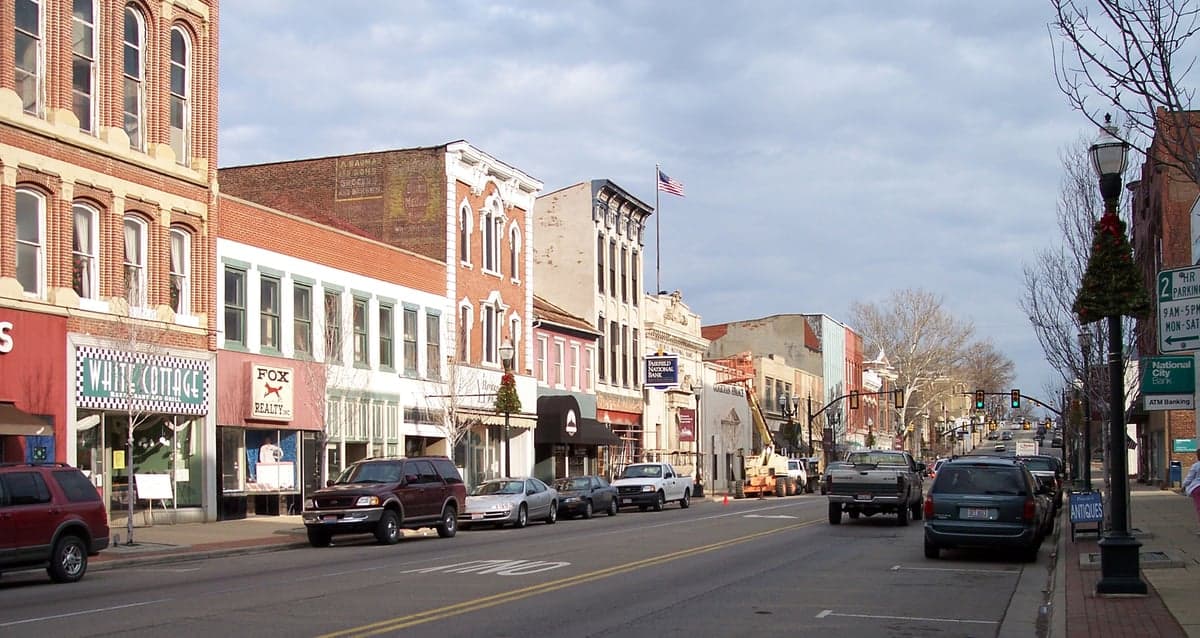
Photo: Wikipedia
Personal Sovereignty in Lancaster, OH
Viable for self-reliance. Generally workable, though some barriers may limit total independence.
What does Personal Sovereignty tell us?
Personal Sovereignty measures your capacity for self-reliance and independence with minimal government friction. Higher scores mean fewer barriers between you and the way you want to live... but it assumes you have the space you need and good neighbors.
What does this tell us?
Personal Sovereignty measures your capacity for self-reliance and independence with minimal government friction. Higher scores mean fewer barriers between you and the way you want to live... but it assumes you have the space you need and good neighbors.
State Policy
Energy independence: Importer (40% of energy produced in-state)
Personal Liberty
Homesteading

Personal Liberty Analysis
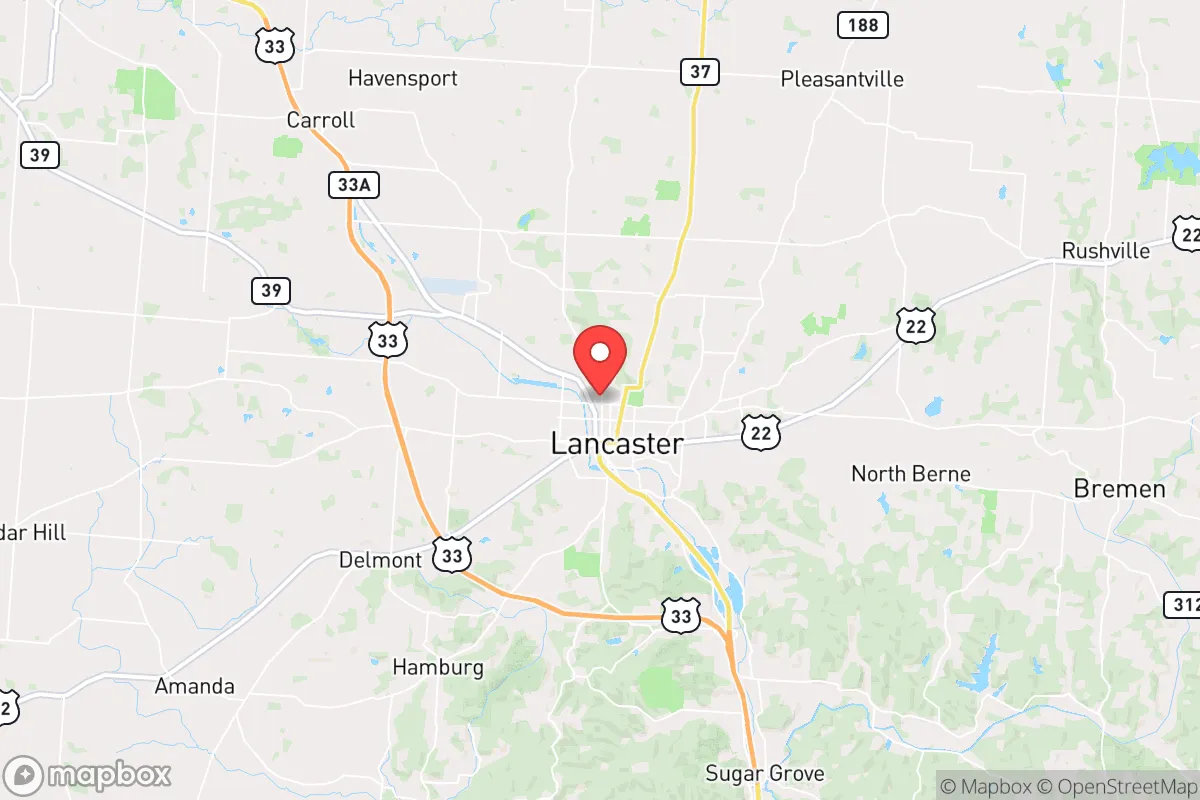
Lancaster, Ohio offers a notably high degree of personal sovereignty for those prioritizing autonomy, self-reliance, and minimal government interference in daily life. Situated in Fairfield County, this city of roughly 40,000 provides a practical balance of rural accessibility and small-city infrastructure, where residents can largely live by their own rules without the heavy hand of metropolitan governance. For the survivalist or prepper mindset, Lancaster represents a strategic foothold in the Midwest, where the legal and cultural environment still respects individual decision-making over collective mandates. The key question is whether this translates into genuine freedom or just a quieter version of the same restrictions found elsewhere.
Tax burden and regulatory posture: How much of your income and property stays yours
Ohio’s overall tax climate is moderate, but Lancaster benefits from a state framework that does not aggressively penalize income or property ownership. The state income tax is a flat 2.75% on most earned income as of 2026, with no local income tax in Lancaster itself—a significant advantage over many Ohio cities that tack on an additional 1-2%. Property taxes in Fairfield County run about 1.5% of assessed value, which is reasonable for the region and well below the national average. For a prepper or homesteader, this means more capital retained for land, supplies, and infrastructure rather than being siphoned off by government. The regulatory posture in Lancaster is notably light: there are no city-level rent control ordinances, no burdensome business licensing requirements for small-scale operations like home-based food production or crafts, and zoning is generally permissive for agricultural and residential uses. The state’s right-to-work status (Ohio is a right-to-work state) further reduces union-imposed constraints on employment and contracting, giving individuals more control over their labor. However, be aware that Ohio does have a state sales tax of 5.75%, plus a county levy of 1.5%, so major purchases like vehicles or equipment carry a 7.25% total bite. Overall, the tax burden here is low enough that a disciplined individual can accumulate resources without constant government extraction.
Self-defense and gun law specifics: What you can carry, where, and without permission
Ohio is a constitutional carry state, meaning Lancaster residents can carry a concealed firearm without a permit—no license, no training requirement, no government permission slip. This is a bedrock freedom for anyone serious about self-defense and personal security. The state preempts local gun ordinances, so Lancaster cannot impose its own bans or restrictions beyond state law. Open carry is legal without a permit, and there are no magazine capacity limits or assault weapon bans at the state level. Stand-your-ground laws are in effect, with no duty to retreat in any place where you are lawfully present. For the prepper, this means you can keep a firearm in your vehicle, on your person, or in your home without bureaucratic hurdles. The only notable restriction is that concealed carry is prohibited in certain locations like schools, government buildings, and airports, but these are standard nationwide. Background checks are required for dealer sales, but private sales between individuals remain unregulated—a critical point for those who value privacy in transactions. Ohio also has a strong castle doctrine, explicitly protecting the use of deadly force against intruders in your home or occupied vehicle. For a conservative concerned with government overreach, Lancaster’s gun laws are a clear win: the state trusts its citizens with the tools of self-defense.
Self-reliance and homesteading viability: Lot sizes, zoning, and off-grid feasibility
Lancaster’s zoning code is surprisingly accommodating for those looking to reduce dependence on public utilities and systems. Within city limits, standard residential lots range from one-quarter to one-half acre, but many neighborhoods allow for larger parcels, especially on the outskirts. The city does not prohibit rainwater collection, composting toilets, or small-scale solar panel installations, though building permits are required for structural changes. For true off-grid living, the surrounding Fairfield County townships are far more permissive: unincorporated areas have minimal zoning, allowing for private wells, septic systems, and even alternative energy setups without excessive red tape. Chicken keeping is allowed within city limits with a permit, and beekeeping is permitted with registration—both small steps toward food sovereignty. The real draw for homesteaders is the availability of affordable land: you can find 5-10 acre parcels within 15 minutes of downtown for under $10,000 per acre, a fraction of what similar land costs in Colorado or Texas. Ohio’s agricultural exemption means you can raise livestock, grow crops, and even sell produce at farmers’ markets without triggering commercial zoning requirements. The climate is four-season, with adequate rainfall (about 38 inches annually) and a growing season of 170 days, making it viable for year-round food production with a greenhouse. For the prepper, Lancaster offers a realistic path to partial or full self-sufficiency without fighting the local government every step of the way.
Personal liberties: Parental rights, medical autonomy, speech, and property
Ohio has a strong track record on parental rights, with state law explicitly affirming that parents have the primary authority over their children’s education, healthcare, and upbringing. Lancaster’s school district, Lancaster City Schools, is subject to state curriculum standards, but homeschooling is straightforward: parents need only submit an annual notification and an assessment, with no intrusive oversight or mandatory testing requirements. Medical autonomy is more mixed: Ohio does not have a state-level vaccine mandate for adults, and there is no forced medical treatment for competent individuals, but the state did impose some COVID-era restrictions that have since been repealed. The right to refuse medical treatment, including life-sustaining care, is protected by state law. Free speech is robustly protected under the Ohio Constitution, which has its own free speech clause that courts have interpreted broadly. Lancaster has no local hate speech ordinances or content-based restrictions on public expression. Property rights are strong: Ohio is a “notice” state for recording deeds, and eminent domain is limited to public use with just compensation, though the state has not been aggressive in using it for private development. For the conservative concerned with government overreach, Lancaster’s environment is one where you can raise your family according to your values, speak your mind without fear of official reprisal, and control your property without excessive regulation.
In the broader landscape of American personal sovereignty, Lancaster, Ohio stands out as a solid, if not exceptional, choice. It lacks the extreme libertarian lean of places like rural Idaho or New Hampshire, but it also avoids the authoritarian drift seen in blue states like California or New York. The combination of constitutional carry, low taxes, permissive zoning for self-reliance, and strong parental rights creates a foundation where a determined individual can build a life of genuine autonomy. For the prepper or survivalist weighing relocation, Lancaster offers a realistic middle ground: enough freedom to live on your own terms, enough infrastructure to avoid isolation, and a legal climate that still respects the individual over the state. It is not a utopia, but in a country where personal sovereignty is increasingly under threat, it is a place where you can still breathe.

* Values derived from national, state, county, city and local statistics and may differ in a specific area. Last updated: 2026-04-21T19:45:18.000Z
Narrative content on this page is AI-generated and may contain mistakes. Verify any details that matter before acting on them.
ReloMaps may earn a commission from affiliate links at no extra cost to you.

