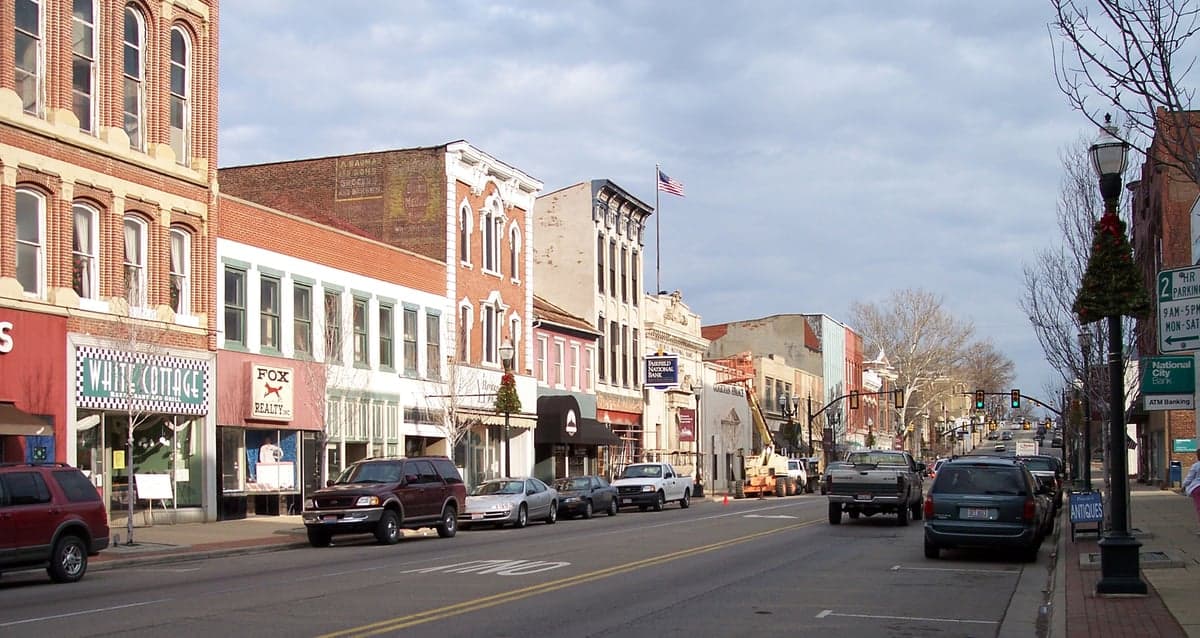
Photo: Wikipedia
Strategic Assessment of Lancaster, OH
Meaningful friction. Expect exposure to either population pressure, blast zones, or natural disaster risk. Consider buying a retreat property.
What does the Strategic Assessment tell us?
Our Strategic Assessment grades tactical survivability of an area. Major population centers, military targets, fallout zones, natural disasters, and border exposure all drive risk — lower exposure means a more defensible position in a crisis.
This is heavily inspired by Joel Skousen's Strategic Relocation book. Highly recommended you checkout the book ($)What does this tell us?
Our Strategic Assessment grades tactical survivability of an area. Major population centers, military targets, fallout zones, natural disasters, and border exposure all drive risk — lower exposure means a more defensible position in a crisis.
This is heavily inspired by Joel Skousen's Strategic Relocation book. Highly recommended you checkout the book ($)Strategic Pillars

Key Distances
Regional Safe Places
Below is our recommended "safe zones" in Ohio and the surrounding area based on our strategic heuristics. For most people, it's unrealistic to live in a “safe zone” full-time due to work, family or other personal reasons. They tend to be more rural. However, many of these areas are perfect for second homes and retreat properties that double as a vacation home or even a short-term rental.

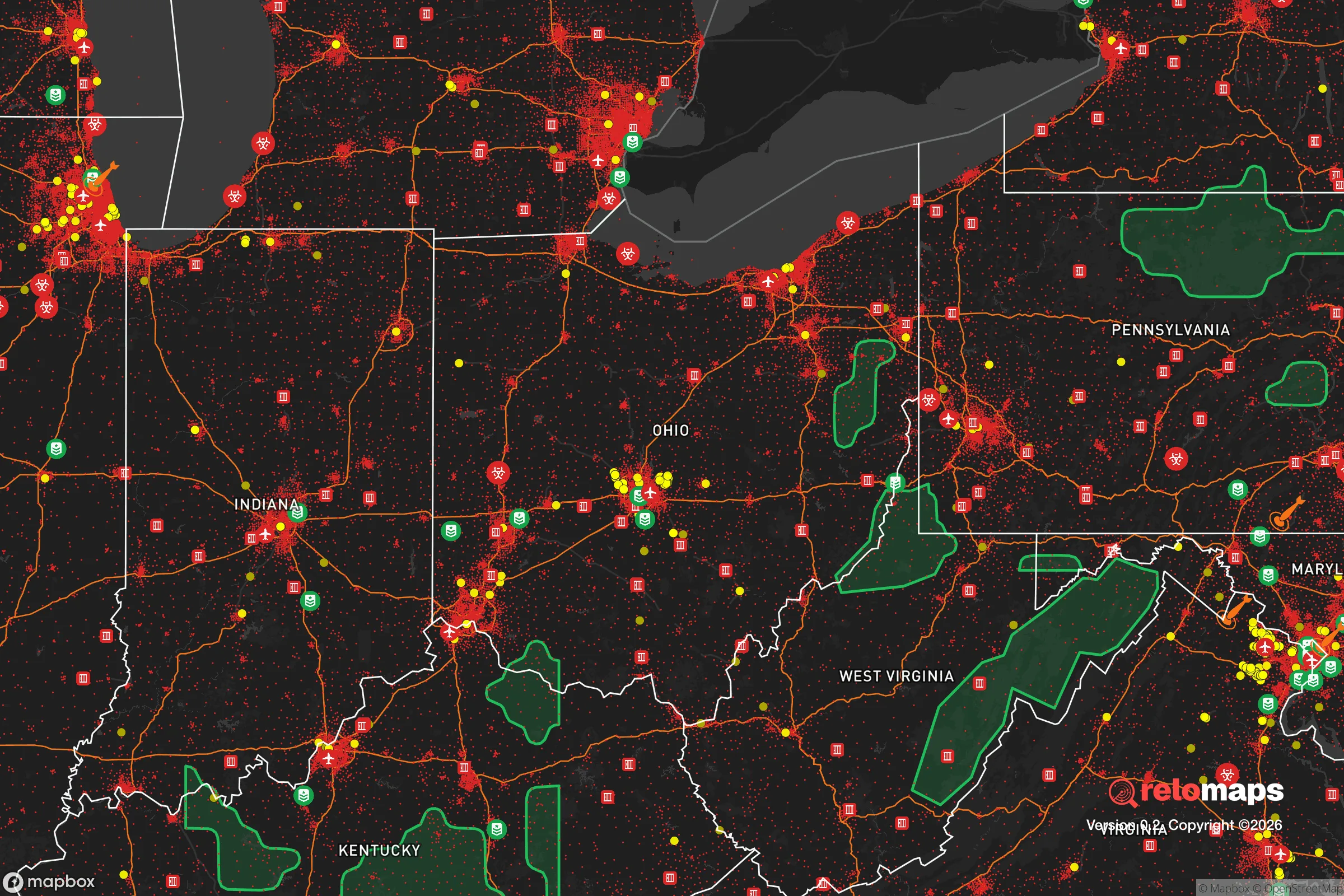


Important Note: For informational purposes only. This does not mean nothing bad ever happens in the green zones. Please use common sense. This is based on public data and modeled with AI. We tried to take a conservative approach but mistakes happen. We update this regularly as new information becomes available.
Solar Generator Recommendations
Backup power matters more here than in safer locations. We've picked three solar generators across budgets and capacity tiers — start with the budget unit if you only need a few essentials, or step up if you want to run a fridge and HVAC for days at a time.

Jackery Portable Power Station Explorer 300
Budget OptionPower on the Go: Weighing only 11 lbs, it's convenient to set up and store with book-sized foldable solar panels

BLUETTI Portable Power Station AC180
Designed for both indoor and outdoor scenarios, AC180 is highly capable as it has a robost capacity and continuous output power.

EF ECOFLOW DELTA Pro Ultra Power Station
Upgraded PickEcoFlow DELTA Pro Ultra is a whole-home energy system designed to grow with your family. Integrated with the Smart Home Panel 2, it scales to meet your evolving energy needs — keeping your home powered, intelligent, and secure through every stage of life.
We earn a commission, at no additional cost to you.
Strategic Assessment Analysis
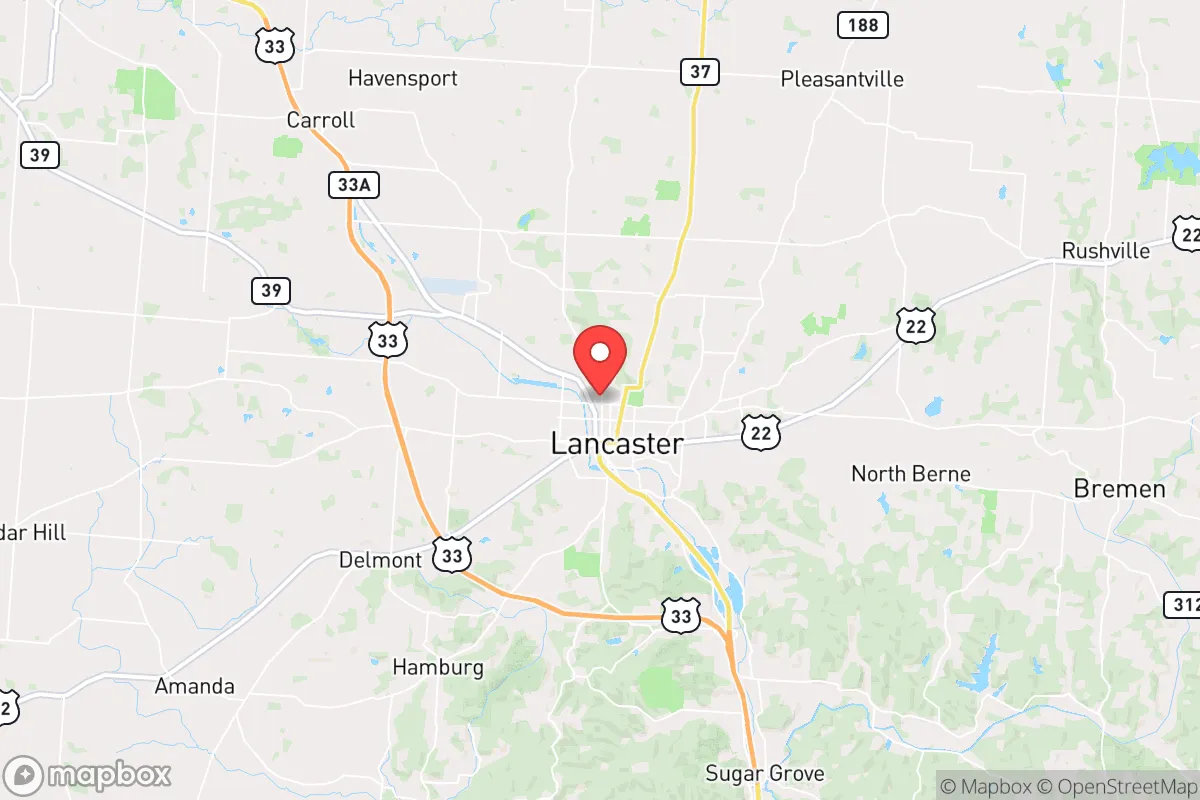
Lancaster, Ohio, offers a surprisingly resilient strategic position for those prioritizing preparedness and self-sufficiency, sitting at a deliberate distance from the major population centers of Columbus (35 miles) and Cincinnati (100 miles) while remaining within a practical supply corridor. The city’s location in Fairfield County, straddling the Hocking River valley and the edge of the Appalachian foothills, provides a blend of agricultural capacity, water resources, and terrain that can support a low-profile, defensible lifestyle. For a relocator with a survivalist mindset, Lancaster’s key advantage is its ability to function as a secondary node—close enough to access urban resources in a stable period, yet far enough to avoid the immediate fallout of a major crisis in Columbus or along the I-71 corridor.
Geographic position and natural advantages for long-term survival
Lancaster sits at the intersection of U.S. Route 33 and State Route 22, offering multiple egress routes that avoid the choke points of major interstates. The Hocking River provides a reliable surface water source, and the surrounding terrain—rolling hills, wooded ridges, and scattered farmland—offers natural cover and defensible positions. The area’s geology includes shallow coal seams and limestone deposits, which can be leveraged for off-grid construction or water filtration. The presence of the Hocking Hills region to the south adds a buffer of rugged, sparsely populated land that could serve as a retreat zone if Lancaster itself becomes compromised. The city’s elevation (roughly 900 feet) reduces flood risk compared to river towns downstream, and the local climate supports a 150–180 day growing season, adequate for subsistence agriculture. For a prepper, the ability to tap into the Hocking River for irrigation or emergency water, combined with the region’s history of small-scale farming, makes Lancaster a viable base for a self-reliant household.
Risks, exposures, and proximity to fallout-relevant landmarks
The primary strategic liability is Lancaster’s proximity to Columbus, a major logistics and government hub that would be a high-priority target in a national emergency. The city lies within the 35-mile blast and fallout zone of any large-scale event at the Ohio Statehouse, the Rickenbacker Air National Guard Base, or the Defense Supply Center Columbus. Additionally, the Hocking River valley is a natural drainage corridor that could concentrate fallout or floodwaters after a disaster. The nearby Buckeye Lake dam (15 miles west) presents a secondary risk—its history of structural issues means a failure could inundate low-lying areas of Lancaster and disrupt evacuation routes. On the positive side, Lancaster has no major military installations, nuclear power plants, or chemical storage facilities within its immediate vicinity. The closest nuclear plant is the Perry Nuclear Power Plant (120 miles northeast), which is outside the primary fallout zone. The city’s industrial base—primarily glass manufacturing (Anchor Hocking) and light manufacturing—poses minimal catastrophic risk. For a relocator, the key takeaway is that Lancaster is not a primary target, but its proximity to Columbus means you must have a plan for rapid evacuation or sheltering within the first 72 hours of a crisis.
Practical resilience for a relocator: food, water, energy, and defensibility
Lancaster’s practical resilience is moderate but improvable with deliberate effort. The city’s water supply comes from the Hocking River and a network of wells, but the municipal system is vulnerable to power loss and contamination. A prepper should invest in a deep well (200+ feet) or a rainwater catchment system with UV filtration, as the local water table is accessible but can be affected by agricultural runoff. Food security is a mixed picture: Fairfield County has active farmland, but much of it is dedicated to corn and soybeans for commodity markets rather than direct human consumption. You will need to establish relationships with local farmers at the Lancaster Farmers Market or through the Fairfield County Farm Bureau to secure meat, eggs, and produce. The growing season is reliable but short, so a greenhouse or cold frame is essential for year-round production. Energy-wise, Lancaster is served by AEP Ohio, and grid reliability is average—outages occur during winter storms and summer thunderstorms. Solar potential is decent (4.5 peak sun hours per day), and the hilly terrain allows for micro-hydro if you have a stream with adequate flow. Defensibility is the area’s strongest suit: the city’s layout includes older neighborhoods with brick homes and basements, and the surrounding hills provide natural observation points. The Hocking River acts as a natural barrier to the south, and the limited number of bridges crossing it (four within city limits) creates choke points that can be monitored. For a single individual or family, a property on the eastern or southern edge of town, near the Hocking Hills, offers the best balance of access to resources and retreat options.
Overall, Lancaster presents a viable but not ideal strategic relocation option for a conservative-leaning prepper. Its strengths lie in its moderate distance from Columbus, its water and agricultural resources, and its defensible terrain. Its weaknesses are the proximity to a major target city, the vulnerability of the Buckeye Lake dam, and the need for significant off-grid infrastructure investment. For someone willing to put in the work—digging a well, building a greenhouse, and establishing local supply chains—Lancaster can serve as a functional base for weathering a period of national instability. However, it is not a remote redoubt; it is a secondary node that requires constant situational awareness and a pre-planned bug-out route into the Hocking Hills or further south into Appalachia. If you are looking for a place that is close enough to civilization to function in normal times but far enough to survive a collapse, Lancaster is worth a serious look—just don’t expect it to be a fortress without effort.

* Values derived from national, state, county, city and local statistics and may differ in a specific area. Last updated: 2026-04-21T19:45:18.000Z
Narrative content on this page is AI-generated and may contain mistakes. Verify any details that matter before acting on them.
ReloMaps may earn a commission from affiliate links at no extra cost to you.

