Photo: Wikipedia
Political ClimatePolitical Climate in Lancaster, OH
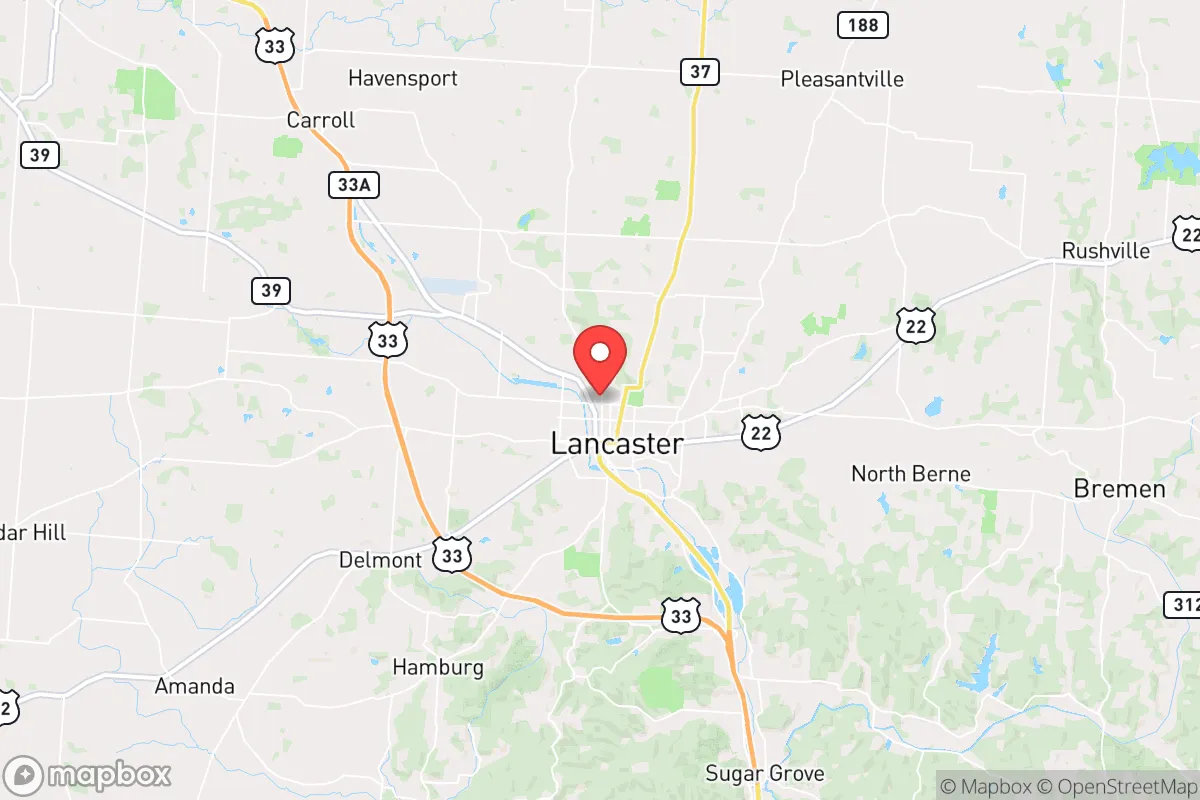
District shown is the primary district for this city’s centroid. Cities may span multiple districts.
Local Political AnalysisPolitical Analysis of Lancaster, OH
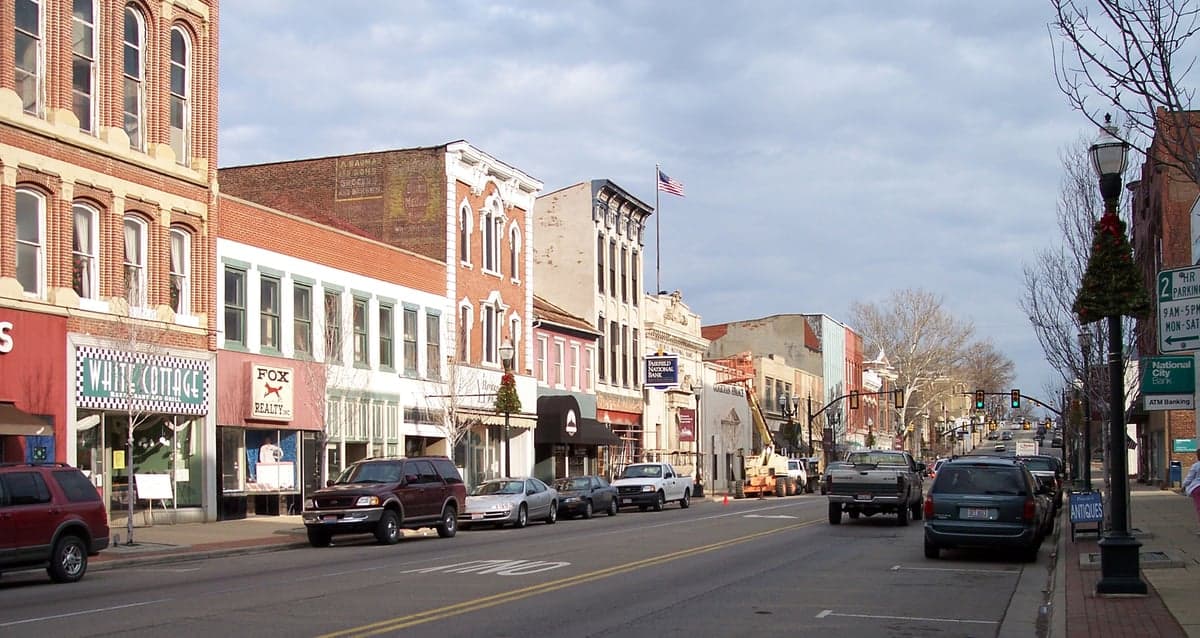
Lancaster, Ohio, sits solidly in the red, with a Cook Partisan Voting Index of R+16, meaning the area votes about 16 points more Republican than the national average. That’s not just a number on a map—it reflects a community that has long valued personal responsibility, limited government, and the Second Amendment. If you’ve lived here a while, you’ve seen the political lean hold steady, even as places like Columbus, just 30 miles northwest, have drifted hard left. The trajectory here is one of cautious resistance: folks are watching the progressive push from the state capital and the feds, and they’re not shy about pushing back at the ballot box.
How it compares
Drive 20 minutes north to Pickerington or Reynoldsburg, and you’ll start to feel the suburban sprawl of Columbus—more transplants, more mixed politics, and a noticeable uptick in Democratic votes. Lancaster, by contrast, is still the kind of place where you know your neighbors and the local county commissioners aren’t afraid to say “no” to unfunded mandates from the state. Surrounding Fairfield County as a whole leans Republican, but Lancaster itself is the anchor—a bit more conservative than the rural townships to the east, like Rushville or Bremen, which are even more libertarian-leaning. The contrast is sharpest with Columbus proper, where city council has pushed zoning changes and tax hikes that would make a Lancaster resident’s blood boil. Here, the political culture is still rooted in the idea that your home, your business, and your family are yours to run without a bureaucrat’s permission.
What this means for residents
For the person living here, the R+16 tilt translates into real, everyday freedoms. You’re not getting a knock on the door for a backyard shed permit that takes six months to approve. Property taxes are manageable, and the local school board isn’t pushing critical theory or gender ideology into the curriculum—at least not yet. The county sheriff’s office is pro-Second Amendment, and concealed carry permits are handled with common sense, not red tape. That said, the long-term concern is the creep from the state level: Columbus politicians have floated statewide mask mandates, energy regulations, and housing density rules that could trickle down here. If you value your right to live without government overreach, Lancaster is still a safe harbor, but you’ve got to stay engaged. The local GOP is active, and the tea party influence from a decade ago still lingers in the county party meetings—keeping an eye on any move toward progressive ideology, whether it’s a bike lane mandate or a diversity initiative at city hall.
Culturally, Lancaster holds onto distinctions that feel increasingly rare. The annual Lancaster Festival is a big deal, but it’s still a family-friendly, non-political affair—no drag shows or activist booths. The city’s historic square is a gathering spot, but you won’t see BLM murals or pride flags on the courthouse lawn. That’s by design: the community has a quiet but firm consensus that public spaces shouldn’t be co-opted for political messaging. Policy-wise, the city council has resisted “sanctuary city” nonsense and kept zoning light for small businesses. The biggest worry I hear from longtime neighbors is that as Columbus expands, so do its ideas—and that’s a fight worth having. For now, Lancaster remains a place where you can still raise a family, run a business, and keep the government out of your living room. But keep your head on a swivel: the next election cycle could bring more pressure from the outside, and this town’s character depends on staying the course.

State Political ClimatePolitical Climate in Ohio
State Political AnalysisPolitical Environment in the State
Ohio has long been the quintessential swing state, but over the past decade it has shifted decisively to the right, with Donald Trump carrying it by 8 points in both 2016 and 2020 and by over 11 points in 2024. The state’s political center of gravity now sits firmly in the conservative camp, driven by a coalition of working-class voters in small cities, exurbs, and rural areas who have abandoned the Democratic Party in droves. This 10-20 year arc has seen the collapse of organized labor’s political influence, the rise of a populist GOP machine, and a steady migration of conservatives from blue states into places like the Cincinnati suburbs and the Lake Erie shoreline.
Urban vs. rural divide
The political map of Ohio is a textbook case of the urban-rural chasm. The three C’s — Columbus, Cleveland, and Cincinnati — are deep blue islands in a sea of red. Franklin County (Columbus) went +30 for Biden in 2020, while Cuyahoga County (Cleveland) was +45. But these metros are shrinking in relative political weight as their suburbs drift right. The real action is in the exurbs and small cities: Delaware County, just north of Columbus, voted +25 for Trump in 2024, up from +18 in 2016. Butler County, north of Cincinnati, is now a GOP stronghold at +35. Meanwhile, the Appalachian southeast — places like Meigs County and Monroe County — vote +50 or more Republican, a flip from the 1990s when they were reliably Democratic. The only blue growth corridor is the Akron-Canton area, where Summit County still leans Democratic but is trending purple. The rural northwest, from Lima to Toledo, has become a GOP bastion as union Democrats aged out and were replaced by younger, more conservative voters.
Policy environment
Ohio’s policy environment is a mixed bag for conservatives. On the plus side, the state has a flat income tax rate of 3.5% (down from 4.8% in 2020), no estate tax, and a Republican supermajority that has passed right-to-work-lite legislation and tort reform. Property taxes are moderate, averaging 1.5% of home value, but they vary wildly — Cuyahoga County levies over 2%, while rural counties like Holmes are under 1%. Education policy is a flashpoint: the state has a robust school voucher program (EdChoice) that lets parents use public funds for private or religious schools, but the system is under constant legal attack from teachers’ unions. Healthcare is a sore spot — Ohio expanded Medicaid under Obamacare, and the state has some of the highest hospital consolidation rates in the nation, driving up costs. Election laws are solid: voter ID is required, early voting is generous (28 days), and the state purges inactive voters regularly. The GOP legislature has also passed a 6-week abortion ban (SB 23), but it was suspended by a court challenge and then effectively overturned by a 2023 ballot initiative enshrining abortion rights in the state constitution — a major loss for conservatives.
Trajectory & freedom
Ohio’s trajectory on personal freedom is a tug-of-war. On the positive side, the state has become a national leader in gun rights: permitless carry (constitutional carry) was signed into law in 2022, and the state preempts local gun ordinances, meaning cities like Cleveland and Columbus can’t pass their own bans. Parental rights got a boost with the 2023 Parents’ Bill of Rights (HB 8), which requires schools to notify parents about curriculum changes and medical services. But there are real concerns: the 2023 abortion amendment (Issue 1) was a massive blow, enshrining a “right to reproductive freedom” that could be used to challenge parental consent laws. Medical freedom took a hit during COVID — the state had mask mandates and business closures, though Governor DeWine eventually backed off. Property rights are generally strong, with no statewide rent control and limited eminent domain abuse. Taxation is trending in the right direction — the income tax is being phased down, and the sales tax is capped at 7.25%. But the state’s pension system for public employees is underfunded, which could force tax hikes down the road.
Civil unrest & political movements
Ohio has seen its share of political flashpoints. The 2020 George Floyd protests in Columbus and Cincinnati turned violent, with looting and arson in the Short North and Over-the-Rhine neighborhoods. The state’s response was mixed — some cities defunded police, but the GOP legislature passed a “back the blue” law in 2021 that increased penalties for assaulting officers. Immigration politics are relatively quiet, as Ohio has a small foreign-born population (4.5%), but there have been skirmishes over sanctuary city policies in Cleveland and Columbus, both of which have declared themselves “welcoming cities” but lack formal sanctuary ordinances. Election integrity was a major issue after 2020, with widespread concerns about ballot drop boxes and mail-in voting. The GOP passed a 2023 law (SB 117) that tightened drop box security, required ID for absentee ballots, and banned private funding of elections. The most visible movement is the pro-life side, which has been organizing to push for a new 15-week ban after the 2023 amendment. On the left, the “People’s Union” and other activist groups have been agitating for ranked-choice voting and automatic voter registration, but they’ve gained little traction in the legislature.
Projection
Over the next 5-10 years, Ohio is likely to become more Republican, but not necessarily more libertarian. The demographic trends are favorable: the state is gaining conservative retirees from Michigan and Illinois, while losing young progressives to Texas and Florida. The rural and exurban counties will continue to grow their GOP margins, while the urban cores will shrink. The wildcard is the suburbs — places like Dublin (Columbus) and West Chester (Cincinnati) are becoming more diverse and could flip purple if the GOP doesn’t moderate on social issues. The biggest threat to freedom is the state’s fiscal health: the pension crisis and infrastructure needs could force a tax increase, even with a GOP supermajority. On the cultural front, expect more battles over school curriculum and library books, as the legislature has already passed a “divisive concepts” ban (HB 327) that restricts teaching about race and gender. The abortion issue will remain a live grenade — expect a push for a 12-week ban with exceptions, but it will face legal challenges under the new constitutional amendment. Overall, Ohio will remain a red state, but one where the GOP must balance populist economics with social conservatism to hold its coalition together.
For a conservative moving to Ohio, the bottom line is this: you’ll find a state that broadly shares your values on taxes, guns, and parental rights, but you’ll need to pick your county carefully. Stick to the exurbs of Columbus (Delaware, Union counties) or the Cincinnati metro (Butler, Warren counties) for the best policy environment and school options. Avoid the urban cores and the Lake Erie shoreline from Toledo to Cleveland, where local governments are more progressive and taxes are higher. The state is trending in the right direction on most fronts, but the 2023 abortion amendment was a stark reminder that no state is immune to ballot-box activism from the left. If you’re looking for a place where your vote counts and your voice is heard, Ohio is still a solid bet — just keep an eye on the legislature and show up at the ballot box every cycle.
* Values derived from national, state, county, city and local statistics and may differ in a specific area. Last updated: 2026-04-21T19:45:18.000Z
Narrative content on this page is AI-generated and may contain mistakes. Verify any details that matter before acting on them.
ReloMaps may earn a commission from affiliate links at no extra cost to you.

