Strategic Assessment of Lantana, TX
Meaningful friction. Expect exposure to either population pressure, blast zones, or natural disaster risk. Consider buying a retreat property.
What does the Strategic Assessment tell us?
Our Strategic Assessment grades tactical survivability of an area. Major population centers, military targets, fallout zones, natural disasters, and border exposure all drive risk — lower exposure means a more defensible position in a crisis.
This is heavily inspired by Joel Skousen's Strategic Relocation book. Highly recommended you checkout the book ($)What does this tell us?
Our Strategic Assessment grades tactical survivability of an area. Major population centers, military targets, fallout zones, natural disasters, and border exposure all drive risk — lower exposure means a more defensible position in a crisis.
This is heavily inspired by Joel Skousen's Strategic Relocation book. Highly recommended you checkout the book ($)Strategic Pillars

Key Distances
Regional Safe Places
Below is our recommended "safe zones" in Texas and the surrounding area based on our strategic heuristics. For most people, it's unrealistic to live in a “safe zone” full-time due to work, family or other personal reasons. They tend to be more rural. However, many of these areas are perfect for second homes and retreat properties that double as a vacation home or even a short-term rental.

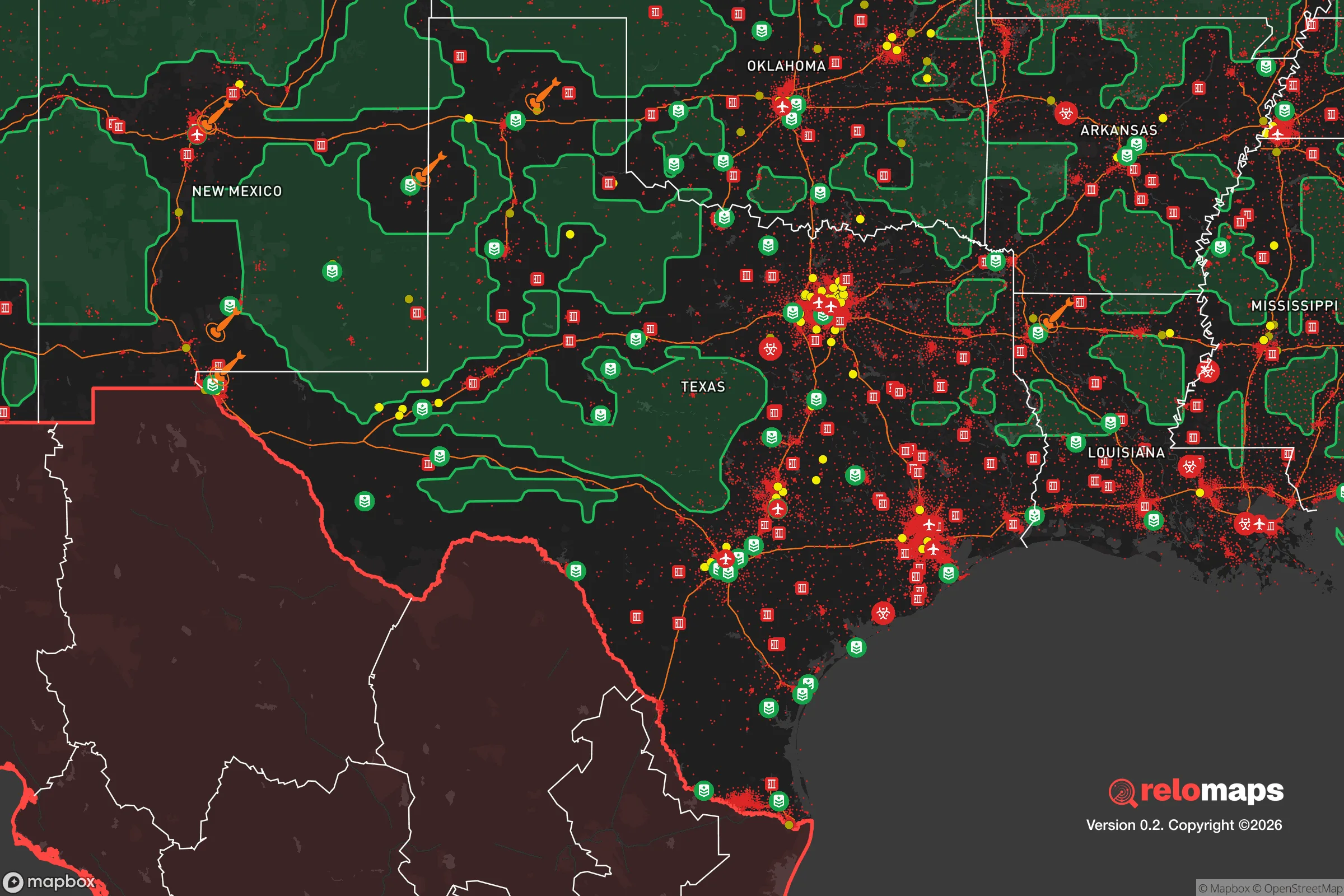


Important Note: For informational purposes only. This does not mean nothing bad ever happens in the green zones. Please use common sense. This is based on public data and modeled with AI. We tried to take a conservative approach but mistakes happen. We update this regularly as new information becomes available.
Solar Generator Recommendations
Backup power matters more here than in safer locations. We've picked three solar generators across budgets and capacity tiers — start with the budget unit if you only need a few essentials, or step up if you want to run a fridge and HVAC for days at a time.

Jackery Portable Power Station Explorer 300
Budget OptionPower on the Go: Weighing only 11 lbs, it's convenient to set up and store with book-sized foldable solar panels

BLUETTI Portable Power Station AC180
Designed for both indoor and outdoor scenarios, AC180 is highly capable as it has a robost capacity and continuous output power.

EF ECOFLOW DELTA Pro Ultra Power Station
Upgraded PickEcoFlow DELTA Pro Ultra is a whole-home energy system designed to grow with your family. Integrated with the Smart Home Panel 2, it scales to meet your evolving energy needs — keeping your home powered, intelligent, and secure through every stage of life.
We earn a commission, at no additional cost to you.
Strategic Assessment Analysis
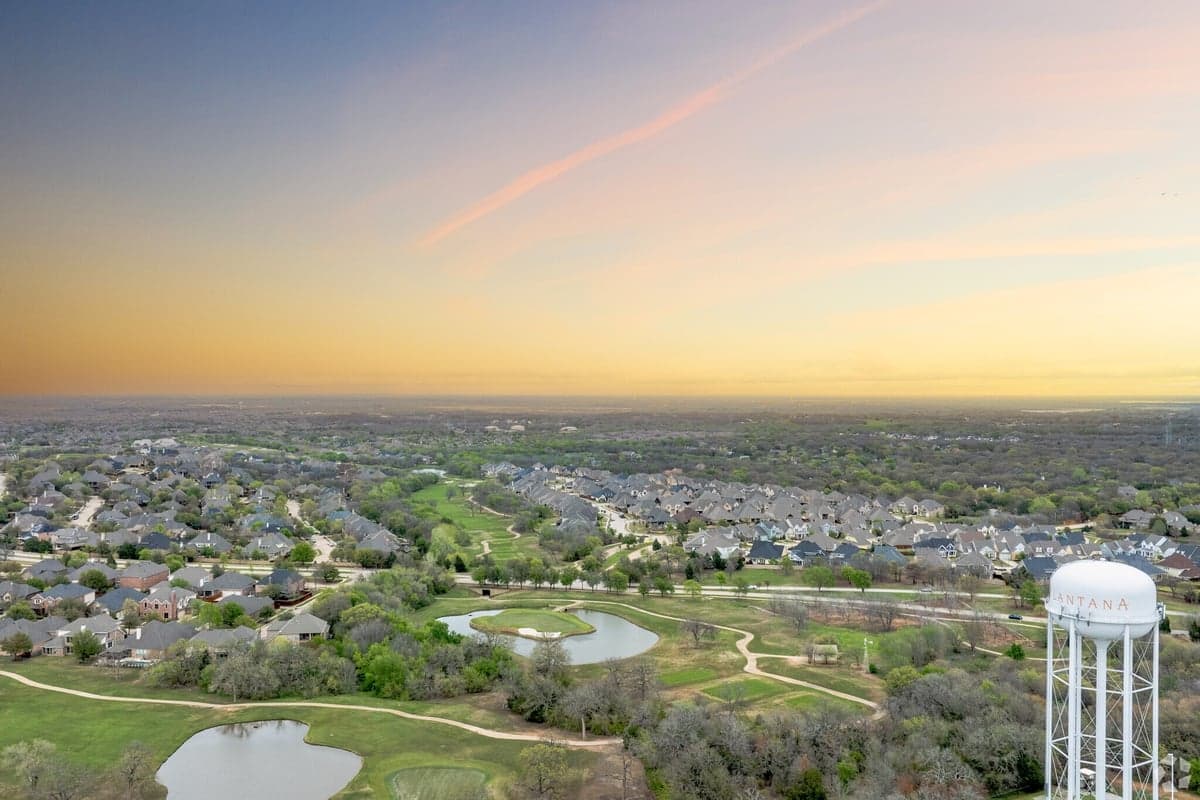
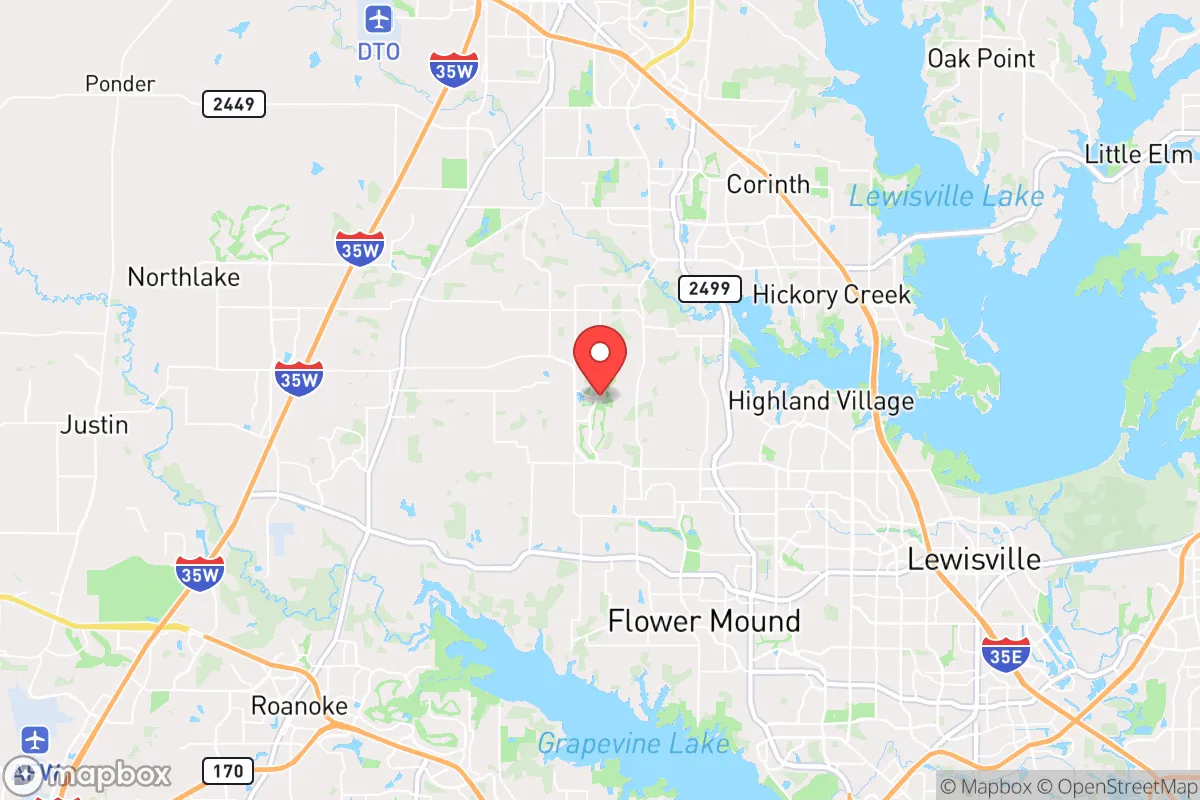
Lantana, Texas, sits in a precarious but potentially advantageous position for those prioritizing resilience and self-sufficiency. Located roughly 30 miles north of Dallas and 10 miles south of Denton, this master-planned community offers a buffer from the immediate chaos of a major metro area while still being close enough to access critical resources—if you move fast. For a prepper or survivalist with a conservative mindset, the key question isn't whether Lantana is a bunker; it's whether its location, infrastructure, and community layout give you a fighting chance when the grid goes down or civil unrest spills north from the city. The answer is a cautious yes, but only if you understand the trade-offs.
Geographic position and natural advantages for long-term survival
Lantana’s primary strategic asset is its position in the Cross Timbers region, a transitional zone between the Blackland Prairie to the east and the more rugged, wooded terrain to the west. This geography provides moderate natural cover and a slightly higher elevation than the flood-prone Trinity River basin to the south. The area sits on the edge of the Barnett Shale formation, meaning groundwater is accessible via private wells in many parts of the community, though most homes are on municipal supply. The proximity to Lewisville Lake—about 8 miles east—offers a reliable secondary water source, but it’s also a potential chokepoint if the lake becomes a target or a gathering point for displaced populations. The prevailing winds from the south-southeast mean fallout from a Dallas-centric event would likely blow north, but Lantana’s distance and the intervening suburban sprawl of Carrollton and Lewisville provide some attenuation. The natural advantages here are modest: decent tree cover for concealment, a few creeks for drainage, and a soil composition that supports small-scale gardening. You won’t find mountains or deep caves, but you will find a layout that isn’t a flat, exposed grid.
Risks, exposures, and proximity to fallout-relevant landmarks
The biggest risk for Lantana residents is its proximity to critical infrastructure that could become a target or a source of secondary disasters. Dallas/Fort Worth International Airport (DFW) is about 20 miles south—a prime target for any air-based attack or a staging ground for federal forces during civil unrest. The nearby Lewisville Lake Dam is a Class I high-hazard dam; a failure or sabotage would send a wall of water down the Elm Fork Trinity River, but Lantana sits on higher ground and would likely escape direct flooding, though road access could be severed. The Denton Municipal Airport (about 10 miles north) is smaller but still a potential landing zone for military or relief convoys. Interstate 35E runs directly through Lantana’s western edge, making it a natural funnel for evacuees from Dallas—and a target for roadblocks or ambushes. The community is also within 50 miles of the Pantex nuclear weapons plant near Amarillo, but prevailing winds make direct fallout unlikely. More immediate is the Dallas CBD, with its concentration of federal buildings, corporate HQs, and media centers—any of which could trigger mass casualty events or riots. Lantana’s suburban buffer helps, but it’s not a remote retreat; it’s a bedroom community that could become a refugee magnet within hours of a major event.
Practical resilience for a relocator: food, water, energy, and defensibility
For a single individual or family looking to hunker down, Lantana offers a mixed bag. Water is the biggest vulnerability: the community relies on the Upper Trinity Regional Water District, which draws from Lewisville Lake and the Trinity River. A prolonged grid outage or contamination event would cut supply within days. Installing a private well is possible but expensive (typically $10,000–$20,000), and permits are required from Denton County. Rainwater catchment is legal in Texas, and Lantana’s average 36 inches of annual rainfall makes it viable for non-potable use. Food options are limited: the nearest major grocery stores are in Highland Village or Denton, both a 10-minute drive. Local farmers’ markets exist but are seasonal. For long-term storage, you’ll need to stockpile or build a root cellar—basements are rare in this region due to clay soils. Energy is a bright spot: Texas’s deregulated grid means you can install solar panels with battery backup (e.g., Tesla Powerwall) without HOA pushback in many parts of Lantana, though the community’s architectural review committee may impose aesthetic restrictions. Natural gas is widely available, so a dual-fuel generator is a practical hedge. Defensibility is the weak link. Lantana is a suburban grid with multiple entry points via FM 407, FM 2181, and I-35E. The HOA maintains common areas and gates at some entrances, but these are cosmetic, not hardened. Your best bet is a home on a cul-de-sac with a fenced backyard and a clear line of sight to the street. Neighbors are generally professional and family-oriented—good for mutual aid, but not for forming a militia. The Denton County Sheriff’s Office has a substation nearby, but response times during a city-wide event would stretch to hours.
The overall strategic picture for Lantana is one of calculated risk. It’s not a survivalist’s paradise—you’re still within a 30-mile radius of 7 million people, and the infrastructure that makes daily life convenient becomes a liability when things break down. But for a relocator who wants to stay close to job markets, medical facilities (Texas Health Presbyterian Hospital in Denton is 12 miles north), and supply chains while maintaining a low profile, it’s a defensible middle ground. The key is to treat Lantana as a base camp, not a fortress. Stockpile six months of supplies, invest in off-grid water and power, and build relationships with neighbors who share your mindset. If the worst happens, your plan should be to bug in for the first 72 hours, then assess whether to move north toward the less populated areas of Cooke or Grayson counties. Lantana gives you options—but only if you’ve done the work before the sirens sound.

* Values derived from national, state, county, city and local statistics and may differ in a specific area. Last updated: 2026-04-19T07:12:05.000Z
Narrative content on this page is AI-generated and may contain mistakes. Verify any details that matter before acting on them.
ReloMaps may earn a commission from affiliate links at no extra cost to you.

