Political ClimatePolitical Climate in Lantana, TX
District shown is the primary district for this city’s centroid. Cities may span multiple districts.
Local Political AnalysisPolitical Analysis of Lantana, TX
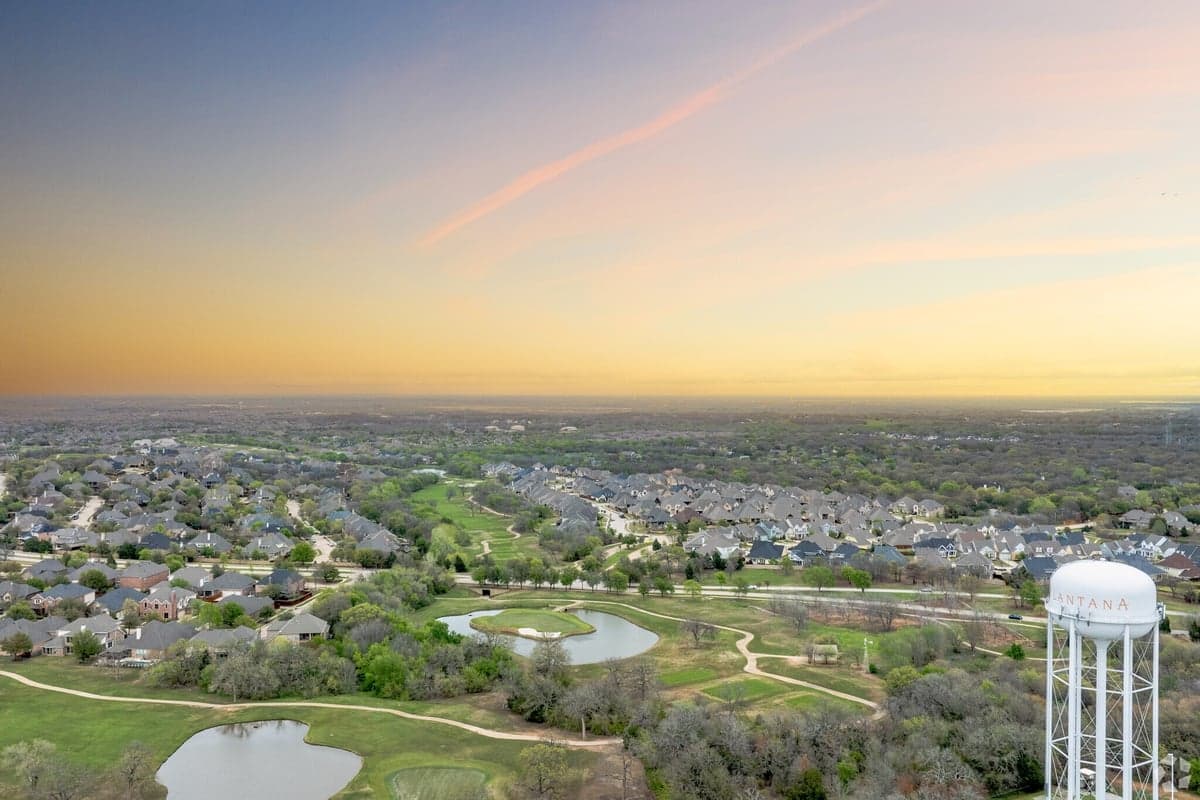
Lantana, Texas, sits solidly in the conservative column, and that’s been the case since the first homes went up. The area’s Cook Partisan Voting Index of R+11 tells you the math: this is a place where Republican candidates routinely win by double digits, and the local culture reflects that. Over the last decade, the political lean has held steady, even as the Dallas-Fort Worth metroplex has seen some suburban shifts toward the center. Lantana’s voters have consistently rejected the progressive drift you see in places like Denton or Dallas proper, and the trajectory looks to stay that way—newcomers tend to be families looking for good schools and lower taxes, not a political experiment.
How it compares
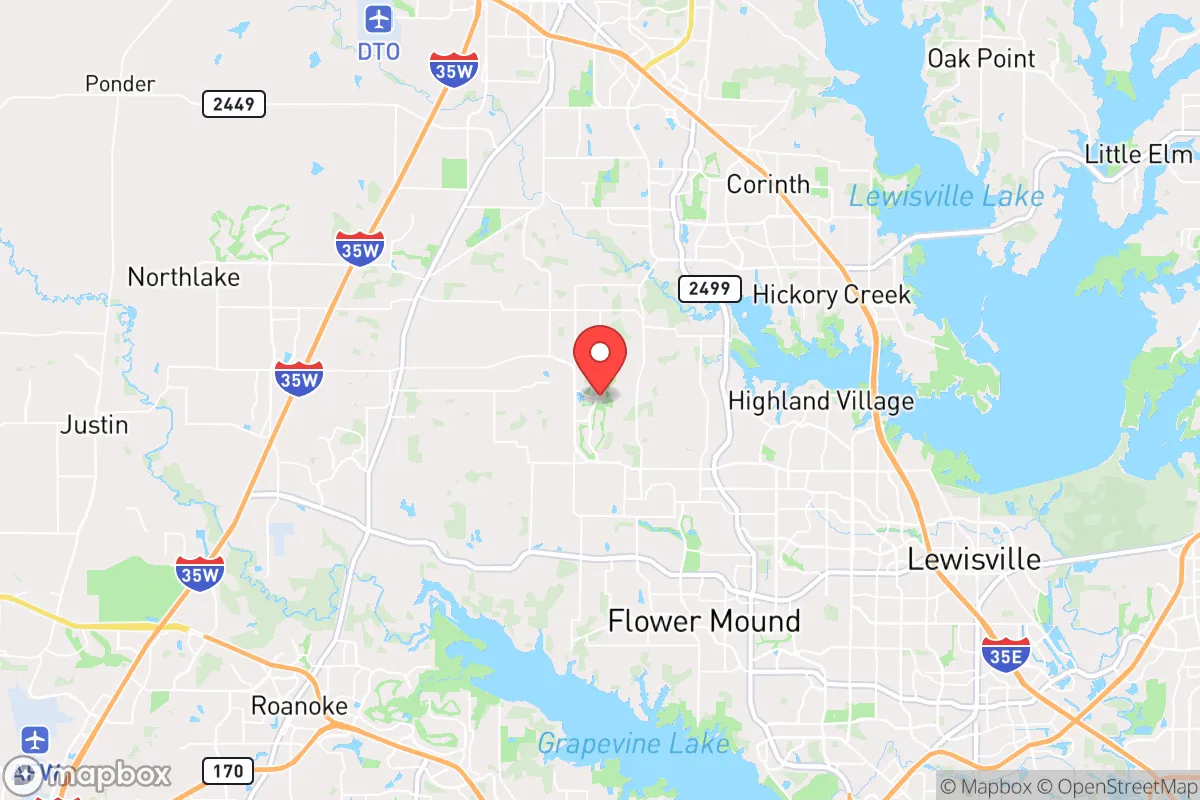
Drive ten miles east to Denton, and you’re in a different world—a college town that’s trended blue in recent cycles, with city council races that feel like a culture war proxy. Lantana, by contrast, is part of unincorporated Denton County, which means less local government overhead and fewer ordinances that rub conservatives the wrong way. Neighboring Highland Village and Flower Mound lean Republican too, but Lantana’s R+11 rating puts it to the right of both. The contrast is sharpest when you look at school board elections: Argyle ISD, which serves Lantana, has consistently kept a conservative majority, while districts closer to Dallas have seen heated battles over curriculum and library books. That’s not an accident—it’s a reflection of the voters who choose to live here.
What this means for residents
For someone who values personal freedom and limited government, Lantana is a breath of fresh air. Property taxes are a perennial concern—Texas doesn’t have a state income tax, so local levies matter—but the community has a track record of pushing back against unnecessary spending. The homeowners’ association has some rules, sure, but they’re about keeping the neighborhood tidy, not dictating how you live your life. The bigger picture is that state-level overreach from Austin—whether it’s mask mandates, business closures, or property rights restrictions—gets a cold reception here. Residents pay attention, and they vote accordingly. The concern among longtime locals is that as the DFW sprawl creeps north, some of the progressive policies from the cities might follow. So far, Lantana’s political DNA has held firm, but it’s something to keep an eye on.
Culturally, Lantana is the kind of place where the Fourth of July parade is a big deal, and the local churches are community anchors. There’s no city council to micromanage things—the county handles most governance—which means fewer opportunities for the kind of regulatory creep that chokes small businesses and homeowners. The biggest policy distinction is the absence of the progressive zoning and housing mandates you see in places like Austin or Dallas. Here, you can still have a big yard and a pickup truck without someone in city hall telling you it’s unsustainable. That’s the Lantana way, and for those of us who’ve been around, it’s worth protecting.

State Political ClimatePolitical Climate in Texas
State Political AnalysisPolitical Environment in the State
Texas has been a reliably Republican state for over three decades, but the nature of that conservatism is shifting under the weight of explosive growth. The dominant coalition remains a blend of suburban fiscal conservatives, rural social conservatives, and a growing number of libertarian-leaning transplants. Over the last 10-20 years, the state has moved from a solid +12-point GOP margin in presidential races to a narrower +5 or +6, driven almost entirely by the leftward drift of the major metros. The 2024 election saw Donald Trump win Texas by about 5.5 points, down from 6 points in 2020 and 9 points in 2016, signaling a slow but real erosion in the GOP’s grip.
Urban vs. rural divide
The political map of Texas is a tale of two worlds. The big cities — Austin, Houston, Dallas, San Antonio, and El Paso — are solidly blue or trending that way. Austin’s Travis County gave Biden 71% in 2020, and Harris County (Houston) went 56% for Biden. These metros are the engine of the state’s progressive shift, driven by young professionals, tech transplants, and a growing minority electorate. Meanwhile, the rural and exurban counties are deeply red. Lubbock’s Lubbock County voted 71% for Trump, and the Panhandle’s rural counties routinely hit 80%+ GOP. The real battleground is the suburbs. Places like Collin County (north of Dallas) and Fort Bend County (southwest of Houston) were once GOP strongholds but are now competitive. Collin County went from 57% Romney in 2012 to 51% Trump in 2020 — a massive shift. The suburbs are where the political future of Texas will be decided, and right now, they’re trending purple.
Policy environment
Texas’s policy environment is a mixed bag for a conservative. On the plus side, there’s no state income tax, which is a huge draw. The regulatory posture is generally business-friendly, with right-to-work laws and minimal zoning in many areas. Property taxes are high — among the highest in the nation — but the state has been using budget surpluses to buy them down, including a $12 billion property tax cut passed in 2023. Education policy is a flashpoint. The state has school choice via charter schools and a limited voucher program for special needs students, but a universal Education Savings Account (ESA) bill failed in 2023 due to rural Republican opposition. Healthcare is a mess: Texas has the highest uninsured rate in the country, and the state has refused Medicaid expansion under Obamacare. Election laws have tightened since 2021’s SB 1, which added ID requirements for mail-in voting and banned drive-through voting. For a conservative, the policy environment is generally favorable on taxes and regulation, but frustrating on school choice and healthcare access.
Trajectory & freedom
On personal liberty, Texas has been a mixed bag over the last five years. On the positive side, the state passed constitutional carry (permitless carry of handguns) in 2021, a major win for gun rights. Parental rights were strengthened with the 2023 passage of the “Parental Bill of Rights” (HB 900), which requires school libraries to get parental consent for certain materials and restricts instruction on sexual orientation in elementary grades. Medical autonomy took a hit with the near-total abortion ban (SB 8, 2021), which conservatives see as a win for life but libertarians view as government overreach. Property rights are generally strong, with no statewide zoning and minimal eminent domain abuse. However, the state has expanded government power in other areas. The 2023 “bathroom bill” (SB 14) restricted transgender students’ access to facilities, which some see as protecting privacy and others as government intrusion. The bottom line: Texas is becoming more free on guns and parental rights, but less free on medical choices and some social issues. The trend is toward a more assertive state government, which cuts both ways.
Civil unrest & political movements
Texas has seen its share of political flashpoints. The 2020 Black Lives Matter protests in Austin and Dallas were large and occasionally violent, leading to property damage and a lasting souring of relations between activists and police. The “Defund the Police” movement gained traction in Austin, where the city council cut the police budget by $150 million in 2020, only to reverse course after a spike in violent crime. On the right, the “Take Back Texas” movement has been active, pushing for school board elections and library policies. Immigration politics are a constant. The state’s Operation Lone Star, launched in 2021, has deployed thousands of National Guard troops to the border and bused migrants to sanctuary cities like New York and Chicago. This has been popular with conservatives but has drawn lawsuits and criticism. Election integrity remains a hot topic. The 2020 election saw no major fraud in Texas, but the 2021 SB 1 law was passed in response to widespread distrust. Secession rhetoric is mostly fringe — the Texas Nationalist Movement has little real traction — but “nullification” of federal gun laws has been discussed in some rural counties. A new resident will notice the heavy police presence in cities and the constant political ads on TV.
Projection
Over the next 5-10 years, Texas is likely to continue its slow leftward drift in the major metros while the rural areas stay deep red. The key variable is in-migration. The state is adding about 1,000 new residents per day, many from California and the Northeast. These transplants tend to be more moderate or even liberal, especially in the suburbs. If current trends hold, Collin County and Fort Bend County could flip blue by 2030, and the statewide margin could shrink to 2-3 points. However, the rural vote is not going anywhere, and the state’s Republican legislature is likely to continue gerrymandering to protect its majorities. The wild card is the Hispanic vote. Texas’s Hispanic population is growing fast, but it’s not monolithic — many are conservative on social issues and could keep the state red if the GOP can hold them. A new resident moving in now should expect a state that remains Republican-controlled at the state level but with increasingly competitive statewide races. The culture war battles over schools, guns, and immigration will only intensify.
For a conservative considering a move to Texas, the bottom line is this: you’ll find a state that broadly aligns with your values on taxes, guns, and parental rights, but you’ll also see the progressive tide rising in the cities and suburbs. The state is still a net positive for freedom compared to most of the country, but it’s not the conservative utopia some imagine. If you’re looking for a place where your vote still counts and your values are reflected in state law, Texas is a solid bet — just don’t expect it to stay that way forever without active engagement. The fight for the soul of Texas is real, and it’s happening right now in the suburbs of Dallas, Houston, and Austin.
* Values derived from national, state, county, city and local statistics and may differ in a specific area. Last updated: 2026-04-19T07:12:05.000Z
Narrative content on this page is AI-generated and may contain mistakes. Verify any details that matter before acting on them.
ReloMaps may earn a commission from affiliate links at no extra cost to you.

