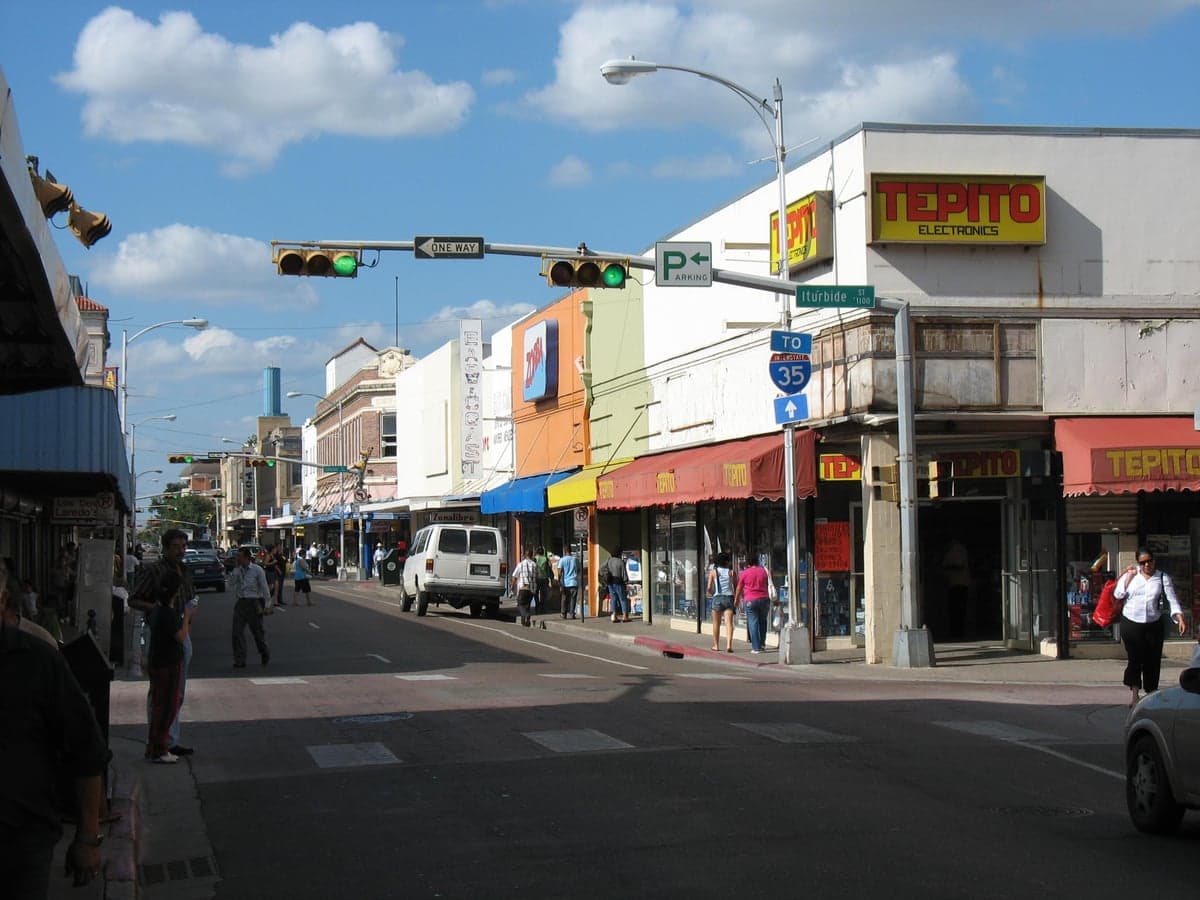
Photo: Wikipedia
Personal Sovereignty in Laredo, TX
Strong independent fundamentals that actively favor personal liberty and low regulation.
What does Personal Sovereignty tell us?
Personal Sovereignty measures your capacity for self-reliance and independence with minimal government friction. Higher scores mean fewer barriers between you and the way you want to live... but it assumes you have the space you need and good neighbors.
What does this tell us?
Personal Sovereignty measures your capacity for self-reliance and independence with minimal government friction. Higher scores mean fewer barriers between you and the way you want to live... but it assumes you have the space you need and good neighbors.
State Policy
Energy independence: Net exporter (220% of energy produced in-state)
Personal Liberty
Homesteading

Personal Liberty Analysis
For the individual or family prioritizing personal sovereignty above all else, Laredo, Texas presents a strategic environment where state-level protections create a strong foundation for autonomy, though local realities require careful navigation. Texas’s constitutional framework—no state income tax, robust preemption laws limiting municipal overreach, and expansive self-defense statutes—provides a legal bulwark against many forms of government intrusion. However, Laredo’s position as a major border city introduces unique federal dynamics and a local political culture that may temper some of the Lone Star State’s libertarian leanings. For those with a survivalist or prepper mindset, the key is understanding where Texas law grants you breathing room and where Laredo’s specific conditions demand extra vigilance.
Tax burden and regulatory posture: How Laredo compares to other Texas cities
Texas’s absence of a state income tax is a cornerstone of personal sovereignty, allowing residents to retain more of their earnings for self-directed purposes like land acquisition, supplies, or savings. Laredo’s property tax burden, however, is notably higher than the Texas median. The combined city and county tax rate in Webb County hovers around 2.3% to 2.5% of assessed value, compared to the state average of roughly 1.6%. This means a $200,000 home could carry an annual tax bill of $4,600 to $5,000—a significant recurring cost that eats into self-reliance budgets. On the regulatory front, Texas law generally preempts local governments from enacting stricter building codes or zoning ordinances than state minimums, but Laredo does enforce standard municipal codes on setbacks, utility connections, and occupancy limits. For the prepper, this means you cannot simply build a remote cabin on a residential lot without permits, but you are not facing the kind of draconian land-use restrictions found in states like California or Oregon. The city’s regulatory posture is best described as moderate—not a freedom haven, but far from an overreaching bureaucracy. Business licensing is straightforward, and there are no local income or gross receipts taxes, making Laredo a viable base for a home-based enterprise or side hustle that funds your preparedness efforts.
Self-defense and gun law specifics: What Texas statutes mean for Laredo residents
Texas’s firearm laws are among the most permissive in the nation, and Laredo residents benefit directly from these state-level protections. The state’s permitless carry law (effective 2021) allows any law-abiding adult 21 or older to carry a handgun openly or concealed without a license. This is a critical sovereignty tool—no government permission slip required to defend your life or property. Additionally, Texas’s Castle Doctrine and Stand Your Ground statutes provide strong legal cover for using deadly force in self-defense, including inside your home, vehicle, or workplace, with no duty to retreat. For Laredo specifically, the proximity to the border means federal law enforcement presence is higher, but Texas law explicitly preempts local municipalities from enacting their own gun control ordinances. Laredo cannot ban firearms in city parks, impose waiting periods, or require registration. However, be aware that federal restrictions still apply—felons, domestic violence misdemeanants, and those under certain protective orders are prohibited from possession. For the prepper, this legal landscape means you can maintain a well-stocked armory for personal defense and community security without fear of local crackdowns. The practical consideration is storage: Laredo’s high humidity and heat require diligent maintenance of firearms and ammunition to prevent corrosion. Also, while carrying in most public spaces is legal, private businesses can post 30.06 or 30.07 signs to prohibit concealed or open carry, so situational awareness remains essential.
Self-reliance and homesteading viability: Lot sizes, zoning, and off-grid feasibility
True self-reliance often requires land, water, and the ability to operate independently of municipal utilities. Within Laredo city limits, standard residential lots are typically 5,000 to 10,000 square feet—adequate for a garden and small livestock (chickens are generally allowed, subject to noise ordinances), but insufficient for significant homesteading. Zoning codes require connection to city water and sewer where available, making true off-grid living inside the city illegal. The real opportunity lies in unincorporated Webb County, where you can purchase parcels of 1 to 10 acres at prices ranging from $5,000 to $15,000 per acre—far cheaper than comparable land near Austin or Dallas. In these areas, county regulations are minimal: no building permits for structures under 200 square feet, no zoning restrictions on livestock, and no requirement for municipal utility hookups. Rainwater collection is legal and encouraged, and solar panels face no local restrictions. The challenge is water availability: Webb County receives only about 20 inches of rain annually, and groundwater can be deep and brackish. Drilling a well typically costs $10,000 to $20,000, and yields are uncertain. For the serious prepper, buying land 20–30 minutes outside Laredo offers the best balance of affordability and regulatory freedom, allowing for a self-sufficient setup with solar, rainwater catchment, and a septic system. Just be prepared for the harsh semi-arid climate and the need for robust water storage.
Personal liberties: Parental rights, medical autonomy, speech, and property protections
Texas has become a national battleground for personal liberties, and Laredo sits within a state that has enacted strong protections in several key areas. Parental rights are explicitly protected under Texas law, with statutes affirming parents’ authority to direct their children’s education, healthcare, and moral upbringing. This means no local school district can implement curriculum or medical policies that override parental consent—a critical safeguard for families concerned about government overreach in education. Medical autonomy is more mixed: Texas has banned nearly all abortions and protects conscientious objection for healthcare providers, but it also maintains a state vaccine registry and mandates certain immunizations for school attendance. For the prepper, this means you can refuse most medical interventions for yourself and your children, but you may face administrative hurdles if you opt out of school-required vaccines. Free speech is robustly protected under both the Texas Constitution and state law, which explicitly prohibits local governments from restricting speech based on content or viewpoint. Property rights are similarly strong: Texas’s private property rights laws limit eminent domain abuse and require just compensation. Laredo’s local government has not shown a pattern of aggressive property seizures, but as with any border city, federal agencies have broad authority near ports of entry. For the sovereignty-minded individual, the key takeaway is that Texas law provides a legal framework that generally sides with the individual against government overreach, though federal jurisdiction remains a wildcard in Laredo’s unique border environment.
In the broader landscape of American personal sovereignty, Laredo offers a compelling but imperfect package. The state-level protections—no income tax, permitless carry, strong parental rights, and property safeguards—create a baseline of freedom that surpasses most of the Northeast, West Coast, and even parts of the Midwest. However, the high property tax burden and the federal presence along the border introduce costs and complexities that a pure sovereignty seeker might avoid by moving further inland to counties like Bandera or Kerr. For the prepper who values proximity to international trade routes, a large Spanish-speaking population for community resilience, and relatively cheap land, Laredo is a viable option. For those whose primary concern is minimizing government contact of any kind, the rural counties north of Laredo offer a cleaner break. Ultimately, Laredo represents a strategic compromise: strong state-level sovereignty with local trade-offs that require deliberate planning and ongoing vigilance.

* Values derived from national, state, county, city and local statistics and may differ in a specific area. Last updated: 2026-05-03T04:47:33.000Z
Narrative content on this page is AI-generated and may contain mistakes. Verify any details that matter before acting on them.
ReloMaps may earn a commission from affiliate links at no extra cost to you.

