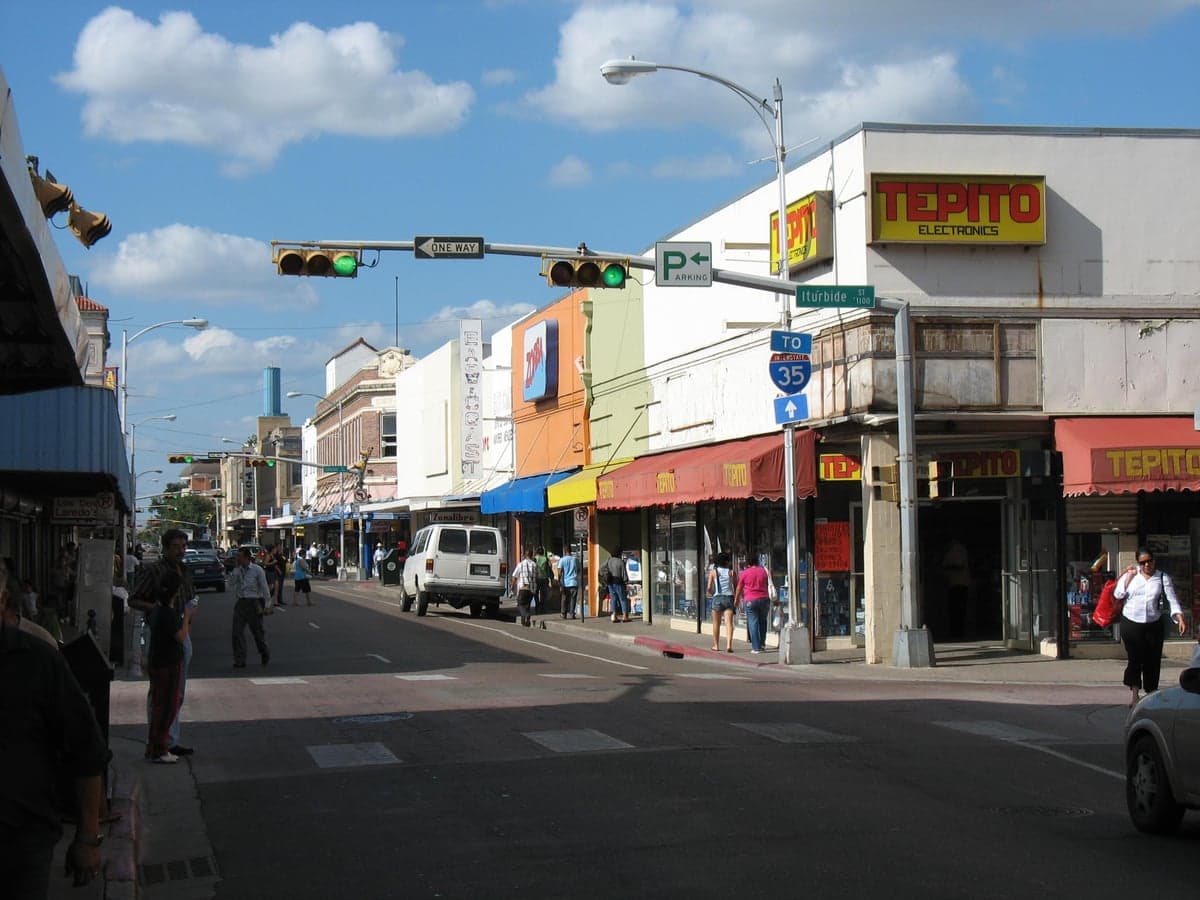
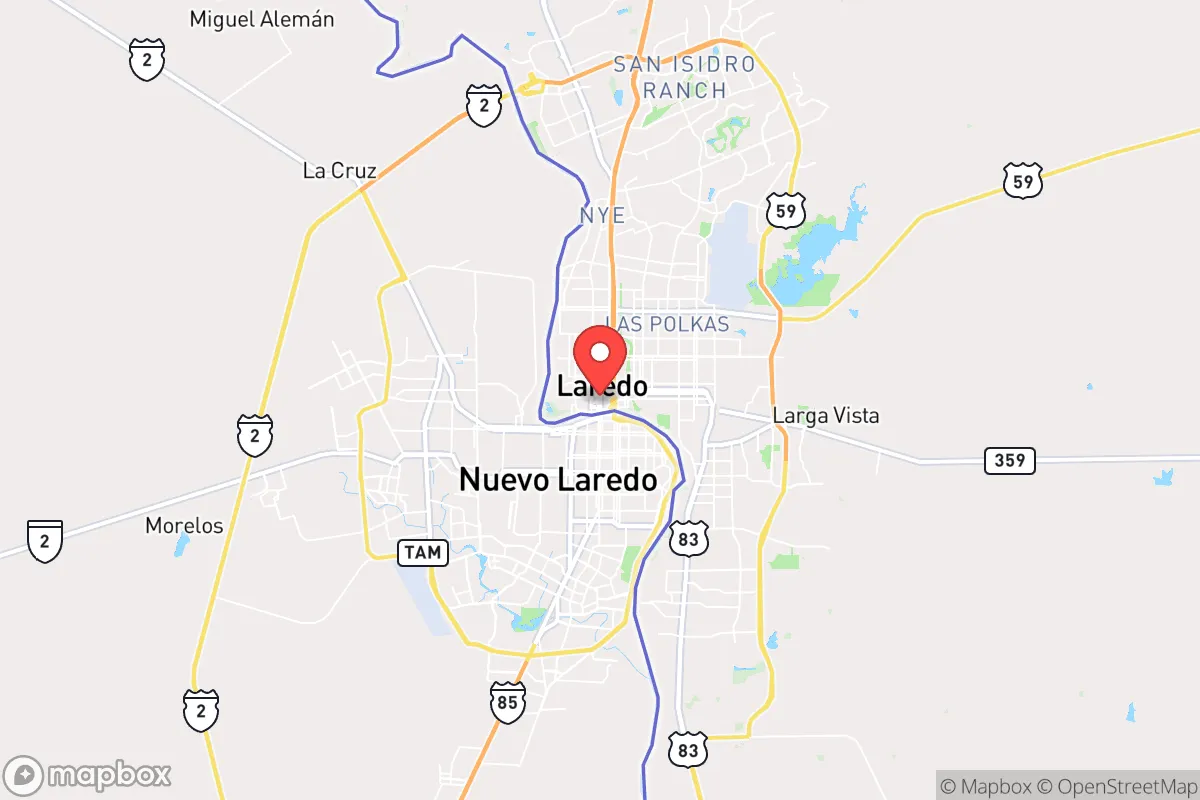

Photo: Wikipedia
Political ClimatePolitical Climate in Laredo, TX
District shown is the primary district for this city’s centroid. Cities may span multiple districts.
Local Political AnalysisPolitical Analysis of Laredo, TX
Look, I’ve lived in Laredo my whole life, and I’ll tell you straight: this city leans conservative, but it’s not the kind of conservative you see in, say, Midland or even San Antonio’s suburbs. The Cook PVI here is R+2, which means it’s a solid red district on paper, but the reality is more complicated. We’ve got a strong tradition of family values, faith, and a live-and-let-live attitude that’s been the backbone of this community for generations. But lately, I’ve seen a slow creep of progressive ideas—especially from folks moving in from places like Austin or Houston—that’s starting to shift the conversation. The 2024 election results still favored the GOP, but the margins are tighter than they were a decade ago, and that worries me.
How it compares
If you drive an hour north to San Antonio, you’ll hit a blue stronghold where city council is pushing things like sanctuary city policies and defunding police rhetoric. That’s not Laredo. We’re closer in spirit to places like Zapata or Rio Grande City—smaller towns where people still wave the flag and don’t want the government telling them how to raise their kids or run their businesses. But here’s the rub: Laredo’s population is younger and more connected to the border economy, which brings in a lot of federal oversight. That’s where the tension lives. You’ve got folks who want less regulation on cross-border trade and more local control over schools, but you also have a growing number of activists pushing for things like “equity” programs in city hiring and environmental mandates that would hit our small trucking companies hard. Compared to Eagle Pass, which is even more conservative, Laredo feels like it’s at a crossroads.
What this means for residents
For the average family here, the political climate directly affects your wallet and your freedoms. Property taxes are already a burden, and when the city council starts flirting with “green” building codes or diversity quotas for contractors, that cost gets passed down to you. I’ve seen it happen with a friend who runs a small construction crew—new compliance paperwork doubled his overhead in two years. On the personal freedom side, there’s been a push to expand the city’s anti-discrimination ordinances to cover things like sexual orientation and gender identity, which sounds fine on paper, but it’s opened the door for some real overreach. A local bakery owner I know got a warning letter for not using a customer’s preferred pronouns on a cake order. That’s the kind of government intrusion that makes you wonder where it stops. The silver lining is that most of our elected officials still remember that Laredo’s strength is its independence—they’re not eager to turn us into another Austin.
Culturally, Laredo is still a place where the Fourth of July parade is the biggest event of the year, and the local churches are packed on Sundays. But you can feel the shift. The city’s push for more “inclusive” public art and library programming—like drag story hours and critical race theory workshops—has sparked quiet pushback from families who just want their kids to learn math and history without the politics. My hope is that we hold the line. If you’re thinking of moving here, know that you’ll find a community that values tradition and personal responsibility, but you’ll also need to keep an eye on the ballot box. The next few elections will decide whether Laredo stays true to its roots or drifts into the kind of progressive experiment that’s already failing in bigger cities.

State Political ClimatePolitical Climate in Texas
State Political AnalysisPolitical Environment in the State
Texas has been a solidly Republican state for the past three decades, but the coalition that keeps it red is shifting under your feet. The GOP still holds every statewide office and both legislative chambers, but the margin of victory in presidential races has narrowed from 16 points in 2012 to about 5.5 points in 2024. The dominant coalition is a mix of rural conservatives, suburban moderates, and a growing number of Hispanic voters who broke for Trump in larger numbers than expected. However, the fast-growing suburbs around Dallas, Houston, Austin, and San Antonio are becoming more competitive, and the state’s 10-20 year trajectory shows a slow but real drift toward purple — driven by massive in-migration from blue states and generational turnover among native Texans.
Urban vs. rural divide
The political map of Texas is a stark checkerboard. The big five metros — Houston, Dallas-Fort Worth, San Antonio, Austin, and El Paso — are the Democratic strongholds. Harris County (Houston) alone delivered nearly 1 million votes for Biden in 2020, and Travis County (Austin) is the most liberal large county in the South. But the moment you leave the urban core, the landscape flips hard. The rural Panhandle, West Texas, and East Texas piney woods are deep red; Lubbock and Midland-Odessa are reliably Republican by 30-40 point margins. The most interesting shift is in the suburbs. Collin County (north of Dallas) was once a GOP fortress, but it went from +28 R in 2016 to +15 R in 2024. Fort Bend County (southwest of Houston) flipped from red to blue in 2018 and has stayed there. Meanwhile, the Rio Grande Valley — historically Democratic — moved sharply right in 2020 and 2024, with counties like Zapata and Starr flipping to Trump. This is not a simple urban-rural split; it’s a realignment where Hispanic working-class voters are leaving the Democratic coalition while affluent suburbanites are drifting away from the GOP.
Policy environment
Texas has no state income tax, which is the single biggest policy draw for conservatives. Property taxes are high — averaging about 1.6% of home value — but the state legislature has passed multiple rounds of compression and appraisal caps to slow the growth. The regulatory posture is famously light: no state-level occupational licensing for dozens of trades, no state minimum wage above the federal $7.25, and a right-to-work law that keeps unions weak. On education, the state passed a school voucher-like program in 2023 (HB 3) that created education savings accounts for special-needs students, and the 2025 session expanded it to all families. Healthcare is a mixed bag: Texas refused Medicaid expansion under the ACA, leaving 18% of the population uninsured — the highest rate in the nation. Election laws tightened after 2020 with SB 1, which banned 24-hour and drive-through voting, added ID requirements for mail ballots, and empowered partisan poll watchers. The state also passed a near-total abortion ban (SB 8 and the trigger law) and a permitless carry law (HB 1927) in 2021. For a conservative, the policy environment is broadly favorable, but the property tax burden and the uninsured rate are real pain points.
Trajectory & freedom
On balance, Texas has been expanding personal freedom in several key areas over the last five years, but there are also notable contractions. The permitless carry law (HB 1927, effective 2021) means any law-abiding adult can carry a handgun without a license or training — a clear expansion of Second Amendment rights. The parental rights bill (HB 18, 2023) requires public libraries to restrict minors’ access to sexually explicit materials and gives parents more control over school curricula. The state also passed a law (SB 14, 2023) banning gender-transition procedures for minors, which conservatives view as protecting children from irreversible medical decisions. On the contraction side, the state’s dragnet against “election integrity” (SB 1) added bureaucratic hurdles to voting that some argue restrict access more than they prevent fraud. The state also cracked down on local governments: SB 23 (2023) banned cities from defunding police, and HB 2127 (2023) preempted local ordinances on everything from overtime pay to tree removal — a move that limits local control but standardizes the regulatory environment. The biggest freedom concern for conservatives is property taxes: while the state caps appraisal growth at 10% per year, that cap doesn’t apply when you move, so new residents often face a massive tax jump. Overall, Texas is still moving in a freedom-friendly direction on guns, education, and medical consent, but the property tax system and the growing state preemption of local authority are worth watching.
Civil unrest & political movements
Texas has seen its share of political flashpoints. The 2020 protests in Austin and Dallas over George Floyd’s death were large and occasionally violent, leading to property damage and a lasting rift between city leaders and state lawmakers. The state responded with the aforementioned ban on defunding police and a law (HB 9, 2021) that increased penalties for rioting. Immigration politics are a constant live wire. Governor Abbott’s Operation Lone Star has deployed thousands of National Guard troops to the border, bused migrants to New York and Chicago, and installed razor wire and buoys in the Rio Grande — actions that have drawn lawsuits from the Biden administration but remain popular with the GOP base. The “sanctuary city” ban (SB 4, 2017) remains in effect, requiring local law enforcement to cooperate with federal immigration authorities. On the right, the Texas Nationalist Movement — a fringe group pushing for secession — gets media attention but has zero legislative traction. On the left, the Texas Democratic Party has been energized by in-migration and the 2023 abortion fight, but they’ve failed to flip a single statewide office. Election integrity remains a hot-button issue: the 2020 audit of Harris County (ordered by the governor) found no evidence of widespread fraud, but the controversy hasn’t died down. A new resident in a blue city like Austin will see regular protests at the Capitol, while someone in a red suburb like Frisco or Katy will see mostly quiet streets with occasional campaign rallies.
Projection
Over the next 5-10 years, Texas will likely remain Republican at the state level, but the margin will continue to shrink. The demographic drivers are clear: the state is adding about 1,000 new residents per day, and a significant share come from California, New York, and Illinois — states where they were fleeing high taxes and progressive policies. These migrants tend to be moderate to conservative on economics but more liberal on social issues, which could shift the suburban vote further left. The Hispanic vote is the wild card: if the 2024 trend continues — with Hispanic men moving right — the GOP could hold the line. But if the suburbs in Tarrant County (Fort Worth) and Williamson County (north of Austin) keep trending blue, the state could become competitive for Democrats in presidential races by 2032. The legislature will likely stay red due to gerrymandering, but the governor’s race in 2026 will be a bellwether. Expect continued fights over school vouchers, property tax reform, and border security. A new resident moving in now should expect a state that is still conservative but increasingly polarized between its growing blue cities and its shrinking red countryside. The freedom-friendly policies on guns and education are likely to hold, but the property tax burden will remain a top complaint.
For a conservative considering a move to Texas, the bottom line is this: you get no state income tax, a light regulatory touch, strong Second Amendment protections, and a government that is actively pushing back against progressive overreach. But you also get high property taxes, a hot and crowded housing market, and a political environment that is becoming more contentious by the year. If you’re moving from a blue state, you’ll feel freer — but don’t expect a static utopia. Texas is changing, and the politics are changing with it. Pick your county carefully: a red suburb like Celina or Forney will feel very different from a blue one like Austin or Dallas proper. The state is still a solid bet for conservative values, but it’s no longer a lock, and the next decade will test whether the Texas model can survive its own success.
* Values derived from national, state, county, city and local statistics and may differ in a specific area. Last updated: 2026-05-03T04:47:33.000Z
Narrative content on this page is AI-generated and may contain mistakes. Verify any details that matter before acting on them.
ReloMaps may earn a commission from affiliate links at no extra cost to you.

