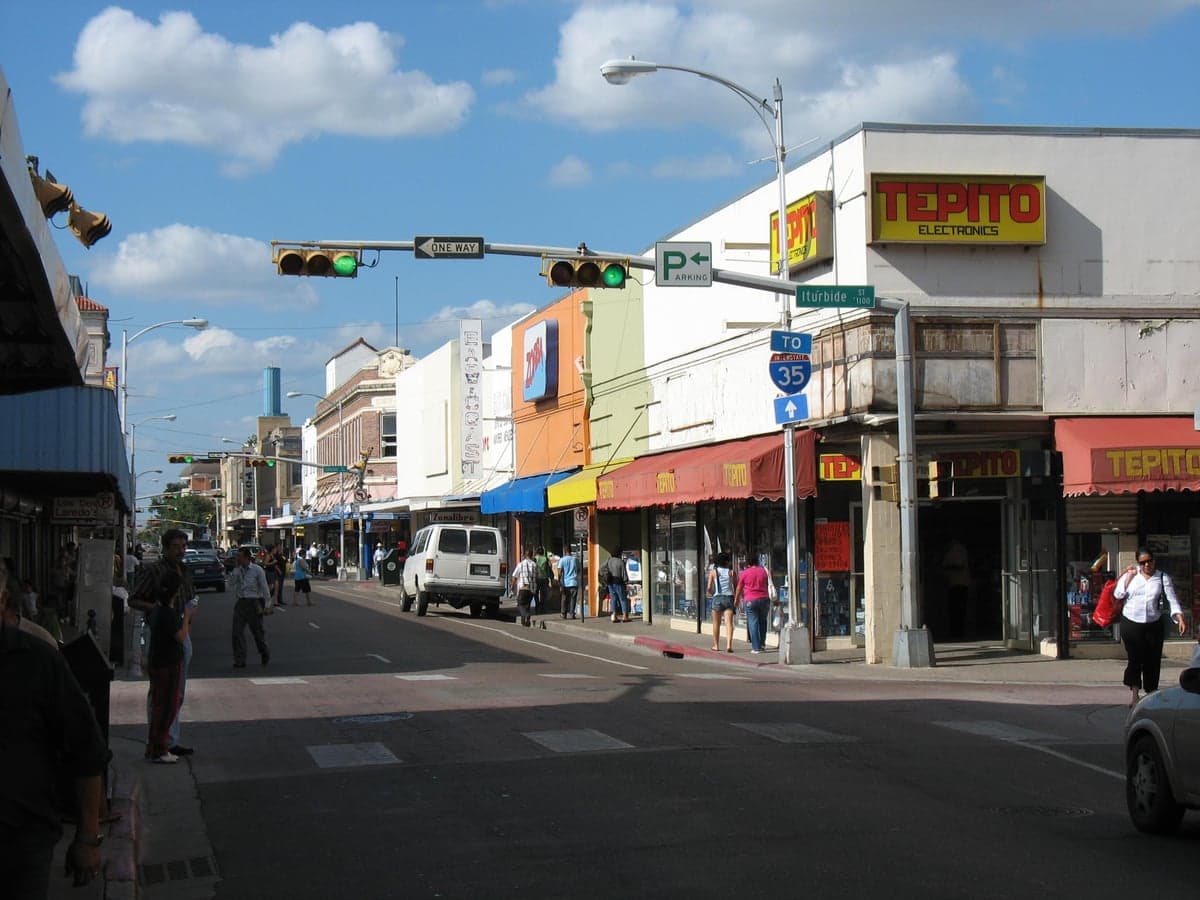
Photo: Wikipedia
Strategic Assessment of Laredo, TX
Multiple tactical vulnerabilities. Population density, target proximity, or disaster risk are likely compounding. A retreat property and exit planning is required.
What does the Strategic Assessment tell us?
Our Strategic Assessment grades tactical survivability of an area. Major population centers, military targets, fallout zones, natural disasters, and border exposure all drive risk — lower exposure means a more defensible position in a crisis.
This is heavily inspired by Joel Skousen's Strategic Relocation book. Highly recommended you checkout the book ($)What does this tell us?
Our Strategic Assessment grades tactical survivability of an area. Major population centers, military targets, fallout zones, natural disasters, and border exposure all drive risk — lower exposure means a more defensible position in a crisis.
This is heavily inspired by Joel Skousen's Strategic Relocation book. Highly recommended you checkout the book ($)Strategic Pillars

Key Distances
Regional Safe Places
Below is our recommended "safe zones" in Texas and the surrounding area based on our strategic heuristics. For most people, it's unrealistic to live in a “safe zone” full-time due to work, family or other personal reasons. They tend to be more rural. However, many of these areas are perfect for second homes and retreat properties that double as a vacation home or even a short-term rental.

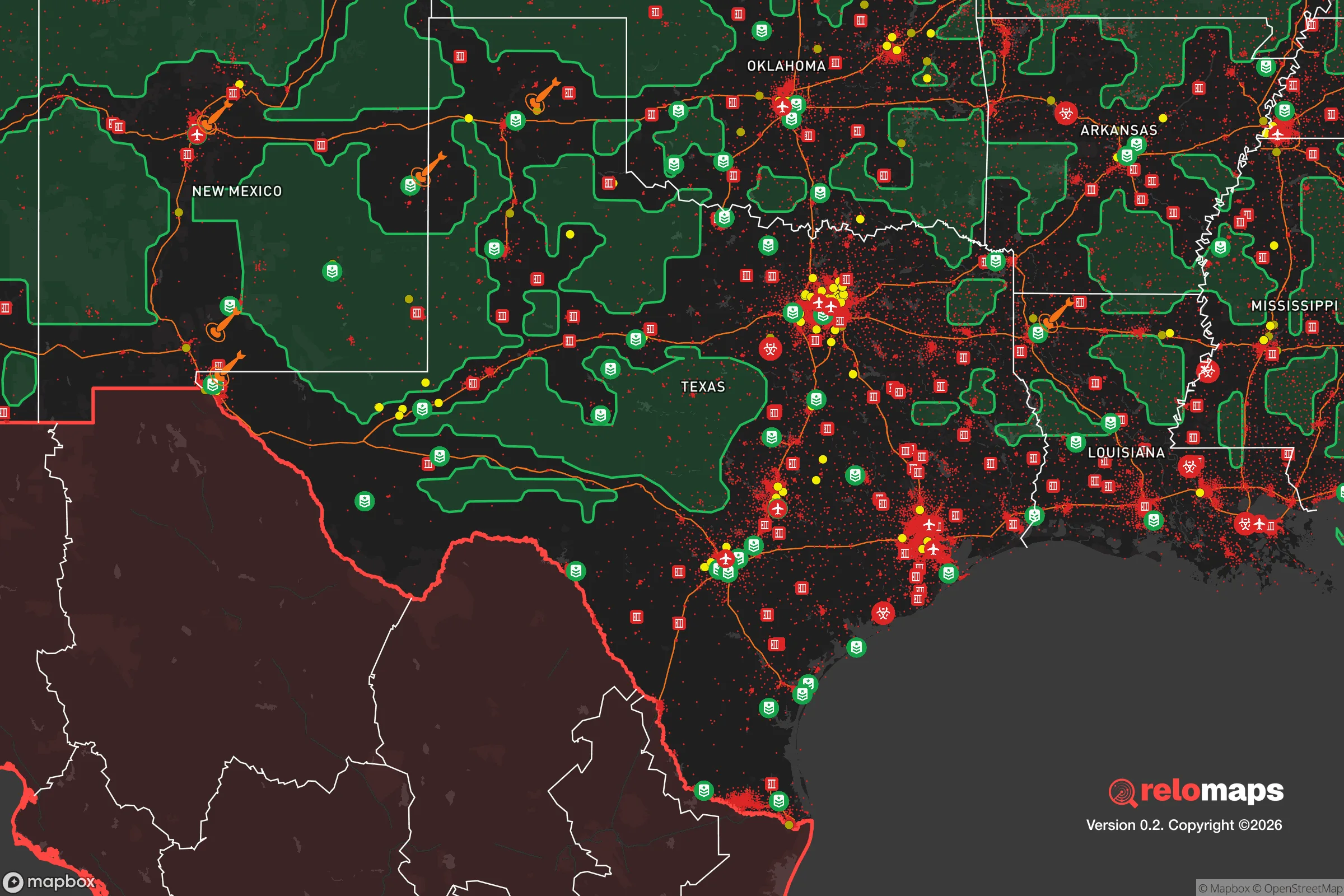


Important Note: For informational purposes only. This does not mean nothing bad ever happens in the green zones. Please use common sense. This is based on public data and modeled with AI. We tried to take a conservative approach but mistakes happen. We update this regularly as new information becomes available.
Solar Generator Recommendations
Backup power matters more here than in safer locations. We've picked three solar generators across budgets and capacity tiers — start with the budget unit if you only need a few essentials, or step up if you want to run a fridge and HVAC for days at a time.

Jackery Portable Power Station Explorer 300
Budget OptionPower on the Go: Weighing only 11 lbs, it's convenient to set up and store with book-sized foldable solar panels

BLUETTI Portable Power Station AC180
Designed for both indoor and outdoor scenarios, AC180 is highly capable as it has a robost capacity and continuous output power.

EF ECOFLOW DELTA Pro Ultra Power Station
Upgraded PickEcoFlow DELTA Pro Ultra is a whole-home energy system designed to grow with your family. Integrated with the Smart Home Panel 2, it scales to meet your evolving energy needs — keeping your home powered, intelligent, and secure through every stage of life.
We earn a commission, at no additional cost to you.
Strategic Assessment Analysis
Laredo, Texas, offers a unique strategic position for those prioritizing resilience and self-sufficiency, but it comes with significant trade-offs that a prepper or survival-minded relocator must weigh carefully. Located on the northern bank of the Rio Grande, this city of roughly 260,000 sits at a critical chokepoint for international trade and migration, which creates both opportunities and vulnerabilities. For a conservative-leaning individual or family concerned with civic unrest, mass casualty events, and national instability, Laredo’s geographic isolation from major U.S. population centers is a double-edged sword—it provides distance from likely fallout zones but places you directly on a geopolitical fault line.
Geographic position and natural advantages for a survival-minded relocator
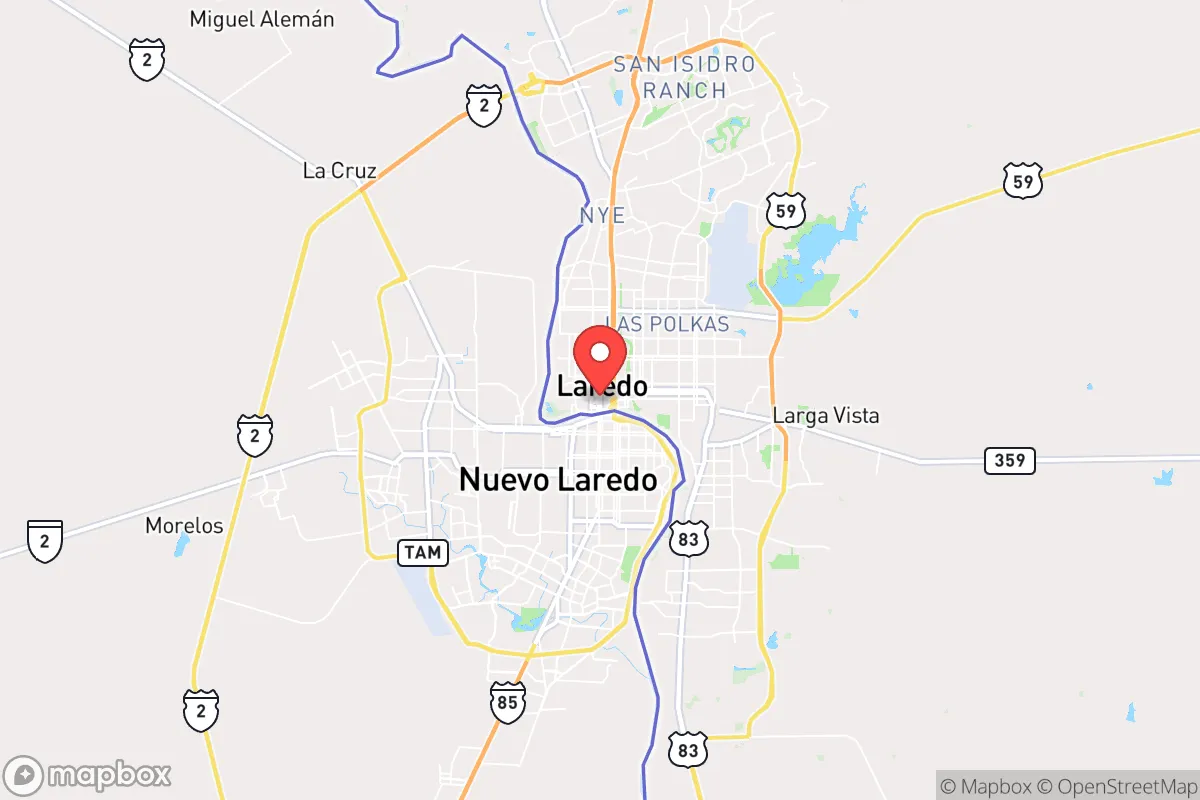
Laredo’s primary strategic asset is its distance from the major metropolitan areas that would likely be primary targets in a mass casualty event or civil unrest scenario. It sits roughly 150 miles from San Antonio, 200 miles from Houston, and over 400 miles from Dallas-Fort Worth, placing it well outside the immediate blast radius or riot zones of those cities. The surrounding landscape is semi-arid brush country, offering ample space for rural homesteading within a 30- to 60-minute drive of the city center. The Rio Grande provides a reliable surface water source, though it is heavily managed and subject to treaty obligations with Mexico. The region’s climate is hot and dry, with average summer highs above 100°F, which reduces the risk of many waterborne diseases and mold issues common in wetter climates. The local aquifer, the Carrizo-Wilcox, is a deep, high-quality source that many rural properties tap into, giving a relocator a viable off-grid water option if they secure land with a well permit. The area’s low population density outside the city limits—roughly 25 people per square mile in Webb County—means fewer neighbors to compete with for resources during a collapse scenario.
Risks, exposures, and proximity to fallout-relevant landmarks
The most glaring vulnerability for Laredo is its position as a major port of entry on the U.S.-Mexico border. The city is a primary corridor for drug trafficking, human smuggling, and cartel activity, which creates a persistent low-level security threat that could escalate rapidly during a national crisis. The Laredo-Columbia Solidarity International Bridge and the World Trade International Bridge are critical infrastructure points that could become chokepoints for mass migration or cartel violence during a breakdown of civil order. In 2023, U.S. Customs and Border Protection reported over 200,000 encounters in the Laredo sector alone, underscoring the scale of cross-border traffic. A mass casualty event—whether a pandemic, economic collapse, or terrorist attack—could trigger a surge of desperate people crossing the border, overwhelming local law enforcement and healthcare. The city’s proximity to Nuevo Laredo, a Mexican city of 400,000 with a heavy cartel presence, means that any instability in Mexico directly affects Laredo’s security. Additionally, Laredo is within 100 miles of the Falcon Reservoir and the Amistad Dam, both of which are potential targets for sabotage or infrastructure failure. The area is not in a major earthquake zone, but it does face occasional severe weather, including flash floods and the rare hurricane remnant, though these are less frequent than in coastal Texas.
Practical resilience for a relocator: food, water, energy, and defensibility
For a prepper focused on self-sufficiency, Laredo’s practical resilience is mixed. The local food supply is heavily dependent on trucking from the Rio Grande Valley and Mexico, meaning that a disruption to the supply chain—whether from fuel shortages, border closures, or civil unrest—could empty grocery shelves within days. The city has only a handful of large-scale grocery chains, and local agriculture is limited to small-scale ranching and some citrus production in the valley. A relocator would need to plan for at least a three-month food stockpile, ideally with a focus on non-perishables that can withstand the heat. Water is more promising: the Rio Grande is a perennial river, but it is heavily polluted with agricultural runoff and industrial waste from both sides of the border. A serious prepper would need a high-quality filtration system, such as a reverse osmosis unit or a Berkey with fluoride filters, to make it potable. The local electricity grid is part of the ERCOT system, which has proven unreliable during extreme weather events—the 2021 winter storm caused rolling blackouts across the region. Solar power is a viable option, as Laredo averages over 260 sunny days per year, and many rural properties already have off-grid solar setups. Defensibility is a major concern: the flat, open terrain offers little natural cover, and the city’s layout along the river makes it difficult to secure a perimeter. A rural homestead outside the city, with a good line of sight and a well, would be far more defensible than a home within the urban core. The local gun culture is strong, with multiple gun ranges and a high rate of firearm ownership, which is a positive for those who prioritize self-defense. However, the presence of cartel activity means that any visible stockpile of weapons or supplies could attract unwanted attention from organized criminals, not just desperate individuals.
Overall, Laredo presents a calculated risk for the strategic relocator. It offers genuine advantages in terms of distance from primary target zones, access to water, and a climate that supports solar energy and long-term food storage. But those benefits are offset by the city’s position on a volatile border, its dependence on fragile supply chains, and the persistent threat of cartel violence. For a single individual or a family with a solid prepping plan—including a rural property with a well, solar panels, a substantial food cache, and a robust security setup—Laredo could serve as a viable retreat. For those who want to avoid any proximity to border chaos or who lack the resources to harden a property against both nature and organized crime, the risks likely outweigh the rewards. The smart move here is to treat Laredo as a potential secondary location, not a primary bug-out destination, and to have a clear evacuation route north toward the Hill Country if the border situation deteriorates beyond what local law enforcement can handle.

* Values derived from national, state, county, city and local statistics and may differ in a specific area. Last updated: 2026-05-03T04:47:33.000Z
Narrative content on this page is AI-generated and may contain mistakes. Verify any details that matter before acting on them.
ReloMaps may earn a commission from affiliate links at no extra cost to you.

