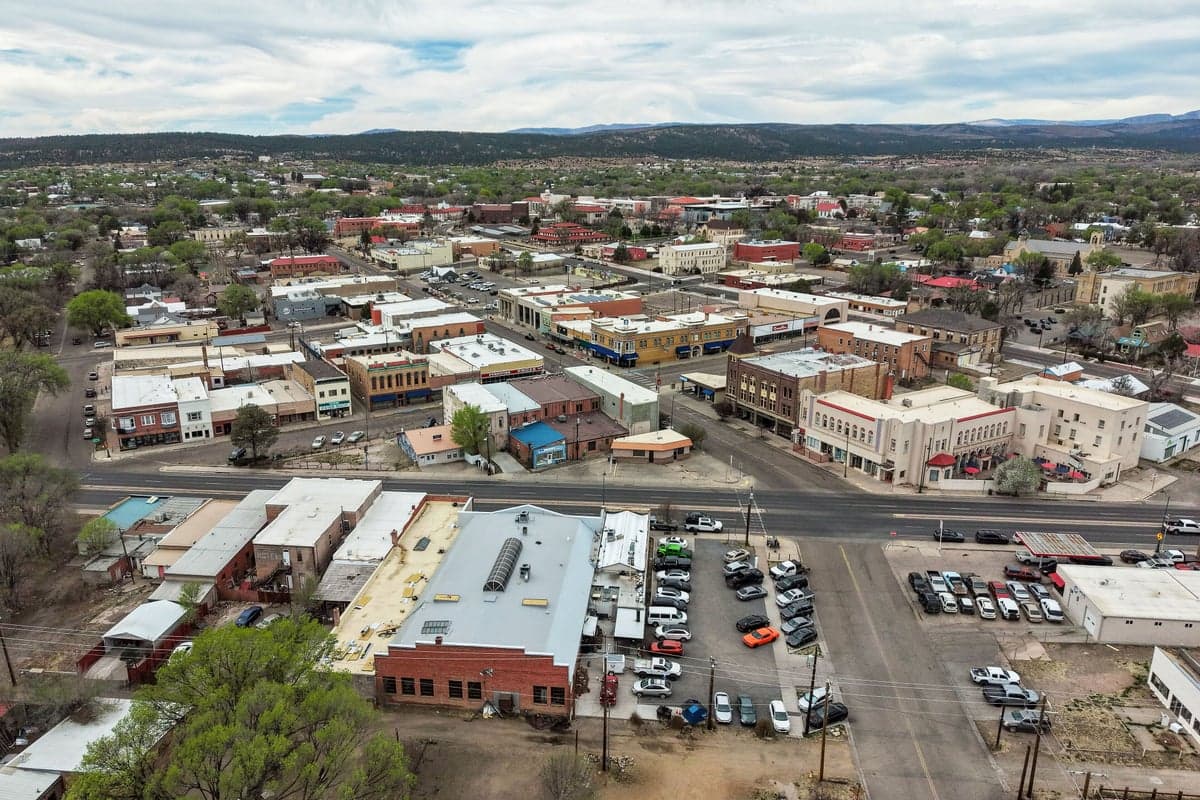
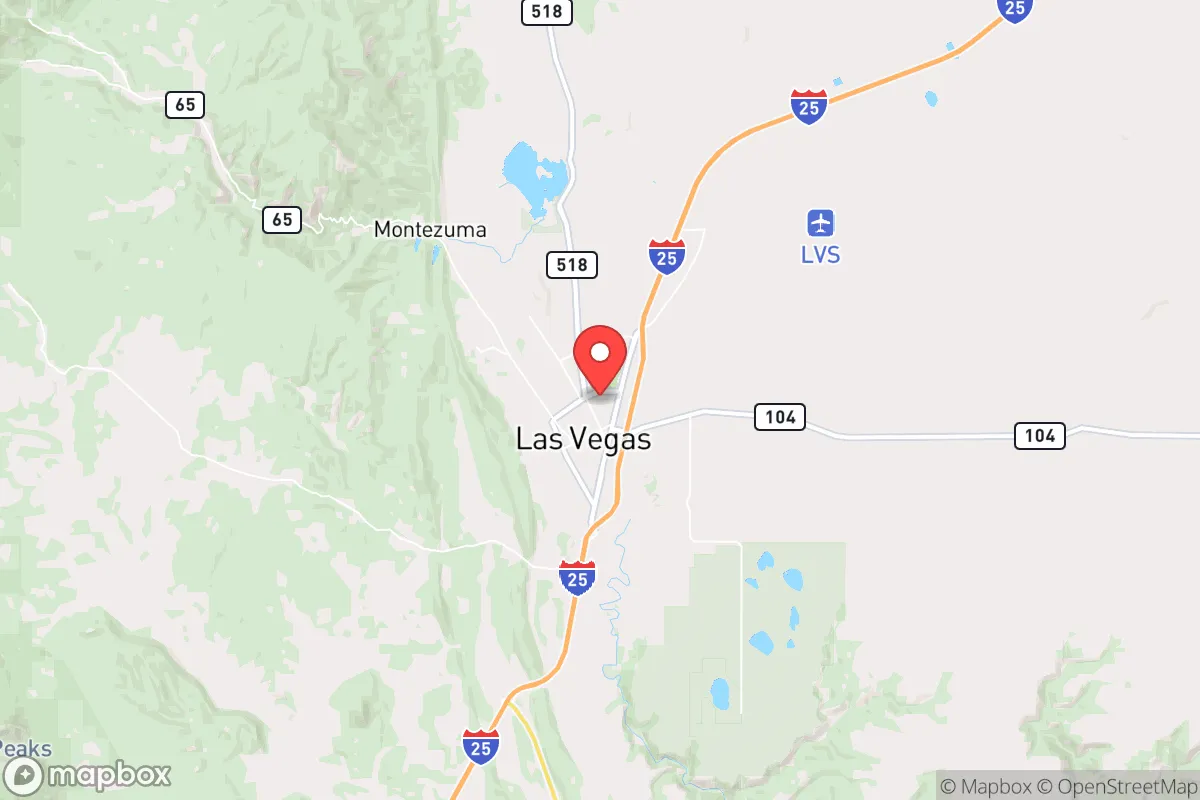
Photo: Wikipedia
Political ClimatePolitical Climate in Las Vegas, NM
District shown is the primary district for this city’s centroid. Cities may span multiple districts.
Local Political AnalysisPolitical Analysis of Las Vegas, NM
Las Vegas, New Mexico, leans solidly Democratic, with a Cook PVI of D+3 that reflects a long-standing progressive tilt in this small mountain town. But if you’ve lived here as long as I have, you know that label doesn’t tell the whole story. The political climate has shifted noticeably over the past decade, moving from a more moderate, live-and-let-live vibe toward a harder progressive edge that’s starting to chafe on folks who value personal freedom and local control. The trajectory feels like it’s accelerating, and that’s got a lot of us watching closely.
How it compares
Drive 30 minutes south to Santa Fe, and you’ll find a similar D+ leaning, but with a much wealthier, more activist flavor—think high-end organic co-ops and city council debates over electric vehicle charging stations. Head east about an hour to Raton or west to Mora, and the politics flip hard red, with conservative values and a strong distrust of government overreach. Las Vegas sits in this weird middle ground: it’s a college town (New Mexico Highlands University) and a historic railroad hub, so you get a mix of longtime Hispanic families, artists, and transplants from blue states. That blend used to keep things balanced, but the newcomers—especially since 2020—have pushed the needle toward policies that feel less about community and more about control. The contrast with nearby Wagon Mound or Springer, where folks still wave Trump flags, is stark.
What this means for residents
For those of us who’ve been here decades, the biggest concern is how local government is creeping into everyday life. The city council has floated ordinances on short-term rentals and water usage that sound reasonable on paper but end up as bureaucratic headaches for small property owners. There’s a growing push for “equity” initiatives in the school district that prioritize ideology over academics, and the county commission has backed state-level gun restrictions that feel out of step with rural New Mexico’s hunting and self-defense traditions. Property taxes have ticked up to fund social programs that sound noble but rarely deliver results—meanwhile, basic services like road maintenance and police staffing lag behind. If you value keeping your business decisions, your home, and your family’s choices out of government hands, the trend here is worrying. The long-term outlook? I’d say we’re five to ten years away from Las Vegas becoming a smaller version of Santa Fe—unless enough locals push back at the ballot box.
One cultural distinction that stands out is the city’s deep-rooted Hispanic heritage, which historically meant a more conservative, family-first approach to politics—think church, community, and self-reliance. That’s still alive in the older generation, but younger activists and transplants are reshaping the conversation toward progressive social policies and environmental regulations that often ignore the economic realities of a town where the median household income hovers around $35,000. The annual Fiesta de la Nuestra Señora de la Luz still draws crowds, but the political rallies around it have gotten more polarized. If you’re considering a move here, know that the political climate is shifting fast—and if you’re like me, you’ll want to keep a close eye on who’s running for city council next cycle.

State Political ClimatePolitical Climate in New Mexico
State Political AnalysisPolitical Environment in the State
New Mexico has been a reliably blue state in presidential elections since 2004, but don’t let that single stat fool you—it’s a deeply contested, purple-ish battleground at the local level, with a Democratic stronghold in Albuquerque and Santa Monica-style politics in Santa Fe, balanced by conservative, rural, and libertarian-leaning counties in the eastern plains and southwestern bootheel. Over the last 20 years, the state has drifted left on social issues and energy policy, but a stubborn independent streak and a growing Hispanic conservative vote have kept it from becoming a full-on California clone. If you’re a conservative looking at relocation, you need to understand that the political climate here is a patchwork—not a monolith—and the trajectory is worrying if you value limited government and personal freedom.
Urban vs. rural divide
The political map of New Mexico is a tale of three regions. Bernalillo County (Albuquerque) and Santa Fe County are the Democratic engines, delivering 60-70% of their votes to Democrats in recent cycles. Albuquerque’s sprawling suburbs—like Rio Rancho and Corrales—are more moderate, but the city core and Santa Fe’s wealthy progressive enclave drive the statewide leftward tilt. Meanwhile, the eastern plains (Lea, Roosevelt, Curry counties) are solidly Republican, with oil and gas towns like Hobbs and Clovis voting +30 to +40 points red. The southwest bootheel (Hidalgo, Luna, Grant counties) is a mixed bag—historically conservative Hispanic communities in Deming and Lordsburg are now trending purple, while Silver City leans green and progressive. The north-central mountains (Taos, Mora, San Miguel) are deep blue, driven by Santa Fe spillover and a strong environmentalist presence. The key takeaway: if you move to a rural county, you’ll find a conservative community; if you land in Albuquerque or Santa Fe, you’re in a blue bubble.
Policy environment
New Mexico’s policy environment is a mixed bag for conservatives. On the plus side, there is no state income tax on Social Security benefits, and the state has a relatively low property tax rate (average 0.67% of home value). But the state income tax is progressive, topping out at 5.9% for high earners. The corporate tax rate is a moderate 5.9%, but the regulatory burden is heavy—especially in energy. The state has aggressively pursued a Green New Deal-style energy transition, with the 2019 Energy Transition Act mandating 100% carbon-free electricity by 2045, which has already killed coal jobs in the Four Corners area (Farmington, Gallup). Education policy is a sore spot: the state has a universal school choice program (the 2022 Opportunity Scholarship Act), but it’s limited to public schools and doesn’t include private or religious options. Healthcare is dominated by the state’s Medicaid expansion, which covers nearly 40% of residents. Election laws are a concern: New Mexico has no voter ID requirement, same-day registration, and automatic voter registration—a setup that conservatives worry invites fraud. The state also has a red flag law (2019) and a ban on concealed carry without a permit (2021), which are major red flags for gun owners.
Trajectory & freedom
Over the last five years, New Mexico has become less free by any conservative measure. The 2021 repeal of the state’s permitless carry law (replacing it with a “may-issue” concealed carry system) was a direct hit on Second Amendment rights. The 2023 Extreme Risk Firearm Protection Order Act (red flag law) allows courts to seize guns without a criminal conviction, which many see as a due process violation. On parental rights, the 2023 House Bill 7 expanded abortion access and removed parental notification requirements for minors, a clear erosion of family authority. The state also passed a sanctuary state law (2019) that limits local law enforcement cooperation with federal immigration authorities, which frustrates conservatives who want border security. On the positive side, the state has no income tax on military pensions, and the 2023 Tax Stabilization and Reform Act slightly lowered the top income tax rate from 5.9% to 5.9% (it was already there, but they made it permanent). Property rights are under threat from the state’s Oil and Gas Conservation Commission, which has imposed stricter setback rules for drilling near homes. The overall trajectory is leftward, with the legislature controlled by Democrats and a governor (Michelle Lujan Grisham) who has pushed progressive priorities.
Civil unrest & political movements
New Mexico has seen its share of political flashpoints. The 2020 protests in Albuquerque over George Floyd’s death turned violent, with the toppling of a statue of Juan de Oñate and arson at the county courthouse. The sanctuary state law has created tension between local sheriffs (especially in Lea and Otero counties) and the state government, with some sheriffs refusing to enforce state-level immigration restrictions. The Otero County Commission made national headlines in 2022 for refusing to certify primary election results over voting machine concerns, a sign of deep distrust in election integrity. The Four Corners region has seen protests over the closure of the San Juan Generating Station, with coal miners and their families clashing with environmental activists. The Hispanic conservative movement is growing, particularly in the southern counties (Doña Ana, Otero), where groups like the Hispanic Republican Alliance are active. Immigration politics are raw: the state’s border with Mexico (especially near Sunland Park and Columbus) sees daily crossings, and the state’s sanctuary policies have made it a magnet for illegal immigration, which strains local resources and fuels resentment.
Projection
Over the next 5-10 years, New Mexico is likely to continue its leftward drift, driven by in-migration from California and Colorado (especially to Santa Fe and Albuquerque), a growing Hispanic population that leans Democratic (though not uniformly), and a Democratic-controlled legislature that shows no signs of moderating. The state’s energy transition will accelerate, meaning fewer oil and gas jobs in the eastern plains and more solar/wind projects, which could shift the political balance in places like Lea County. The school choice movement may gain traction, but don’t expect a voucher program anytime soon. The gun rights situation will likely worsen, with potential magazine bans or universal background checks. The sanctuary state status is here to stay, which means continued friction with federal immigration enforcement. The Hispanic conservative vote could be a wildcard—if it grows, it might flip a few state house seats in the south, but it won’t be enough to change the overall trajectory. For a conservative moving in now, expect to live in a state where your vote for president won’t matter, but your local vote in rural counties still will.
Bottom line for a new resident: If you’re a conservative, New Mexico is a state where you can find a like-minded community in the rural areas (Hobbs, Clovis, Deming, Roswell), but you’ll be fighting a losing battle at the state level. The tax burden is moderate, but the regulatory and cultural environment is increasingly hostile to traditional values. You’ll need to be proactive about protecting your rights—especially your Second Amendment rights and your parental authority—because the state government won’t do it for you. If you’re okay with being a political minority in a beautiful, low-cost state, it can work. If you want a state that reflects your values, look elsewhere.
* Values derived from national, state, county, city and local statistics and may differ in a specific area. Last updated: 2026-05-01T00:47:21.000Z
Narrative content on this page is AI-generated and may contain mistakes. Verify any details that matter before acting on them.
ReloMaps may earn a commission from affiliate links at no extra cost to you.

