 Popular
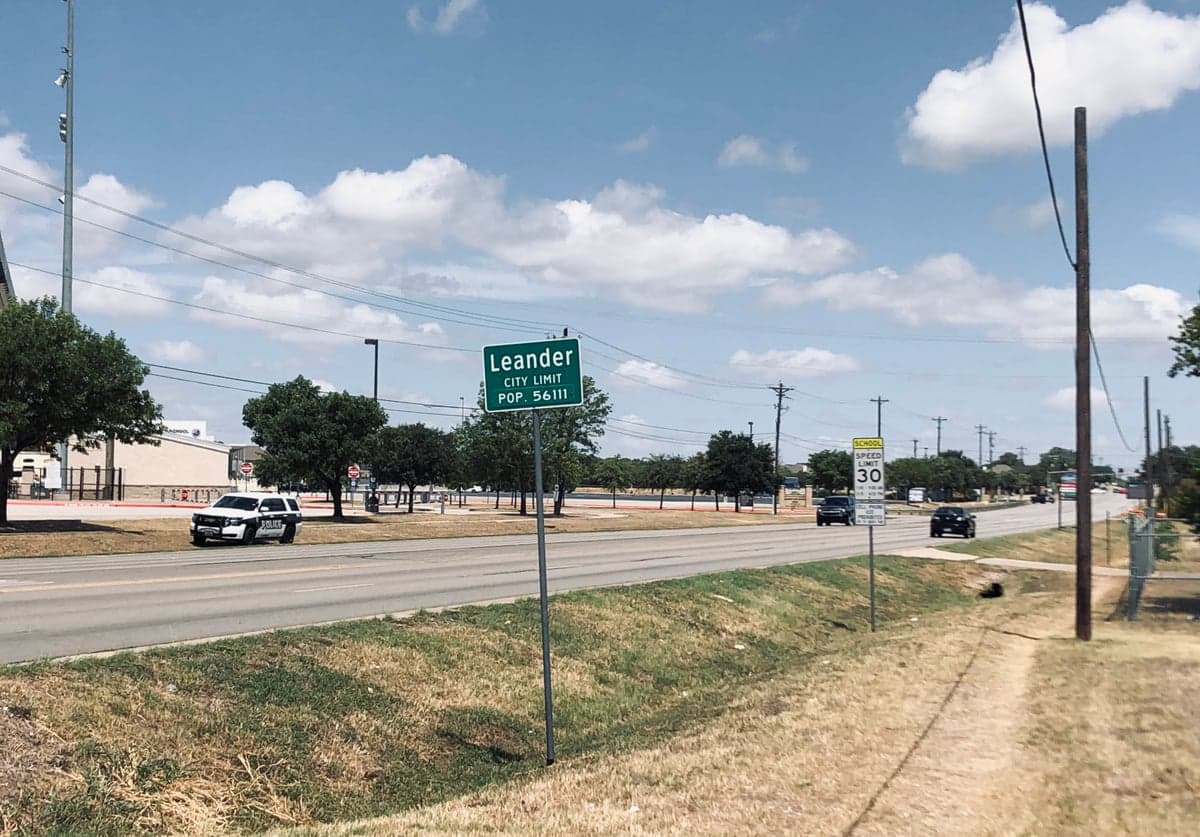
Photo: Wikipedia
Personal Sovereignty in Leander, TX
Strong independent fundamentals that actively favor personal liberty and low regulation.
What does Personal Sovereignty tell us?
Personal Sovereignty measures your capacity for self-reliance and independence with minimal government friction. Higher scores mean fewer barriers between you and the way you want to live... but it assumes you have the space you need and good neighbors.
What does this tell us?
Personal Sovereignty measures your capacity for self-reliance and independence with minimal government friction. Higher scores mean fewer barriers between you and the way you want to live... but it assumes you have the space you need and good neighbors.
State Policy
Energy independence: Net exporter (220% of energy produced in-state)
Personal Liberty
Homesteading

Personal Liberty Analysis
For the individual or family who views personal sovereignty as the bedrock of freedom, Leander, Texas offers a legal and cultural environment that is markedly more protective of individual autonomy than most of the United States. While no municipality is an island of liberty, Leander sits within a state that has consciously structured its laws to limit government overreach, particularly in the realms of taxation, self-defense, and parental authority. The city’s rapid growth has introduced some tensions—increased regulation and HOA proliferation—but the underlying legal framework of Texas provides a powerful buffer against the kind of top-down control that many preppers and liberty-minded individuals find increasingly suffocating elsewhere. This analysis examines the specific pillars of personal sovereignty in Leander, focusing on the practical realities of living free from excessive state interference.
Tax burden and regulatory posture: How Texas law limits government reach
The most immediate expression of personal sovereignty in Leander is its tax environment. Texas has no state income tax, meaning every dollar earned remains in the individual’s control, not the state’s coffers. This is a foundational advantage for anyone seeking to build wealth and self-reliance without subsidizing an ever-expanding government apparatus. The trade-off is a reliance on property taxes, which in Leander are significant—typically in the range of 2.5% to 3.0% of assessed value when combining city, county, and school district (Leander ISD) rates. However, Texas law provides a powerful check on runaway taxation: Proposition 4 (2023), which caps annual appraisal increases for non-homesteaded properties at 20% and for homesteads at 10%, and the 2025 legislative push for further appraisal caps signals a continued trajectory toward taxpayer protection. On the regulatory front, Texas maintains a strong preemption doctrine. Leander cannot enact its own rent control, local energy mandates, or firearm ordinances that exceed state law. This means a homeowner in Leander is not subject to the kind of municipal overreach seen in cities like Austin or Portland, where local governments have imposed building material bans, energy efficiency mandates, or restrictions on short-term rentals that infringe on property rights. For the survivalist, this regulatory predictability is critical: you can build, store, and operate without fear of a city council changing the rules mid-game.
Self-defense and gun law specifics: Stand your ground and constitutional carry
For those prioritizing the right to defend life and property, Leander sits in a jurisdiction with some of the strongest legal protections in the nation. Texas is a constitutional carry state (permitless carry) since 2021, meaning any law-abiding adult 21 or older can carry a handgun openly or concealed without a government-issued license. This is not a privilege granted by the state; it is recognized as a pre-existing right. The state’s Stand Your Ground law removes any duty to retreat before using deadly force in any place where the individual has a legal right to be. This is a critical distinction from states that require a "castle doctrine" only inside the home. In Leander, if you are lawfully present on a public street or in your vehicle, you are legally entitled to meet force with force if you reasonably believe it is necessary to prevent imminent death or great bodily harm. Furthermore, Texas law explicitly prohibits local governments from creating gun-free zones that exceed state statute. Leander cannot ban firearms in city parks, libraries, or municipal buildings beyond what state law allows. For the prepper, this means your vehicle, home, and person are legally fortified against both criminal threats and government overreach. The only notable restriction is the prohibition of carrying in schools (with narrow exceptions) and in secured areas of airports—a standard that aligns with federal law. The legal climate here is one of presumption of innocence for defensive gun use, a stark contrast to states like New York or California where the burden often falls on the defender.
Self-reliance and homesteading viability: Lot sizes, zoning, and off-grid feasibility
True sovereignty requires the ability to produce and store resources independently. In Leander proper, the reality is mixed. The city’s core is increasingly suburban, with typical lot sizes in newer subdivisions ranging from 5,000 to 8,000 square feet. HOAs are common, and their covenants often restrict visible gardening, livestock, and the storage of bulk supplies (e.g., fuel tanks, large generators). This is a significant limitation for the serious prepper. However, the key is location within the broader Leander area. The city’s extraterritorial jurisdiction (ETJ) and the unincorporated areas of Williamson County—just a 10- to 15-minute drive from downtown Leander—offer a different reality. Here, lot sizes of 1 to 10 acres are common, and county zoning is minimal. Raising chickens, goats, or even a small herd of cattle is legally straightforward. Rainwater harvesting is not only legal but encouraged by the Texas Water Development Board, and there are no state-level bans on composting toilets or greywater systems, provided they meet basic health codes. Solar panel installation is protected by state law (Texas Property Code prohibits HOAs from banning them outright, though they can regulate placement). For the off-grid homesteader, the Williamson County area allows for the installation of backup generators, large water storage tanks, and even the construction of a "bug-out" structure on agricultural land without the permitting nightmare found in more regulated states. The bottom line: if you buy inside city limits with an HOA, your sovereignty is constrained. If you buy on the county fringe, you can achieve a high degree of self-reliance with minimal government interference.
Personal liberties: Parental rights, medical autonomy, speech, and property
Beyond taxes and guns, sovereignty encompasses the right to raise your children, make medical decisions, and speak freely without government censorship. Texas has been a national leader in codifying parental rights. The 2023 law (HB 900) requires public school libraries to obtain parental consent before providing sexually explicit materials to minors, and the state has banned the use of "critical race theory" and "social emotional learning" curricula that many parents view as ideological indoctrination. In Leander ISD, this translates to a school board that has been responsive to parental concerns, with meetings often featuring heated debates over curriculum transparency. For the parent who wants to opt out of public school entirely, Texas has no state-level registration or approval for homeschools—you simply file a one-time affidavit with the Texas Education Agency and teach a curriculum of your choice. No state testing, no home visits, no curriculum approval. On medical autonomy, Texas law protects the right to refuse any medical treatment, including vaccines, for yourself and your children (with narrow exceptions for school attendance during outbreaks). The state does not have a universal vaccine mandate for adults, and the 2023 law prohibits employers from requiring COVID-19 vaccination as a condition of employment. This is a direct rebuke to federal overreach. Speech protections are robust: Texas has passed laws prohibiting social media platforms from censoring users based on political viewpoint (though this is being litigated), and there are no state-level "hate speech" laws that criminalize protected expression. Property rights are further secured by the Texas Property Code, which prohibits municipalities from imposing "rent control" or "just cause" eviction ordinances that would limit a landlord’s ability to manage their property. For the individual who values the ability to speak, heal, and teach without state permission, Leander offers a legal environment that is actively hostile to the kind of administrative state creep seen in blue states.
In the broader landscape of American personal sovereignty, Leander ranks among the top-tier locations for those who prioritize liberty over security from the state. The combination of no income tax, constitutional carry, Stand Your Ground, strong parental rights, and minimal zoning in the county fringe creates a legal ecosystem where the individual is presumed capable of managing their own affairs. The primary threat to this sovereignty is not the state of Texas, but the creeping influence of HOAs and municipal ordinances that can restrict what you do on your own land. For the strategic relocator, the calculus is clear: buy outside city limits or in a county-regulated area, and you can achieve a level of self-determination that is increasingly rare in the United States. Leander is not a libertarian utopia—it is a growing suburb with all the pressures that entails—but its legal foundation is built on the principle that the individual, not the government, is the ultimate authority over their own life. That is a foundation worth building on.

* Values derived from national, state, county, city and local statistics and may differ in a specific area. Last updated: 2026-05-29T21:31:32.000Z
Narrative content on this page is AI-generated and may contain mistakes. Verify any details that matter before acting on them.
ReloMaps may earn a commission from affiliate links at no extra cost to you.

