 Popular
Photo: Wikipedia
Find The Best Places To Live
in Leander
PRO TIP! You can paste a Zillow or Redfin link to get info on that property.
What It's Like Living in Leander, TX
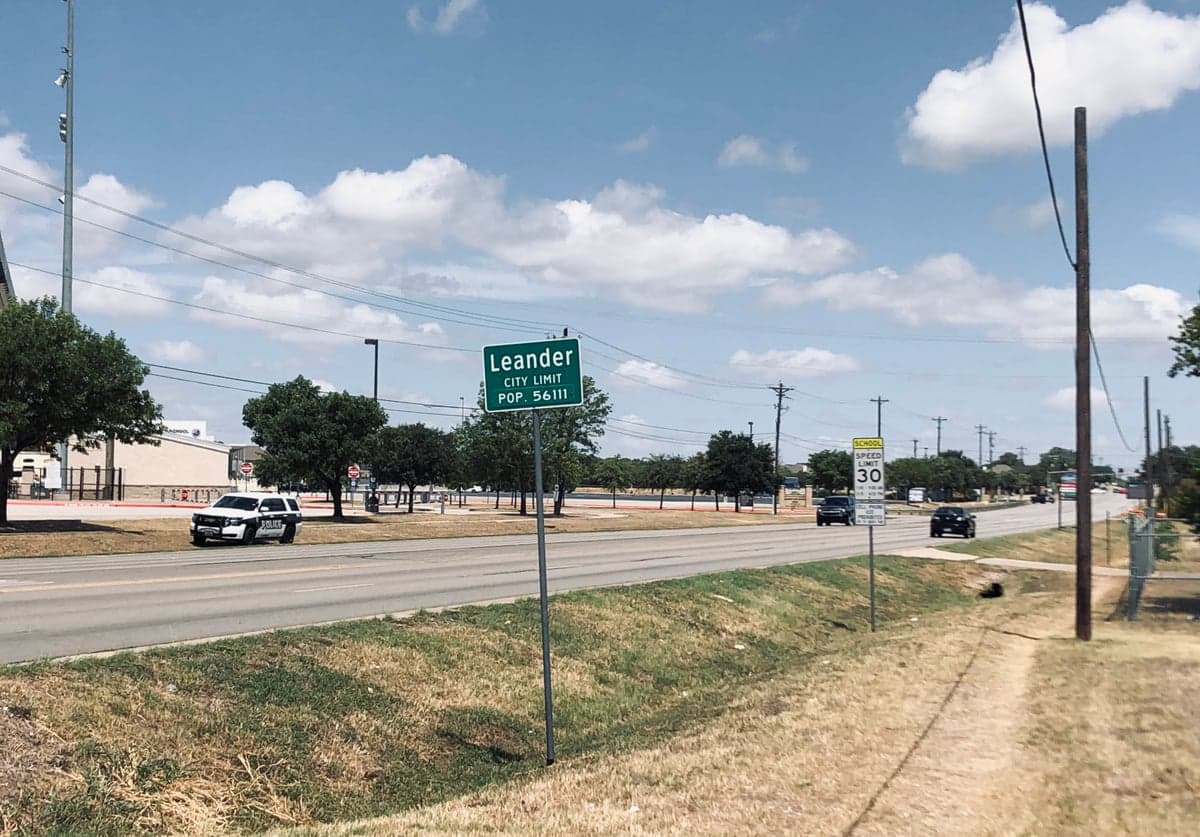
Leander, Texas, has a split personality in the best way. By day, it’s a fast-growing suburb where new neighborhoods unfurl across the Hill Country and the high school football stadium is the town square. By evening, it settles into something quieter—patios fill up with families, the sound of a train rumbles through downtown, and the stars come out over Lake Travis. It’s a place that feels both brand-new and deeply rooted, attracting people who want space to spread out without losing access to a major city.
The Daily Rhythm: Commutes, Errands, and Weekend Rituals
Most mornings in Leander start with a commute. The average drive to work is just under 30 minutes, and for many, that means heading south on US-183 or taking the Capital MetroRail from the Leander station into downtown Austin. The train is a genuine lifeline—it’s how a lot of professionals avoid the worst of I-35 traffic, and it gives the town a commuter-town rhythm that feels more established than its rapid growth might suggest. On weekends, the pace slows. You’ll see people loading kayaks onto trucks at the Lakewood Park boat ramp, grabbing breakfast tacos at Leander House of Coffee, or hitting the farmers market at Robin Bledsoe Park. The H-E-B Plus on Crystal Falls Parkway is basically a community hub—you’ll run into neighbors, coaches, and the mayor there on a Saturday morning.
The kind of person who fits in here is typically in their mid-30s to early 40s—the median age is 35.9—and often has school-age kids or plans to start a family. With a median household income of $140,180 and over half the population holding a college degree, it’s an upwardly mobile, educated crowd. You’re not seeing a lot of young singles or empty nesters; this is a place built around the rhythms of school calendars, soccer practices, and weekend home projects. The affluence is real—median home values sit around $470,700, and the cost of living index of 163 reflects that you’re paying a premium for the schools, the safety, and the proximity to Austin’s job market.
Sports, Schools, and the Town’s Social Glue
If you want to understand Leander, go to a Leander High School football game on a Friday night. The Leander Lions are a big deal—not in a Friday Night Lights caricature way, but in a genuine community-gathering sense. The stands are packed with parents, grandparents, and former students who never left. The school district, Leander ISD, is one of the main reasons people move here. It’s consistently rated among the top in the region, and its presence shapes everything from real estate values to after-school traffic patterns. There’s no pro sports team in town—Austin FC and the Texas Longhorns are the closest draws—but the high school teams (football, volleyball, baseball) are the local equivalent.
Beyond school sports, the town’s identity is tied to its outdoor access. Lake Travis is a 15-minute drive west, and on summer weekends, the lake is where everyone ends up—boating, paddleboarding, or just floating. The Brushy Creek Regional Trail runs through town and is popular for biking and running. There’s also the annual Leander Liberty Fest around July 4th, which draws thousands for a parade, live music, and fireworks at Robin Bledsoe Park. It’s the kind of event where you see the same faces year after year, which is rare in a town that’s growing as fast as this one.
What’s There to Do: Restaurants, Hangouts, and the Austin Factor
Leander’s dining scene is improving but still leans toward chains and reliable local spots. Whitestone Brewery is the go-to for craft beer and a patio vibe, and Mouton’s Sports Bar & Grill is where you catch a Longhorns game. For something nicer, Brick House Tavern serves solid American fare, and Taqueria Vallarta is the taco joint everyone has a strong opinion about. The real entertainment draw, though, is Austin—25 minutes south on a good day, 45 on a bad one. That’s where you’ll find the music venues, the festivals (ACL, SXSW), and the restaurant scene that made the region famous. Leander residents treat Austin like a weekend amenity, not a daily reality.
For outdoor recreation, Lakewood Park has a swimming beach and volleyball courts, and Sandy Creek Park offers hiking trails with Hill Country views. The Leander Public Library is surprisingly good—modern, well-stocked, and a popular spot for parents with young kids. There’s also a growing number of boutique fitness studios and yoga places, reflecting the active, health-conscious bent of the population.
Pros and Cons of Living Here
- What residents love: The schools are excellent and a major reason people stay. The violent crime rate is remarkably low at 58.4 per 100,000—roughly a third of the national average—so safety is a genuine selling point. The train to Austin is a huge quality-of-life bonus for commuters. And the Hill Country setting means you’re never far from a lake view or a hiking trail.
- What frustrates them: Traffic on US-183 and Ronald Reagan Boulevard is getting worse every year as new subdivisions go up. The cost of living is high—163 vs. the US average of 100—and home prices have climbed fast, pricing out some longtime residents. Dining and nightlife are limited; you’ll drive to Cedar Park or Austin for variety. And the summer heat is no joke—June through September, outdoor plans are dictated by the thermometer.
Leander also has a few cultural quirks. The train that runs through downtown is a constant presence—you learn to time your errands around it. There’s a strong sense of “we got here before it blew up” among residents who moved in before 2015. And the town’s rapid growth has created a mix of old-timers who remember when it was a one-stoplight town and newcomers who chose it for the schools and the commute. That tension is part of the character now—Leander is still figuring out what it wants to be, and the people who live here are the ones shaping it.

Similar small cities to Leander
* Values derived from national, state, county, city and local statistics and may differ in a specific area. Last updated: 2026-05-29T21:31:32.000Z
Narrative content on this page is AI-generated and may contain mistakes. Verify any details that matter before acting on them.
ReloMaps may earn a commission from affiliate links at no extra cost to you.

