 Popular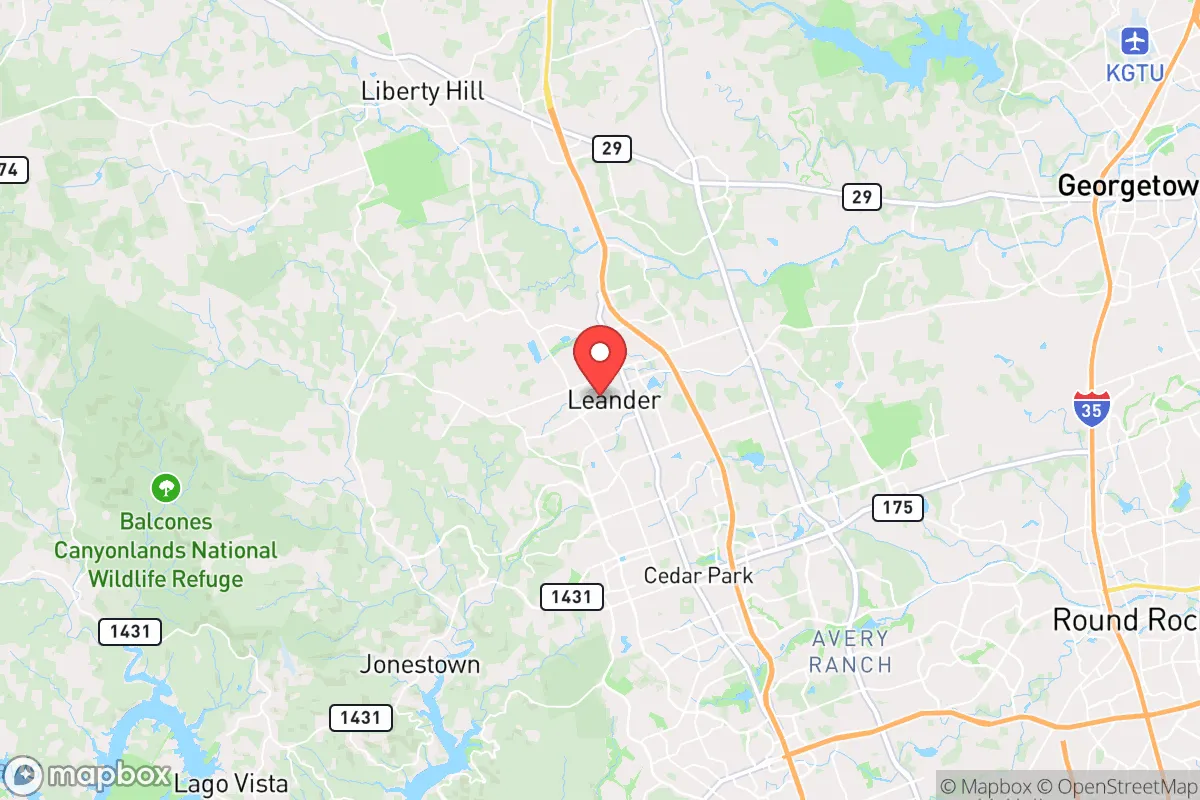
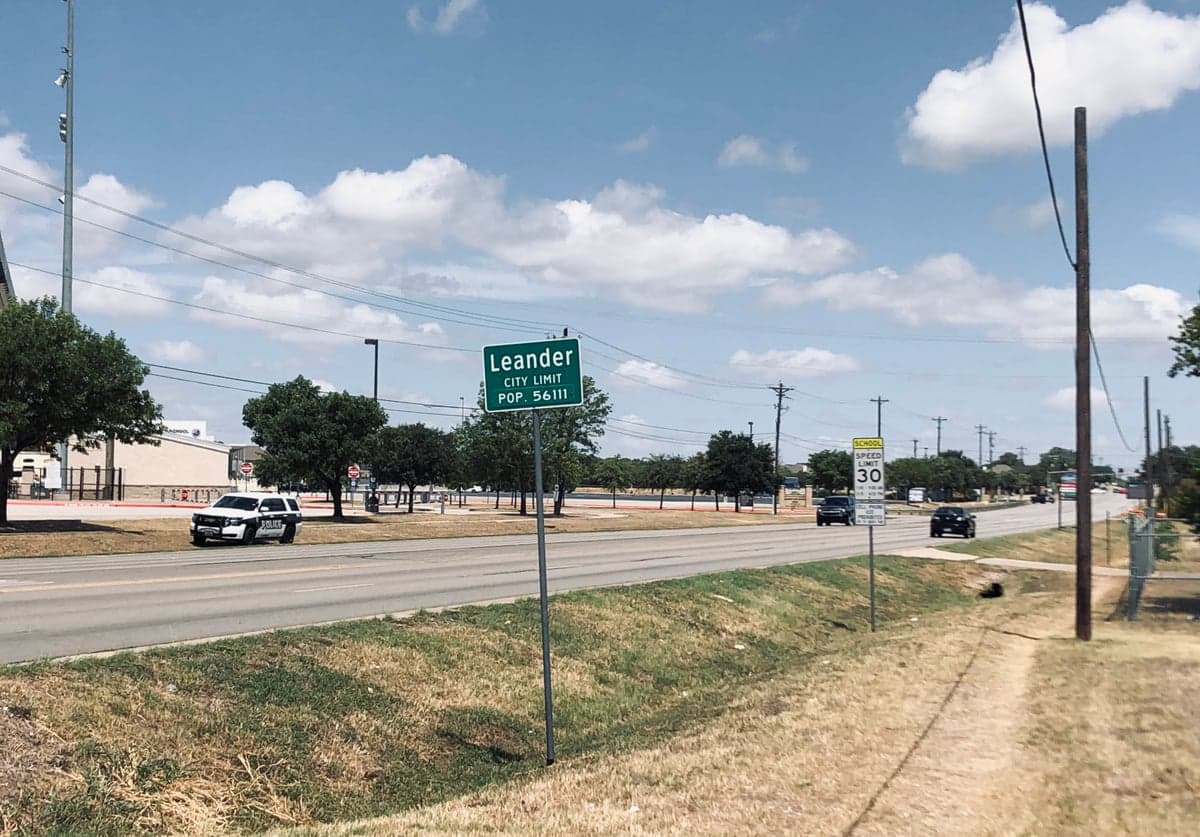
Photo: Wikipedia
Political ClimatePolitical Climate in Leander, TX
District shown is the primary district for this city’s centroid. Cities may span multiple districts.
Local Political AnalysisPolitical Analysis of Leander, TX
Leander, Texas, has long been a solidly conservative community, and that hasn't changed much despite the rapid growth. The Cook PVI here is R+11, which is a full seven points more Republican than the state of Texas as a whole, which sits at R+4. That number tells you the real story: while the rest of Texas has been shifting leftward in places like Austin and Dallas, Leander has held the line. You can feel it in the local elections, the school board meetings, and just talking to your neighbors. It’s still a place where people believe in personal responsibility and limited government, and that’s not something you can say about every growing suburb these days.
How it compares
When you stack Leander up against the rest of Texas, the difference is stark. The state’s R+4 rating is being dragged down by the massive blue bubbles in Travis County (Austin) and Harris County (Houston). Leander sits right on the edge of Williamson County, which is one of the most reliably red counties in the state. Drive ten miles south into Cedar Park or Round Rock, and you’ll find a similar conservative vibe, but head another fifteen miles into downtown Austin, and you’re in a completely different world—one where progressive policies on taxes, policing, and school curriculum are the norm. Leander is a deliberate counterweight to that. People move here specifically to escape the overreach you see in those urban centers. The contrast isn’t subtle; it’s a daily reminder of what happens when local government stays out of your business versus when it tries to manage every aspect of your life.
What this means for residents
For folks living here, the political climate translates directly into everyday freedoms. You don’t have to worry about the city council imposing heavy-handed mandates on small businesses or dictating what you can and can’t do on your own property. Property taxes are a concern everywhere in Texas, but Leander’s leadership has historically been more focused on keeping the tax burden reasonable rather than expanding government programs. The school board here has also resisted the kind of progressive curriculum changes you see in other districts, which is a big deal for families who want their kids taught the basics without political indoctrination. That said, there’s a growing concern among long-time residents that the rapid influx of people from blue states could start to shift the local culture. If you’ve been here a decade or more, you’ve seen the traffic increase and the housing prices climb, and you wonder how long the conservative character can hold out against the tide.
One of the biggest cultural distinctions you’ll notice is the lack of that “keep up with the Joneses” progressive pressure you get in Austin or even parts of Dallas. In Leander, it’s still normal to fly an American flag on your porch, have a gun rack in your truck, and not feel judged for it. The local churches are full, the VFW post is active, and the Fourth of July parade is a big deal. There’s a sense that this is still a place where you can live your life without the government or your neighbors telling you how to think. The trajectory, though, is something to watch. If the state’s R+4 rating keeps slipping, and if Leander’s growth continues to bring in folks from out of state who don’t share those values, we could see a slow erosion of the very things that make this town worth living in. For now, it’s a stronghold, but it’s one that requires active participation to keep it that way.

State Political ClimatePolitical Climate in Texas
State Political AnalysisPolitical Environment in the State
Texas has been a reliably Republican state for decades, with a Cook PVI of R+4 reflecting a solid but not overwhelming conservative lean. The dominant coalition is built on a foundation of limited government, low taxes, and traditional values, but the last 10-20 years have seen a notable shift: the GOP’s grip has tightened in rural and exurban areas while major metros like Austin, Dallas, and Houston have become increasingly Democratic. The overall trajectory is one of polarization, with the state’s fast-growing suburbs becoming the key battlegrounds that will decide whether Texas stays red or trends purple.
Urban vs. rural divide
The political map of Texas is a study in contrasts. The vast rural and small-town regions—places like Lubbock, Midland, and the Panhandle—vote overwhelmingly Republican, often by margins of 70% or more. These areas are the engine of the state’s conservative identity, driven by energy, agriculture, and a deep distrust of federal overreach. On the flip side, the state’s biggest cities are solidly blue: Austin is a progressive stronghold, El Paso leans heavily Democratic, and Houston and Dallas are reliably liberal, powered by diverse populations and professional-class voters. The real action is in the suburbs. Places like Collin County (north of Dallas) and Fort Bend County (southwest of Houston) were once GOP lockboxes but have shifted left in recent cycles—Fort Bend went for Biden in 2020. Meanwhile, exurbs like Katy and Frisco remain competitive, with local races often decided by a few points. This divide means that a resident’s political experience varies wildly depending on whether they live in a dense urban core, a sprawling suburb, or a quiet rural county.
Policy environment
Texas’s policy environment is a textbook example of conservative governance. There is no state income tax, which is a massive draw for individuals and families looking to keep more of their earnings. Property taxes are high—among the highest in the nation—to compensate, but the state’s regulatory posture is famously business-friendly, with minimal red tape and strong right-to-work laws. On education, the state has leaned into school choice, with the 2023 passage of a universal education savings account program (HB 8) that lets parents use public funds for private or homeschool expenses. Healthcare policy is more limited: Texas did not expand Medicaid under the ACA, and the state has some of the strictest abortion laws in the country (the 2021 “Heartbeat Act,” SB 8, effectively banned the procedure after six weeks). Election laws have tightened, with the 2021 passage of SB 1, which restricted mail-in voting, added ID requirements, and banned 24-hour and drive-through voting. For a conservative-leaning resident, this environment offers low taxes, parental control in education, and secure elections—but the high property taxes and lack of healthcare expansion can be a trade-off.
Trajectory & freedom
On the question of personal freedom, Texas has been a mixed bag. The state has expanded liberty in several key areas: constitutional carry (permitless handgun carry) became law in 2021 (HB 1927), and parental rights were strengthened with the 2023 “Parental Bill of Rights” (HB 900), which requires schools to get parental consent for certain health services and restricts library content. Property rights got a boost with the 2021 “Texas Property Tax Relief” package, which capped appraisal increases. But there are concerning trends. The state has aggressively used its power to restrict medical autonomy, particularly around gender-affirming care for minors (SB 14, 2023) and abortion. While many conservatives see this as protecting life, others view it as government overreach into private medical decisions. On speech, the state has taken a heavy-handed approach to social media moderation (HB 20, 2021, which banned platforms from de-platforming users based on viewpoint), but this law has been tied up in court. The bottom line: Texas is becoming more free on guns and parental rights, but less free on medical choices and some forms of expression, depending on your perspective.
Civil unrest & political movements
Texas has seen its share of political flashpoints. The 2020 protests in Austin over George Floyd’s death were large and sometimes violent, leading to a significant backlash that helped fuel the 2021 “Back the Blue” legislation and a statewide ban on defunding police. Immigration politics are a constant source of tension: the state has bused migrants to Democratic-led cities like New York and Chicago, and Governor Abbott’s Operation Lone Star has deployed state troopers and National Guard to the border, leading to legal battles over federal authority. Secession rhetoric—the “Texit” movement—remains a fringe but vocal element, with the Texas Nationalist Movement pushing for a referendum. Election integrity controversies have been front and center, with the 2020 and 2022 cycles seeing intense scrutiny of Harris County’s voting processes, leading to the state takeover of elections there in 2023. A new resident will notice that political bumper stickers, yard signs, and local activism are more visible than in many other states, especially in suburban areas where school board and county commissioner races are bitterly contested.
Projection
Over the next 5-10 years, Texas is likely to become more competitive, but not necessarily bluer. The massive in-migration from California and other blue states is bringing a mix of new voters—some are conservatives fleeing high taxes and regulation, but many are moderates or liberals who will push the suburbs left. The key battlegrounds will be the fast-growing exurbs of San Antonio and Dallas-Fort Worth, where housing is still affordable and families are moving for jobs. If the GOP can hold these areas by focusing on economic freedom and parental rights, the state will stay red. If Democrats flip them, Texas could become a swing state by 2032. The state’s demographic shift—more Hispanic and younger voters—favors Democrats, but the Hispanic vote in Texas is not monolithic; many are culturally conservative and pro-business. A new resident moving in now should expect a state that remains conservative at the state level, but with increasingly heated local battles over schools, taxes, and land use.
For a conservative-leaning individual or family, Texas offers a strong foundation: no income tax, a business-friendly climate, and a government that has prioritized parental rights and gun freedoms. The trade-offs are high property taxes, a hotly contested political environment, and a state government that is not shy about using its power to enforce social policies. If you value low taxes and personal liberty on economic and Second Amendment issues, Texas is a solid bet. But if you’re looking for a place where government stays out of your life entirely—on medical choices, for example—you’ll need to be selective about which county you settle in. The political climate here is vibrant, sometimes chaotic, and always consequential. That’s the Texas way.
* Values derived from national, state, county, city and local statistics and may differ in a specific area. Last updated: 2026-05-29T21:31:32.000Z
Narrative content on this page is AI-generated and may contain mistakes. Verify any details that matter before acting on them.
ReloMaps may earn a commission from affiliate links at no extra cost to you.

