Photo: Wikipedia
Demographics of Lehi, UT
Affluence Level in Lehi, UT
An upper-middle-class area. Household wealth, education levels, and homeownership run ahead of national benchmarks.
People of Lehi, UT
The people of Lehi, Utah today number roughly 81,000, forming a rapidly growing, predominantly white (83.6%) and Latter-day Saint (Mormon) community that blends historic agrarian roots with a modern tech-economy identity. The city’s population is notably young and family-oriented, with a high college attainment rate of 50.2% and a very low foreign-born share of just 3.3%, making it one of the more ethnically homogeneous cities in the fast-growing Silicon Slopes corridor. Distinctive markers include a strong civic culture centered on church and school, a housing stock dominated by large single-family homes, and a palpable sense of being at the epicenter of Utah’s tech boom while still retaining small-town social networks.
How the city was settled and grew
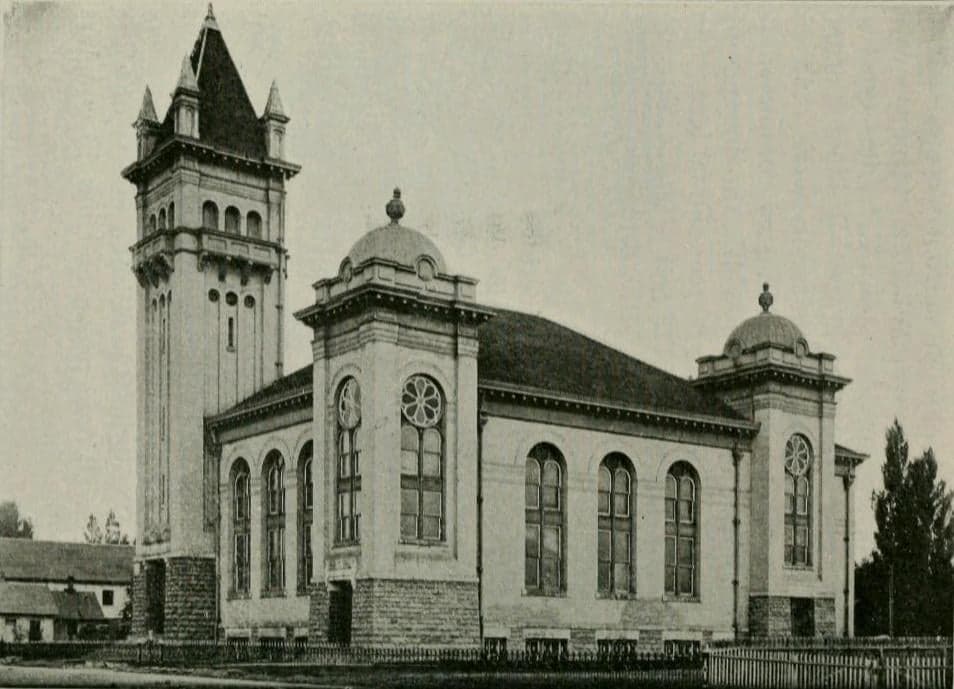
Lehi was settled in 1850 by Mormon pioneers dispatched by Brigham Young to farm the Utah Valley’s northern benchlands. The original settlers were almost entirely converts from the British Isles and Scandinavia, who drained wetlands and built irrigation canals to cultivate sugar beets, alfalfa, and grain. The historic Downtown Lehi area—centered around Main Street and State Street—was the original village grid, where these first families built adobe homes and the Lehi Tabernacle (now the Lehi Utah Temple). A second wave of Mormon settlers from the eastern United States arrived in the 1870s and 1880s, drawn by the promise of irrigated farmland and church-sponsored colonization. They established the Fairfield and Wines Park neighborhoods, which remain older, tree-lined residential districts with a mix of historic homes and mid-century infill. By 1900, Lehi was a stable, overwhelmingly white, LDS farming community of about 3,000 people, with a small population of Japanese and Italian laborers who worked on the railroad and in the sugar beet fields—though these groups never formed lasting enclaves.
Modern era (post-1965)
Lehi’s modern transformation began in earnest after 1990, driven by the expansion of the tech industry along the I-15 corridor. The 1965 Immigration and Nationality Act had little direct effect on Lehi—its foreign-born share remains below 4%—but the domestic in-migration of white, college-educated professionals from California, the Pacific Northwest, and other parts of Utah reshaped the city. The Traverse Mountain neighborhood, built on the hillsides above I-15, became the primary landing zone for these newcomers: a master-planned community of large homes, golf courses, and proximity to tech campuses like Adobe and Vivint. Meanwhile, the Thanksgiving Point area—a mixed-use development around the Ashton family’s museum and gardens—attracted a slightly older, wealthier demographic, including empty-nesters and executives. Hispanic residents, now 9.2% of the population, are concentrated in the older West Lehi neighborhoods near the railroad tracks and the former sugar factory, where they work in construction, landscaping, and service jobs. East and Southeast Asian residents (1.3%) and Indian-subcontinent residents (0.7%) are small but growing, typically settling in newer subdivisions like Eagle Point and Dry Creek, drawn by tech-engineering jobs at companies like Micron and Xactware. The Black population (0.5%) remains tiny and dispersed, with no identifiable neighborhood cluster.
The future
Lehi’s population is heading toward continued growth—projected to exceed 100,000 by 2035—but with a distinct pattern of economic and cultural sorting rather than full homogenization. The city is tribalizing into three broad enclaves: the affluent, tech-driven neighborhoods of Traverse Mountain and Thanksgiving Point, which are becoming whiter and more educated; the older, more affordable West Lehi and Fairfield areas, which are diversifying slowly as Hispanic and working-class families move in; and the newer master-planned subdivisions like Lakeview and Pioneer Crossing, which attract young LDS families from across Utah and the Intermountain West. The immigrant communities—Hispanic, East/Southeast Asian, and Indian—are growing but from a very low base, and they are assimilating into the dominant LDS culture at a moderate pace, with many second-generation children attending church and marrying within the faith. Over the next 10–20 years, Lehi will likely remain a predominantly white, LDS-majority city, but with a slightly more visible Hispanic minority and a thin layer of tech-driven Asian and Indian professionals. The city is not becoming a melting pot; it is becoming a stratified, economically segregated suburb where newcomers choose their neighborhood based on income and lifestyle rather than ethnicity.
For someone moving in now, Lehi offers a stable, family-oriented environment with excellent schools and a booming job market, but it is not a place of deep ethnic diversity or cultural mixing. The city is becoming a collection of distinct, self-selecting enclaves—each with its own character—rather than a single, integrated community. New residents should expect to find their social footing within their neighborhood and church congregation, not through citywide civic life.

* Values derived from national, state, county, city and local statistics and may differ in a specific area. Last updated: 2026-04-21T13:19:19.000Z
Narrative content on this page is AI-generated and may contain mistakes. Verify any details that matter before acting on them.
ReloMaps may earn a commission from affiliate links at no extra cost to you.

