Photo: Wikipedia
Political ClimatePolitical Climate in Lehi, UT
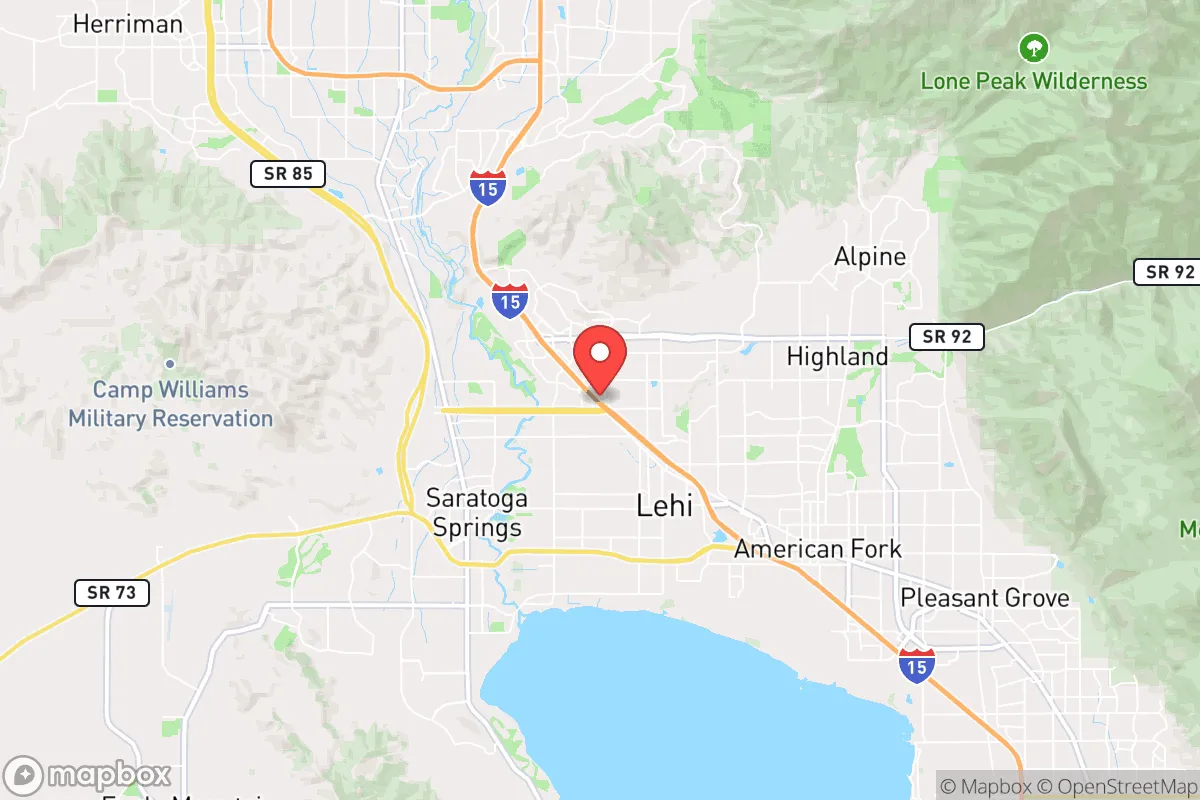
District shown is the primary district for this city’s centroid. Cities may span multiple districts.
Local Political AnalysisPolitical Analysis of Lehi, UT
Lehi, Utah, sits in the heart of Utah County, and politically, it’s about as reliably conservative as it gets. The Cook PVI of R+10 tells you the math, but the real story is in the culture: this is a place where the Republican primary is the real election, and where a Democrat running for local office is about as common as a palm tree in the snow. That said, the rapid growth from tech jobs and an influx of out-of-state families is starting to stir the pot, and while the area hasn’t flipped, you can feel the political winds shifting in ways that make a long-time resident like me a little uneasy.
How it compares
Lehi is the conservative anchor of the "Silicon Slopes" corridor, but it’s not a monolith. Drive a few miles north to Sandy or Draper, and you’ll find a slightly more moderate vibe, especially in state legislative races, where those areas have occasionally sent Republicans who are less hardline on things like school choice or property rights. Head south to Payson or Spanish Fork, and you’re in even deeper red territory—places where the R+10 of Lehi almost looks purple by comparison. The real contrast, though, is with Salt Lake City proper, just 30 minutes north, where the political climate is so progressive that it feels like a different state entirely. That proximity is what worries me: as Lehi grows, the pressure to adopt Salt Lake-style policies on zoning, taxes, and even public health mandates is creeping in, and it’s a battle we’re fighting at every city council meeting.
What this means for residents
For the average Lehi resident, the conservative tilt means a government that generally stays out of your business. Property taxes are low compared to the national average, and the city has been aggressive about keeping regulations light for new businesses, which is why you see so many tech companies setting up shop. But the flip side is that the growth is straining infrastructure, and there’s a growing tension between the old guard—who want to keep Lehi’s small-town feel and low taxes—and newcomers who are used to more services and are willing to pay for them. The biggest red flag I see is the push for "complete streets" and transit-oriented development, which sounds nice but often comes with strings attached: higher density, more government planning, and less freedom to use your property as you see fit. If you value personal liberty and a government that doesn’t meddle, Lehi is still a great bet, but you need to stay engaged in local elections to keep it that way.
Culturally, Lehi is still deeply rooted in the LDS Church, which shapes a lot of the social and political norms. That means you’ll find a strong emphasis on family, community service, and a general distrust of big government. But there’s a noticeable shift among younger residents who are more influenced by national trends. I’ve seen more yard signs for moderate candidates in the last two cycles than in the previous twenty years combined. If the trend continues, I’d expect Lehi to stay red, but maybe not as deep red as it was a decade ago. The key is to watch the school board and city council races—that’s where the real battles over curriculum, land use, and local taxes are fought. For now, Lehi is a solid conservative haven, but it’s not immune to the pressures of growth and the progressive wave washing over the Wasatch Front. Keep your eyes open, and don’t take the political climate for granted.

State Political ClimatePolitical Climate in Utah
State Political AnalysisPolitical Environment in the State
Utah has long been one of the most reliably conservative states in the Union, with a Republican trifecta controlling state government for decades and a cultural DNA shaped by the LDS Church’s emphasis on family, self-reliance, and limited government. The state voted +20 points for Donald Trump in 2024, but beneath that headline, the last 15 years have seen a slow, uneven drift: the Wasatch Front’s urban core is trending purple, while rural counties like San Juan and Daggett remain deep red. For a conservative relocating here, the big question isn’t whether Utah is red—it’s whether the red is fading or holding.
Urban vs. rural divide
The political map of Utah is a tale of two corridors. Salt Lake County, home to over 1.1 million people, has been the epicenter of the state’s leftward shift: it voted for Joe Biden in 2020 and Kamala Harris in 2024, driven by the growing influence of Salt Lake City proper, Millcreek, and the liberal enclave of Park City (Summit County). Meanwhile, Utah County—anchored by Provo and Orem—remains a conservative stronghold, though even there, younger LDS voters in Lehi and American Fork are showing more libertarian streaks on social issues. The rural counties—Carbon, Emery, Grand, and San Juan—vote 70-80% Republican, powered by mining, ranching, and a fierce independence from state-level mandates. The real flashpoint is the Wasatch Front’s suburban ring: places like Draper, Sandy, and Herriman are where the battle for Utah’s future is fought, as transplants from California and Colorado bring moderate-to-left leanings on housing, transit, and environmental regulation.
Policy environment
Utah’s policy posture is a mixed bag for conservatives. On the plus side, the state has no income tax on retirement income, a flat 4.65% personal income tax rate, and a sales tax cap of 8.35%—among the lowest in the West. The regulatory climate is business-friendly, with right-to-work laws and no state-level minimum wage above the federal $7.25. Education policy is a battleground: the state passed a universal school choice voucher program in 2023 (HB 215), allowing families to use public funds for private or homeschool expenses—a major win for parental rights. However, the state’s healthcare system is heavily regulated, with certificate-of-need laws still on the books for hospitals and nursing homes, limiting competition. Election laws are solid: voter ID is required, no-excuse mail-in voting is universal (a bipartisan compromise), and the state has a strong anti-fraud framework. The biggest red flag for liberty-minded residents is the state’s heavy-handed approach to alcohol regulation—state-run liquor stores, strict ABV limits on grocery beer, and a byzantine licensing system that feels like a holdover from the 1950s.
Trajectory & freedom
Utah is in a tug-of-war between expanding and contracting personal freedom. On the freedom-expanding side, the 2024 legislative session saw the passage of SB 171, which prohibits any state or local entity from enforcing federal gun laws that violate the Second Amendment—a direct nullification move. The state also passed HB 261, which bans gender-affirming care for minors and restricts transgender athletes in school sports, a clear win for parental rights and biological reality. Property rights got a boost with the 2023 passage of HB 166, which limits the use of eminent domain for private economic development. But there are concerning trends: the state’s housing crisis has led to a wave of zoning preemption bills (like SB 34 in 2024) that override local control to force higher-density development in suburban areas—a classic case of state-level overreach that conservatives in places like St. George and Cedar City see as government meddling. The biggest liberty concern is the state’s aggressive use of civil asset forfeiture, which remains a tool for law enforcement to seize property without a criminal conviction, despite reform efforts in 2022 that fell short.
Civil unrest & political movements
Utah has been relatively quiet on the civil unrest front compared to coastal states, but there are visible flashpoints. The 2020 protests in Salt Lake City over George Floyd’s death turned into a multi-day occupation of the city’s downtown, with property damage and clashes with police—a shock to a state that prides itself on civility. Since then, the left has organized around the Utah Poor People’s Campaign and the Salt Lake City chapter of the Democratic Socialists of America, which has gained traction among younger transplants in the Avenues and Sugar House neighborhoods. On the right, the Utah Patriot Movement and the Constitutional Sheriffs and Peace Officers Association have a strong presence in rural counties like Box Elder and Uintah, where talk of nullification of federal land management is common. Immigration politics are a simmering issue: while the state passed a 2011 law (HB 497) requiring police to check immigration status, enforcement is uneven, and the growing Latino population in Ogden and West Valley City has led to sanctuary-city rhetoric from local officials. Election integrity remains a hot-button issue: the 2022 audit of Salt Lake County’s election system found no widespread fraud, but distrust persists among grassroots conservatives, particularly in rural areas where mail-in ballots are viewed skeptically.
Projection
Over the next 5-10 years, Utah is likely to become more politically divided, not less. The in-migration wave—roughly 50,000 new residents per year, mostly from California, Colorado, and Washington—is bringing a more moderate-to-left electorate to the Wasatch Front, particularly in Salt Lake County and the tech corridor from Lehi to Sandy. This demographic shift will likely push the state toward a more competitive two-party system in urban areas, but rural counties will dig in deeper. The LDS Church’s influence is slowly waning among younger generations, which could loosen the cultural conservatism that has kept the state red. Expect continued fights over housing density (state vs. local control), water rights (a growing scarcity issue that will pit agricultural against urban interests), and education funding (vouchers vs. public schools). The most likely outcome is a Utah that remains Republican-controlled at the state level but with a narrower margin, and a growing libertarian wing that challenges both parties on property rights, gun rights, and tax reform. A conservative moving in now should expect to find a state that is still broadly aligned with their values, but where the political ground is shifting under their feet.
For a new resident, the bottom line is this: Utah offers a high degree of personal freedom on gun rights, school choice, and low taxes, but you’ll have to navigate a state government that is increasingly willing to override local control on housing and land use, and a culture that is slowly becoming more polarized along urban-rural lines. If you’re looking for a place where your vote still counts and your values are respected, the rural counties and the outer suburbs of Utah County are your best bet. The Wasatch Front’s urban core is a warning sign of what’s coming—but for now, the state as a whole remains a solid conservative haven, provided you’re willing to fight for it.
* Values derived from national, state, county, city and local statistics and may differ in a specific area. Last updated: 2026-04-21T13:19:19.000Z
Narrative content on this page is AI-generated and may contain mistakes. Verify any details that matter before acting on them.
ReloMaps may earn a commission from affiliate links at no extra cost to you.

