
Photo: Wikipedia
Personal Sovereignty in Lehi, UT
Viable for self-reliance. Generally workable, though some barriers may limit total independence.
What does Personal Sovereignty tell us?
Personal Sovereignty measures your capacity for self-reliance and independence with minimal government friction. Higher scores mean fewer barriers between you and the way you want to live... but it assumes you have the space you need and good neighbors.
What does this tell us?
Personal Sovereignty measures your capacity for self-reliance and independence with minimal government friction. Higher scores mean fewer barriers between you and the way you want to live... but it assumes you have the space you need and good neighbors.
State Policy
Energy independence: Self-sufficient (80% of energy produced in-state)
Personal Liberty
Homesteading

Personal Liberty Analysis
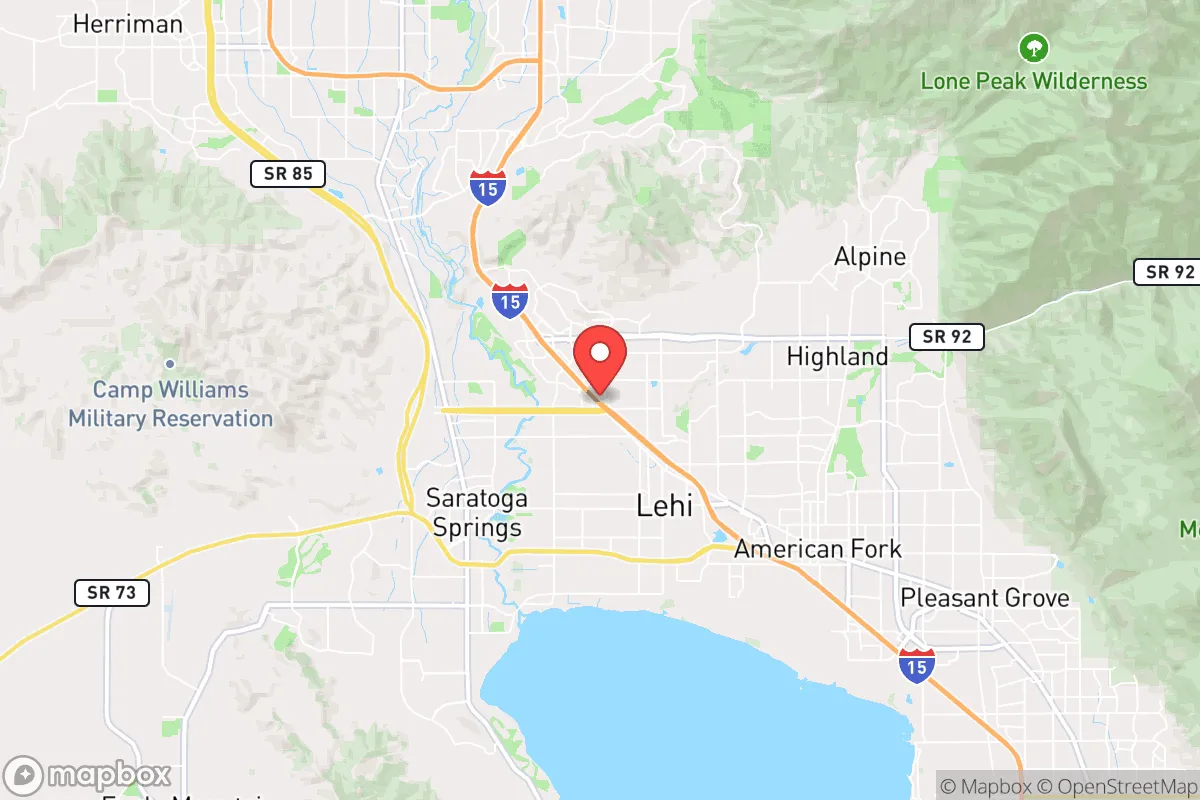
Lehi, Utah, offers a notably high degree of personal sovereignty compared to many urban centers along the Wasatch Front, largely because state-level protections create a buffer against federal overreach and local progressive policies. For the survivalist or prepper, this translates into a legal environment where self-defense, property rights, and family autonomy are treated as presumptive rights rather than privileges granted by the state. The city sits within Utah County, a region where conservative values dominate local governance, meaning the regulatory climate is generally permissive toward individual preparedness and self-reliance. However, Lehi’s rapid growth—its population has more than doubled since 2010 to over 80,000—means that some municipal ordinances are tightening, particularly around land use and building codes, so the window for unfettered autonomy is narrowing but still wide open relative to coastal alternatives.
Tax burden and regulatory posture: how Utah’s fiscal policies protect your resources
Utah’s tax structure is among the most favorable in the nation for individuals seeking to retain control over their earnings and investments. The state levies a flat income tax rate of 4.55% as of 2026, with no progressive brackets that penalize higher earners or those building wealth through side businesses—critical for preppers who may run small-scale operations or hold multiple income streams. Property taxes in Lehi are moderate, with effective rates around 0.6% of assessed value, and the state caps annual increases at 5% for primary residences, preventing the kind of tax-driven displacement seen in states like California or Colorado. Sales tax in Lehi is approximately 7.2%, but essential preparedness items like bulk food, water storage equipment, and firearms components are often exempt from local add-ons. The regulatory posture at the state level is explicitly pro-business and anti-red-tape: Utah has a right-to-work law, no state-level occupational licensing for many trades, and a streamlined environmental review process that discourages federal-style permitting delays. For the survivalist, this means fewer bureaucratic hurdles when building a root cellar, installing a backup generator, or converting a garage into a food storage facility. The state’s constitutional requirement for a balanced budget and its AA+ credit rating further signal fiscal discipline, reducing the risk of sudden tax hikes to cover pension shortfalls.
Self-defense and gun law specifics: what you can legally carry and store
Utah is a constitutional carry state, meaning any law-abiding adult 21 or older can carry a concealed firearm without a permit—a foundational right for those prioritizing personal security in uncertain times. Lehi’s local law enforcement generally respects this, and there are no city-level restrictions that exceed state law, such as magazine capacity bans or “assault weapon” registrations. The state preempts all local firearm ordinances, so Lehi cannot enact its own waiting periods or storage requirements. For preppers, this means you can legally stockpile ammunition, build a private shooting range on your own property (subject to noise ordinances and zoning), and keep firearms in vehicles without special permits. Stand-your-ground laws are in effect, with no duty to retreat in any place where you have a legal right to be, which is critical for home defense scenarios. Utah also recognizes firearm suppressors and short-barreled rifles under state law, even if federal NFA paperwork is required, and the state has a “Second Amendment Sanctuary” resolution that discourages local cooperation with federal gun confiscation schemes. The only notable limitation is that carrying in K-12 schools requires a concealed carry permit, but permitless carry is allowed on public university campuses. For the survivalist, the legal framework is permissive enough to support a robust personal defense posture without fear of prosecution for standard preparedness activities.
Self-reliance and homesteading viability: lot sizes, zoning, and off-grid feasibility
Lehi’s zoning is a mixed bag for the serious homesteader. The city’s older neighborhoods, particularly around the historic downtown and areas near the Point of the Mountain, feature lots ranging from 0.25 to 0.5 acres, which can accommodate substantial gardens, chicken coops, and small livestock like goats or rabbits—though city code limits the number of animals and requires permits for structures like barns. Newer subdivisions, especially those in the Traverse Mountain and Eagle Mountain areas, often have HOAs with restrictive covenants that ban clotheslines, front-yard gardens, and external storage of firewood or equipment, so buyers must vet deed restrictions carefully. For off-grid feasibility, Utah’s state laws are surprisingly accommodating: rainwater harvesting is legal and encouraged, with no permit required for systems under 2,500 gallons, and solar panel installation is protected by state law against HOA bans. However, Lehi’s municipal water and power are reliable, so going fully off-grid is more a matter of personal preference than necessity. The city’s zoning code allows for “accessory dwelling units” (ADUs) on single-family lots, which can serve as bunkhouses or rental income for preppers seeking redundancy. The biggest constraint is the Wasatch Front’s water scarcity—Lehi sits in a high desert, and while the city has secured water rights through the Central Utah Project, long-term drought resilience requires personal storage. For the survivalist, the ideal property is a 1-2 acre lot in unincorporated Utah County just outside Lehi’s city limits, where county zoning is far more permissive for livestock, workshops, and alternative energy systems.
Personal liberties: parental rights, medical autonomy, speech, and property protections
Utah’s legal framework strongly favors parental rights, with a state constitutional amendment (passed in 2024) that explicitly recognizes parents’ “fundamental right to direct the upbringing, education, and care of their children.” This means Lehi parents can opt out of public school curricula, homeschool without excessive state oversight, and refuse medical treatments—including vaccines—for their children without fear of child protective services intervention, provided basic safety standards are met. Medical autonomy is similarly robust: Utah has no state-level vaccine mandate for adults, and the 2023 “Medical Freedom” law prohibits employers from requiring COVID-19 vaccines as a condition of employment, a protection that extends to private sector workers. For the prepper, this means you can stockpile prescription medications for chronic conditions (with a valid prescription) and use telemedicine services that operate across state lines, as Utah is part of the Interstate Medical Licensure Compact. Free speech protections are strong, with no hate speech laws that criminalize political or religious expression, and the state has a “campus free speech” law that prevents public universities from designating “free speech zones” or punishing controversial speakers. Property rights are guarded by Utah’s “private property protection” act, which requires the government to pay just compensation for any regulatory taking that reduces property value by more than 20%. For the survivalist, this means you can build a fence, install security cameras, and post “no trespassing” signs without fear of aesthetic ordinances, and the state’s castle doctrine ensures you can use deadly force to defend your home against intruders.
Overall, Lehi offers a sovereignty profile that ranks among the top 10% of U.S. cities for those prioritizing personal autonomy, self-defense, and family independence. The combination of constitutional carry, strong parental rights, low taxes, and permissive zoning for homesteading creates a legal environment where a prepared individual can operate with minimal government interference. However, the city’s rapid growth is bringing more regulation, particularly through HOAs and municipal code enforcement, so the window for maximum autonomy is closing. For the survivalist or prepper seeking a balance between access to urban infrastructure and the freedom to live on your own terms, Lehi is a strong contender—but the best strategy is to buy land in the surrounding unincorporated areas while the regulatory climate remains favorable.

* Values derived from national, state, county, city and local statistics and may differ in a specific area. Last updated: 2026-04-21T13:19:19.000Z
Narrative content on this page is AI-generated and may contain mistakes. Verify any details that matter before acting on them.
ReloMaps may earn a commission from affiliate links at no extra cost to you.

