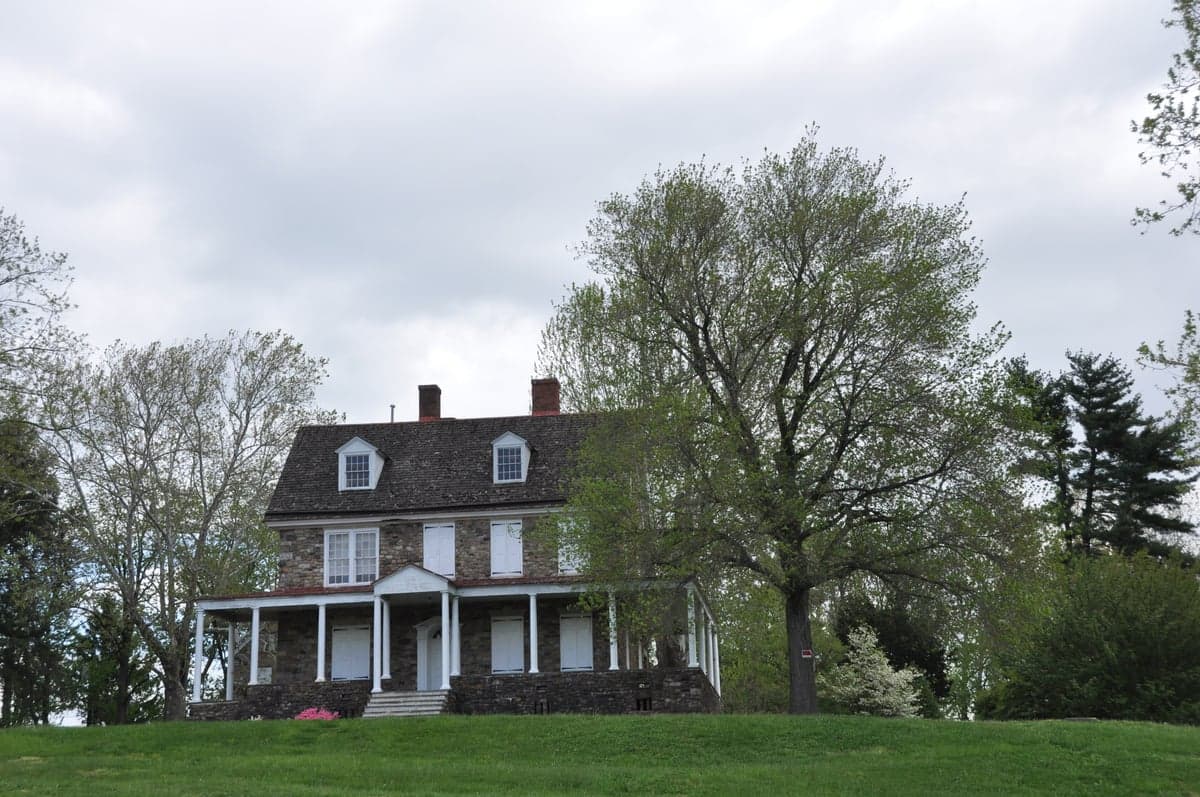
Photo: Wikipedia
Political ClimatePolitical Climate in Levittown, PA
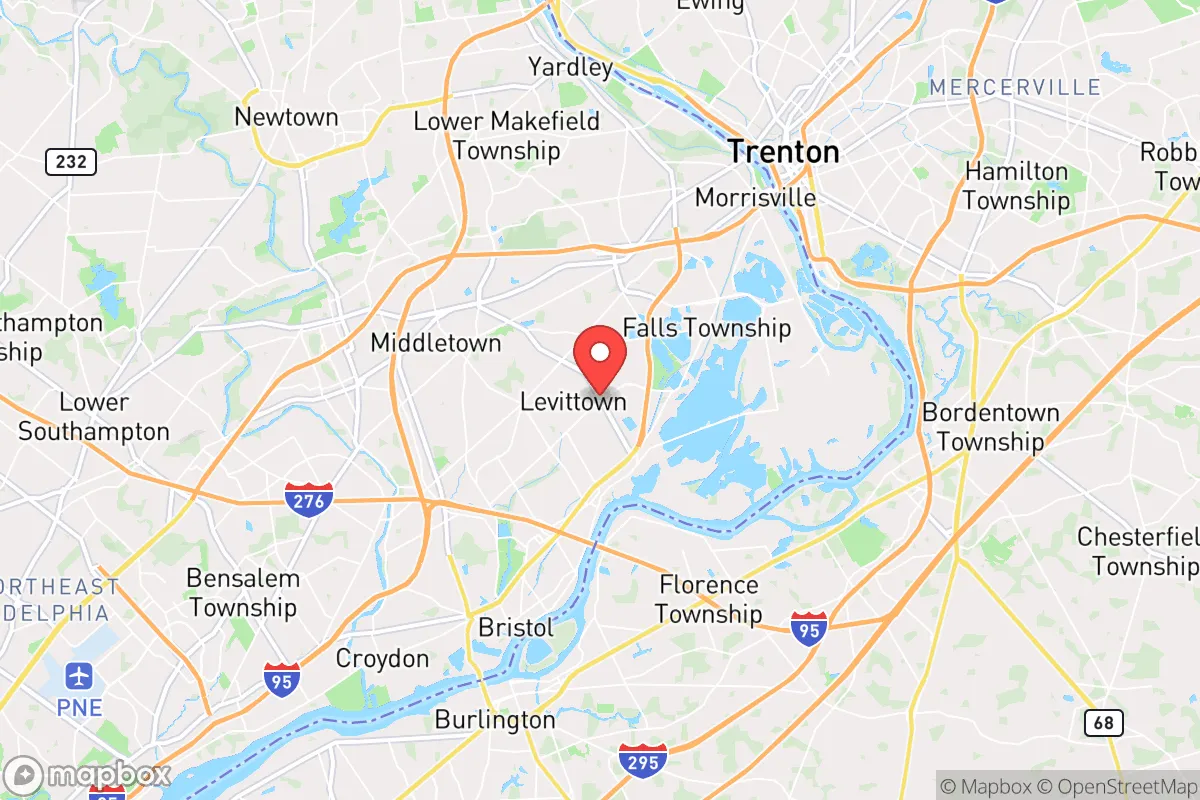
District shown is the primary district for this city’s centroid. Cities may span multiple districts.
Local Political AnalysisPolitical Analysis of Levittown, PA
Levittown, PA, sits in a political sweet spot that’s shifted noticeably over the past decade. With a Cook Partisan Voting Index (PVI) of D+1, the area leans just slightly Democratic, but that’s a real change from the more reliably blue tilt it had in the 2000s and early 2010s. The surrounding state of Pennsylvania, PA, has a Cook PVI of EVEN—perfectly neutral—so Levittown is actually a hair more Democratic than the state as a whole, but the gap is razor-thin. What that means on the ground is that you’ll see a mix of Biden and Trump yard signs in the same block, and local elections often come down to a few hundred votes.
How it compares
Compared to the rest of Pennsylvania, Levittown’s D+1 lean is a mild outlier. The state’s EVEN rating reflects a dead-even split between urban and rural voters, with Philadelphia and Pittsburgh pulling left and the vast central and northern counties pulling right. Levittown, part of Bucks County, sits in a suburban corridor that’s been trending more competitive. Just a few miles north, in towns like Doylestown or New Hope, you’ll find a stronger Democratic tilt (around D+5 to D+8), driven by wealthier, college-educated commuters. Head south or west into Lower Bucks County—places like Bristol or Falls Township—and the politics get more conservative, often R+2 to R+5, thanks to a larger base of union tradespeople and older residents who’ve shifted right on cultural issues. Levittown itself is the middle ground: a working-class suburb where the old Democratic machine still holds some sway, but where Trump’s 2020 and 2024 gains among non-college voters have made it a true swing pocket. The trajectory is toward the center, not further left.
What this means for residents
For conservative residents, Levittown is a place where your vote genuinely counts—it’s not a deep-blue stronghold where you feel drowned out. You’ll find plenty of neighbors who share your views on taxes, school choice, and Second Amendment rights, and local GOP clubs are active. The downside? You’re still in a D+1 district, so statewide races (governor, Senate) often go blue, and you’ll need to work harder to flip local seats. For liberal residents, the advantage is that you’re in a district that’s winnable for Democrats, but you can’t take it for granted. The area’s moderate streak means you’ll need to compromise on issues like zoning or police funding—pure progressive platforms don’t fly here. Both sides will find that local politics is less about ideology and more about practical concerns: school budgets, road repairs, and the cost of living. The cultural vibe is blue-collar and family-focused, not activist-heavy.
One cultural distinction that sets Levittown apart from more polarized parts of Pennsylvania is its relative lack of political theater. You won’t see the kind of heated town hall fights you get in, say, central Pennsylvania’s more rural counties or Philly’s urban core. People here tend to keep politics at the dinner table, not on the front lawn. That’s partly because the area’s demographic mix—longtime residents, newer commuters, and a growing Hispanic population—creates a natural moderating effect. The near-term future looks like more of the same: a D+1 district that could flip to EVEN or even R+1 in a strong Republican year, but that’s unlikely to become a deep-blue or deep-red enclave anytime soon. For anyone moving here, the takeaway is simple: your vote matters, your neighbors will probably disagree with you on something, and that’s just how it works in Levittown.

State Political ClimatePolitical Climate in Pennsylvania
State Political AnalysisPolitical Environment in the State
Pennsylvania is the ultimate swing state, with a Cook PVI of EVEN that perfectly captures its 50/50 split. Over the past 20 years, it has shifted from a reliably blue-leaning state in presidential races (voting for Gore, Kerry, Obama twice) to a true battleground where margins are razor-thin — Trump won it by 44,000 votes in 2016, Biden by 80,000 in 2020, and the 2024 race was again decided by less than 2 points. The dominant coalitions are the urban-suburban Democratic strongholds of Philadelphia and Pittsburgh versus the sprawling exurban and rural Republican base that covers most of the state's landmass. For a conservative-leaning relocator, the key takeaway is that Pennsylvania offers a genuinely competitive political environment where your vote matters, but the policy outcomes are a constant tug-of-war.
Urban vs. rural divide
The political map of Pennsylvania is a textbook case of geographic polarization. The Democratic base is anchored by Philadelphia (which delivers 500,000+ vote margins for Democrats) and Pittsburgh (Allegheny County, another 200,000+ margin), plus the mid-sized cities of Harrisburg, Allentown, and Erie. These urban centers are surrounded by deep-red suburbs and exurbs — Lancaster County voted +15 for Trump in 2024, York County +18, and Franklin County (Chambersburg) +30. The rural north-central region, from Williamsport to Bradford, is among the most Republican territory in the Northeast, often delivering 65-70% for GOP candidates. The critical swing areas are the Philadelphia collar counties — Bucks, Montgomery, Delaware, and Chester — which have been trending leftward since 2016, while the Pittsburgh exurbs like Westmoreland County have shifted right. A conservative moving to Pennsylvania will find a comfortable political home in most places outside the two major metro cores, but should expect to encounter a mix of viewpoints in any suburban or exurban community.
Policy environment
Pennsylvania's policy landscape reflects its divided government. The state has a flat income tax rate of 3.07% — one of the lowest in the Northeast — and a sales tax of 6% (8% in Philadelphia and Pittsburgh). Property taxes are high, averaging about 1.5% of home value, but there is a homestead exemption that reduces the burden for owner-occupied homes. The regulatory posture is moderate: Pennsylvania is not a "right-to-work" state, meaning union membership remains strong in construction, education, and public services, but it also has a relatively business-friendly corporate tax rate that was cut from 9.99% to 8.49% in 2023 and is scheduled to drop further. Education policy is a major flashpoint — the state has a patchwork of 500 school districts, with funding disparities between wealthy suburbs and poorer rural areas that have led to ongoing litigation. Election laws are relatively accessible: no-excuse mail-in voting was enacted in 2019 (Act 77), but remains controversial among conservatives who argue it weakens ballot security. Voter ID is required for first-time voters only, not for established voters — a point of contention that has not been tightened despite GOP control of the legislature.
Recent policy direction
The last five years have seen Pennsylvania lurch in both directions on key liberty issues. On gun rights, the state remains a "shall-issue" concealed carry state, and in 2022 the legislature passed preemption laws that prevent municipalities from enacting their own gun bans — a win for Second Amendment advocates. However, Philadelphia and Pittsburgh have sued to overturn these preemptions, and the state Supreme Court (with a 5-2 Democratic majority) has been sympathetic to local control. On education and parental rights, the 2023-24 session saw heated debates over library book content and curriculum transparency, but no major legislation passed — the issue remains a local school board battleground. Medical marijuana is legal (since 2016), but recreational cannabis remains illegal despite bipartisan support in polls; Governor Josh Shapiro has called for legalization, but the GOP-controlled Senate has blocked it. On privacy and surveillance, Pennsylvania has no statewide ban on facial recognition by police, and several cities (Philadelphia, Pittsburgh) use it. Property rights are generally strong, with no statewide rent control and relatively straightforward zoning in most rural and suburban areas. Voting access remains a flashpoint: Act 77's mail-in voting survived a 2024 state Supreme Court challenge, but the legislature has not funded drop boxes or expanded early voting, keeping Pennsylvania's election system in a state of suspended animation.
Civil unrest & political movements
Pennsylvania has seen its share of political turbulence. The 2020 election aftermath was particularly intense in Philadelphia, where Trump supporters protested outside the convention center during the vote count, and in Lancaster, where a 2022 audit of voting machines by a Republican county commissioner sparked a legal battle. The state has a robust activist scene on both sides: the Pennsylvania Freedom Caucus (a hardline conservative group in the legislature) pushes for election integrity reforms and school choice, while groups like Indivisible and Keystone Progress organize progressive resistance. Immigration politics are relatively quiet compared to border states — Pennsylvania has no sanctuary city laws, though Philadelphia has a "welcoming city" policy that limits cooperation with ICE. There is no serious secession or nullification movement, though some rural counties have passed "Second Amendment sanctuary" resolutions. The most visible flashpoint for a new resident would likely be local school board meetings, where debates over curriculum, library books, and transgender policies have become regular occurrences in suburbs like Central Bucks and Pittsburgh's North Hills.
Projection
Over the next 5-10 years, Pennsylvania is likely to remain a competitive swing state, but the demographic trends favor a slight leftward drift. The Philadelphia suburbs are growing and diversifying, while many rural counties are losing population. In-migration from New York and New Jersey — particularly to the Lehigh Valley (Allentown, Bethlehem) and the Poconos — tends to bring more moderate-to-liberal voters. However, the state's electoral college weight and Senate races will keep it a national battleground, meaning both parties will pour resources into voter turnout. A conservative moving to Pennsylvania now should expect to live in a state where their vote is genuinely contested, but where policy outcomes will likely remain a stalemate — no major gun control, no recreational marijuana, no abortion ban, no school choice expansion. The practical reality is that your quality of life will be shaped more by your local county and municipality than by Harrisburg.
Bottom line for a new resident: Pennsylvania offers a balanced political environment where your vote carries real weight, but the trade-off is constant gridlock on major issues. If you're a conservative, you'll find welcoming communities in most of the state outside Philadelphia and Pittsburgh, with low taxes, strong gun rights, and local control over schools. If you're a liberal, the urban centers and growing suburbs provide a progressive haven. The key is choosing your county wisely — Lancaster and York feel like the Midwest, while Bucks and Montgomery feel like the Northeast. Either way, you're moving to a state that still believes in political competition, for better or worse.
* Values derived from national, state, county, city and local statistics and may differ in a specific area. Last updated: 2026-08-11T09:15:02.000Z
Narrative content on this page is AI-generated and may contain mistakes. Verify any details that matter before acting on them.
ReloMaps may earn a commission from affiliate links at no extra cost to you.

