Photo: Wikipedia
Find The Best Places To Live
in Niagara Falls
PRO TIP! You can paste a Zillow or Redfin link to get info on that property.
What It's Like Living in Niagara Falls, NY
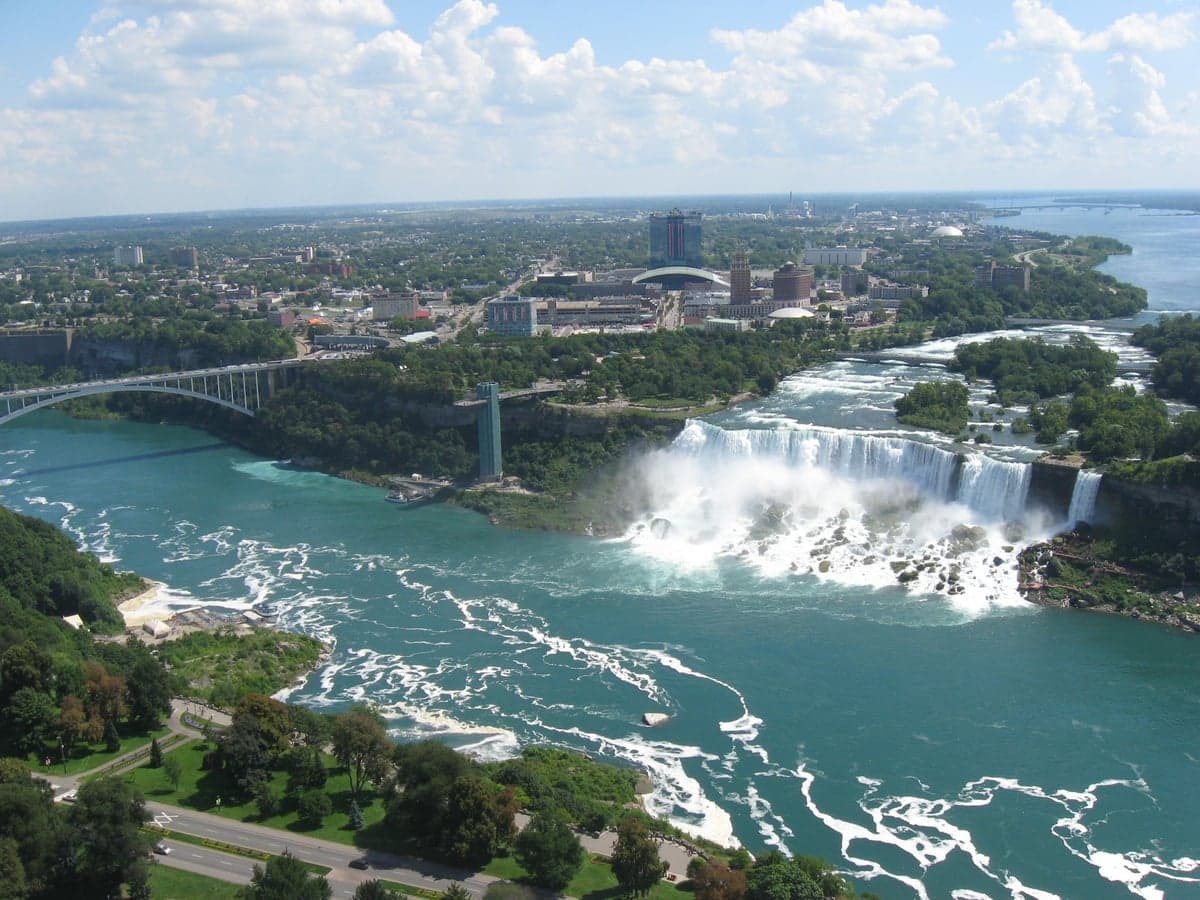
Living in Niagara Falls, New York, means waking up to the constant, low rumble of falling water—a sound that becomes white noise for locals, but never quite loses its power. This is a working-class city of about 48,000 people, where the world-famous waterfalls are the backdrop to a life that’s more about practicality than spectacle. It’s a place where you can afford a home, where the commute is laughably short, and where the community feels tight-knit, but where economic challenges and a tough climate keep things real.
The Daily Rhythm: Affordable Living and Short Commutes
Day-to-day life in Niagara Falls moves at a slower, more deliberate pace than in nearby Buffalo. The median home value sits at just $104,400, and with a cost of living index of 55—nearly half the national average—your paycheck goes a long way. The average commute is a blissful 18.4 minutes, meaning most people are home well before the dinner hour. You’ll find locals shopping at the Niagara Falls Boulevard strip malls, grabbing groceries at Tops or Wegmans in nearby Wheatfield, and grabbing a beer at places like The Silo Restaurant or the venerable Como Restaurant, an Italian-American institution that’s been around since the 1920s. Weekends often involve a trip to the Niagara Falls State Park—not as a tourist, but as a local walking the trails or having a picnic at Terrapin Point. The median income is $48,535, which reflects a blue-collar and service-industry base; this isn’t a town of high earners, but of people who value stability over flash.
Who Fits In: The Resilient and the Rooted
This city suits people who don’t need a lot of frills. It’s a fit for single individuals and families who want to own a home without a crushing mortgage, and who don’t mind a winter that lasts from November to April. The median age is 40.7, a touch older than the national average, and only 22.8% of adults hold a college degree—so the vibe is more about trades, hospitality, and public service than white-collar careers. The kind of person who thrives here is someone who’s handy, community-minded, and okay with driving 20 minutes to Buffalo for a concert or a major shopping trip. It’s also a place where high school sports are a genuine social anchor; Friday night football games at Niagara Falls High School’s Sal Maglie Stadium draw real crowds, and the Wolverines’ hockey team is a point of pride in a town that lives for the ice.
What’s There to Do: Water, Hockey, and Honest Food
Entertainment here leans heavily on the natural wonder at your doorstep. The Cave of the Winds tour and the Maid of the Mist are tourist traps, but locals know the real gems: hiking the Niagara Gorge Trail, fishing off the Whirlpool State Park, or watching the winter ice formations from Goat Island. The city’s biggest annual event is the Niagara Falls Jazz Festival in July, which brings free concerts to the park. For sports, the Niagara University Purple Eagles men’s hockey team is the closest thing to a pro team, and games at the Dwyer Arena are a cheap, rowdy night out. The Buffalo Bills and Sabres are an hour away, but the fandom is real—every bar is packed for a Bills Sunday. For food, you’ve got the classic beef on weck at The Griffon Gastropub, and the Polish soul food at The Polish Nook. The nightlife is modest: a few dive bars on Pine Avenue and the Seneca Niagara Resort & Casino, which draws a steady crowd for slots and table games.
Pros and Cons of Living Here: The Honest Trade-Offs
Longtime residents love the affordability and the natural beauty—you can own a three-bedroom house for under $100,000 and have a world-class waterfall in your backyard. They also appreciate the lack of traffic and the fact that you can be in downtown Buffalo in 25 minutes. What frustrates them is the violent crime rate of 446.4 per 100,000, which is notably higher than the national average and concentrated in certain neighborhoods. The weather is another grind: lake-effect snow can dump two feet overnight, and the gray skies from November to March test anyone’s patience. The schools are a mixed bag—Niagara Falls City School District has struggled with funding and performance, which pushes some families to private options or to the suburbs of Lewiston or Wheatfield. And while the tourism economy brings jobs, it’s seasonal and often low-wage, which keeps the median income below the state average.
There’s a cultural quirk here that sums up the place: locals rarely call it “Niagara Falls.” They say “the Falls.” It’s a subtle marker that you belong—that you see the wonder every day, but you also see the potholes, the empty storefronts on Main Street, and the resilience of a city that refuses to be just a postcard. If you’re looking for a place where your dollar stretches, where the commute is short, and where the community knows your name, it’s worth a serious look. Just bring a good snow shovel and a tolerance for honest, unpolished living.

Similar towns to Niagara Falls
* Values derived from national, state, county, city and local statistics and may differ in a specific area. Last updated: 2026-04-19T08:28:46.000Z
Narrative content on this page is AI-generated and may contain mistakes. Verify any details that matter before acting on them.
ReloMaps may earn a commission from affiliate links at no extra cost to you.

