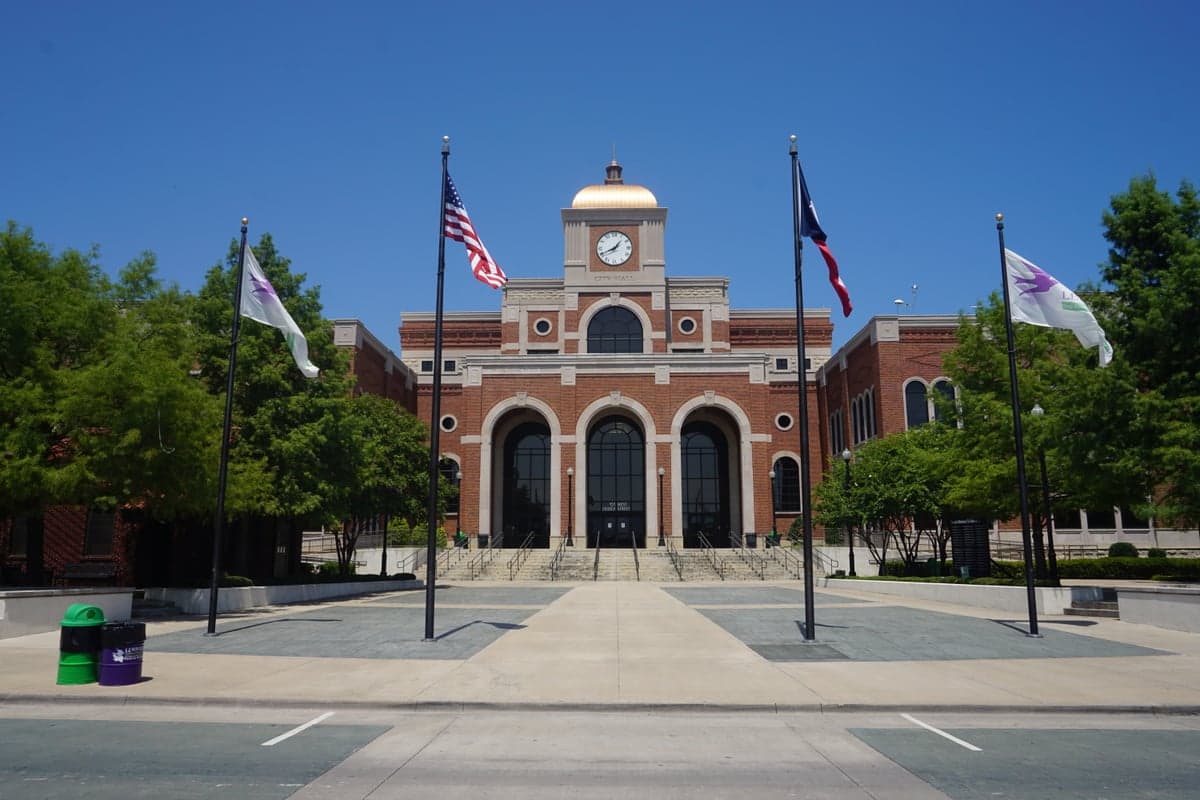
Photo: Wikipedia
Strategic Assessment of Lewisville, TX
Multiple tactical vulnerabilities. Population density, target proximity, or disaster risk are likely compounding. A retreat property and exit planning is required.
What does the Strategic Assessment tell us?
Our Strategic Assessment grades tactical survivability of an area. Major population centers, military targets, fallout zones, natural disasters, and border exposure all drive risk — lower exposure means a more defensible position in a crisis.
This is heavily inspired by Joel Skousen's Strategic Relocation book. Highly recommended you checkout the book ($)What does this tell us?
Our Strategic Assessment grades tactical survivability of an area. Major population centers, military targets, fallout zones, natural disasters, and border exposure all drive risk — lower exposure means a more defensible position in a crisis.
This is heavily inspired by Joel Skousen's Strategic Relocation book. Highly recommended you checkout the book ($)Strategic Pillars

Key Distances
Regional Safe Places
Below is our recommended "safe zones" in Texas and the surrounding area based on our strategic heuristics. For most people, it's unrealistic to live in a “safe zone” full-time due to work, family or other personal reasons. They tend to be more rural. However, many of these areas are perfect for second homes and retreat properties that double as a vacation home or even a short-term rental.

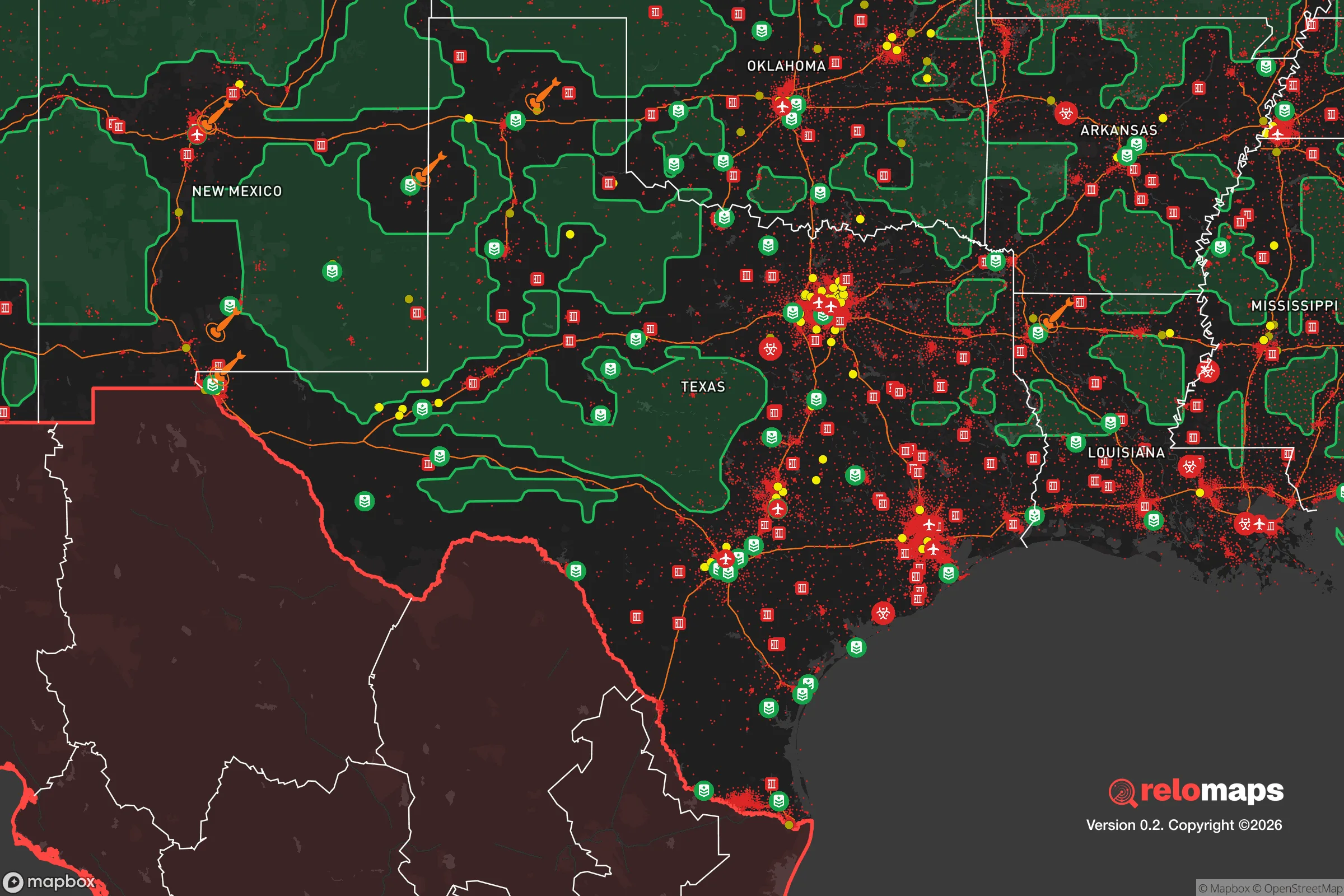


Important Note: For informational purposes only. This does not mean nothing bad ever happens in the green zones. Please use common sense. This is based on public data and modeled with AI. We tried to take a conservative approach but mistakes happen. We update this regularly as new information becomes available.
Solar Generator Recommendations
Backup power matters more here than in safer locations. We've picked three solar generators across budgets and capacity tiers — start with the budget unit if you only need a few essentials, or step up if you want to run a fridge and HVAC for days at a time.

Jackery Portable Power Station Explorer 300
Budget OptionPower on the Go: Weighing only 11 lbs, it's convenient to set up and store with book-sized foldable solar panels

BLUETTI Portable Power Station AC180
Designed for both indoor and outdoor scenarios, AC180 is highly capable as it has a robost capacity and continuous output power.

EF ECOFLOW DELTA Pro Ultra Power Station
Upgraded PickEcoFlow DELTA Pro Ultra is a whole-home energy system designed to grow with your family. Integrated with the Smart Home Panel 2, it scales to meet your evolving energy needs — keeping your home powered, intelligent, and secure through every stage of life.
We earn a commission, at no additional cost to you.
Strategic Assessment Analysis
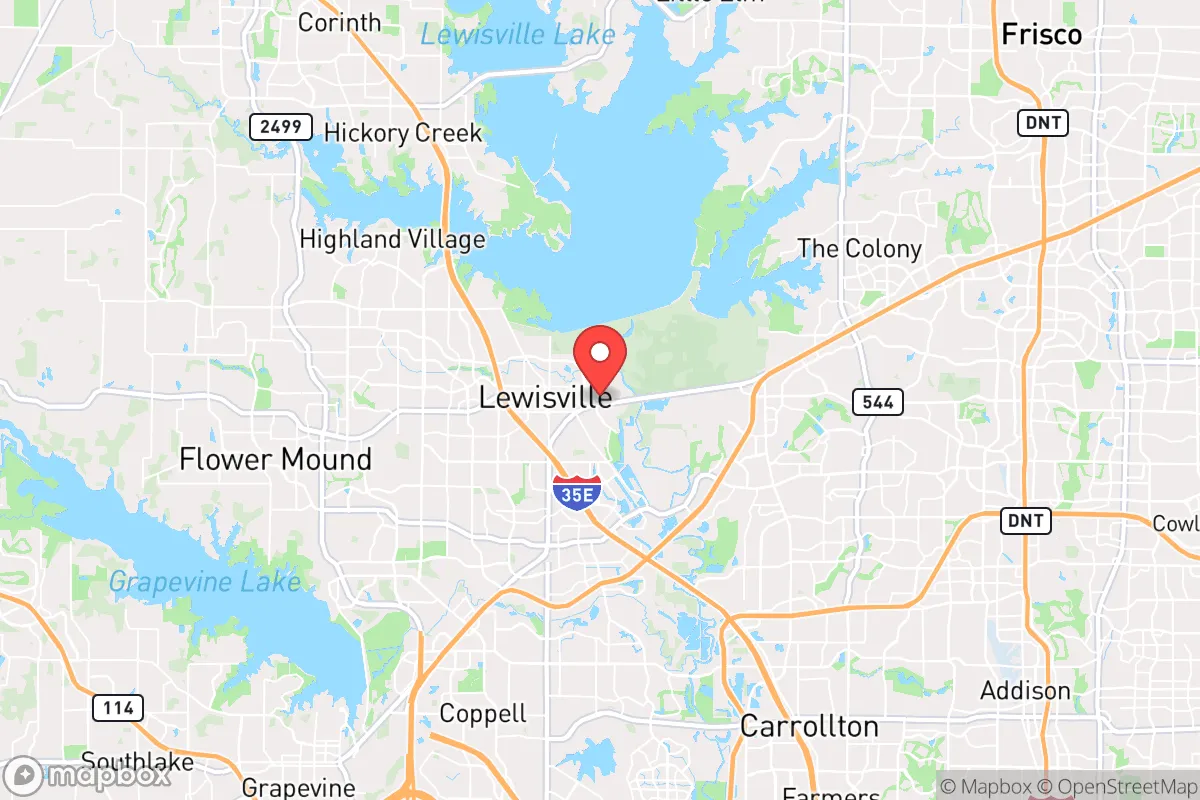
Lewisville, Texas, occupies a strategic position that demands a clear-eyed assessment for anyone serious about long-term resilience. Located roughly 20 miles northwest of downtown Dallas, the city sits at the intersection of I-35E and SH 121, offering rapid evacuation routes north toward Oklahoma and west toward Fort Worth, but also placing it squarely within the blast radius of a major metropolitan target. For a relocator weighing civic stability against proximity to risk, Lewisville presents a mixed picture: its economic base is diversified enough to weather localized disruptions, but its geography ties it directly to the vulnerabilities of the Dallas-Fort Worth metroplex. The city’s population of roughly 110,000, combined with its role as a regional employment hub for companies like JCPenney and Peterbilt Motors, means it has both the resources and the liabilities of a mid-sized Texas city in an increasingly unstable national landscape.
Geographic position and natural advantages for long-term stability
Lewisville’s location on the northern edge of the Dallas-Fort Worth sprawl gives it a few genuine strategic assets. The city is anchored by Lewisville Lake, a 29,000-acre reservoir that provides a reliable freshwater source—critical for any extended disruption scenario. The lake also offers a natural barrier to the south and east, funneling potential movement through a limited number of bridges and choke points, which could be leveraged for neighborhood-level security if civil order degrades. The surrounding terrain is mostly flat to gently rolling, with pockets of wooded areas along the Elm Fork of the Trinity River, offering limited but usable cover for retreat or resupply. The region’s climate is generally temperate, with hot summers and occasional winter ice storms, but it avoids the extremes of coastal hurricane zones or northern blizzard belts. For a prepper, the key takeaway is that Lewisville’s water access and evacuation corridors are real advantages, but they are offset by the city’s integration into a metropolitan area that would be a primary target in any large-scale conflict or economic collapse.
Risks, exposures, and proximity to fallout-relevant landmarks
The most significant risk for a Lewisville relocator is its proximity to Dallas-Fort Worth International Airport, roughly 10 miles south, and the concentration of military and industrial infrastructure in the region. DFW Airport is a Category I target in any major power conflict, and Lewisville lies within the likely fallout zone of a conventional or nuclear strike on that facility. Additionally, the city is within 30 miles of the Fort Worth Naval Air Station Joint Reserve Base and the Lockheed Martin plant in Fort Worth, both high-value targets. On the civil unrest front, Lewisville’s position along I-35E means it would be a primary evacuation route for Dallas residents fleeing north, potentially turning the city into a bottleneck of desperate traffic and resource competition. The city’s own infrastructure—power grids, water treatment plants, and fuel depots—are tied to the larger ERCOT and regional systems, meaning a localized failure could cascade quickly. For a conservative-minded individual, the calculus is clear: Lewisville offers better odds than downtown Dallas, but it is not a retreat location. It is a buffer zone that requires a plan for either fortifying in place or moving further north to more rural areas like Denton or Cooke County if the situation deteriorates.
Practical resilience for a relocator: food, water, energy, and defensibility
For someone serious about self-sufficiency, Lewisville’s practical resilience is a mixed bag. The city’s water supply from Lewisville Lake is robust, but treatment plants are centralized and vulnerable to disruption. A prepper should plan for at least two weeks of stored water per person, plus a Berkey or similar filtration system for lake water if needed. Food access is decent: the city has multiple grocery chains, but in a panic scenario, shelves empty within hours. Local farmers’ markets and the nearby Texas Fresh produce distribution center offer some alternative supply lines, but they are not reliable in a crisis. Energy is the weak link. Lewisville is entirely dependent on the ERCOT grid, which has shown fragility during winter storms (2021) and summer heat waves. Solar panels with battery backup are a wise investment, but HOAs in many Lewisville neighborhoods restrict visible installations—check covenants before buying. Natural gas is available in most areas, but pipelines are vulnerable to sabotage or pressure drops. Defensibility is moderate: the city’s suburban layout with cul-de-sacs and gated communities can be secured with minimal effort, but the sheer number of entry points from major highways makes area-wide defense impractical. A better strategy is to identify a specific neighborhood with limited access points—preferably near the lake or in the hilly areas west of I-35E—and build a community network of like-minded neighbors. Lone-wolf survivalism is less effective here than a coordinated block-level plan.
The overall strategic picture for Lewisville is one of calculated risk. It is not a bug-out location or a remote homestead, but it offers a viable base for someone who needs to stay within commuting distance of Dallas employment while maintaining a reasonable level of preparedness. The city’s water access, evacuation routes, and economic diversity give it a resilience score that beats most inner-ring suburbs, but its proximity to high-value targets and major population centers means it will be affected by any large-scale event. For a conservative relocator who values community, local governance, and the ability to network with other prepared individuals, Lewisville can work—provided you have a clear plan for the first 72 hours of a crisis and a secondary retreat location further north. The smart move is to treat Lewisville as a forward operating base, not a final redoubt. If you’re looking for a place to ride out the coming instability with a reasonable chance of maintaining order and access to resources, it’s a solid option. If you’re looking for total isolation and self-reliance, keep driving north.

* Values derived from national, state, county, city and local statistics and may differ in a specific area. Last updated: 2026-04-21T13:19:09.000Z
Narrative content on this page is AI-generated and may contain mistakes. Verify any details that matter before acting on them.
ReloMaps may earn a commission from affiliate links at no extra cost to you.

