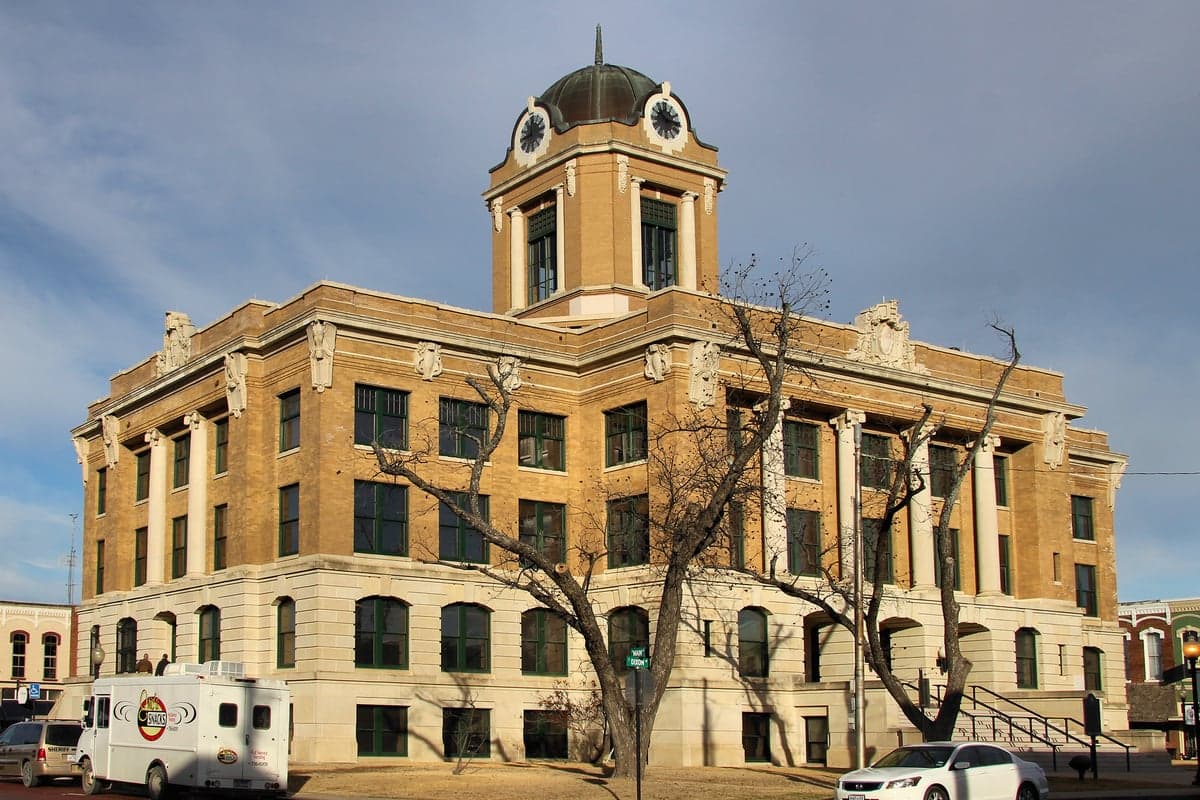
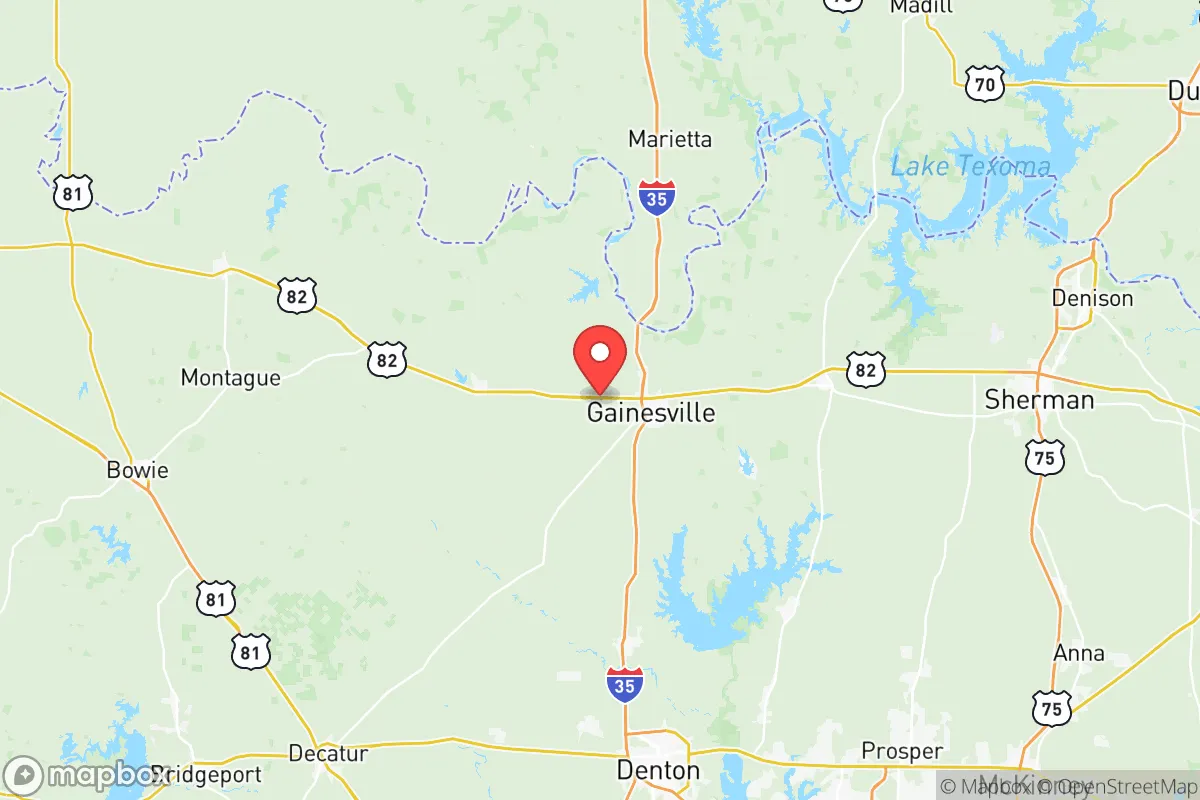
Photo: Wikipedia
Find The Best Places To Live in Cooke County
PRO TIP! You can paste a Zillow or Redfin link to get info on that property.
Best Places to Live in Cooke County
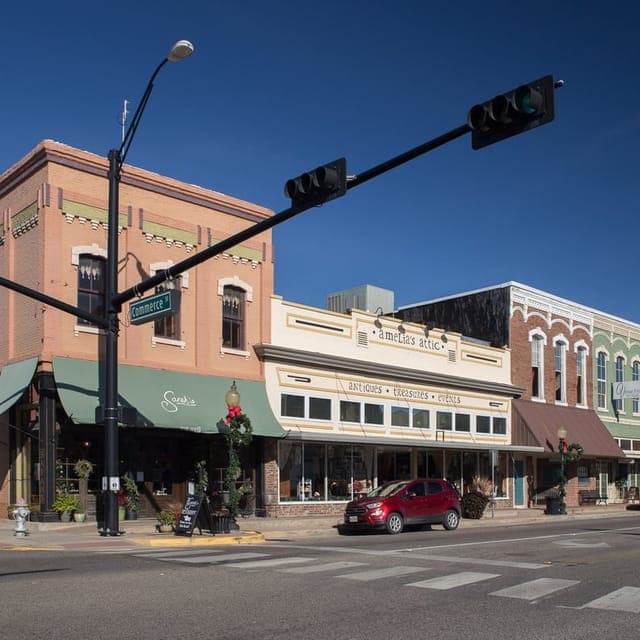
Cities & Towns in Cooke County
Cities in Cooke County
What It's Like Living in Cooke County, TX
Cooke County sits at the northern edge of Texas, where the rolling plains meet the Red River, and life moves at a pace that feels both deliberate and unhurried. The county’s 42,473 residents are spread across a mix of small cities like Gainesville (the county seat and largest town), Muenster, Lindsay, and Valley View, along with wide-open rural stretches where cattle ranches and hay fields dominate the horizon. It’s a place where people know their neighbors, Friday night lights are a genuine community event, and the cost of living—indexed at 88, well below the national average—lets families stretch a median income of $72,472 further than they could in Dallas or Austin.
Daily Rhythm and the Kind of Person Who Fits In
Life here revolves around work, family, and a calendar full of school and church events. The median age is 40.3, and that skews toward families with school-age kids and retirees who’ve traded suburban congestion for a quieter life. The average commute is just under 26 minutes, which feels luxurious compared to the DFW metroplex, and most people drive to jobs in Gainesville’s industrial parks, local healthcare facilities, or the county’s agricultural operations. A fair number also commute south to Denton or even Dallas for higher-paying work, but they do it by choice, not necessity. The kind of person who thrives here values self-reliance, isn’t bothered by a 45-minute drive to a Costco, and prefers a front porch over a high-rise balcony. College attainment is low at 23.6%, but that reflects a workforce heavy on trades, farming, and manufacturing—not a lack of ambition.
Weekends in Cooke County are spent on the water at Lake Ray Roberts (just south of the county line), hunting deer and turkey on private leases, or catching a show at the Butterfield Stage Theatre in Gainesville. The Gainesville Factory Shops draw shoppers from a 50-mile radius, and for groceries, most people hit the local Brookshire’s or Walmart. The social scene is low-key: a cold beer at O’Reilly’s Irish Pub in Gainesville, a burger at Fischer’s Meat Market in Muenster, or a slice of pie at the Muenster Bakery. The German Catholic heritage of Muenster and Lindsay shows up in the food—sausage, sauerkraut, and homemade pastries are staples at community dinners.
Sports, Community, and the Glue That Holds It Together
High school sports are the undisputed center of social life. Gainesville High School football games on Friday nights pack the stands, and the rivalry with Muenster is genuine and long-standing. Muenster’s football program, a perennial Class 2A powerhouse, is a source of immense local pride—the town of roughly 1,500 people will shut down for a playoff game. Basketball and baseball also draw crowds, and the Lindsay Knights have a strong following in their own right. There’s no pro sports team in the county, but that’s fine; the community’s identity is built around its own kids, not distant franchises. The Cooke County Fair in September is the biggest annual event, with livestock shows, carnival rides, and a rodeo that brings in families from every corner of the county.
Cultural quirks are subtle but real. The county is heavily Republican, and gun ownership is common—not as a political statement, but as a practical tool for hunting and varmint control. The Gainesville State School, a juvenile correctional facility, is a major employer and a topic of occasional local debate. The area’s German Catholic roots in Muenster and Lindsay mean that Lenten fish fries and Oktoberfest-style gatherings are annual traditions, while the rest of the county leans more toward Baptist potlucks and cowboy church.
What’s There to Do (and What’s Missing)
Outdoor recreation is the main draw. The Red River forms the northern border, offering fishing and kayaking, though access points are limited. Muenster’s City Park has a disc golf course and a swimming pool that’s packed in summer. The Gainesville Municipal Golf Course is a solid, affordable 18-hole layout. For a bigger night out, people drive 30 minutes south to Denton for the music scene or 90 minutes to Dallas for concerts and pro sports. The lack of a major entertainment venue within the county is a genuine downside—if you want a movie theater, you’re heading to Gainesville’s small multiplex or driving to Sherman.
Pros and cons are clear-cut. On the plus side: the cost of living is a standout—median home value is $224,600, which buys a three-bedroom house on a half-acre lot, something unimaginable in Austin or Dallas. The violent crime rate of 344.4 per 100,000 is slightly above the national average, but most of that is concentrated in specific areas of Gainesville, and the rural parts of the county feel very safe. On the downside: job diversity is limited. Healthcare, education, and manufacturing dominate, and anyone in tech or corporate work will likely need to commute. The weather is classic North Texas—hot, humid summers with highs in the 90s, and occasional ice storms in winter that can shut down roads for a day or two. Tornado warnings are a spring reality, and most homes have a storm shelter or a plan to get to one.
Schools are a major community anchor. Gainesville ISD serves the largest population, while Muenster ISD and Lindsay ISD are smaller, higher-performing districts that draw families specifically for the academics and small class sizes. The county’s identity is proudly independent—people here don’t want to be a Dallas suburb, and they’ve fought to keep it that way. For a single person or a parent looking for a place where a handshake still means something and the pace of life leaves room for what matters, Cooke County delivers exactly what it promises

* Values derived from national, state, county, city and local statistics and may differ in a specific area. Last updated: 2026-05-21T10:23:16.000Z
Narrative content on this page is AI-generated and may contain mistakes. Verify any details that matter before acting on them.
ReloMaps may earn a commission from affiliate links at no extra cost to you.

