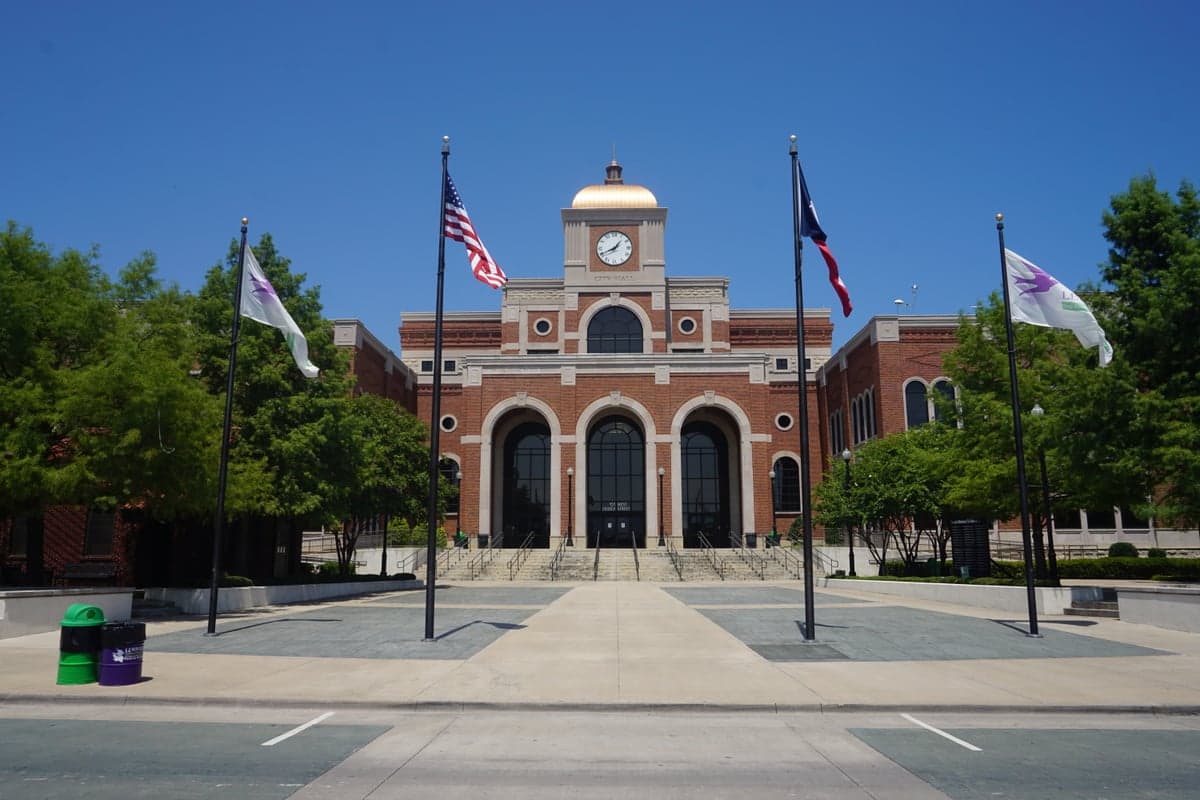
Photo: Wikipedia
Political ClimatePolitical Climate in Lewisville, TX
District shown is the primary district for this city’s centroid. Cities may span multiple districts.
Local Political AnalysisPolitical Analysis of Lewisville, TX
Lewisville, Texas, has long been a reliably conservative community, but like many suburbs in the Dallas-Fort Worth metroplex, it’s starting to feel the pressure of shifting demographics and outside influence. The Cook Partisan Voting Index (PVI) for the area sits at R+11, which tells you the district still leans solidly Republican, but that number doesn’t capture the growing tension between long-time residents who value limited government and newer arrivals who bring a more progressive mindset. If you’ve lived here for a while, you’ve seen the change—it’s not a blue wave, but it’s a noticeable undercurrent that has folks watching local elections a lot more closely than they used to.
How it compares
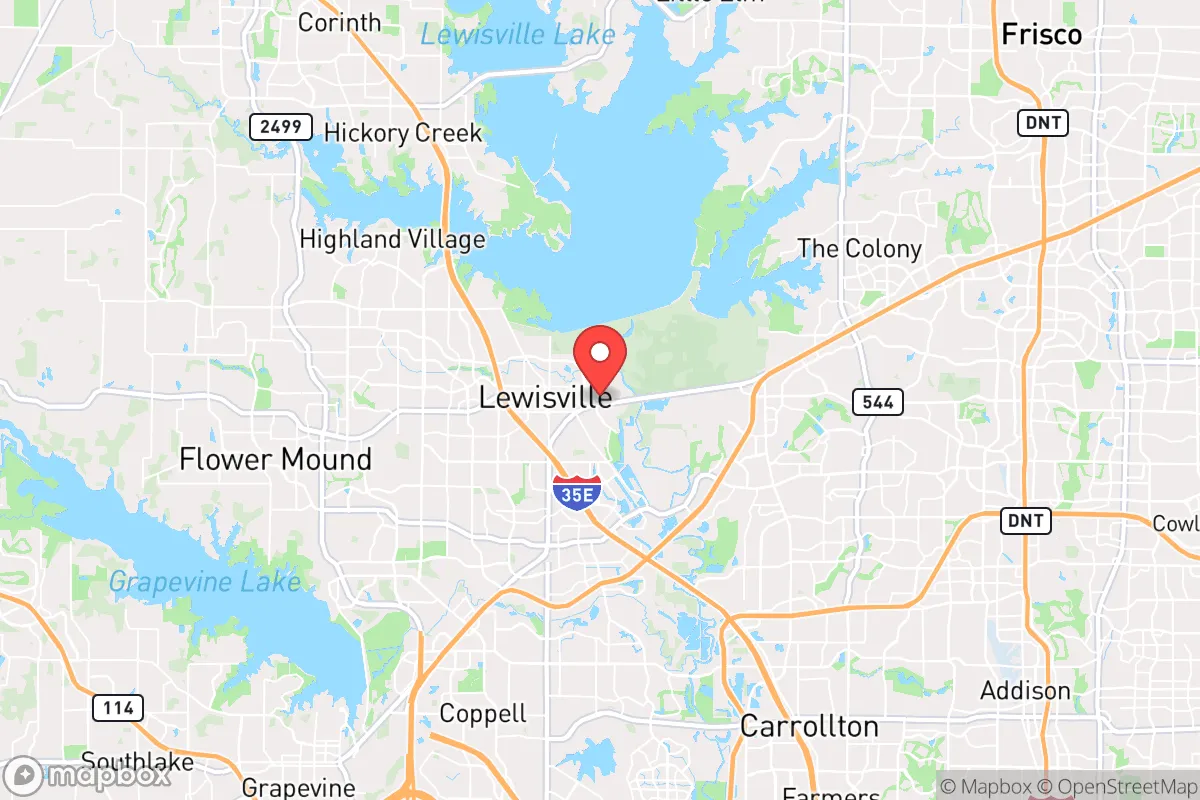
When you stack Lewisville up against its neighbors, the contrast is pretty stark. Head west a few miles to Flower Mound, and you’ll find a town that’s still very much in the traditional conservative camp—lower taxes, fewer regulations, and a general hands-off approach from local government. But drive east to Carrollton or south to Irving, and you’re in areas that have swung noticeably leftward in recent years, with more progressive policies on zoning, policing, and even school board decisions. Lewisville sits right in the middle, and that’s what makes it interesting. It’s not as red as it was in the 2000s, but it’s still a place where the Republican primary is the real election in most local races. The worry for many of us is that the progressive drift from the cities to the east is creeping in, and if we’re not careful, we’ll end up with the same kind of overreach—like higher property taxes funding pet projects or school boards pushing agendas that don’t reflect what parents want.
What this means for residents
For the average person living here, the political climate directly affects your wallet and your freedoms. The R+11 lean means your local representatives are still mostly focused on keeping government out of your business—things like low business regulations, minimal zoning hassles, and a police department that respects your Second Amendment rights. But there’s a real concern that as the city grows, the pressure to adopt “best practices” from more progressive cities will increase. You see it in debates over housing density, where some council members push for high-density apartments that bring more traffic and strain on schools, while long-time residents argue for keeping the suburban character that made Lewisville a great place to raise a family. The school board is another battleground—there’s a constant tug-of-war between parents who want transparency and local control versus those who want to align with state or national education trends. If you value personal liberty and don’t want a government telling you how to live, Lewisville is still a good bet, but you’ve got to stay engaged.
Culturally, Lewisville has a few distinctions that set it apart from its more conservative neighbors. The city has a strong tradition of local festivals and community events that feel genuinely small-town, even as the population grows. But there’s also a noticeable push from some quarters to make the city more “inclusive” in a way that often translates to government-mandated diversity initiatives or symbolic resolutions that don’t actually solve problems. The real red flag for me is when local leaders start talking about “equity” programs or reimagining public safety—those are code words for expanding government control and eroding the trust between citizens and law enforcement. Long-term, if Lewisville doesn’t hold the line, it could easily slide into the same kind of bureaucratic mess that’s bogged down Dallas. But for now, it’s still a place where a conservative can live without feeling like an outsider, as long as you’re willing to show up at the polls and speak up at city council meetings.

State Political ClimatePolitical Climate in Texas
State Political AnalysisPolitical Environment in the State
Texas has been a reliably Republican state for decades, with the GOP holding every statewide office and both legislative chambers, but the margin of victory has been shrinking — from 16 points in 2012 to about 9 points in 2024. The dominant coalition remains a mix of rural conservatives, suburban moderates, and a growing number of Hispanic voters who lean right on economics and social issues, though the party's grip is being tested by rapid in-migration from blue states and a surge of Democratic-leaning voters in the major metros. Over the last 10-20 years, the state has shifted from a solid +12 Republican lean to a more competitive +5 or +6, driven largely by the explosive growth of Austin, Dallas, Houston, and San Antonio.
Urban vs. rural divide
The political map of Texas is a study in extremes. The big four metros — Houston, Dallas-Fort Worth, San Antonio, and Austin — are the engine of Democratic growth, with Harris County (Houston) flipping blue in 2018 and staying there, and Travis County (Austin) voting over 70% Democratic in 2024. Meanwhile, the rural and exurban counties are deeply red: Lubbock, Midland, and Odessa routinely vote 75-80% Republican, and the Panhandle is as conservative as any place in America. The suburbs are the real battleground — places like Collin County (north of Dallas) and Fort Bend County (southwest of Houston) have shifted from solid red to purple or even light blue in recent cycles, driven by college-educated professionals and Asian-American voters who are more moderate on social issues but still fiscally conservative. The divide isn't just about cities versus farms — it's about the sprawling, diverse suburbs that are growing faster than either core urban or rural areas.
Policy environment
Texas has no state income tax, which is the single biggest policy draw for conservatives and businesses alike, and the regulatory climate is famously business-friendly with minimal zoning and weak labor protections. On education, the state has leaned into school choice with the 2023 expansion of the Education Savings Account program, though it's still limited compared to some other states, and parents have strong rights to opt out of curriculum they object to. Healthcare policy is a mixed bag: Texas refused Medicaid expansion under the ACA, keeping the uninsured rate high (around 17%), but the state has also passed laws protecting doctors who refuse to perform abortions or gender transition procedures. Election laws tightened after 2020 with Senate Bill 1, which restricted mail-in voting and added ID requirements, though the state still has no voter ID law as strict as Georgia's. The overall posture is one of limited government, low taxes, and a strong tilt toward parental and religious liberty, but the state's rapid growth is straining infrastructure and schools, which could force more government intervention down the road.
Trajectory & freedom
On the freedom front, Texas has been a mixed bag in recent years. On the positive side for conservatives, the state passed permitless carry (constitutional carry) in 2021, allowing law-abiding adults to carry a handgun without a license, and the 2023 "Parental Bill of Rights" law (HB 900) gave parents more control over school library materials and curriculum. The Heartbeat Act (SB 8) in 2021 effectively banned abortion after six weeks, and the state has since passed a near-total ban with no exceptions for rape or incest. On the concerning side, the state has seen a creep of government overreach in the name of public health — during COVID, Governor Abbott issued multiple executive orders that shut down businesses and mandated masks, though those were later rolled back. Property rights have been under pressure from the Texas Railroad Commission's aggressive regulation of oil and gas drilling, and the state's massive eminent domain powers for pipelines and transmission lines have angered rural landowners. The trend is toward more state-level control over social issues (abortion, guns, education) but also more government intervention in health emergencies and property use — a tension that long-time residents are watching closely.
Civil unrest & political movements
Texas has seen its share of political flashpoints. The 2020 protests in Austin over George Floyd's death were among the largest in the country, with the city council later defunding the police by about $150 million, though that was partially restored after a backlash. The border crisis has been a constant source of tension, with Governor Abbott's Operation Lone Star deploying state troopers and National Guard to the border, and the state busing migrants to New York, Chicago, and Washington D.C. — a move that's popular with conservatives but has drawn lawsuits. Election integrity remains a hot-button issue: the 2020 election in Texas saw no major fraud, but the 2022 primary in Harris County was marred by ballot paper shortages and long lines, leading to a state takeover of the county's election administration in 2023. Secession talk is mostly fringe, but the Texas Nationalist Movement has a small but vocal following, and the state's legal battles with the Biden administration over immigration and energy policy have fueled a sense of defiance. A new resident would notice the heavy police presence in border towns like El Paso and the constant political ads on TV about immigration and crime.
Projection
Over the next 5-10 years, Texas is likely to become more politically competitive, but not necessarily blue. The in-migration from California and New York is slowing as housing costs rise, and many of the newcomers are actually conservatives or libertarians fleeing high taxes and lockdowns — they're not all Democrats. The Hispanic vote is the wild card: younger Hispanic voters are trending more Republican on economic issues, while older Hispanic voters remain reliably Democratic. The suburbs will continue to be the battleground, with places like Denton County and Williamson County (north of Austin) likely to flip from red to purple. The state's political leadership will probably remain Republican, but with narrower margins, meaning more compromise on issues like school funding and property tax relief. A resident moving in now should expect a state that is still conservative but less reliably so, with more political noise and a growing divide between the libertarian-leaning rural areas and the socially liberal cities.
For a new resident, the bottom line is that Texas offers a low-tax, business-friendly environment with strong protections for gun rights and parental control, but the political landscape is shifting. You'll find a state that is still fundamentally conservative, but the culture wars are real and visible — especially in the suburbs and cities. If you're looking for a place where your values are the majority and the government stays out of your life, Texas is still one of the best bets in the country, but you'll need to pick your county carefully. The rural areas and smaller cities like Lubbock or Midland are solidly red, while the big metros are increasingly blue. The key is to find a community that matches your priorities — and Texas still has plenty of those to choose from.
* Values derived from national, state, county, city and local statistics and may differ in a specific area. Last updated: 2026-04-21T13:19:09.000Z
Narrative content on this page is AI-generated and may contain mistakes. Verify any details that matter before acting on them.
ReloMaps may earn a commission from affiliate links at no extra cost to you.

