
Photo: Wikipedia
Political ClimatePolitical Climate in Lexington, KY
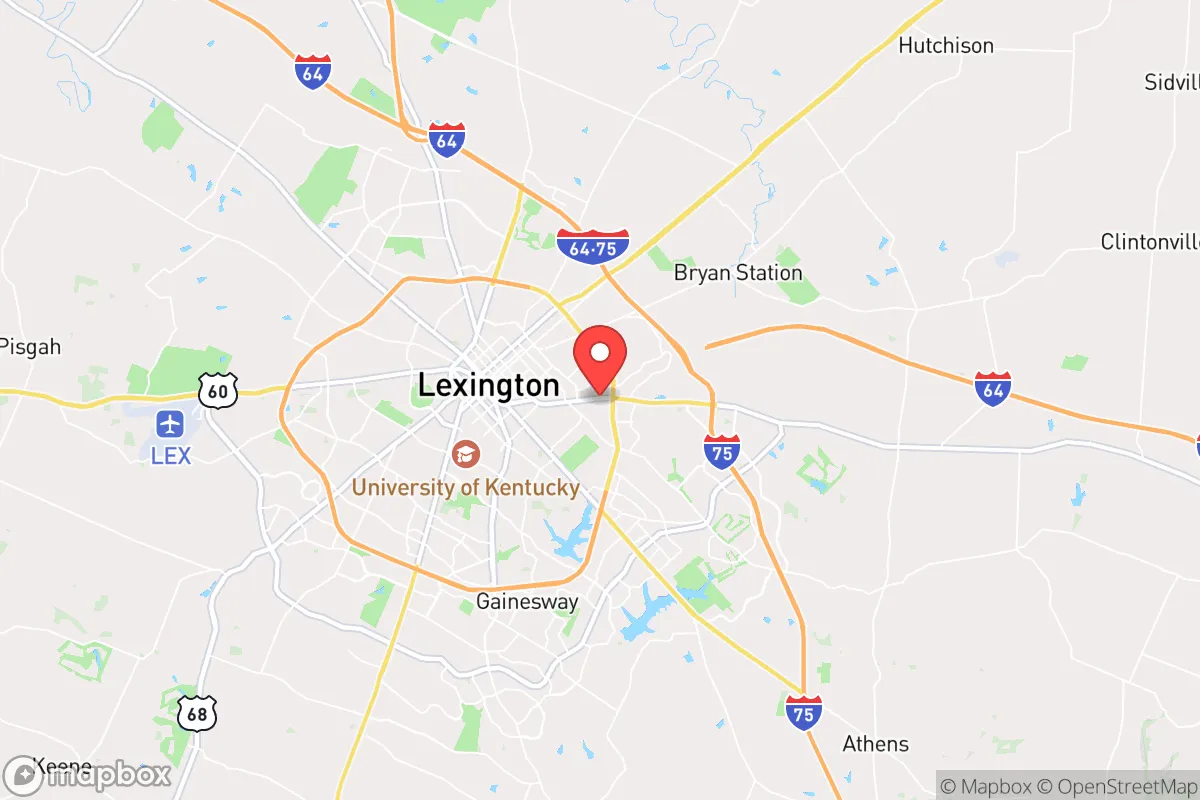
District shown is the primary district for this city’s centroid. Cities may span multiple districts.
Local Political AnalysisPolitical Analysis of Lexington, KY
Lexington, Kentucky, has long been a blue dot in a deep red state, and that political split is getting wider by the year. The city’s Cook Partisan Voting Index (PVI) sits at R+7, meaning it leans Republican by seven points relative to the national average—but that’s a full eight points more Democratic than the rest of Kentucky, which clocks in at R+15. What that tells you, if you’ve lived here as long as I have, is that Lexington is becoming more progressive while the state around it stays solidly conservative. The shift hasn’t been overnight, but it’s real, and it’s changing how folks here think about everything from taxes to school boards.
How it compares
Drive thirty minutes in any direction from Lexington and you’ll feel the political difference fast. Head south to Richmond or north to Georgetown, and you’re in counties that vote R+20 or higher—places where the local GOP is the only game in town. Even nearby Frankfort, the state capital, leans more conservative than Lexington does. The contrast is stark: in Fayette County, you’ll see yard signs for progressive candidates and hear talk of bike lanes and public transit expansions, while just over the county line in Jessamine or Woodford, the conversation is about property rights, gun freedoms, and keeping government out of local schools. That R+7 PVI for Lexington means it’s still a Republican-leaning district overall, but it’s trending left faster than anywhere else in the state. The 2024 presidential race here was closer than it was in 2020, with Democratic margins shrinking in the urban core but growing in the suburbs—a sign that the city’s progressive wing is gaining ground, even if the county as a whole hasn’t flipped yet.
What this means for residents
For someone who values personal freedoms and limited government, Lexington’s political drift is a real concern. The city council has pushed through zoning changes that some see as government overreach into property rights, and there’s been a steady push for higher local taxes to fund social programs. Meanwhile, the state legislature in Frankfort—which is overwhelmingly Republican—has been passing preemption laws to block Lexington from enacting its own gun ordinances, rent control, or local minimum wage hikes. That tension means residents live under two competing governments: a city that wants to regulate more and a state that wants to regulate less. If you’re a conservative here, you’re constantly watching to see which side wins the next fight. The long-term trajectory is concerning—if Lexington keeps moving left, you could see more restrictions on everything from short-term rentals to school choice, all justified in the name of “progress.”
Culturally, Lexington still holds onto its horse-country roots and Southern hospitality, but the policy landscape is shifting. The city’s embrace of bike lanes, density bonuses, and “equity” initiatives feels out of step with the rest of Kentucky, where folks are more likely to prioritize low taxes, gun rights, and local control. If you’re thinking of moving here, know that you’ll be living in a place where your vote for conservative candidates might not carry the day in local elections, but your voice still matters in state races. The political climate here is a balancing act—and for now, it’s tilting in a direction that should give any freedom-minded resident pause.

State Political ClimatePolitical Climate in Kentucky
State Political AnalysisPolitical Environment in the State
Kentucky is a deeply conservative state, with a Cook PVI of R+15, but it hasn't always been this way. Over the last 10-20 years, the state has undergone a dramatic realignment, shifting from a competitive, ancestrally Democratic state to a reliably red stronghold. The old "Blue Dog" Democrats who once dominated local offices have been almost entirely replaced by Republicans, driven by a cultural backlash against national Democratic policies on guns, abortion, and religious liberty. The coalition is now a mix of rural traditionalists, suburban conservatives in the Louisville and Lexington exurbs, and a growing number of transplants from the Midwest seeking lower taxes and fewer regulations.
Urban vs. rural divide
The political map of Kentucky is a textbook case of the urban-rural split. The two major metros, Louisville (Jefferson County) and Lexington (Fayette County), are the only reliably blue areas, voting Democratic by double digits in most statewide races. But even these cities have conservative suburbs that are pushing back. For example, Oldham County, just northeast of Louisville, is one of the most Republican counties in the state, with a strong base of families who moved out of the city for better schools and lower crime. Boone County, part of the Cincinnati metro in Northern Kentucky, has also trended redder as it grows with conservative-leaning commuters. Meanwhile, the rest of the state—from the coal fields of Harlan County in the east to the farmlands of Graves County in the west—votes overwhelmingly Republican. The rural areas are not just red; they are deeply skeptical of federal authority and any hint of progressive social policy. The divide is stark: you can drive 20 minutes from downtown Louisville and find yourself in a county where Trump won 80% of the vote.
Policy environment
Kentucky's policy environment is a mixed bag for conservatives. On the plus side, the state has a flat income tax that is being phased down—currently at 4% and scheduled to drop to 3.5% by 2026—with a goal of eventually eliminating it entirely. There is no state-level property tax on vehicles, and property taxes on real estate are among the lowest in the nation. The state is a right-to-work state, and it passed a near-total abortion ban in 2019 (triggered by Roe's fall), with no exceptions for rape or incest. However, there are real concerns about government overreach. The state's Medicaid expansion under the Affordable Care Act was kept by Governor Andy Beshear (a Democrat), which many conservatives see as a costly federal entanglement. On education, Kentucky has a robust school choice movement, but it's been a battleground: the state Supreme Court struck down a charter school funding law in 2022, and a 2024 law creating education opportunity accounts (vouchers) is being challenged. Election laws are solid—voter ID is required, and the state has clean voter rolls—but there's no early voting on the Saturday before Election Day, which some see as a minor inconvenience.
Trajectory & freedom
On the freedom front, Kentucky has been moving in the right direction, but not without some stumbles. The state is a constitutional carry state (permitless concealed carry) since 2019, and it has strong preemption laws preventing local gun control. In 2023, the legislature passed a parental rights bill (HB 177) that requires schools to notify parents of any medical or mental health services offered to their children, a direct response to concerns about gender ideology in schools. The same year, a religious freedom restoration act (SB 16) was signed, giving stronger protections for faith-based objections to government mandates. However, the state's medical marijuana program, signed into law in 2023, is a mixed bag—it's highly regulated and won't take effect until 2025, and some conservatives see it as a slippery slope toward recreational use. The biggest red flag for liberty-minded folks is the state's emergency powers structure. During COVID, Governor Beshear used executive orders to shut down churches and businesses for months, and the legislature has since passed laws (SB 1 in 2021) to limit a governor's emergency powers, but the fight isn't over—the courts have upheld some of Beshear's actions, and the balance of power remains a live issue.
Civil unrest & political movements
Kentucky has seen its share of political flashpoints. The Breonna Taylor protests in Louisville in 2020 were among the largest in the nation, with weeks of nightly demonstrations, property damage, and a heavy police presence. This led to a backlash: the city's Democratic mayor and police chief faced intense criticism from conservatives for not restoring order quickly enough, and the state legislature passed a series of "back the blue" laws, including enhanced penalties for rioting and attacking officers. The rural-urban cultural war is also visible in the push for "sanctuary city" policies—Louisville passed a non-cooperation ordinance with federal immigration enforcement in 2017, which was later repealed after state pressure, but the issue still simmers. On the right, there is a strong Second Amendment sanctuary movement in over 60 counties, where local sheriffs have pledged not to enforce any future federal gun bans. Election integrity is a hot topic: after 2020, the state tightened absentee ballot rules and banned ballot drop boxes, but there's still a vocal minority pushing for a full audit of the 2020 results, which the Republican Secretary of State has resisted. You won't see daily protests in most of the state, but in Louisville and Lexington, political tensions are palpable, especially around race and policing.
Projection
Over the next 5-10 years, Kentucky is likely to become more conservative, not less. The in-migration pattern is telling: people are moving to the state from Illinois, Ohio, and Indiana, drawn by lower housing costs and a more traditional culture. These newcomers tend to be conservative-leaning families and retirees. The urban cores of Louisville and Lexington are slowly growing, but the suburbs and exurbs are exploding—places like Richmond (Madison County) and Elizabethtown (Hardin County) are seeing rapid development and are solidly red. The state's Republican supermajority in the legislature is likely to hold, and the flat tax phase-out will continue, making Kentucky even more attractive for business. However, the wildcard is the governor's race: if a Republican wins in 2027 (Beshear is term-limited), you'll see a full-court press on school choice, further tax cuts, and a rollback of any remaining COVID-era executive powers. If a Democrat wins, expect gridlock and continued fights over education and healthcare. The biggest risk for conservatives is complacency—the state is so red that primary elections often matter more than general elections, and that can lead to infighting and less effective governance.
For a new resident, the bottom line is this: Kentucky offers a low-tax, high-freedom environment for those who value traditional values and limited government, but you need to be strategic about where you land. If you want the best schools and a conservative community, look at the suburbs of Louisville (Oldham County) or Northern Kentucky (Boone County). If you want a slower pace and deep rural roots, the western and eastern parts of the state are your jam. Just be aware that the urban centers are blue islands with their own progressive agendas, and the state's political future depends on keeping those islands from expanding. If you're moving here for freedom, you'll find plenty of it—but you'll also need to stay engaged to protect it.
* Values derived from national, state, county, city and local statistics and may differ in a specific area. Last updated: 2026-05-07T10:56:38.000Z
Narrative content on this page is AI-generated and may contain mistakes. Verify any details that matter before acting on them.
ReloMaps may earn a commission from affiliate links at no extra cost to you.

