Political ClimatePolitical Climate in Lindenhurst, NY
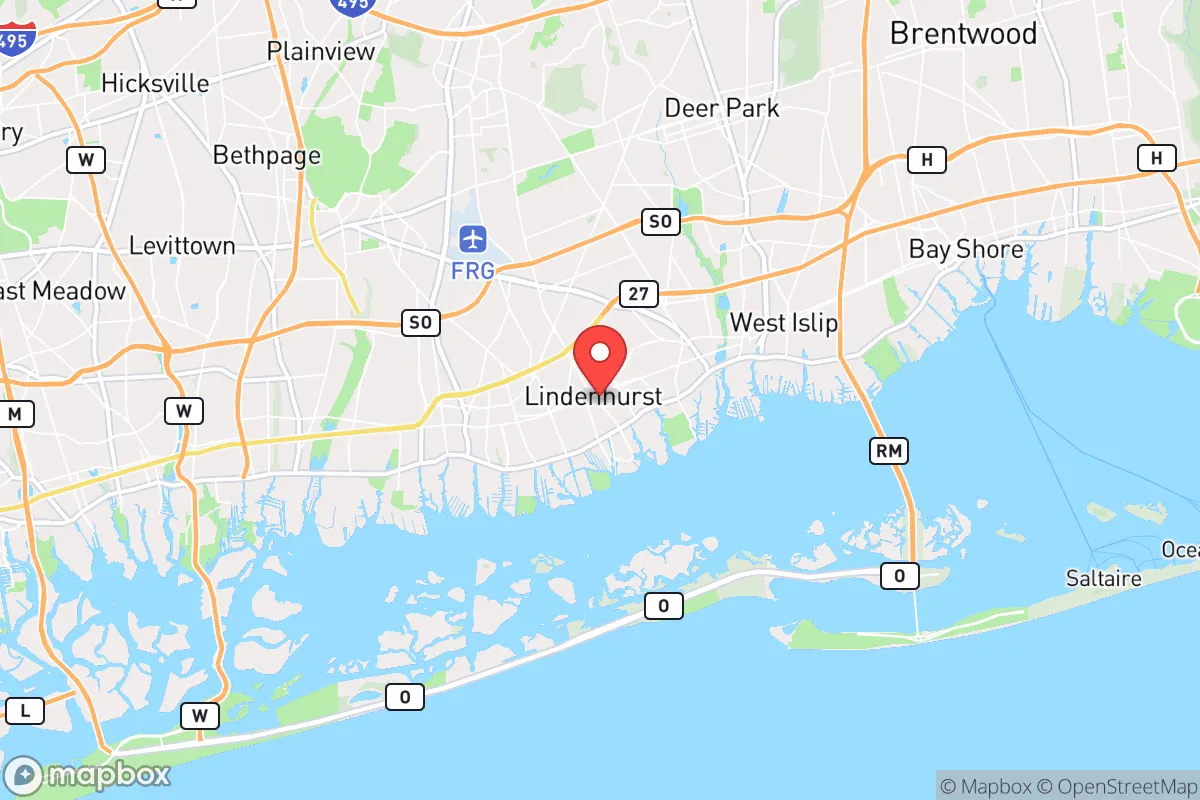
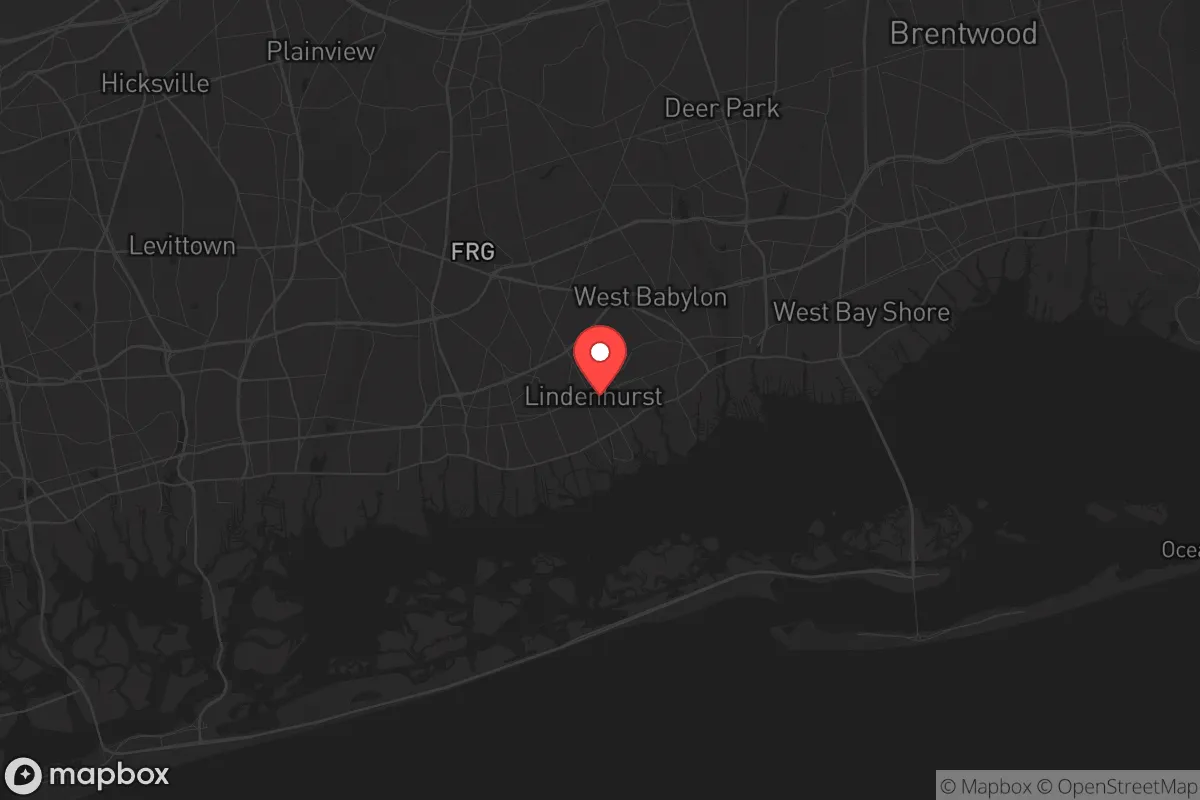
District shown is the primary district for this city’s centroid. Cities may span multiple districts.
Local Political AnalysisPolitical Analysis of Lindenhurst, NY
Lindenhurst has long been a solidly conservative community, a fact that hasn't changed much even as the rest of Long Island has drifted in different directions. With a Cook Partisan Voting Index of R+6, this south shore village in Suffolk County leans reliably Republican, and that's been the case for as long as anyone can remember. You still see plenty of American flags on front porches, and local chatter at the diner or the VFW hall is more likely to be about property taxes and school budgets than the latest progressive cause. That said, there's been a slow creep of influence from places like Babylon and Patchogue, where younger transplants and commuters from the city have started to shift the local conversation toward more progressive talking points. It's not a full-on wave yet, but you can feel the undercurrent.
How it compares
If you drive ten minutes north to Babylon Village, you'll notice a different vibe entirely—more boutique shops, more craft breweries, and a town council that's been flirting with progressive zoning and "equity" initiatives. Patchogue, to the east, has seen a similar transformation, with new apartment complexes and a younger demographic that tends to vote blue. Lindenhurst, by contrast, still feels like the working-class backbone of the South Shore. The difference is stark when you look at local elections: Lindenhurst's village board and school board races are dominated by candidates who talk about fiscal restraint, public safety, and keeping government out of your backyard. Meanwhile, in Babylon, you've got officials pushing for sanctuary city policies and bike lanes that nobody asked for. It's a reminder that even within the same county, a few miles can mean a completely different set of priorities.
What this means for residents
For folks who value personal freedoms and want to be left alone, Lindenhurst is still a pretty good place to hang your hat. The local government hasn't gone overboard with mask mandates, business closures, or the kind of overreach that made headlines in places like New York City or even some of the more affluent North Shore towns. Property taxes are still high—this is Long Island, after all—but the village hasn't piled on extra layers of regulation or fees just to make a political statement. The school district, while not perfect, has resisted the more extreme curriculum overhauls you hear about in other districts. That said, there's a growing concern among longtime residents that the progressive drift from neighboring towns is starting to seep in. You see it in the occasional push for "diversity, equity, and inclusion" training at the library, or in the local Democratic club becoming more vocal. It's not a crisis yet, but it's something to keep an eye on if you believe that government's job is to protect your rights, not manage your life.
Culturally, Lindenhurst still holds onto a blue-collar, family-first ethos that's getting harder to find on Long Island. The annual street fairs, the fire department parades, the sense that people look out for each other without needing a government program to do it—that's the real character of the place. The biggest policy distinction is that Lindenhurst hasn't bent the knee to the kind of "smart growth" or "sustainable development" agendas that are reshaping places like Patchogue and Babylon. There's no rush to build high-density housing or eliminate single-family zoning. For now, the village council seems to understand that most residents moved here for a little space and a lot of independence, not to be guinea pigs for some urban planner's pet project. If that balance holds, Lindenhurst will stay the kind of place where you can still have a beer in your backyard without worrying about what the HOA or the town board thinks.

State Political ClimatePolitical Climate in New York
State Political AnalysisPolitical Environment in the State
New York State has been a solidly Democratic stronghold for decades, with a partisan lean that has only deepened in recent years. The state has not voted for a Republican presidential candidate since 1984, and in 2024, Kamala Harris carried it by roughly 12 points. However, this blue veneer masks a stark internal divide: the massive, progressive-leaning New York City metro area (including Long Island and the lower Hudson Valley) drives the statewide results, while vast swaths of Upstate New York—places like Allegany County, Wyoming County, and Orleans County—routinely vote Republican by margins of 30 to 40 points. Over the past 10-20 years, the state has shifted further left on cultural and economic issues, driven by an influx of younger, more progressive voters into the city and its inner suburbs, while rural and exurban areas have become more conservative in reaction.
Urban vs. rural divide
The political map of New York is a tale of two states. The five boroughs of New York City—Manhattan, Brooklyn, Queens, the Bronx, and Staten Island—cast about 40% of the state's vote, and they are overwhelmingly Democratic. Manhattan and Brooklyn are among the most liberal jurisdictions in the country, regularly giving Democratic candidates 80-85% of the vote. The inner-ring suburbs of Westchester County and Nassau County on Long Island have also trended blue, with Westchester now reliably Democratic and Nassau flipping from purple to solidly blue in the last decade. In contrast, the vast rural expanse of Upstate New York—places like the Southern Tier (Steuben, Chemung, and Tioga counties), the North Country (St. Lawrence, Jefferson, and Lewis counties), and the Finger Lakes region outside of Ithaca—vote Republican by wide margins. The city of Buffalo and its inner suburbs in Erie County are Democratic, but the surrounding rural counties (Genesee, Niagara, Orleans) are deeply red. The divide is not just about population density; it's cultural. Upstate residents often feel ignored or overruled by the city-dominated state legislature, fueling resentment and a sense of political disenfranchisement.
Policy environment
New York's policy environment is among the most progressive in the nation, and it has become more so over the last decade. The state has a highly progressive income tax with rates topping out at 10.9% for top earners, and property taxes are among the highest in the country, especially in the suburbs. The regulatory posture is heavy: New York has strict rent control laws in NYC, a statewide ban on natural gas hookups in new construction (effective 2026), and some of the nation's toughest environmental regulations. On education, the state has a powerful teachers' union and has moved toward "equity" initiatives, including the elimination of gifted and talented programs in some districts. Healthcare is dominated by the state's expansive Medicaid program and a push toward single-payer, though it hasn't passed yet. Election laws have been loosened significantly: no-excuse absentee voting, early voting, and automatic voter registration are now law. The state also passed the "New York Health Act" in principle, though it's not yet funded. For a conservative, the policy environment feels like a constant expansion of government control over daily life.
Trajectory & freedom
Over the past five years, New York has become less free by almost any measure. The 2019 "Green Light Law" allowed undocumented immigrants to obtain driver's licenses, and the state has become a de facto sanctuary state, limiting cooperation with federal immigration enforcement. In 2022, the state passed a sweeping gun control package (the "Concealed Carry Improvement Act") that severely restricted where licensed gun owners could carry firearms, including "sensitive locations" like places of worship and private businesses unless the owner explicitly allows it. This law was partially struck down by a federal court in 2024, but the state continues to fight for restrictions. Parental rights have been eroded: the state's "Child Victims Act" extended the statute of limitations for child abuse claims, but also opened the door to lawsuits against schools and youth groups. More recently, the state passed a law requiring schools to adopt "gender identity" policies that allow students to use preferred names and pronouns without parental consent, a major flashpoint for conservative families. Property rights are constrained by strict rent control and zoning laws that limit development. The trajectory is clearly toward more government intervention in personal choices.
Civil unrest & political movements
New York has been a hotbed of political activism, both left and right. The 2020 Black Lives Matter protests in New York City were among the largest and most destructive in the country, leading to calls to defund the police, which the city council partially enacted. In response, a "back the blue" movement emerged in the suburbs and upstate, with large rallies in Staten Island and Nassau County. Immigration politics are a constant flashpoint: the state's sanctuary policies have led to a surge of migrants bused from Texas, overwhelming shelters in NYC and causing friction in suburban communities like Orange County and Rockland County, where local officials have tried to block migrant housing. Election integrity remains a concern for conservatives, given the state's expansion of mail-in voting and the lack of voter ID requirements. There have been several high-profile controversies, including the 2022 gubernatorial race where the Democratic nominee, Kathy Hochul, faced a surprisingly strong challenge from a moderate Republican, Lee Zeldin, who came within 6 points—a sign of growing discontent. Secessionist talk is common in the rural "Upstate" regions, with some counties passing resolutions to secede from the state, though it's mostly symbolic.
Projection
Looking ahead 5-10 years, New York is likely to become even more progressive at the state level, driven by continued in-migration of young, left-leaning professionals to NYC and its suburbs, while the rural population continues to shrink and age. The state's Democratic supermajority in the legislature is unlikely to be broken, meaning more gun control, higher taxes, and expanded social programs are on the horizon. However, there is a growing counter-movement: the 2022 gubernatorial race showed that a Republican can get close to winning by focusing on crime, taxes, and parental rights, especially in the suburbs. If the state continues to lose population (it lost a congressional seat after the 2020 census), the political calculus could shift slightly. For a conservative moving in now, expect to live in a state where your vote for president or senator is effectively meaningless, but where local elections—especially in the suburbs and upstate—can still make a difference. The cultural war will intensify, particularly around education and parental rights.
For a conservative considering a move to New York, the bottom line is this: you will be living in a state where the government is actively hostile to many of your values, from gun ownership to school choice to tax burdens. Your best bet is to settle in a red-leaning county like Ontario County or Saratoga County, where local officials may offer some buffer. But you will still pay high taxes and deal with state-level policies you oppose. If you value personal freedom and limited government, New York is a tough place to call home—but if you're willing to fight for your values in local school boards and town halls, there are communities where you can make a difference.
* Values derived from national, state, county, city and local statistics and may differ in a specific area. Last updated: 2026-05-01T07:38:38.000Z
Narrative content on this page is AI-generated and may contain mistakes. Verify any details that matter before acting on them.
ReloMaps may earn a commission from affiliate links at no extra cost to you.

