
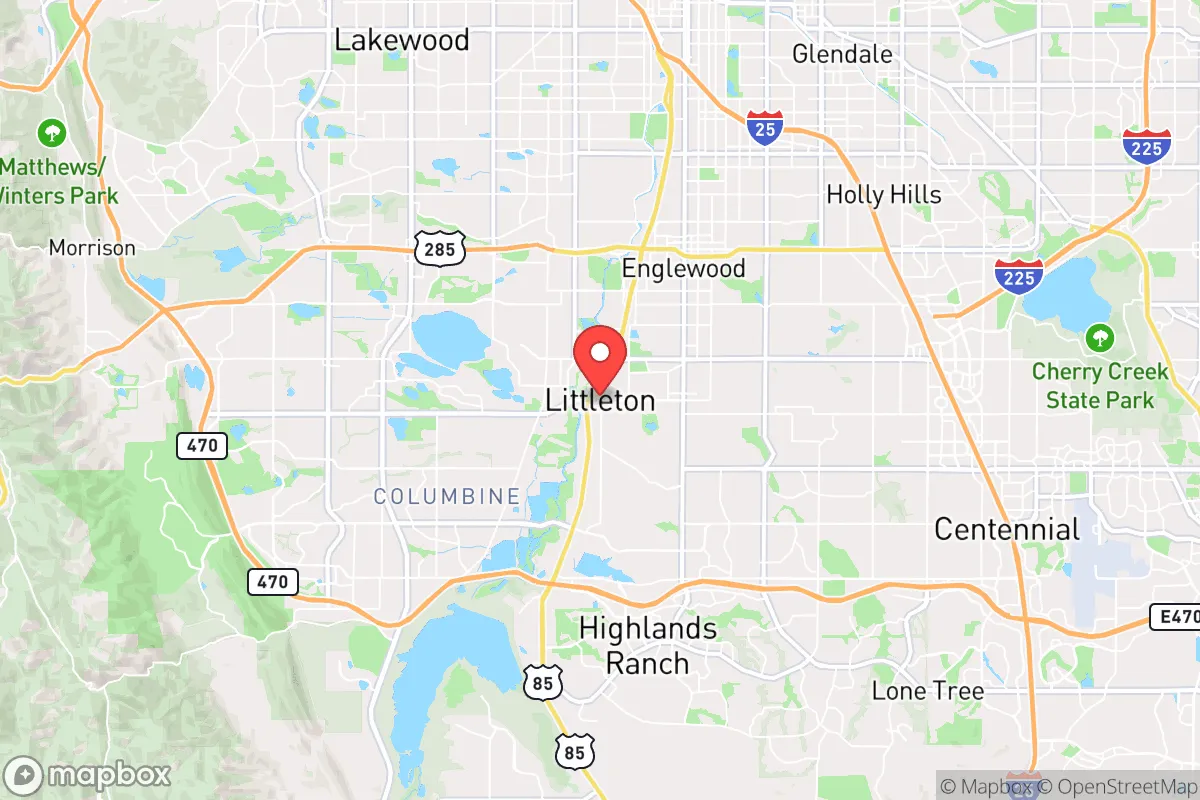
Photo: Wikipedia
Personal Sovereignty in Littleton, CO
Viable for self-reliance. Generally workable, though some barriers may limit total independence.
What does Personal Sovereignty tell us?
Personal Sovereignty measures your capacity for self-reliance and independence with minimal government friction. Higher scores mean fewer barriers between you and the way you want to live... but it assumes you have the space you need and good neighbors.
What does this tell us?
Personal Sovereignty measures your capacity for self-reliance and independence with minimal government friction. Higher scores mean fewer barriers between you and the way you want to live... but it assumes you have the space you need and good neighbors.
State Policy
Energy independence: Net exporter (110% of energy produced in-state)
Personal Liberty
Homesteading

Personal Liberty Analysis
For the liberty-minded individual or family evaluating Littleton, Colorado, the personal sovereignty picture is a study in contrasts: the city sits within a state that has aggressively expanded government authority in recent years, yet it retains pockets of relative freedom, particularly in its more rural southern and western fringes. While Colorado’s state-level trajectory—marked by strict gun control, high taxes, and expansive public health mandates—raises serious red flags for those prioritizing autonomy, Littleton’s local governance, zoning flexibility, and community culture offer some breathing room for the self-reliant. The key is understanding where the state’s overreach ends and where local conditions still allow for a measure of independence, especially for those willing to operate within the letter of the law while maximizing their personal buffer.
Tax burden and regulatory posture: how Colorado’s fiscal policies affect your autonomy
Colorado’s tax structure is a mixed bag for the sovereignty-minded. The state income tax is a flat 4.4% as of 2025, which is moderate compared to high-tax states like California or New York, but it still represents a direct claim on your earnings. Property taxes in Arapahoe and Jefferson Counties—the two counties that cover Littleton—are relatively low, with effective rates around 0.5% to 0.6% of assessed value, thanks to the Gallagher Amendment’s legacy (though it was repealed in 2020, the effects linger). However, the state’s regulatory posture is where the real friction emerges. Colorado has a strict energy code for new construction, a statewide plastic bag ban, and a growing list of environmental mandates that can feel like micromanagement. For a prepper or survivalist, the biggest concern is the state’s land-use authority: counties and municipalities have broad power to restrict building, water rights, and even backyard structures. Littleton itself has a city-wide ban on new oil and gas wells within city limits, which, while popular with environmentalists, limits energy independence. The bottom line: Colorado’s tax burden is tolerable for now, but the regulatory creep is real and tends to expand during Democratic-controlled sessions.
Self-defense and gun law specifics: what Colorado’s restrictions mean for your right to bear arms
This is the most contentious area for anyone moving to Littleton from a free state. Colorado has enacted a series of gun control measures that directly impact personal sovereignty. The state requires universal background checks for all firearm transfers, including private sales, and has a 15-round magazine capacity limit for handguns and long guns (enacted in 2013 and upheld by courts). In 2023, the legislature passed a three-day waiting period for all firearm purchases, and a red flag law (Extreme Risk Protection Order) allows family members or law enforcement to petition a court to temporarily seize firearms from someone deemed a risk. For the prepper, this is a direct threat: a vindictive neighbor or a misunderstanding could trigger a red flag order, stripping you of your means of self-defense without a criminal conviction. Open carry is legal without a permit in Colorado, but Littleton’s city ordinances restrict it in certain public buildings and parks. Concealed carry requires a permit, which is shall-issue with a training requirement. The practical advice: if you value a robust arsenal, Littleton is not ideal. You can still own firearms, but the magazine limit and red flag law create a legal minefield. Consider living just outside city limits in unincorporated Jefferson County, where local enforcement is less aggressive, though state law still applies.
Self-reliance and homesteading viability: lot sizes, zoning, and off-grid feasibility in Littleton
For the homesteader or off-grid enthusiast, Littleton proper is a tough sell. The city’s zoning is predominantly suburban, with minimum lot sizes of 6,000 to 7,000 square feet in most residential areas. This means raising chickens is allowed (with a permit and setback rules), but goats, pigs, or larger livestock are generally prohibited. Rainwater collection is legal in Colorado since 2016, but only for outdoor use and limited to two rain barrels per household (totaling 110 gallons). Off-grid solar is permitted, but you must remain connected to the grid unless you can prove a hardship exemption. The real opportunity lies in the unincorporated areas south of Littleton, toward Roxborough Park and the Douglas County line. There, you can find parcels of 1 to 5 acres with fewer restrictions, allowing for larger gardens, small livestock, and even private wells. Douglas County is notably more libertarian-leaning, with a county commission that has resisted state mandates on land use. However, septic systems are strictly regulated, and building permits are required for any structure over 120 square feet. For true off-grid living—no electric hookup, no county permits—you’d need to look further out, like Park County or the San Luis Valley. Littleton’s suburbs are for those who want a garden and a backup generator, not a full homestead.
Personal liberties: parental rights, medical autonomy, speech, and property protections
Colorado’s state-level policies on personal liberties are a growing concern for conservative families. Parental rights have been eroded by laws like the 2019 “comprehensive sex education” mandate, which requires schools to teach LGBTQ+ inclusive content without an opt-out for parents (though parents can request their child be excused from specific lessons). The state also has a universal vaccine mandate for school attendance, with only medical exemptions allowed (no religious or philosophical exemptions). This is a dealbreaker for some families. Medical autonomy took a hit during the pandemic, with Colorado having one of the longest-running mask mandates and vaccine passport systems in the country. While those are gone, the legal framework remains, meaning future health emergencies could see similar overreach. Free speech is generally protected, but Littleton’s city council has passed “hate speech” resolutions that, while not legally binding, signal a cultural hostility to certain viewpoints. Property rights are under pressure from the state’s “just cause” eviction laws (if you’re a landlord) and the construction defects liability framework, which makes it hard to build new housing. For the property owner, the biggest threat is eminent domain for transit projects—RTD’s light rail expansion has targeted private land in the area. The bottom line: Littleton is not a bastion of personal liberty. It’s a blue-leaning suburb in a blue state, and your rights are subject to the whims of the Denver political machine.
Overall, Littleton offers a moderate level of personal sovereignty compared to other Front Range suburbs, but it falls short for the serious prepper or liberty-minded individual. The tax burden is manageable, the gun laws are restrictive but not prohibitive, and the zoning allows for limited self-reliance if you choose the right parcel. However, the state’s trajectory on parental rights, medical autonomy, and property protections is concerning. For a family that wants to be near Denver’s economy while maintaining a degree of independence, Littleton is a compromise—not a sanctuary. If absolute sovereignty is your priority, look to rural Colorado counties like El Paso, Fremont, or Las Animas, where local culture and enforcement are far more aligned with self-reliance. Littleton works if you’re willing to navigate the legal gray areas and keep your head down, but don’t expect the state to have your back.

* Values derived from national, state, county, city and local statistics and may differ in a specific area. Last updated: 2026-04-19T07:21:40.000Z
Narrative content on this page is AI-generated and may contain mistakes. Verify any details that matter before acting on them.
ReloMaps may earn a commission from affiliate links at no extra cost to you.

