Photo: Wikipedia
Political ClimatePolitical Climate in Littleton, CO
District shown is the primary district for this city’s centroid. Cities may span multiple districts.
Local Political AnalysisPolitical Analysis of Littleton, CO
Littleton, Colorado, has drifted significantly leftward over the past decade, and the numbers back up what many long-time residents have felt in their gut. The Cook Political Report now rates the area as D+11, meaning it votes about 11 points more Democratic than the national average—a stark shift from the purple-to-light-red community it was in the 1990s and early 2000s. While the city itself leans blue, the surrounding Arapahoe County has become a battleground, with precincts in south Littleton and unincorporated areas like Columbine Valley still holding conservative ground. But if you look at the city council and school board elections over the last few cycles, the progressive wing has tightened its grip, and it’s not showing signs of loosening.
How it compares
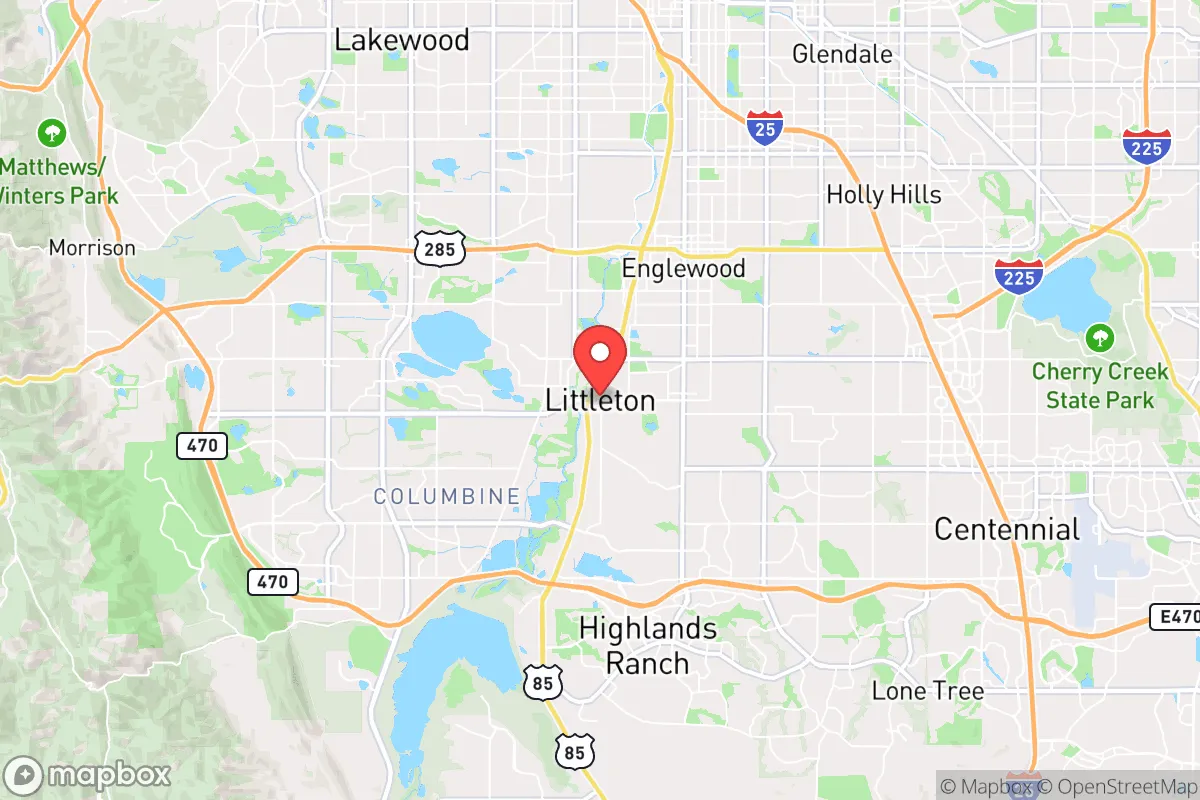
Drive 15 minutes south to Highlands Ranch or 20 minutes southeast to Parker, and you’ll find communities that still vote reliably Republican—those areas are more like the Littleton of the 1980s. Head north into Denver proper, and you’re in deep-blue territory. Littleton sits right in the middle of that corridor, but it’s been absorbing Denver’s political culture for years. The contrast is sharpest during school board races: Douglas County (Highlands Ranch) has fought to keep parental rights and local control front and center, while Littleton Public Schools has moved toward state-mandated curriculum changes and diversity, equity, and inclusion initiatives that many parents feel bypass their input. Even the city’s zoning decisions—like the recent push for higher-density housing near the light rail—reflect a more urban, progressive planning philosophy that feels out of step with the suburban, single-family-home character that drew families here in the first place.
What this means for residents
For a conservative or libertarian-leaning resident, the practical effects are starting to pile up. Property taxes have risen faster than the state’s TABOR limits would suggest, thanks to local bond measures and mill levy overrides that pass easily in D+11 precincts. The city council has also tightened regulations on short-term rentals and added new fees for home-based businesses—moves that feel like government overreach into how you use your own property. On the cultural side, the local library district has faced repeated calls to remove or relocate certain books, and the police department has adopted new use-of-force policies that some officers say handcuff their ability to respond decisively. If you value personal freedoms—whether it’s running a small business from your garage, carrying a firearm for self-defense, or simply wanting a say in what your kids are taught—you’ll find yourself increasingly at odds with the local political machine.
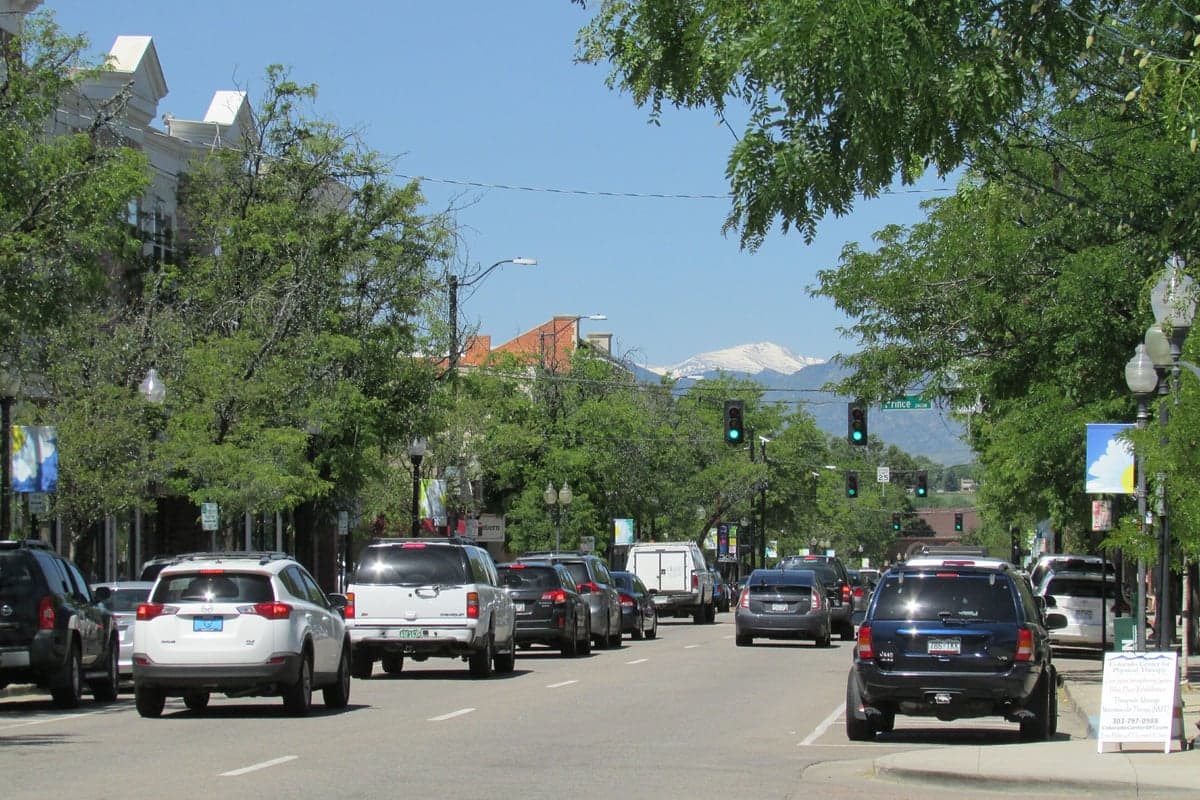
One cultural distinction that still holds is Littleton’s strong sense of community identity, rooted in its historic downtown and the Western heritage of the South Platte River valley. But even that is being reshaped: the annual Western Welcome Week parade now features more political advocacy booths than rodeo or 4-H displays. The long-term trajectory, unless there’s a significant realignment, points toward more of the same—higher taxes, more regulations, and a school system that prioritizes state and national progressive goals over local parent input. For those who remember when Littleton was a place where the government stayed out of your business and the schools taught the basics without the politics, it’s a tough pill to swallow. If you’re considering a move here, just know what you’re signing up for—and maybe look a little further south if you want a community that still values individual liberty over collective mandates.

State Political ClimatePolitical Climate in Colorado
State Political AnalysisPolitical Environment in the State
Colorado has shifted from a classic purple swing state to a solidly blue-leaning state over the past two decades, driven primarily by explosive growth in the Denver-Boulder corridor and the Front Range. While the state voted for a Republican governor as recently as 2002, it has voted Democratic in every presidential election since 2008, and the state legislature has been under Democratic control since 2018. This trajectory is a direct result of massive in-migration from more liberal states, particularly California and the Northeast, which has fundamentally altered the state’s political DNA.
Urban vs. rural divide
The political map of Colorado is a textbook example of the urban-rural divide. The Denver metro area, including Denver, Boulder, and the surrounding suburbs of Aurora and Lakewood, is the engine of the state’s Democratic majority. These areas are home to a highly educated, younger, and more diverse population that consistently votes for progressive candidates and policies. In contrast, the rest of the state is overwhelmingly Republican. The Eastern Plains, the Western Slope, and the San Luis Valley are deeply conservative, with counties like El Paso County (Colorado Springs) and Weld County (Greeley) serving as major red strongholds. However, even these areas are seeing demographic shifts. Colorado Springs, once a reliably conservative military town, has seen its margins shrink as tech and service industries bring in a more moderate workforce. The real story is the suburban ring around Denver: counties like Jefferson, Arapahoe, and Adams have flipped from purple to blue over the last decade, cementing the state’s leftward tilt.
Policy environment
Colorado’s policy environment is a mixed bag that increasingly leans progressive, which is a major concern for conservative-leaning newcomers. The state has a flat income tax rate of 4.4%, which is relatively low, but property taxes are moderate and sales taxes can be high, especially in home-rule cities like Denver and Boulder. The regulatory posture is decidedly pro-government, with strict environmental regulations on oil and gas, a statewide plastic bag ban, and aggressive renewable energy mandates. Education policy is a flashpoint: the state has seen a steady erosion of school choice, with charter school funding being squeezed and a push for more centralized control from the state Department of Education. Healthcare is heavily regulated, with a state-run insurance exchange and a public option that is being debated. Election laws have been dramatically loosened: Colorado now has universal mail-in voting, same-day voter registration, and automatic voter registration, which critics argue undermines election integrity. The state also has a "red flag" law (Extreme Risk Protection Orders) that allows for the temporary seizure of firearms from individuals deemed a risk, a policy that many conservatives view as a direct infringement on Second Amendment rights.
Trajectory & freedom
Colorado is unequivocally becoming less free from a conservative perspective. The most significant recent legislation is the 2023 "Family Leave and Medical Leave Insurance" (FAMLI) program, which imposes a new payroll tax on workers and employers for paid leave—a clear expansion of government into personal and business decisions. On gun rights, the state has passed a series of restrictive laws, including a ban on "ghost guns" and a 2024 law raising the minimum age to purchase a firearm to 21. Parental rights have been under assault, with the state’s Department of Education pushing for "comprehensive sex education" that includes LGBTQ+ topics without an opt-out provision for parents. Medical autonomy has been curtailed by vaccine mandates for healthcare workers and school staff, though these have been partially rolled back. Property rights are under pressure from the aforementioned oil and gas regulations, which have effectively banned new drilling in large swaths of the state. The trend is clear: the state government is actively expanding its reach into areas that were once considered private or local.
Civil unrest & political movements
Colorado has seen significant civil unrest and political activism, particularly on the left. The 2020 George Floyd protests in Denver were large and sometimes violent, leading to property damage and a lasting tension between city leadership and law enforcement. The state has a strong "sanctuary" movement, with Denver and Boulder County declaring themselves sanctuary cities, limiting cooperation with federal immigration authorities. This has created friction with the more conservative rural areas, where immigration enforcement is seen as a matter of public safety. On the right, there is a growing "secession" movement in the Eastern Plains, with some counties exploring the idea of forming a new state called "Colorado 51" to escape the progressive policies of the Front Range. Election integrity remains a hot-button issue, with widespread distrust of the mail-in ballot system among conservatives, despite no evidence of widespread fraud. The most visible flashpoint for a new resident would be the constant political tension between the urban and rural areas, which manifests in everything from license plate designs to state funding formulas.
Projection
Over the next 5-10 years, Colorado will likely continue its leftward drift. The demographic trends are clear: the Front Range is growing faster than the rest of the state, and the new arrivals are predominantly younger, more educated, and more liberal. The state’s economy is heavily tied to tech, renewable energy, and government, which further reinforces the progressive tilt. However, there are countervailing forces. The high cost of living, particularly in Denver and Boulder, is pushing some families and businesses to more affordable areas like Colorado Springs, Pueblo, and the Western Slope, which could slow the leftward shift in those regions. The state’s independent streak also means that ballot initiatives can still produce surprises, such as the 2020 vote to reintroduce gray wolves, which was opposed by rural ranchers. A newcomer moving in now should expect to find a state where the political climate is increasingly dominated by the Denver metro area, with state policies that reflect urban, progressive values. The rural areas will continue to resist, but their political power will continue to wane.
For a conservative-leaning individual or family, Colorado offers a beautiful landscape and a strong economy, but the political climate is a serious consideration. The state’s trajectory is toward more government intervention, higher taxes, and less personal freedom. If you value low taxes, strong Second Amendment protections, and local control, you will find yourself increasingly at odds with the state government. The best bet for a conservative newcomer is to look at the remaining red pockets—El Paso County, Weld County, and the Western Slope—where local governance still reflects traditional values, but be prepared for a constant battle with the state legislature in Denver. Colorado is a beautiful place to live, but it is no longer a politically neutral one.
* Values derived from national, state, county, city and local statistics and may differ in a specific area. Last updated: 2026-04-19T07:21:40.000Z
Narrative content on this page is AI-generated and may contain mistakes. Verify any details that matter before acting on them.
ReloMaps may earn a commission from affiliate links at no extra cost to you.

