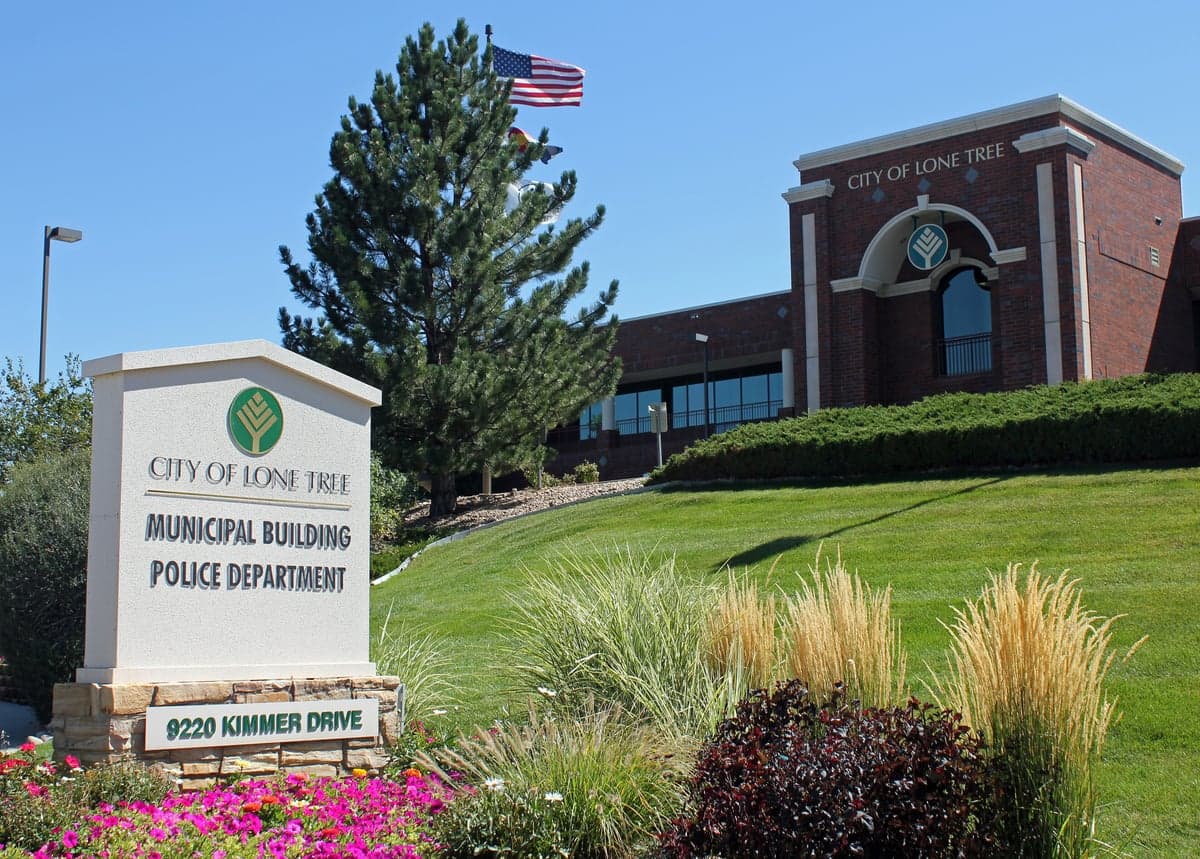
Photo: Wikipedia
Demographics of Lone Tree, CO
Affluence Level in Lone Tree, CO
An upper-middle-class area. Household wealth, education levels, and homeownership run ahead of national benchmarks.
People of Lone Tree, CO
Lone Tree, Colorado, is a small, affluent city of 14,136 residents defined by its high educational attainment—69.8% hold a college degree—and a notably diverse Asian and Indian population that together account for 12.3% of the city. The population is predominantly White (72.4%), with a foreign-born share of 6.9% that is lower than the national average but concentrated in specific professional and tech sectors. The city’s character is that of a planned, master-planned suburb where corporate headquarters, upscale retail, and family-oriented neighborhoods create a stable, low-crime environment attractive to professionals and families seeking a predictable, high-amenity lifestyle.
How the city was settled and grew
Lone Tree is a genuinely post-1900 suburb, with no colonial or pioneer-era settlement core. The area was originally part of the larger Douglas County ranching landscape, with sparse homesteads dotting the rolling plains. The modern city’s history begins in the 1970s when developer John Madden Jr. (of the Madden family, founders of the Denver Broncos) began assembling land for what would become the Heritage Hills neighborhood—a gated, golf-course community that attracted affluent families from Denver and the Front Range. This first wave of residents was overwhelmingly White, upper-middle-class, and drawn by the promise of large lots, open space, and a planned community ethos. The city was officially incorporated in 1995, a deliberate move by residents to control local zoning and prevent the haphazard sprawl seen in neighboring unincorporated areas. The early population was almost entirely domestic in-migrants from other parts of Colorado and the Midwest, seeking a safe, high-performing school district (Douglas County School District) and proximity to the Denver Tech Center.
Modern era (post-1965)
The post-1965 immigration reforms had a delayed but significant impact on Lone Tree, primarily through the expansion of the Denver Tech Center and the arrival of major corporate campuses. The RidgeGate neighborhood, a massive master-planned community that began development in the 2000s, became the primary landing zone for a new wave of residents: highly educated professionals working in technology, finance, and healthcare. This wave included a notable influx of Indian-subcontinent professionals (6.2% of the current population), many employed at companies like Charles Schwab, Dish Network, and the nearby Sky Ridge Medical Center. East and Southeast Asian communities (6.1%) also concentrated in RidgeGate and the newer Willows neighborhood, drawn by the area’s top-rated schools and the presence of Asian grocery and cultural amenities in adjacent Centennial. The Hispanic population (5.2%) is smaller and more dispersed, with some families in older apartment complexes along Yosemite Street and in the Park at Lone Tree area, often working in service and construction roles supporting the city’s retail and hospitality sectors. The Black population (4.8%) is similarly distributed, with no single dominant enclave, reflecting Lone Tree’s overall pattern of integration by income rather than by ethnic clustering.
The future
Lone Tree’s population is trending toward continued affluence and professional diversity, but with clear signs of homogenization by income. The city’s high housing costs—median home values exceed $700,000—effectively gate-keep by income, meaning that future growth will likely come from upper-middle-class domestic migrants and foreign-born professionals in STEM fields. The Indian-subcontinent and East/Southeast Asian populations are expected to grow modestly, as the RidgeGate and Meadows neighborhoods continue to attract tech and healthcare workers, but the overall foreign-born share (6.9%) is unlikely to spike dramatically given the city’s limited new housing supply and high entry costs. The White population will remain the majority but may slowly decline as a share, mirroring national trends. The city is not tribalizing into distinct ethnic enclaves; instead, it is becoming a place where professional identity and income level override ethnic boundaries. The next 10-20 years will likely see Lone Tree become slightly more diverse in ancestry but more uniform in socioeconomic status, with little growth in lower-income or service-worker populations due to affordability constraints.
For someone moving in now, Lone Tree is becoming a stable, high-investment suburb where demographic change is gradual and driven by professional opportunity rather than rapid immigration or cultural shift. The city offers a predictable, safe environment with excellent schools and amenities, but it is not a place of significant ethnic or economic diversity—it is a place where residents largely share similar educational and income profiles, regardless of their ancestral background. This makes it an attractive choice for families and professionals who prioritize stability, safety, and school quality over urban diversity or affordability.

* Values derived from national, state, county, city and local statistics and may differ in a specific area. Last updated: 2026-04-23T02:02:42.000Z
Narrative content on this page is AI-generated and may contain mistakes. Verify any details that matter before acting on them.
ReloMaps may earn a commission from affiliate links at no extra cost to you.

