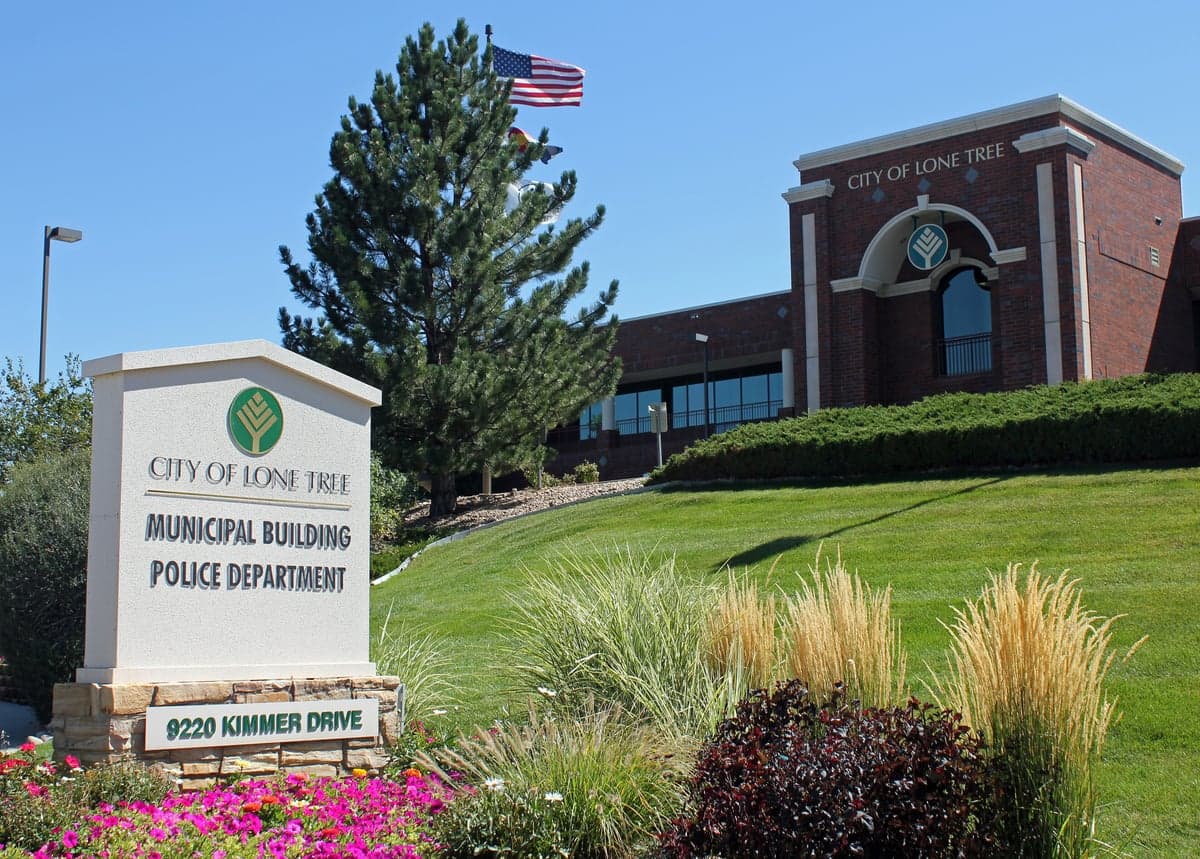
Photo: Wikipedia
Political ClimatePolitical Climate in Lone Tree, CO
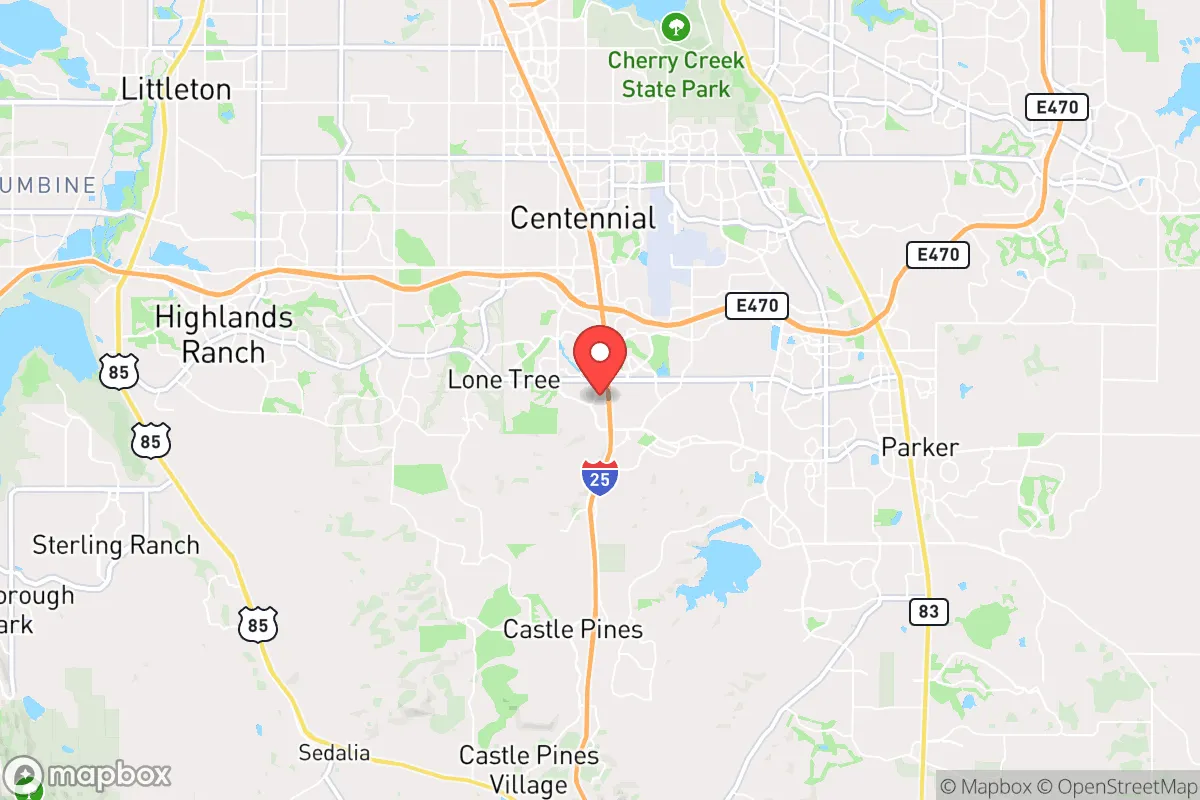
District shown is the primary district for this city’s centroid. Cities may span multiple districts.
Local Political AnalysisPolitical Analysis of Lone Tree, CO
Lone Tree, Colorado, sits in a politically interesting pocket of Douglas County, a place that has long been a conservative stronghold in the Denver metro area. With a Cook Partisan Voting Index (PVI) of R+9, the city leans reliably Republican, but that doesn't mean it's immune to the political shifts happening across the Front Range. If you've lived here as long as I have, you've watched the area go from a quiet, family-oriented suburb where folks just wanted to be left alone to raise their kids, to a place where the local elections and school board races feel like they're getting more attention than the Broncos game. The trajectory is clear: Lone Tree is still red, but the shade is getting lighter, and that's something to keep an eye on if you value personal freedoms and limited government interference.
How it compares
To understand Lone Tree's political climate, you have to look at its neighbors. Head north into Denver proper, and you're in a deep blue city where progressive policies on everything from zoning to public safety are the norm. Drive a few miles west to Littleton, and you'll find a purple-to-blue area that's been trending left for years. But here in Lone Tree, and across most of Douglas County, the story is different. The county as a whole voted for Donald Trump by a comfortable margin in 2020, and local offices—like the county commission and sheriff—remain firmly in conservative hands. That said, the city itself has seen a slow creep of progressive influence, especially in newer housing developments and among younger families moving in from Denver. The contrast with nearby Castle Rock, which is even more reliably conservative, is noticeable. Castle Rock feels like the old Lone Tree—pro-business, pro-Second Amendment, and skeptical of government overreach. Lone Tree, meanwhile, has started to flirt with things like "diversity, equity, and inclusion" initiatives in its schools and more aggressive climate goals, which raise eyebrows for those of us who remember when the city council's biggest concern was keeping the roads plowed.
What this means for residents
For residents, this political climate means a few things in daily life. First, property taxes are relatively low compared to Denver or Boulder, and the city has historically been stingy with new regulations on businesses and homeowners. You can still put up a fence without a parade of permits, and the local government generally stays out of your way. But the warning signs are there. The school board elections have become battlegrounds over curriculum transparency and parental rights, and there's been chatter about expanding the city's affordable housing mandates—a policy that often leads to more government control over private property. If you're someone who values personal freedom, you'll want to pay attention to these local races. The long-term trend is concerning: as more people move in from blue areas, they bring their voting habits with them. In 10 years, Lone Tree could look more like Littleton than Castle Rock, and that means more taxes, more regulations, and less room for individual choice.
Culturally, Lone Tree still feels like a place where you can wave at your neighbor without worrying about their politics. The city's identity is tied to its outdoor lifestyle—the trails, the golf courses, the proximity to the mountains—and that tends to attract people who want to be left alone to enjoy it. But there's a growing divide between the old guard, who remember when the city was mostly farmland, and the newcomers, who see Lone Tree as a convenient bedroom community for Denver tech jobs. The policy distinctions are subtle but real: Lone Tree has resisted some of the more aggressive gun control measures pushed at the state level, and its police department remains well-funded and community-oriented. For now, it's a good place to live if you want a conservative community without the in-your-face politics of some rural areas. But keep your ear to the ground—the next few election cycles will tell us whether Lone Tree stays true to its roots or drifts toward the progressive tide.

State Political ClimatePolitical Climate in Colorado
State Political AnalysisPolitical Environment in the State
Colorado has shifted from a classic purple swing state to a solidly blue-leaning state over the past two decades, with Democrats now controlling the governorship, both U.S. Senate seats, and both chambers of the state legislature. The state voted for Hillary Clinton by 5 points in 2016, Joe Biden by 13 points in 2020, and Kamala Harris by roughly 11 points in 2024 — a clear leftward trajectory driven almost entirely by explosive growth in the Denver-Boulder-Aurora metroplex. While the state still has deep red pockets in the eastern plains and western slope, the political center of gravity has moved decisively to the Front Range, and that shift shows no signs of reversing.
Urban vs. rural divide
The political map of Colorado is a tale of two states. The Denver metro area — including Denver proper, Boulder, Aurora, Lakewood, and the suburbs of Jefferson and Arapahoe counties — accounts for roughly 60% of the state’s population and votes overwhelmingly Democratic. Boulder County is the bluest county in the state, routinely giving Democrats 75-80% of the vote. Denver County itself is similarly deep blue. Meanwhile, the eastern plains — places like Yuma, Kit Carson, and Prowers counties — vote Republican by margins of 70-80%. The Western Slope, including Mesa County (Grand Junction) and Garfield County (Glenwood Springs), leans red but is seeing slow in-migration from Front Range refugees, which is gradually moderating those areas. The I-25 corridor from Colorado Springs north to Fort Collins is the real battleground: Colorado Springs (El Paso County) remains a conservative stronghold, home to the Air Force Academy and Focus on the Family, but Larimer County (Fort Collins) and Weld County (Greeley) have been trending blue as Denver sprawl pushes north. The 2024 election saw Weld County flip from +15 R in 2020 to +6 R — a massive shift in just four years.
Policy environment
Colorado’s state-level policy environment is increasingly progressive, with a heavy regulatory hand that conservatives find frustrating. The state income tax rate is a flat 4.4%, which is moderate by national standards, but property taxes have been rising sharply — especially in Denver and Boulder counties — due to a 2020 ballot measure (Proposition EE) that hiked tobacco and nicotine taxes and redirected revenue to education. The state has a strict regulatory posture on energy: Senate Bill 19-181 in 2019 gave local governments near-total control over oil and gas drilling, effectively banning new wells in many Front Range counties. On education, Colorado has adopted the Common Core standards and has a robust school choice system, including charter schools and open enrollment, but the state’s education funding formula is notoriously complex and has been a source of perennial litigation. Healthcare policy is dominated by the state’s Medicaid expansion under the Affordable Care Act, which covers roughly 25% of the population. Election laws have been loosened significantly: Colorado was one of the first states to implement universal mail-in voting (2013), same-day voter registration, and automatic voter registration — all of which have been praised by progressives but criticized by conservatives as reducing ballot security. The state also has a “red flag” law (Extreme Risk Protection Orders, 2019) that allows courts to temporarily seize firearms from individuals deemed a risk to themselves or others.
Trajectory & freedom
On the freedom index, Colorado is moving in a concerning direction for conservatives. The most significant recent contraction of personal liberty came with the passage of Proposition KK in 2024, which imposed a 6.5% excise tax on firearms and ammunition sales, with revenue earmarked for crime victim services and gun violence prevention programs — a direct infringement on the Second Amendment that many residents see as a punitive tax on a constitutional right. The 2019 red flag law has been used thousands of times, with critics arguing it lacks due process protections. On parental rights, the state passed a law in 2023 (HB 23-1221) that prohibits school boards from banning books based on “controversial” content, effectively overriding local control. Medical autonomy took a hit with the passage of Proposition 122 in 2022, which legalized psilocybin mushrooms and created state-licensed “healing centers” — a move that many conservatives view as normalizing drug use. On property rights, the state’s 2021 “land use” reform (SB 21-105) preempted local zoning in an attempt to force higher-density housing, which has been controversial in suburban communities. The only bright spot for conservatives is that Colorado remains a “right-to-work” state (constitutional amendment, 2018), and the state has no personal income tax on Social Security benefits — a small but meaningful retention of fiscal freedom.
Civil unrest & political movements
Colorado has seen its share of political flashpoints. The 2020 George Floyd protests in Denver were among the most destructive in the country, with over $2 million in property damage, looting in the 16th Street Mall area, and a prolonged standoff between protesters and police at the state capitol. The state’s sanctuary policies are a major point of contention: Colorado has a 2019 law (HB 19-1124) that limits local law enforcement cooperation with federal immigration authorities, and Denver has been a “welcoming city” since 2017. This has led to tensions, particularly as the state has seen a surge in migrant arrivals from the southern border since 2022. On the right, the Colorado Republican Party has been riven by internal strife between establishment and MAGA factions, with the state party chairwoman (Dave Williams) being ousted in 2024 after a series of controversial moves. The “Three Governors” controversy of 2023 — when a dispute over the line of succession led to a brief constitutional crisis — highlighted the state’s increasingly dysfunctional political culture. Election integrity remains a live issue: the 2020 election in Colorado was certified without major controversy, but the state’s universal mail-in system has been criticized by conservatives for lacking voter ID requirements at the ballot drop box level. The Douglas County school board elections in 2021 and 2023 became a national proxy war over critical race theory and parental rights, with conservative candidates winning in 2021 but losing ground in 2023 as the district’s demographics shifted.
Projection
Looking ahead 5-10 years, Colorado is almost certain to become more progressive, not less. The state is adding roughly 100,000 new residents per year, and the vast majority are moving to the Denver-Boulder-Aurora metro area — which is already the most liberal part of the state. The 2020 Census gave Colorado an eighth congressional seat, and the new district (CO-08, covering parts of Adams and Weld counties) is a swing seat that could go either way, but the overall trend is blueward. The rural counties are losing population, which means their political influence is shrinking. The state’s 2026 gubernatorial election will be a key test: if Democrats hold the governor’s mansion, expect further leftward movement on energy, housing, and education policy. The most realistic scenario is that Colorado becomes a solidly blue state by 2030, similar to Oregon or Washington, with the only remaining conservative strongholds being Colorado Springs and the eastern plains. For a conservative moving in now, the expectation should be that the policy environment will continue to tighten on gun rights, parental rights, and economic freedom.
Bottom line for a new resident: If you’re a conservative considering Colorado, you need to go in with eyes wide open. The state’s natural beauty and outdoor lifestyle are unmatched, but the political climate is increasingly hostile to traditional values. Your best bet is to settle in El Paso County (Colorado Springs) or Mesa County (Grand Junction), where local governance is still conservative and you’ll have some buffer from Denver’s policy reach. But even there, state-level laws on guns, taxes, and education will affect you. Colorado is a beautiful place to live, but it’s no longer a friendly one for conservatives — and it’s only going to get less so.
* Values derived from national, state, county, city and local statistics and may differ in a specific area. Last updated: 2026-04-23T02:02:42.000Z
Narrative content on this page is AI-generated and may contain mistakes. Verify any details that matter before acting on them.
ReloMaps may earn a commission from affiliate links at no extra cost to you.

