 Popular
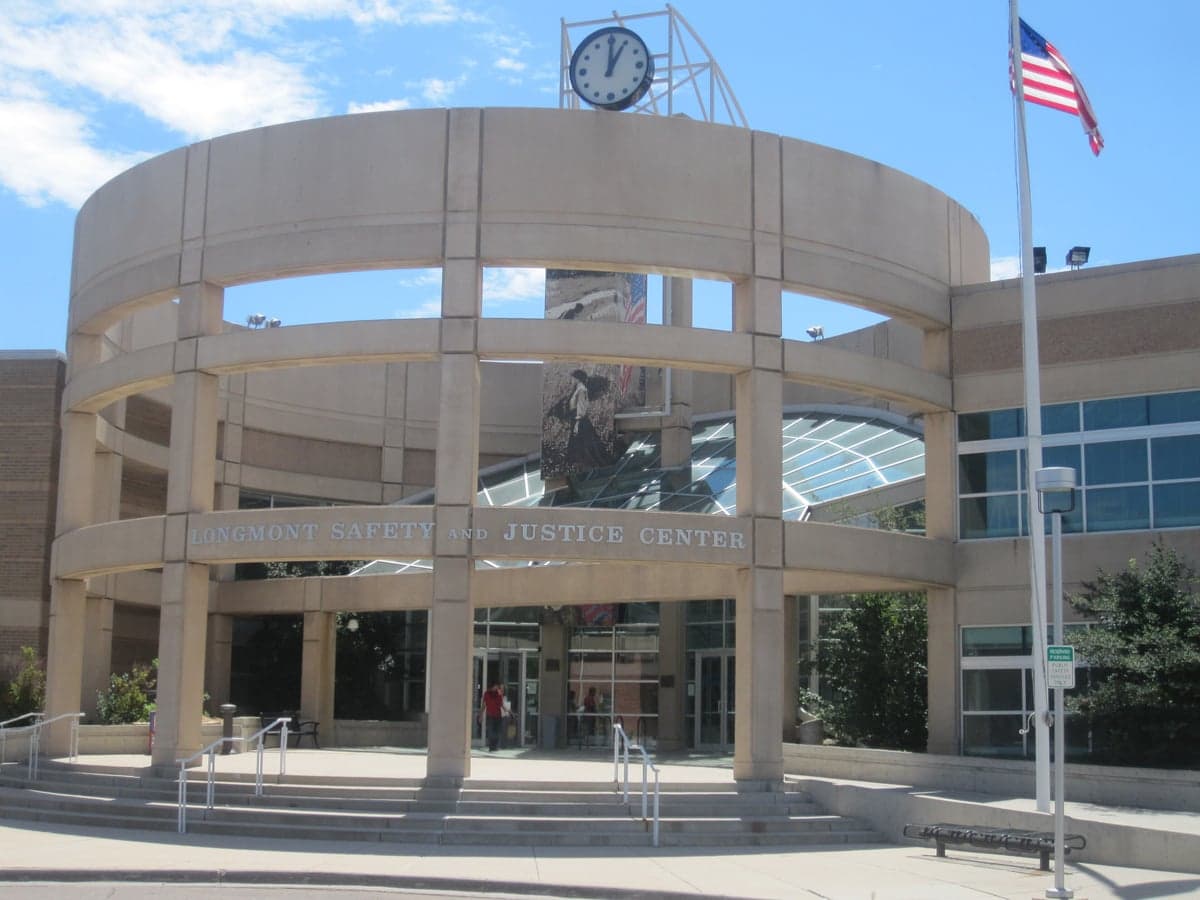
Photo: Wikipedia
Strategic Assessment of Longmont, CO
Meaningful friction. Expect exposure to either population pressure, blast zones, or natural disaster risk. Consider buying a retreat property.
What does the Strategic Assessment tell us?
Our Strategic Assessment grades tactical survivability of an area. Major population centers, military targets, fallout zones, natural disasters, and border exposure all drive risk — lower exposure means a more defensible position in a crisis.
This is heavily inspired by Joel Skousen's Strategic Relocation book. Highly recommended you checkout the book ($)What does this tell us?
Our Strategic Assessment grades tactical survivability of an area. Major population centers, military targets, fallout zones, natural disasters, and border exposure all drive risk — lower exposure means a more defensible position in a crisis.
This is heavily inspired by Joel Skousen's Strategic Relocation book. Highly recommended you checkout the book ($)Strategic Pillars

Key Distances
Regional Safe Places
Below is our recommended "safe zones" in Colorado and the surrounding area based on our strategic heuristics. For most people, it's unrealistic to live in a “safe zone” full-time due to work, family or other personal reasons. They tend to be more rural. However, many of these areas are perfect for second homes and retreat properties that double as a vacation home or even a short-term rental.
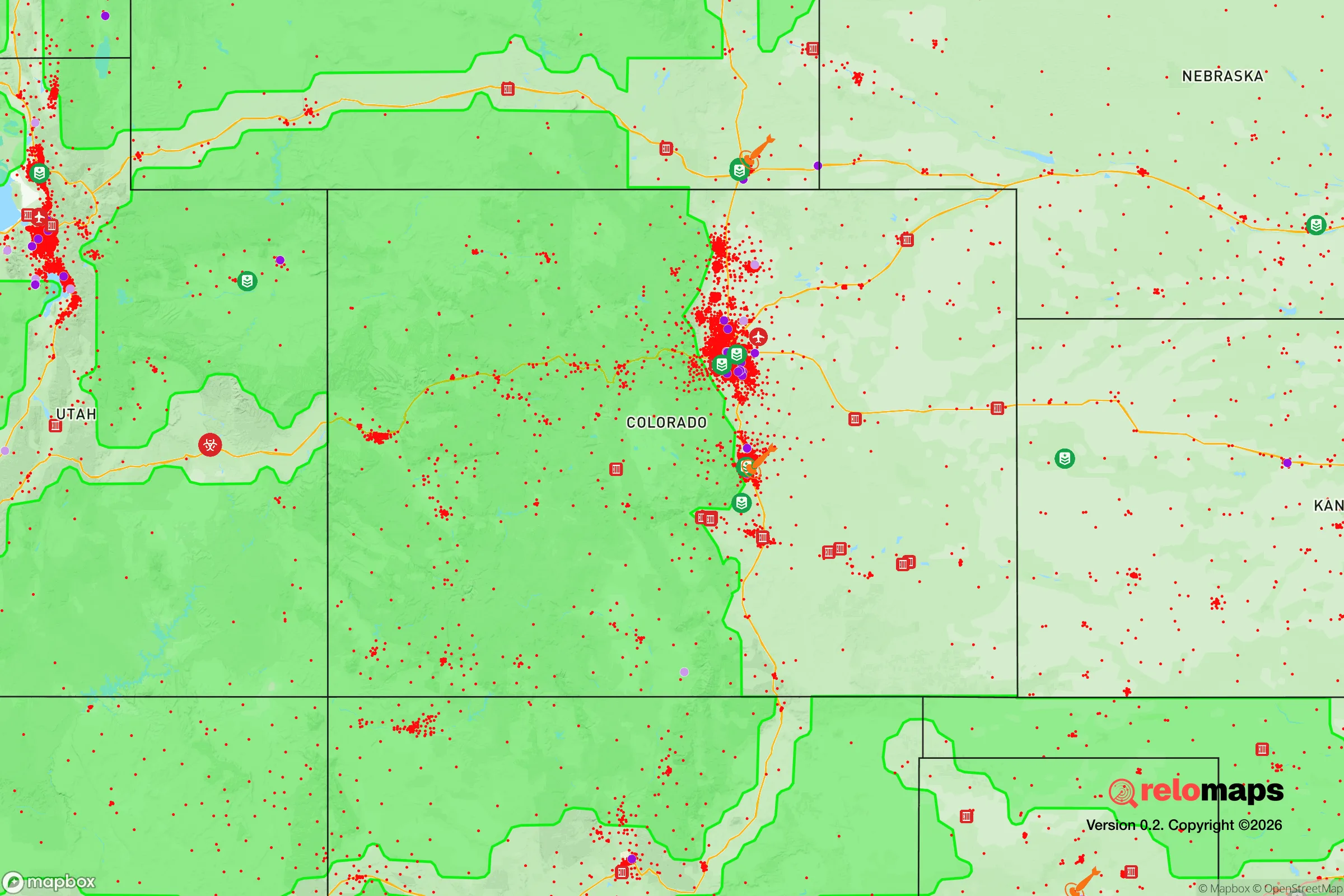
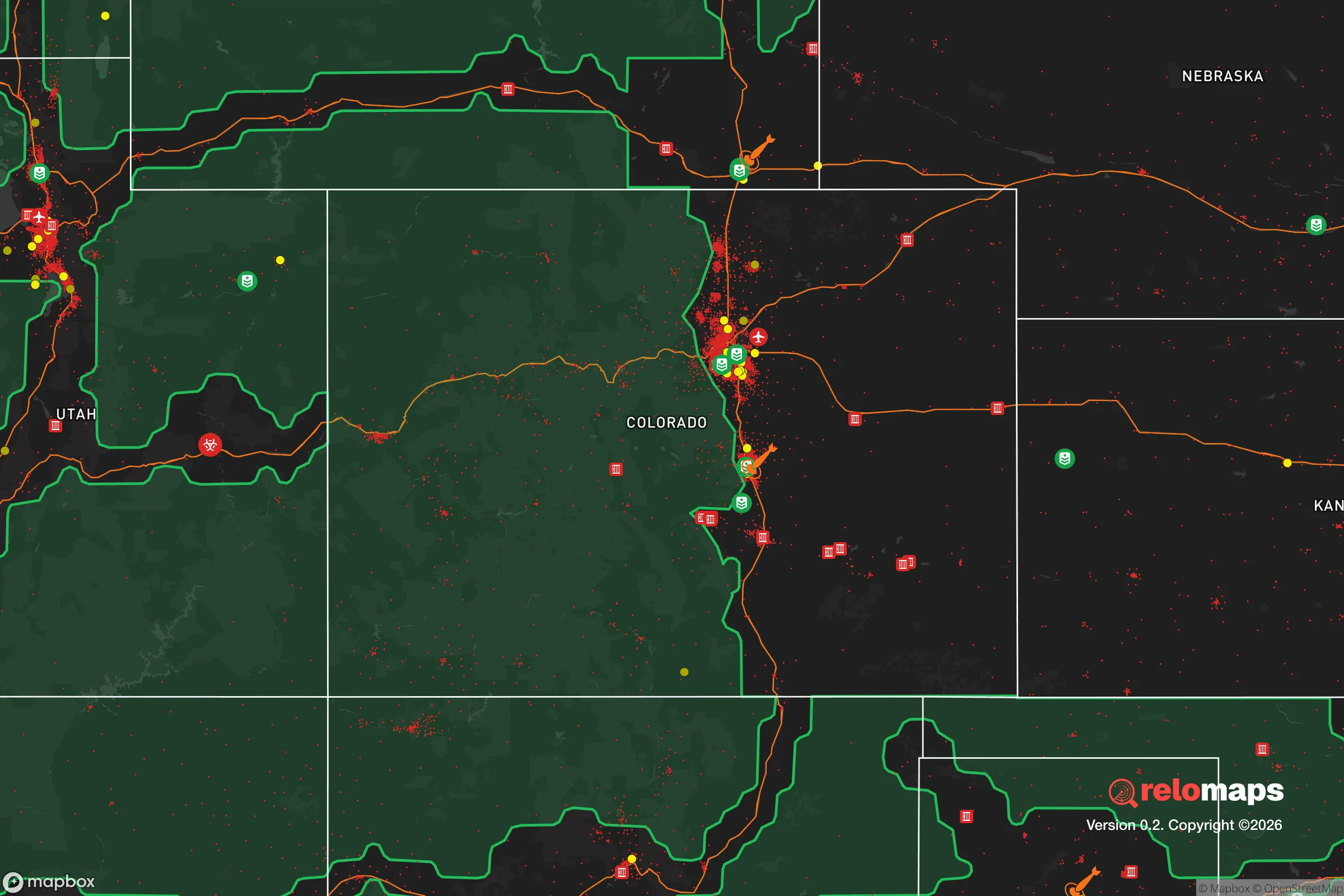


Important Note: For informational purposes only. This does not mean nothing bad ever happens in the green zones. Please use common sense. This is based on public data and modeled with AI. We tried to take a conservative approach but mistakes happen. We update this regularly as new information becomes available.
Solar Generator Recommendations
Backup power matters more here than in safer locations. We've picked three solar generators across budgets and capacity tiers — start with the budget unit if you only need a few essentials, or step up if you want to run a fridge and HVAC for days at a time.

Jackery Portable Power Station Explorer 300
Budget OptionPower on the Go: Weighing only 11 lbs, it's convenient to set up and store with book-sized foldable solar panels

BLUETTI Portable Power Station AC180
Designed for both indoor and outdoor scenarios, AC180 is highly capable as it has a robost capacity and continuous output power.

EF ECOFLOW DELTA Pro Ultra Power Station
Upgraded PickEcoFlow DELTA Pro Ultra is a whole-home energy system designed to grow with your family. Integrated with the Smart Home Panel 2, it scales to meet your evolving energy needs — keeping your home powered, intelligent, and secure through every stage of life.
We earn a commission, at no additional cost to you.
Strategic Assessment Analysis
Longmont, Colorado, offers a compelling mix of strategic depth and practical resilience for those prioritizing self-reliance and security in an uncertain future. Positioned along the Front Range, it avoids the immediate crush of Denver’s urban core while retaining access to critical infrastructure, making it a viable base for weathering civic unrest or supply-chain disruptions. Its location—roughly 35 miles north of Denver and 15 miles east of the Rocky Mountain foothills—provides a buffer zone that is neither too remote for resupply nor too exposed to the chaos of a major metropolitan collapse.
Geographic position and natural advantages for long-term security
Longmont sits at an elevation of roughly 5,000 feet, offering a natural defensive advantage against sea-level threats like storm surges or rising water tables, while still being in a region with relatively mild winters compared to the high Rockies. The city is flanked by the St. Vrain River and several irrigation canals, providing a reliable surface water source that is less vulnerable to municipal failure than deep-well systems. The surrounding agricultural land—much of it still active—means that local food production is a tangible asset, not just a theoretical one. The proximity to Rocky Mountain National Park and the Roosevelt National Forest to the west gives a relocator access to vast public lands for hunting, foraging, and retreat if urban conditions deteriorate. However, this is not a remote bunker; it’s a working town with a population of roughly 100,000, which means you get the benefits of a local economy and medical services without the density of a major city. The key trade-off is that Longmont is within a 45-minute drive of Denver International Airport and the Denver metro area—a major risk factor for fallout from a high-value target event, but also a logistical node for evacuation or supply runs if you have a vehicle and a plan.
Risks, exposures, and proximity to fallout-relevant landmarks
The most significant vulnerability for Longmont is its position along the Interstate 25 corridor, a primary north-south artery that would become a chokepoint during any mass evacuation or civil unrest event. Denver, with its population of over 700,000 and critical infrastructure like the Federal Center, the Denver Federal Center, and Buckley Space Force Base, is a high-probability target for any coordinated attack or cyber-induced collapse. Longmont’s distance—roughly 35 miles—places it within the moderate fallout zone for a ground-level nuclear detonation at DIA or downtown Denver, depending on wind patterns. The city itself has no major military installations, but it does host a significant number of tech and data centers (e.g., IBM, Seagate, and several cloud facilities), which could become secondary targets or attract looting during a grid-down scenario. The St. Vrain River also poses a flood risk; the 2013 floods demonstrated that heavy rain events can isolate parts of the city, cutting off access to the west and south. For a prepper, the biggest exposure is the sheer number of people who would flee Denver northward along I-25 and Highway 287—Longmont would see a surge of refugees within hours of any major event, straining local resources and law enforcement.
Practical resilience for a relocator: food, water, energy, and defensibility
Water is Longmont’s strongest card. The city draws from a mix of the St. Vrain River, the Colorado-Big Thompson Project, and local reservoirs like Union Reservoir and McIntosh Lake. A relocator with a property near these sources—or with a well permit—can secure a private water supply that is less dependent on municipal treatment plants. The area’s growing season runs from May to October, and the soil in the surrounding farmlands is fertile enough for serious gardening or small-scale agriculture. For energy, Longmont is served by Platte River Power Authority, which has a mix of coal, natural gas, and renewables, but the grid is vulnerable to the same cascading failures that affect the entire Front Range. Solar panels with battery storage are a wise investment here, as the region gets over 300 days of sunshine annually. Defensibility is mixed: the city’s layout is suburban, with cul-de-sacs and grid streets that make it hard to secure a perimeter. However, neighborhoods west of Main Street and near the foothills offer terrain that can be used for observation and cover. The local police force is well-funded and has a reputation for quick response, but during a widespread event, they would be overwhelmed. The presence of a strong local gun culture—Colorado is a shall-issue state for concealed carry, and Longmont has several gun shops and ranges—means that many residents are already armed, which can be a deterrent to roaming groups but also a source of tension if resources run low. Stockpiling food and medical supplies is essential, as the nearest major distribution centers are in Denver and would be compromised early.
The overall strategic picture for Longmont is one of calculated risk. It is not a hardened redoubt, but it is a viable base for a relocator who wants to stay connected to the Front Range’s economy and services while maintaining a buffer from the worst of urban collapse. The key is to treat it as a staging ground: secure a property with private water and solar, build a network of like-minded neighbors, and have a bug-out plan for the mountains to the west if the corridor becomes untenable. The city’s resilience lies in its balance—close enough to Denver to access resources, far enough to avoid the initial shockwave, and surrounded by enough open land to sustain a retreat. For a conservative-leaning individual or family looking to hedge against national instability, Longmont offers a realistic middle ground between isolation and exposure, provided you are willing to invest in preparation and community building before the crisis hits.

* Values derived from national, state, county, city and local statistics and may differ in a specific area. Last updated: 2026-04-29T00:38:54.000Z
Narrative content on this page is AI-generated and may contain mistakes. Verify any details that matter before acting on them.
ReloMaps may earn a commission from affiliate links at no extra cost to you.

