 Popular
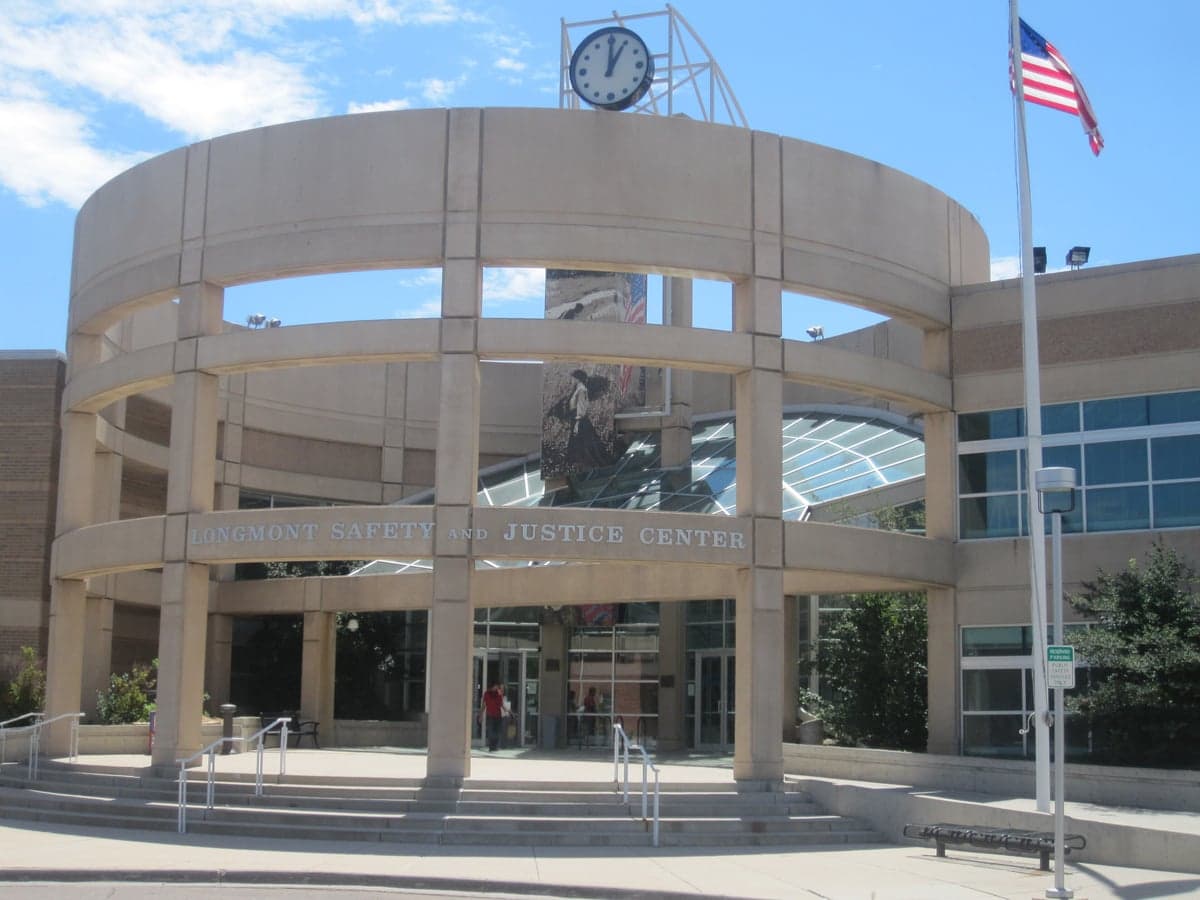
Photo: Wikipedia
Demographics of Longmont, CO
Affluence Level in Longmont, CO
A middle-class area roughly in line with national averages across income, home values, education, and employment.
People of Longmont, CO
Longmont, Colorado, is a city of roughly 99,000 residents where a predominantly white, college-educated population (67.5% white, 46.3% with a bachelor’s degree or higher) lives alongside a significant Hispanic community (24.2%) and smaller but growing East/Southeast Asian and Indian-subcontinent groups. The city’s character blends a historic agricultural and manufacturing base with a newer tech-and-commuter identity, drawing people who value relative affordability compared to Boulder and Denver. Its population density is moderate, and its distinctive marker is a pragmatic, family-oriented culture that leans more conservative than its neighbors to the south and west.
How the city was settled and grew
Longmont was founded in 1871 by the Chicago-Colorado Colony, a group of temperance-minded settlers from the Midwest who purchased land along the St. Vrain Creek. The original plat centered on Main Street and the railroad depot, and the first wave of residents were largely Anglo-American farmers and tradesmen from Illinois, Iowa, and Ohio. The city’s early economy revolved around sugar beets—the Great Western Sugar Company built a massive processing plant in 1903—which drew a second wave of laborers: Mexican and Mexican-American workers who arrived to work the beet fields and railroad lines. These families settled in what is now the West Side neighborhood, south of 3rd Avenue and west of Main Street, an area that remains a historic anchor for Longmont’s Hispanic community. A smaller contingent of German-Russian immigrants also arrived during this period, clustering near the sugar factory in the East Side industrial district around Atwood Street. By 1950, Longmont’s population had reached roughly 8,000, and the city remained a quiet, agricultural hub with a distinctly Anglo-Protestant civic leadership and a growing Mexican-American working class.
Modern era (post-1965)
The 1965 Immigration and Nationality Act opened the door for new waves of immigration, but Longmont’s modern demographic shift was driven more by domestic in-migration than by foreign arrivals. The city’s foreign-born population today is just 5.2%, well below the national average. The major change after 1970 was the arrival of white-collar professionals and families priced out of Boulder and Denver, who built subdivisions in the Southwest Longmont area (around Nelson Road and 9th Avenue) and the Fox Hill neighborhood near Union Reservoir. These newcomers were predominantly white, college-educated, and politically moderate to conservative. Meanwhile, the Hispanic population grew steadily through both natural increase and continued migration from Mexico and the Southwest, expanding beyond the West Side into the Central Longmont corridor along Boston Avenue and into the Northwest Longmont area near Hover Road. The East/Southeast Asian community (2.1%) and Indian-subcontinent community (0.8%) are smaller and more dispersed, with no single ethnic enclave; they tend to settle in newer subdivisions in South Longmont near the Boulder County Fairgrounds and along Ken Pratt Boulevard, drawn by tech-sector jobs at companies like Seagate and IBM. The Black population remains very small at 0.9%, concentrated in no particular neighborhood.
The future
Longmont’s population is projected to continue growing, likely reaching 110,000–115,000 by 2035, driven by infill development and annexation of unincorporated Boulder County land. The city is not homogenizing; rather, it is tribalizing into distinct enclaves. The Hispanic community is consolidating in the West Side and Central Longmont, while white professionals dominate the newer subdivisions in the south and southwest. The East/Southeast Asian and Indian-subcontinent populations are growing slowly but steadily, attracted by the tech sector and good schools, but they remain too small to form visible ethnic neighborhoods. The foreign-born share is likely to rise modestly as the tech sector expands, but Longmont will not become a major immigrant gateway. The biggest demographic tension is between the older, more conservative Anglo population and the younger, more diverse Hispanic and professional families—a divide that plays out in local politics, especially around growth, housing density, and school funding.
For someone moving in now, Longmont is becoming a city of two halves: a stable, family-oriented, predominantly white professional class in the newer subdivisions, and a historic, working-class Hispanic community in the older central and west-side neighborhoods. The city offers a relatively safe, affordable, and conservative-leaning alternative to Boulder, with a growing but manageable diversity. The key question for newcomers is which neighborhood’s character aligns with their priorities—and whether they are comfortable with the city’s quiet, gradual demographic sorting.

* Values derived from national, state, county, city and local statistics and may differ in a specific area. Last updated: 2026-04-29T00:38:54.000Z
Narrative content on this page is AI-generated and may contain mistakes. Verify any details that matter before acting on them.
ReloMaps may earn a commission from affiliate links at no extra cost to you.

