 Popular
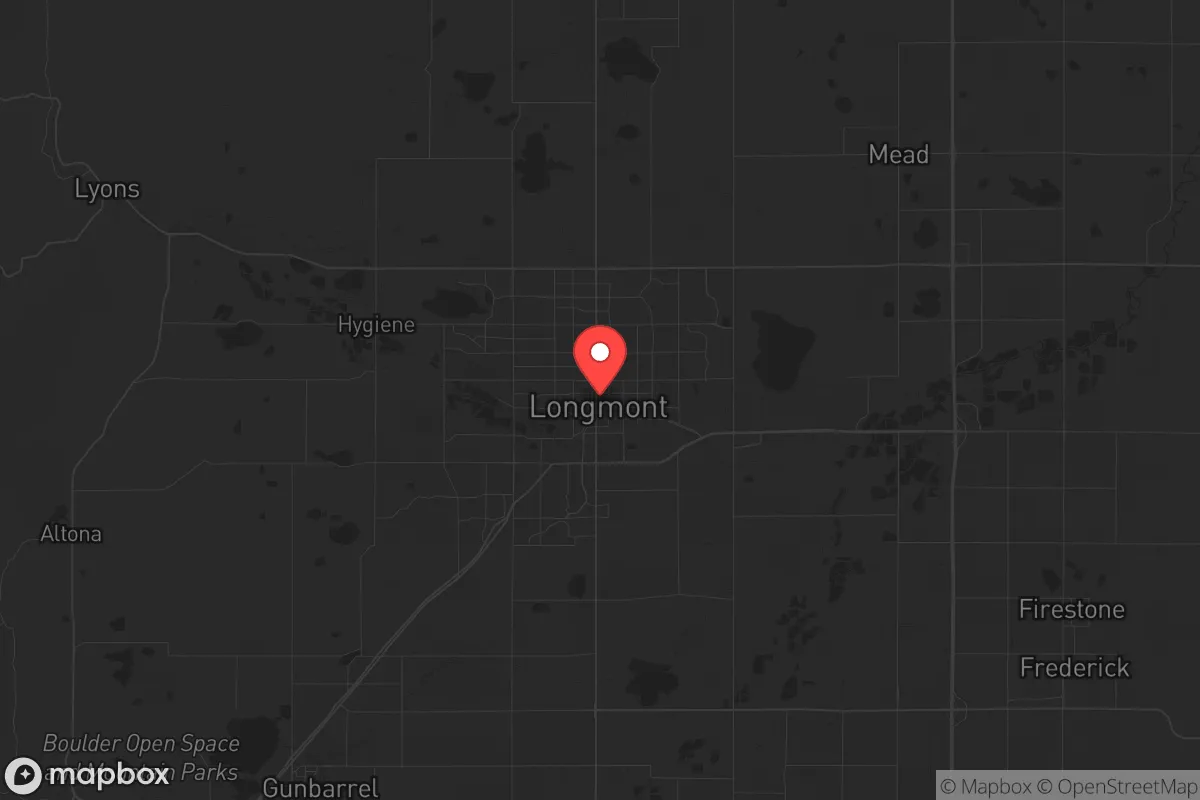
Photo: Wikipedia
Personal Sovereignty in Longmont, CO
Viable for self-reliance. Generally workable, though some barriers may limit total independence.
What does Personal Sovereignty tell us?
Personal Sovereignty measures your capacity for self-reliance and independence with minimal government friction. Higher scores mean fewer barriers between you and the way you want to live... but it assumes you have the space you need and good neighbors.
What does this tell us?
Personal Sovereignty measures your capacity for self-reliance and independence with minimal government friction. Higher scores mean fewer barriers between you and the way you want to live... but it assumes you have the space you need and good neighbors.
State Policy
Energy independence: Net exporter (110% of energy produced in-state)
Personal Liberty
Homesteading

Personal Liberty Analysis
For a conservative-leaning individual or family evaluating Longmont, Colorado, the personal sovereignty environment presents a complex trade-off. While Boulder County’s progressive politics create a regulatory atmosphere that can feel intrusive, Longmont itself retains a more pragmatic, working-class character than its neighbor to the south. The city’s location at the edge of Colorado’s Front Range offers a buffer—you’re close enough to urban amenities but far enough to find space for self-reliance. However, the state’s overarching legal framework, particularly on taxes, firearms, and property rights, imposes real constraints on autonomy that must be weighed carefully against the area’s natural advantages.
Tax burden and regulatory posture: what your money and time are up against
Colorado’s Taxpayer Bill of Rights (TABOR) is a rare constitutional check on government growth, requiring voter approval for tax increases and refunding surplus revenue. This keeps the state income tax at a flat 4.4% as of 2026, and Longmont’s combined city and county sales tax rate is roughly 8.5%—manageable compared to many blue states. Property taxes are low by national standards, typically around 0.5% to 0.6% of assessed value, which benefits landowners. However, the regulatory posture is where friction emerges. Boulder County enforces strict land-use codes, and Longmont’s city council has adopted aggressive energy-efficiency mandates for new construction, including electrification requirements that effectively phase out natural gas hookups in new homes. Permitting for home-based businesses or accessory dwelling units (ADUs) is bureaucratic but not impossible. For a prepper or homesteader, the biggest red flag is the state’s increasingly stringent environmental regulations on water rights and well permits, which can complicate off-grid water independence. The overall tax burden is favorable, but the regulatory creep is real and requires vigilance.
Self-defense and gun law specifics: navigating Colorado’s shifting landscape
Colorado is a “shall-issue” state for concealed carry permits, and Longmont itself does not impose additional local restrictions beyond state law. However, the state legislature has passed several measures that directly impact personal defense options. In 2023, Colorado enacted a red flag law (Extreme Risk Protection Orders) allowing courts to temporarily seize firearms from individuals deemed a risk, without a criminal conviction—a provision many conservatives view as a due-process vulnerability. More recently, the state passed a ban on “large-capacity” magazines (over 15 rounds) and raised the minimum purchase age for all firearms to 21. These laws are enforced in Longmont, and local police have shown willingness to act on them. Open carry is legal without a permit in Colorado, but local ordinances in Boulder County restrict it in certain public buildings and parks. For a survivalist mindset, the practical takeaway is that while you can still own and carry firearms, the legal margin for error has narrowed. Magazine capacity limits and the red flag law are the primary concerns for those prioritizing self-defense autonomy. Training and legal compliance are non-negotiable here.
Self-reliance and homesteading viability: lot sizes, zoning, and off-grid feasibility
Longmont’s zoning is a mixed bag for self-reliance. Within city limits, standard residential lots average 6,000 to 10,000 square feet, which allows for substantial vegetable gardens, small orchards, and even backyard chickens (hens only, no roosters, per city code). Beekeeping is permitted with registration. However, livestock larger than poultry is generally prohibited on lots under one acre, which rules out goats, sheep, or cattle for most in-town properties. The real opportunity lies in the unincorporated areas of Boulder and Weld counties just outside Longmont, where lot sizes of 1 to 5 acres are common and zoning is far more permissive. Off-grid feasibility is limited by Colorado’s water law: you cannot drill a well for domestic use on a property that has access to municipal water, and even on rural land, well permits require a minimum lot size (typically 35 acres in some areas) and proof of adequate aquifer yield. Solar panels are legal and encouraged, but net metering policies are subject to utility company rules. Completely disconnecting from the grid is not practical for most properties due to building codes and utility easements. For a serious homesteader, the best bet is a rural parcel in Weld County, where zoning is looser and county commissioners are more skeptical of state overreach.
Personal liberties: parental rights, medical autonomy, speech, and property
Parental rights in Colorado have become a flashpoint. The state’s 2023 “Jared Polis” executive orders and subsequent legislation expanded access to gender-affirming care for minors without parental consent in certain circumstances, and school districts in Boulder County have adopted policies that can limit parental notification on sensitive topics. Longmont’s St. Vrain Valley School District is more moderate than Boulder Valley, but parents should expect to be proactive in monitoring curriculum and policies. Medical autonomy is constrained by Colorado’s vaccine mandate landscape—while there is no statewide mandate for adults, certain healthcare workers and school employees face requirements, and exemptions have become harder to obtain. Free speech is protected under the First Amendment, but Boulder County’s social climate can be hostile to conservative viewpoints, particularly on public lands and in local government meetings. Property rights are generally strong thanks to TABOR, but the state’s 2024 “land use” reform bill preempted local zoning in some areas to force higher-density housing, which could affect neighborhood character. Eminent domain is rarely used for private development, but the threat exists. Overall, personal liberties in Longmont require active defense—the legal framework is not hostile, but it is not friendly either.
In the broader context of the Front Range, Longmont offers a middle ground for personal sovereignty. It is far more permissive than Boulder or Denver on taxes and property rights, but significantly more restrictive than rural Colorado counties like Weld or Elbert. For a conservative individual or family with a survivalist bent, the calculus comes down to trade-offs: you get lower taxes and decent gun laws compared to the coasts, but you must navigate a state government that is increasingly comfortable with red flag laws, parental rights limitations, and environmental mandates. The best strategy is to locate just outside city limits in an unincorporated area, where zoning is looser and local government is less intrusive. Longmont itself is not a sovereignty stronghold, but it is a viable base of operations for those willing to stay informed and engaged.

* Values derived from national, state, county, city and local statistics and may differ in a specific area. Last updated: 2026-04-29T00:38:54.000Z
Narrative content on this page is AI-generated and may contain mistakes. Verify any details that matter before acting on them.
ReloMaps may earn a commission from affiliate links at no extra cost to you.

