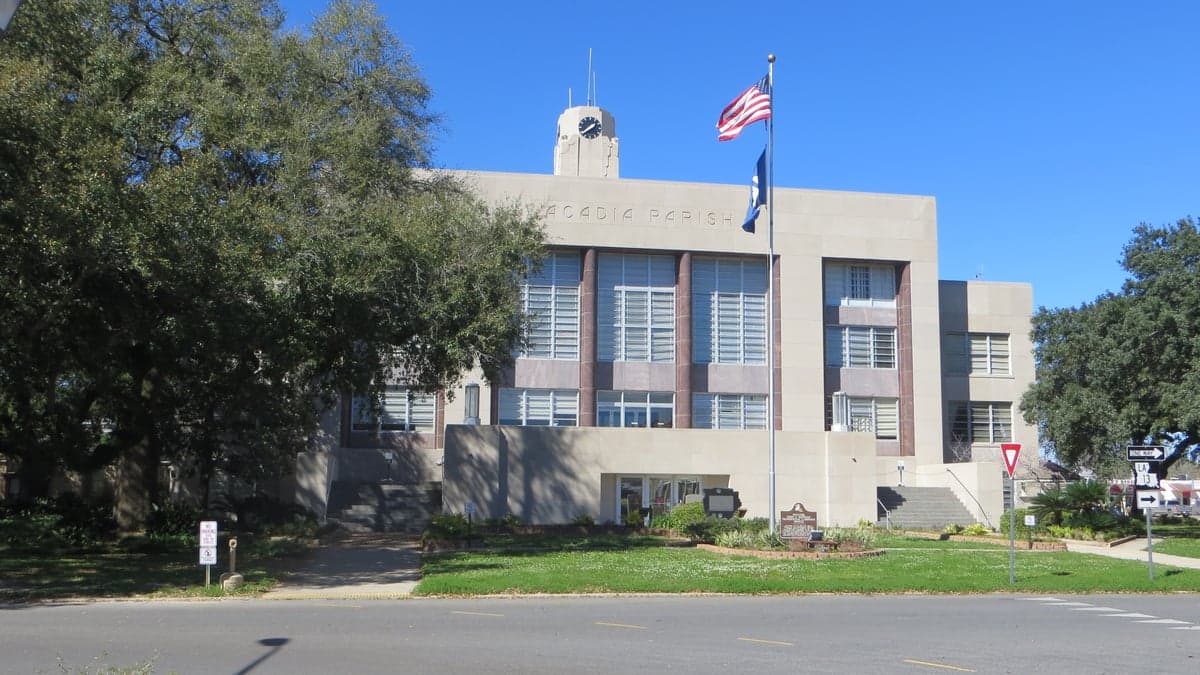
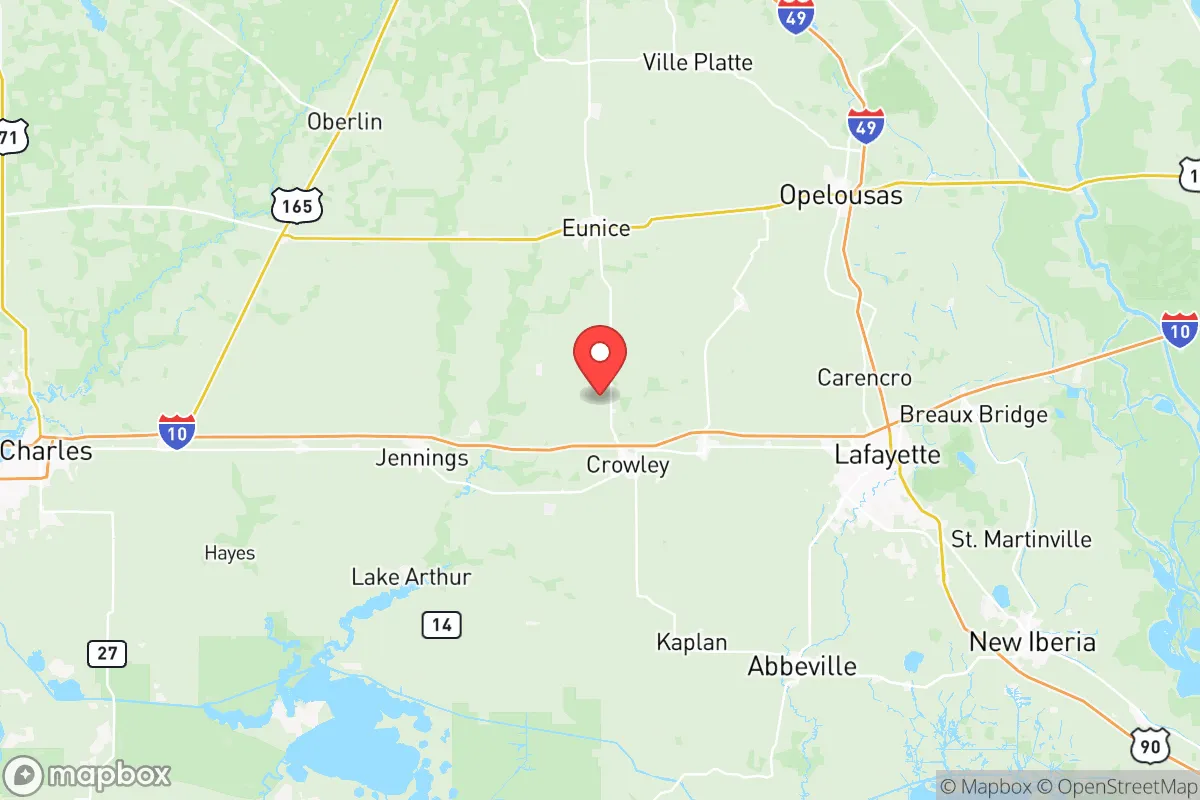
Photo: Wikipedia
Find The Best Places To Live in Acadia County
PRO TIP! You can paste a Zillow or Redfin link to get info on that property.
Best Places to Live in Acadia County
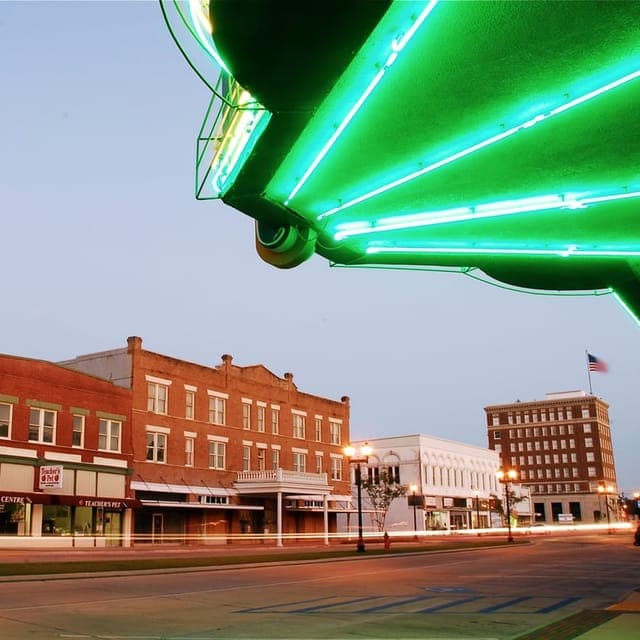
Cities & Towns in Acadia County
Cities in Acadia County
What It's Like Living in Acadia County, LA
Living in Acadia County, Louisiana, feels like stepping into a slower, more grounded version of the Deep South, where life revolves around family, church, and the land. The county’s 57,218 residents are spread across small cities like Crowley, Rayne, and Church Point, with a smattering of unincorporated communities like Iota and Estherwood. It’s a place where the median home value sits at a refreshingly affordable $146,900, and the cost of living index of 58 (well below the U.S. average of 100) means your paycheck stretches further than it would in Baton Rouge or Lafayette. But this affordability comes with trade-offs—lower median incomes ($45,266), a high violent crime rate (362.3 per 100,000), and a very low share of college-educated adults (13.4%)—so it’s not for everyone.
The Daily Rhythm: Work, Commute, and Weekend Life
Most people in Acadia County work in agriculture (rice, soybeans, and crawfish dominate), oilfield support, or healthcare, with a solid chunk commuting to Lafayette, about 30 minutes east. The average commute is 27.7 minutes—longer than you’d expect for a rural area, but manageable. Crowley, the parish seat, is the commercial hub, where you’ll find Walmart, local diners like D.I.’s Cajun Restaurant, and the annual International Rice Festival every October, which draws thousands for carnival rides, a parade, and live zydeco music. Rayne, known as the “Frog Capital of the World,” hosts the quirky Rayne Frog Festival in May, complete with frog-jumping contests and crawfish étouffée. Weekends often involve fishing on the Mermentau River, attending a crawfish boil, or driving to Lake Charles for casino nightlife—there’s not much to do locally after dark beyond a few sports bars like Legends Bar & Grill in Crowley.
The median age here is 37, and the population skews toward families and older couples who’ve lived in the same house for decades. Young singles often feel the pinch—the dating pool is shallow, and the lack of nightlife can be isolating. If you’re a college-educated professional (only 13.4% of adults hold a degree), you’ll likely find yourself among a small minority, and the local job market may not offer the white-collar roles you’re used to. The kind of person who thrives here is someone who values low cost of living, knows their neighbors, and doesn’t mind driving 20 minutes for a decent grocery store or a doctor’s appointment.
Sports, Community, and What People Actually Do
High school football is the undisputed king of local sports. Friday nights in Crowley, Rayne, and Church Point see entire towns packing bleachers for games between Crowley High’s Gents, Rayne High’s Wolves, and Church Point’s Bears. These games are social events—parents, grandparents, and alumni all show up, and the rivalry between Crowley and Rayne is fierce enough to spark year-round trash talk. There’s no college or pro team in the parish, so most residents root for the LSU Tigers or the New Orleans Saints, with game-day watch parties at local bars like The Sports Page in Crowley. Youth sports (Little League baseball, soccer, and softball) are also big, with parents spending weekends at fields in Iota or Estherwood.
Beyond sports, the community calendar is packed with church events, crawfish boils, and hunting season (deer and duck). The Cajun Music & Food Festival in Crowley every June is a highlight, featuring local bands like Wayne Toups and plates of boudin and cracklin. Outdoor enthusiasts appreciate the Acadia Parish Wildlife Management Area for hiking and birding, though the flat, swampy terrain isn’t dramatic—it’s more about quiet solitude than scenic vistas. One cultural quirk: almost everyone speaks with a thick Cajun accent, and you’ll hear French phrases like “laissez les bons temps rouler” tossed around casually, even among younger residents.
Pros and Cons of Living in Acadia County
What longtime residents love: The cost of living is genuinely low—a median home value of $146,900 means a family can buy a three-bedroom house on a single income. The sense of community is strong; neighbors help each other during hurricane season, and local festivals feel like family reunions. The food is outstanding—fresh crawfish, gumbo, and boudin are available at roadside stands and small markets like Bourque’s Superette in Rayne. Traffic is almost non-existent outside of Crowley’s main drag (Evangeline Highway) during rush hour.
What frustrates residents: The violent crime rate of 362.3 per 100,000 is notably high for a rural area—property crime and drug-related incidents (especially methamphetamine) are common in parts of Crowley and Rayne. Many residents lock their doors and avoid certain neighborhoods after dark. The lack of entertainment and dining options means you’ll drive to Lafayette (30 minutes) or Lake Charles (40 minutes) for a movie theater, a nice restaurant, or a shopping mall. The weather is brutal: humid summers with highs in the 90s, frequent thunderstorms, and the constant threat of hurricanes (Laura and Delta hit hard in 2020). The school system is average, with Crowley High and Rayne High both rated C by the state—families who prioritize education often consider private options like Notre Dame High School in Crowley.
Seasonal rhythms are defined by rice planting in spring, crawfish season (March–June), and hunting season in fall. Winters are mild (40s–60s), but the humidity makes even 50°F feel bone-chilling. If you’re considering a move here, visit during the Rice Festival or a Friday-night football game to get a real feel for the place—it’s not for everyone, but for the right person, it’s home.

* Values derived from national, state, county, city and local statistics and may differ in a specific area. Last updated: 2026-08-08T15:01:42.000Z
Narrative content on this page is AI-generated and may contain mistakes. Verify any details that matter before acting on them.
ReloMaps may earn a commission from affiliate links at no extra cost to you.

