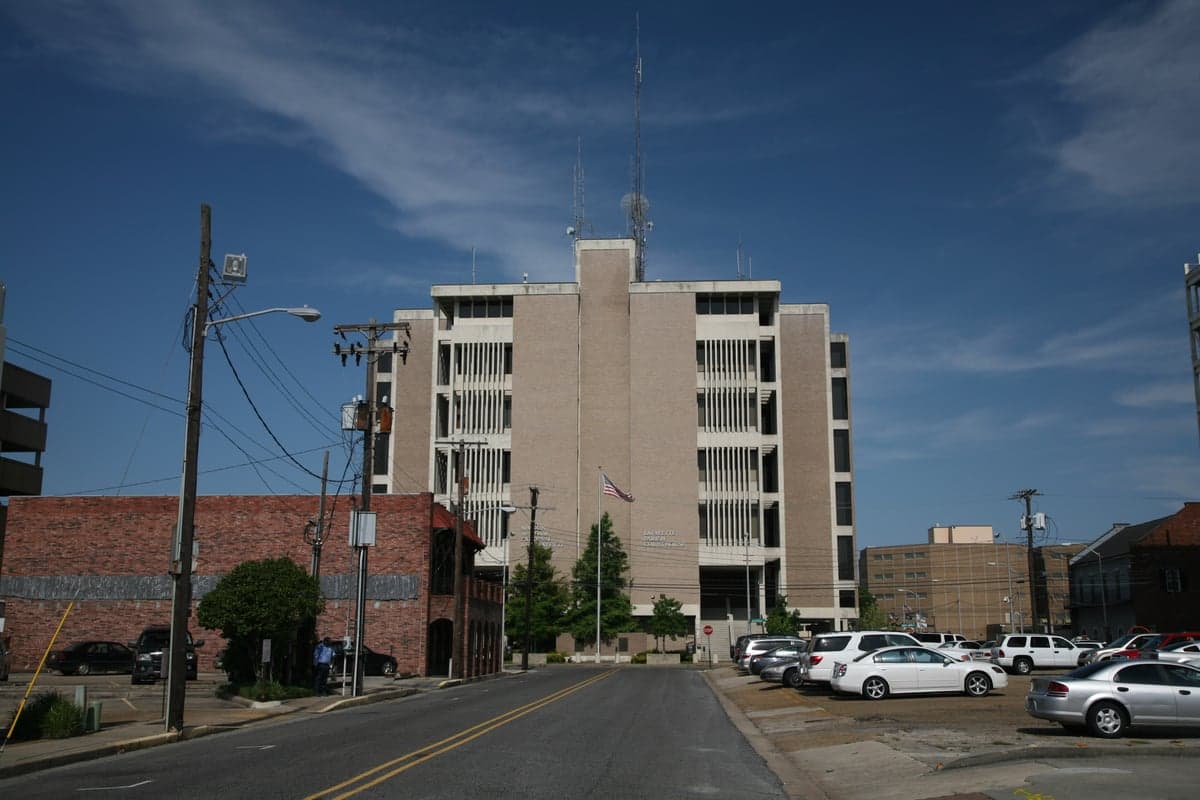
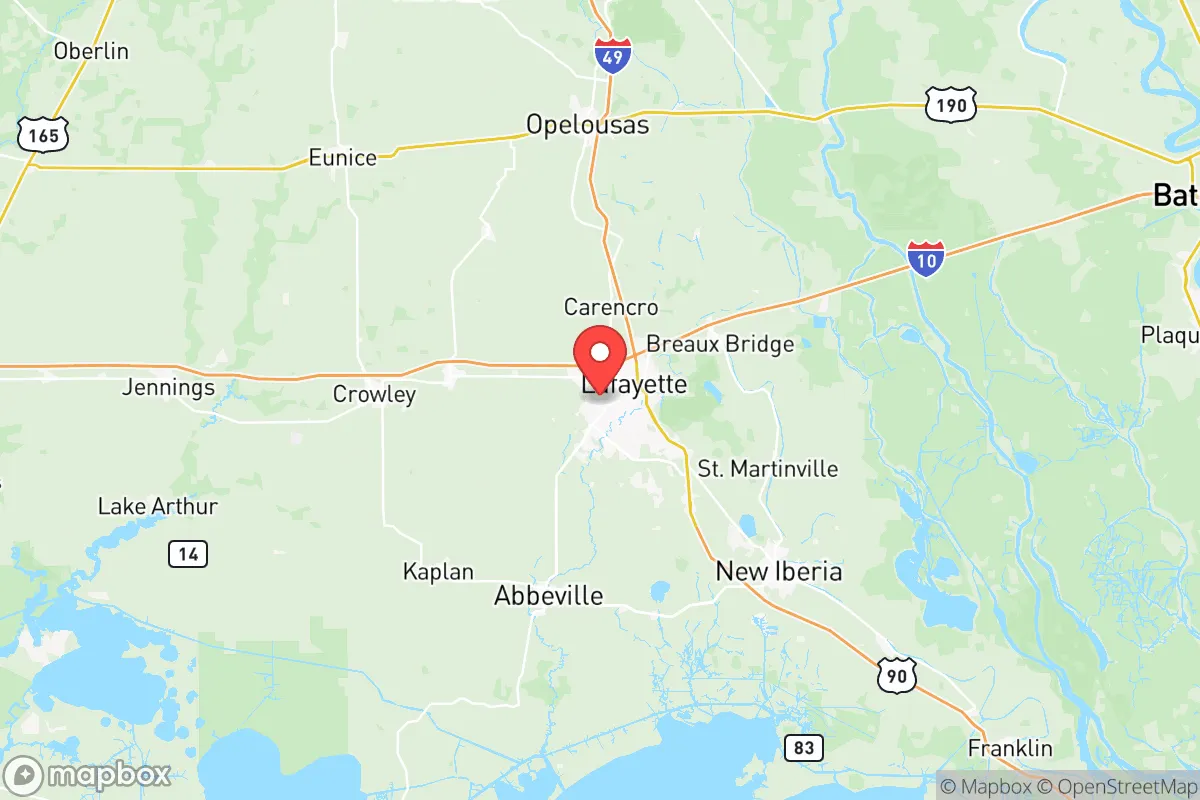
Photo: Wikipedia
Demographics of Lafayette County
Affluence Level in Lafayette County
A below-average socioeconomic profile. Incomes, home values, and educational attainment trail the U.S., with higher poverty and unemployment.
People of Lafayette County
Lafayette County, Louisiana, today is a densely populated, culturally distinct hub of 245,075 residents, defined by its strong Cajun and Creole heritage, a growing but still modestly diverse population, and a deeply rooted sense of place. The county is majority White (62.5%), with a significant Black population (25.3%) and small but established Hispanic (6.5%) and Asian (1.2%) communities. Its identity is anchored in the French-influenced traditions of South Louisiana, with a population that is notably more urban and educated than much of the surrounding region, boasting a 34.9% college-educated rate.
Settlement & growth (pre-1960)
The human history of Lafayette County begins with the indigenous Atakapa and Chitimacha peoples, who inhabited the region's swamps and prairies for centuries before European contact. French and Acadian settlers, the ancestors of today's Cajun population, began arriving in the mid-18th century after being expelled from Acadia (present-day Nova Scotia) by the British. These Acadians, along with later French Creoles and Spanish colonists, established small farming and trading communities along the Bayou Teche and Vermilion River, laying the foundation for the county's distinct Francophone culture. The town of Lafayette, the parish seat, was founded in the 1820s as a trading post and quickly became the commercial and cultural center of the region.
Throughout the 19th century, the population grew steadily through natural increase and the arrival of additional French-speaking settlers, as well as enslaved Africans who were brought to work on sugar and cotton plantations. After the Civil War, freedmen established their own communities, particularly in and around Lafayette and the rural areas of Scott and Broussard. The late 19th and early 20th centuries saw a small influx of Italian and Lebanese immigrants, who settled primarily in Lafayette and became involved in the grocery and dry goods trades. The discovery of oil in the 1930s and 1940s transformed the local economy, drawing workers from across Louisiana and the South to the burgeoning oilfield service industry centered in Lafayette and Youngsville. This period solidified the county's shift from an agrarian to an energy-based economy, but the population remained overwhelmingly White and Black, with a strong Cajun cultural identity.
Modern era (post-1965)
The 1965 Hart-Cellar Act had a relatively muted impact on Lafayette County compared to major metropolitan areas, but it did introduce new demographic threads. The foreign-born population remains low at just 3.2%, but this small share has grown since the 1990s. The most notable post-1965 change has been the growth of the Hispanic population, now at 6.5%, driven by immigration from Mexico and Central America for work in construction, agriculture, and the oil industry. These communities are concentrated in Lafayette and the surrounding areas of Duson and Carencro, where they have established small businesses and churches.
Domestic migration has been a more significant force. Since the 1970s, Lafayette County has attracted a steady stream of domestic migrants from other parts of Louisiana, as well as from Texas and other Southern states, drawn by the energy sector and the region's relatively low cost of living. This in-migration has been largely White and Black, reinforcing the existing demographic structure. The Asian population, at 1.2%, is composed primarily of Vietnamese and Filipino families, many of whom arrived after the Vietnam War and settled in Lafayette and Broussard, often working in the seafood and oil industries. The Indian subcontinent population is very small at 0.7%, with families concentrated in professional fields in Lafayette.
Suburbanization has reshaped the county since the 1980s, with rapid growth in the towns of Youngsville and Broussard, which have become bedroom communities for families seeking newer housing and better schools. This suburban expansion has been predominantly White, though Black and Hispanic families have also moved outward from Lafayette. The city of Lafayette itself has experienced a more stable population, with a higher concentration of Black residents and a growing professional class drawn to the University of Louisiana at Lafayette and the healthcare sector.
The future
The population of Lafayette County is projected to continue growing slowly, driven by natural increase and modest domestic in-migration. The county is not experiencing the rapid diversification seen in many Sun Belt metros; instead, it is likely to remain a predominantly White and Black region with a slowly growing Hispanic minority. The Hispanic population is expected to increase gradually, but it will likely assimilate into the broader Cajun-influenced culture rather than forming a distinct, separate enclave. The Asian and Indian communities are expected to remain small, concentrated in professional and technical fields.
The cultural identity of the county is likely to remain strongly tied to its Cajun and Creole roots, even as the population becomes slightly more diverse. The in-migration of outsiders, particularly from Texas and other parts of the South, is being absorbed into the existing cultural framework rather than fundamentally altering it. The next 10-20 years will likely see continued suburban expansion in Youngsville and Broussard, while Lafayette itself may see a modest urban revival driven by young professionals and empty-nesters. The county is not homogenizing into a generic American suburb, nor is it tribalizing into distinct ethnic enclaves; it is becoming a slightly more diverse, still deeply Southern, and proudly Francophone community.
For someone moving in now, Lafayette County offers a stable, culturally rich environment with a strong sense of community, a growing economy, and a population that is welcoming but firmly rooted in its traditions. The demographic trajectory is one of slow, organic change rather than rapid transformation, making it an attractive option for those seeking a place with a clear identity and a predictable future.

* Values derived from national, state, county, city and local statistics and may differ in a specific area. Last updated: 2026-06-01T13:32:38.000Z
Narrative content on this page is AI-generated and may contain mistakes. Verify any details that matter before acting on them.
ReloMaps may earn a commission from affiliate links at no extra cost to you.

