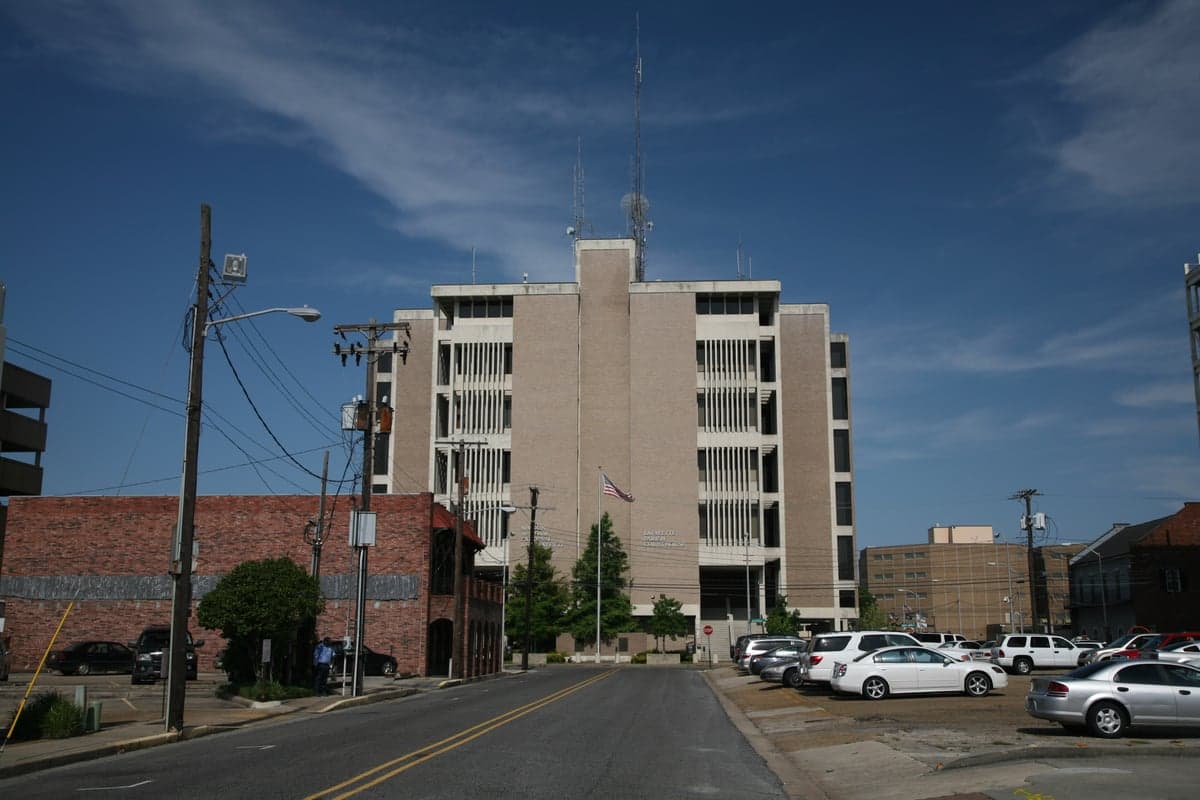
Photo: Wikipedia
Personal Sovereignty in Lafayette County
Strong independent fundamentals that actively favor personal liberty and low regulation.
What does Personal Sovereignty tell us?
Personal Sovereignty measures your capacity for self-reliance and independence with minimal government friction. Higher scores mean fewer barriers between you and the way you want to live... but it assumes you have the space you need and good neighbors.
What does this tell us?
Personal Sovereignty measures your capacity for self-reliance and independence with minimal government friction. Higher scores mean fewer barriers between you and the way you want to live... but it assumes you have the space you need and good neighbors.
State Policy
Energy independence: Net exporter (280% of energy produced in-state)
Personal Liberty
Homesteading

Personal Liberty Analysis
Lafayette County, Louisiana, offers a notably high degree of personal sovereignty compared to many coastal and urban jurisdictions, largely due to Louisiana’s strong constitutional protections for individual rights and a state-level political culture that resists federal overreach. For the strategic relocator—whether a single individual or a parent—this translates into a legal environment where self-defense, parental authority, and economic independence are given wide latitude. The county’s mix of small towns like Lafayette, Broussard, Youngsville, Scott, and Duson provides a spectrum of regulatory intensity, from the more urbanized core of Lafayette proper to the rural outskirts where homesteading and off-grid living become genuinely feasible. The overarching ethos here is one of live-and-let-live, with the caveat that state preemption laws limit local governments from imposing the kind of progressive ordinances seen in places like Austin or Portland.
Tax burden and regulatory posture: How Louisiana’s fiscal and legal climate affects your autonomy
Louisiana’s tax structure is a mixed bag for sovereignty-minded individuals. The state imposes a personal income tax with rates ranging from 1.85% to 4.25%, which is moderate by national standards, but property taxes are among the lowest in the country—averaging roughly 0.55% of assessed value in Lafayette Parish. This low property tax burden means less government claim on your real estate, a key consideration for preppers who prioritize land ownership as a hedge against inflation and state overreach. Sales tax, however, is high: Lafayette Parish tacks on a combined rate of about 9.5% (state + local), which can feel like a consumption penalty. Regulatory posture in Lafayette County is generally business-friendly, with no county-level zoning in unincorporated areas—meaning you can build a workshop, keep livestock, or install a backup generator without navigating a thicket of permits. The city of Lafayette itself has more stringent building codes and noise ordinances, but the surrounding towns like Scott and Duson are far more permissive. For the survivalist, the key takeaway is that state preemption laws prevent local governments from banning things like firearms, short-term rentals, or backyard agriculture outright, preserving a baseline of personal freedom even in the more populated areas.
Self-defense and gun law specifics: What the Second Sanctuary status means for your family
Louisiana is a constitutional carry state, meaning no permit is required to carry a concealed firearm for anyone 21 or older who can legally possess a gun. Lafayette Parish is also a designated Second Amendment Sanctuary, with local officials publicly vowing not to enforce any federal gun control measures deemed unconstitutional. This is not just symbolic: the sheriff’s office in Lafayette has explicitly stated it will not participate in federal firearms confiscation schemes or red flag orders that lack due process. For parents, this means you can train your children in firearm safety and ownership without fear of state interference—Louisiana law explicitly protects the right of parents to teach their kids about guns. Stand-your-ground laws are fully in effect, with no duty to retreat in any place you have a legal right to be. The practical reality in Broussard and Youngsville is that gun ownership is the norm, not the exception, and local gun shops and ranges are plentiful. The only notable restriction is a 10-day waiting period for handgun purchases from dealers, but private sales between individuals remain unregulated. For the prepper, this legal framework means you can stockpile, train, and defend your home without the legal gray areas that plague states like California or New York.
Self-reliance and homesteading viability: Lot sizes, zoning, and off-grid feasibility across the parish
Homesteading viability in Lafayette County varies dramatically by location. In the city of Lafayette, standard residential lots are typically 0.25 acres or smaller, and city ordinances restrict keeping chickens, goats, or other livestock to limited numbers and specific setbacks. However, once you move to the unincorporated areas or smaller towns like Duson or Scott, lot sizes expand to 1-5 acres commonly, and zoning is virtually nonexistent. In Duson, for example, you can find parcels of 2-5 acres where you can build a pole barn, install solar panels, and dig a well without county interference—as long as you meet basic state health codes for septic systems. Off-grid living is legally feasible: Louisiana has no state law requiring connection to the electrical grid, and net metering policies allow you to sell excess solar power back to the utility. Rainwater collection is unrestricted, and composting toilets are permitted with proper permitting. The biggest hurdle is floodplain regulations in low-lying areas near the Vermilion River, so check FEMA maps before buying. For the serious prepper, Youngsville offers a middle ground—newer subdivisions with HOA restrictions that can limit autonomy, but also plenty of older neighborhoods with no covenants where you can garden, raise rabbits, and store supplies without neighbor complaints.
Personal liberties: Parental rights, medical autonomy, speech, and property protections
Parental rights in Louisiana are among the strongest in the nation. The state has a Parents’ Bill of Rights that explicitly affirms the right of parents to direct the upbringing, education, and healthcare of their children, including the right to opt out of any school curriculum or medical treatment they find objectionable. Lafayette Parish School Board has been conservative in its approach, resisting federal mandates on critical race theory and gender ideology in classrooms. Medical autonomy is also robust: Louisiana has not adopted vaccine passports or broad public health mandates, and the state legislature has passed laws prohibiting discrimination against the unvaccinated. For the individualist, this means you can make healthcare decisions for yourself and your family without government coercion. Free speech is protected by both the state constitution and a strong culture of open debate—Lafayette is home to a vibrant conservative media ecosystem, and public meetings are often forums for robust discussion of local issues. Property rights are further secured by Louisiana’s civil law tradition, which treats property as a fundamental right; eminent domain is rarely used for private development, and the state has a strong homestead exemption that protects your primary residence from creditors. The only area where personal sovereignty is constrained is in the realm of environmental regulations—Louisiana’s oil and gas industry has significant influence, and some rural areas near Broussard have experienced industrial encroachment that can affect air and water quality, so due diligence on specific parcels is essential.
Overall, Lafayette County ranks as a high-sovereignty area within the United States, comparable to rural Texas or Tennessee but with the added advantage of Louisiana’s unique legal heritage that prioritizes individual rights over collective mandates. The combination of constitutional carry, strong parental rights, low property taxes, and permissive zoning in the outlying towns creates an environment where a survivalist or prepper can build a self-reliant life without constant government friction. The main trade-offs are the high sales tax and the need to avoid flood-prone areas, but for those willing to settle in Scott, Duson, or the unincorporated parts of the parish, the freedom to live as you see fit is genuinely substantial. Compared to the regulatory chokeholds of the West Coast or Northeast, Lafayette County offers a breath of fresh air—literally and figuratively—for anyone seeking to reclaim personal sovereignty in an increasingly overreaching world.

* Values derived from national, state, county, city and local statistics and may differ in a specific area. Last updated: 2026-06-01T13:32:38.000Z
Narrative content on this page is AI-generated and may contain mistakes. Verify any details that matter before acting on them.
ReloMaps may earn a commission from affiliate links at no extra cost to you.

