
Photo: Wikipedia
Political ClimatePolitical Climate in Rapides County
Showing district-level results — no local-only data available.
Local Political AnalysisPolitical Analysis of Rapides County
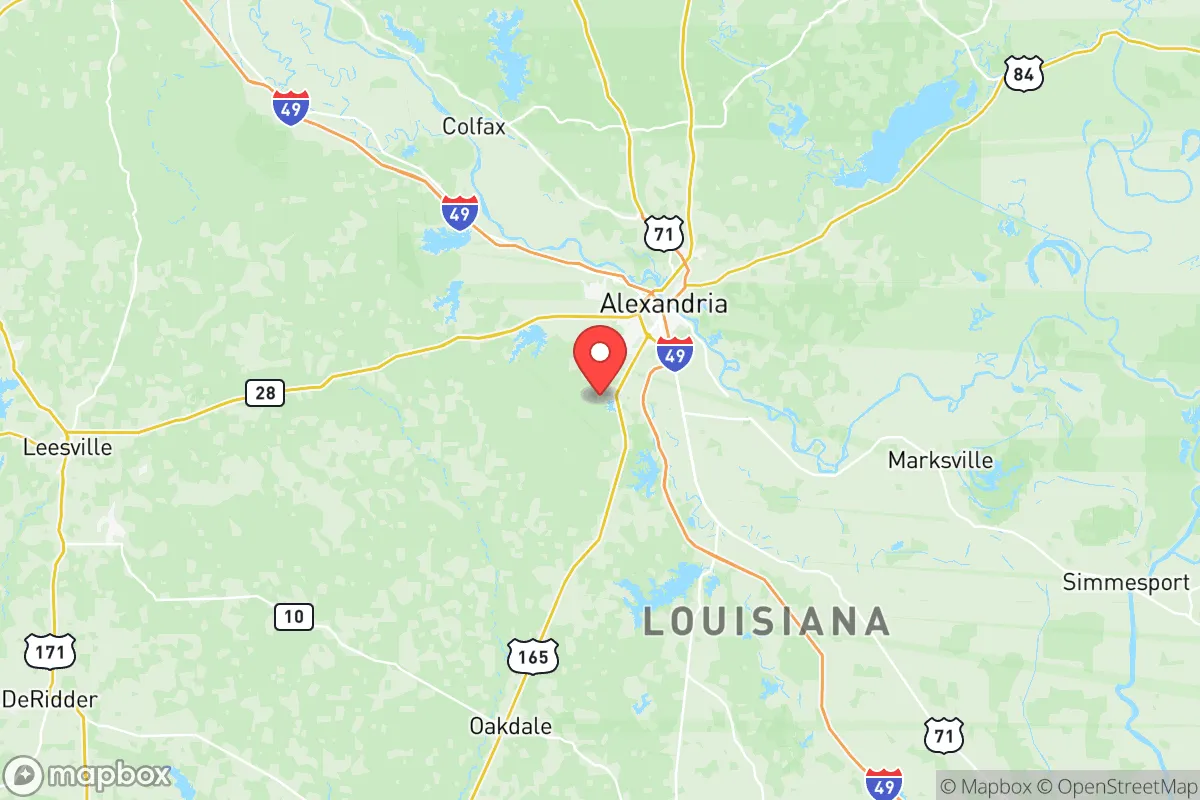
Rapides County is about as solidly conservative as they come in Louisiana, with a Cook PVI of R+26 that makes it a deep-red stronghold compared to the state’s already R+10 lean. If you’ve lived here as long as I have, you’ve watched the political needle stay firmly planted in the same spot for decades—this isn’t a place that flips or even wobbles much. The county has voted Republican in every presidential election since 2000, and the margins have only gotten wider, with Trump pulling in over 65% in 2020. But don’t let the county-wide numbers fool you—there’s real variation on the ground, and the shifts happening in a few pockets are worth keeping an eye on.
How it compares
Louisiana as a whole is a reliably red state, but Rapides County is a full 16 points more conservative than the state average. That gap shows up in local races and ballot measures—where the state might flirt with a moderate Republican or even a conservative Democrat in a rural parish, Rapides almost always goes for the hardest-line conservative. The biggest contrast is inside the county itself: Alexandria, the county seat and largest city, has a few precincts around the downtown core and near LSUA that lean blue or purple, especially in municipal elections. Head out to Pineville across the Red River, and you’re in rock-ribbed Republican territory—think 70%+ GOP turnout. The rural towns like Boyce, Cheneyville, and Lecompte are even redder, with precincts that routinely hit 80% Republican. The swing precincts are mostly in the suburban fringe of Alexandria—places like England Airpark and the Jackson Street corridor—where you’ll see a mix of military retirees and younger families who lean conservative but might split tickets on local issues.
What this means for residents
For folks living here, the political climate means you can generally count on local government to stay out of your business. Property taxes are low, zoning is minimal, and there’s a strong cultural expectation that the county sheriff and school board will prioritize public safety and local control over state or federal mandates. That said, the recent push from Baton Rouge to expand Medicaid and tweak education standards has caused some friction—Rapides residents tend to view those as overreach. The Second Amendment is a given here; you’ll see concealed carry on a daily basis, and there’s zero appetite for red flag laws or waiting periods. The biggest concern I hear from neighbors is that Alexandria’s city council has been flirting with progressive policies—like a proposed equity ordinance in 2023 that got shot down—and that’s a red flag for anyone who values personal freedoms. The rural precincts are watching closely, and if that trend continues, you might see a push to de-annex parts of the city into unincorporated county land.
Culturally, Rapides County is a place where church potlucks and hunting leases are the social backbone, and that shapes policy more than any party platform. The Kisatchie National Forest and Red River are central to outdoor life, and there’s a strong libertarian streak—people want to be left alone to hunt, fish, and raise their families without government interference. The long-term trajectory is stable but not static: the county is growing slowly, mostly from military retirees at Fort Johnson (formerly Fort Polk) and folks moving out of Baton Rouge for cheaper land. That influx is mostly conservative, so the political lean should hold. But if Alexandria’s urban core keeps drifting left, you’ll see a sharper divide between the city and the parish—something to watch if you’re thinking of relocating here. For now, Rapides remains a place where your rights are respected, your taxes are low, and your vote actually counts in a deep-red way.

State Political ClimatePolitical Climate in Louisiana
State Political AnalysisPolitical Environment in the State
Louisiana is a deep-red state with a Cook PVI of R+10, but its politics are far from monolithic. The state has been reliably Republican in presidential elections since 2000, but Democrats still hold significant down-ballot power, particularly in New Orleans and Baton Rouge. Over the last 10-20 years, the shift has been clear: the rural and suburban exodus from the Democratic Party accelerated after the Obama era, while the urban cores have become more solidly blue. The result is a state that votes for Trump by double digits but still elects a Democratic governor (John Bel Edwards served until 2024) and a mix of conservative and moderate legislators. The trajectory is toward a more uniformly Republican state, but the cultural and policy battles are far from settled.
Urban vs. rural divide
The political map of Louisiana is a study in contrasts. New Orleans (Orleans Parish) is the state’s most reliably Democratic stronghold, delivering 80%+ of its vote to Biden in 2020. Baton Rouge (East Baton Rouge Parish) is a purple battleground, with the city proper leaning blue but the surrounding suburbs like Prairieville and Denham Springs voting heavily Republican. Lafayette and Shreveport are more conservative than New Orleans but still have sizable Democratic bases, especially among Black voters. The real engine of Republican dominance is the rural and small-town vote. Parishes like Livingston, St. Tammany (north of Lake Pontchartrain), and Rapides (Alexandria area) routinely vote 70-80% Republican. The Acadiana region, centered on Lafayette, is culturally conservative and reliably red. The Florida Parishes (the strip east of Baton Rouge) are some of the most Republican areas in the entire South. The divide is stark: the I-10 corridor from New Orleans to Baton Rouge is a blue island in a red sea.
Policy environment
Louisiana’s policy environment is a mixed bag for conservatives. On the plus side, the state has no personal property tax and a relatively low corporate tax rate (recently cut from 8% to 7.5%). The state’s regulatory posture is generally business-friendly, especially in oil and gas, which remains the dominant industry. However, the state’s tax burden is still high overall due to a regressive sales tax structure and a high combined state-local sales tax rate (often over 10% in some parishes). Education policy is a bright spot: Louisiana has a robust school choice program, including the Louisiana Scholarship Program and a strong charter school presence, particularly in New Orleans. The state also passed a near-total abortion ban in 2022 (trigger law) and has a constitutional carry law for firearms (permitless carry, effective 2024). On the downside, the state’s healthcare system is heavily Medicaid-dependent, and the expansion under the Affordable Care Act was accepted by Governor Edwards, which some conservatives view as a government overreach. Election laws are relatively secure: Louisiana requires photo ID to vote and has no widespread mail-in voting (absentee is limited to specific reasons). The state’s constitution is notoriously long and detailed, making it difficult to pass major reforms without a constitutional convention.
Trajectory & freedom
Louisiana is trending toward more personal freedom in several key areas, but the picture is uneven. The most significant recent expansion of liberty is the passage of Constitutional Carry (Act 8 of 2024), which allows any law-abiding adult to carry a concealed firearm without a permit. This was a major win for gun rights advocates. The state also passed a Parental Rights in Education law (Act 466 of 2023), which requires schools to notify parents of any changes in a student’s mental, emotional, or physical health, and prohibits instruction on sexual orientation or gender identity in K-12 classrooms. This mirrors Florida’s “Don’t Say Gay” law. On the other hand, the state’s Medicaid expansion (accepted in 2016) is seen by some as a permanent government program that crowds out private options. The state also has a high incarceration rate and a notoriously slow legal system, which some argue infringes on property rights and due process. The Louisiana Justice Reinvestment Task Force has pushed for criminal justice reform, but progress is slow. The state’s tax code is still overly complex, and efforts to simplify it (like a flat tax) have stalled. Overall, the trajectory is toward more conservative governance, but the state’s deep-seated institutional problems (corruption, bureaucracy, poverty) limit how quickly freedom can expand.
Civil unrest & political movements
Louisiana has a history of political flashpoints. The most visible recent unrest was the 2020 Black Lives Matter protests in New Orleans and Baton Rouge, which included clashes with police and the toppling of a Confederate monument. These protests were largely urban and left-wing, and they energized conservative backlash in the suburbs and rural areas. The Louisiana Republican Party has become more populist and Trump-aligned, with figures like Senator John Kennedy and Attorney General Jeff Landry (now governor) leading the charge. On the right, there is a growing Second Amendment sanctuary movement, with several parishes (including Livingston and St. Tammany) passing resolutions declaring themselves “sanctuary counties” for gun rights. Immigration politics are less heated than in border states, but there is a strong anti-sanctuary city sentiment, and the state passed a law in 2024 requiring local law enforcement to cooperate with ICE. Election integrity remains a hot topic: the 2020 election in Louisiana was not seriously contested, but the state has since tightened absentee ballot rules and purged voter rolls. The Louisiana Secession Party is a fringe group with no real influence, but the idea of “nullification” of federal laws (especially gun control and environmental regulations) has some grassroots support. A new resident would notice that political signs and flags (especially Trump flags and “Don’t Tread on Me” banners) are common in rural and suburban areas, while bumper stickers in New Orleans lean progressive.
Projection
Over the next 5-10 years, Louisiana is likely to become more uniformly Republican, but not necessarily more libertarian. The in-migration pattern is modest: the state is not growing fast like Texas or Florida, but it is attracting some conservative retirees and remote workers from high-tax states like California and New York, particularly to the Northshore (St. Tammany Parish) and the Baton Rouge suburbs. These newcomers tend to be culturally conservative and fiscally moderate. The Democratic stronghold in New Orleans is shrinking in relative power due to population loss (the city lost about 7% of its population between 2020 and 2024). The state’s coastal erosion crisis and hurricane risk are long-term drags on growth, but they also create a sense of urgency for infrastructure spending that both parties support. The biggest wild card is the state’s education system: if school choice continues to expand, it could attract more families from other states. If the state’s healthcare system remains heavily Medicaid-dependent, it could become a fiscal burden. The political trajectory is toward a more solidly red state, but one that still struggles with poverty, corruption, and natural disasters. A new resident moving in now should expect a state that is culturally conservative, politically active, and slowly modernizing, but with deep-rooted challenges that won’t disappear quickly.
For a new resident, the bottom line is this: Louisiana offers a low cost of living, a strong gun rights culture, and a growing school choice ecosystem. The state is politically safe for conservatives, but it’s not a libertarian paradise — the tax code is still messy, the government is still involved in healthcare, and the legal system can be slow and frustrating. If you’re looking for a place where your values are the majority and you can live without a lot of government interference in your daily life, Louisiana is a solid choice. Just be prepared for the humidity, the hurricanes, and the fact that politics here is a contact sport.
* Values derived from national, state, county, city and local statistics and may differ in a specific area. Last updated: 2026-05-29T09:18:06.000Z
Narrative content on this page is AI-generated and may contain mistakes. Verify any details that matter before acting on them.
ReloMaps may earn a commission from affiliate links at no extra cost to you.

