
Photo: Wikipedia
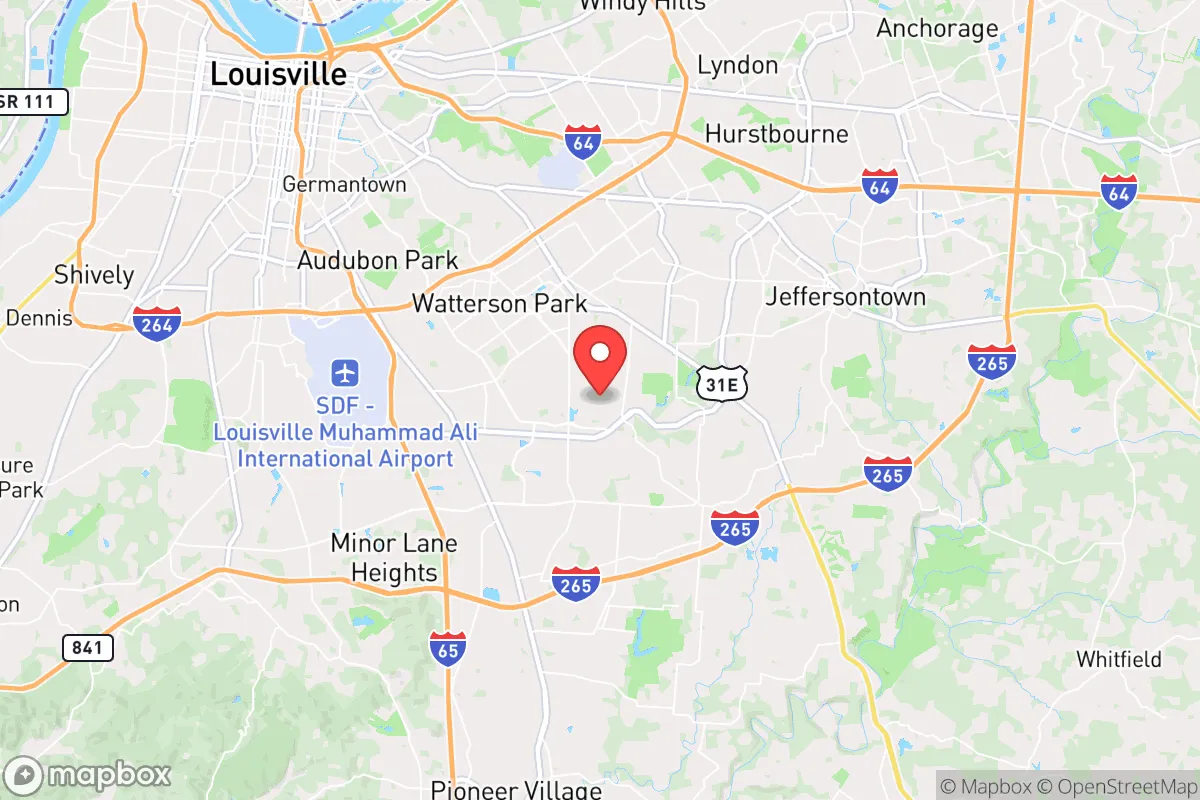
Personal Sovereignty in Louisville, KY
Viable for self-reliance. Generally workable, though some barriers may limit total independence.
What does Personal Sovereignty tell us?
Personal Sovereignty measures your capacity for self-reliance and independence with minimal government friction. Higher scores mean fewer barriers between you and the way you want to live... but it assumes you have the space you need and good neighbors.
What does this tell us?
Personal Sovereignty measures your capacity for self-reliance and independence with minimal government friction. Higher scores mean fewer barriers between you and the way you want to live... but it assumes you have the space you need and good neighbors.
State Policy
Energy independence: Importer (60% of energy produced in-state)
Personal Liberty
Homesteading

Personal Liberty Analysis
Louisville, Kentucky, presents a mixed bag for those prioritizing personal sovereignty, offering a lower cost of living and a generally pro-freedom state legal framework, but with significant caveats tied to its urban Democratic governance. While the commonwealth has moved to protect Second Amendment rights and push back against federal overreach, Jefferson County’s local ordinances and tax policies can feel like a slow creep of the very control many are trying to escape. For the survivalist or prepper, the key question isn't whether Kentucky is a free state—it largely is—but whether Louisville itself allows you to exercise that freedom without constant friction from city hall.
Tax burden and regulatory posture: How much of your money and time does the government take?
Kentucky’s state-level tax structure is relatively favorable for those seeking to keep more of what they earn. The state has a flat income tax rate of 4.5% as of 2025, with a scheduled phase-down to 4.0% by 2026, and no tax on Social Security benefits—a solid win for retirees and those planning for long-term self-reliance. However, Louisville adds its own layer: Jefferson County imposes a 2.2% occupational tax on wages and net profits, which hits anyone working or doing business within the city limits. This effectively brings the combined income tax burden to nearly 7% for residents, which is higher than many surrounding rural counties. Property taxes are moderate, with a rate around 1.2% of assessed value, but the city’s regulatory posture is where the friction really shows. Louisville Metro has adopted stricter building codes, environmental regulations, and business licensing requirements than the state mandates. For the prepper looking to run a side business—say, selling dehydrated goods or offering firearms training—the local permitting process can be a bureaucratic headache. The city also has a stormwater fee and other utility surcharges that add to monthly overhead, a subtle but constant reminder that local government expects its cut.
Self-defense and gun law specifics: Can you keep and bear arms without government interference?
Kentucky is a constitutional carry state, meaning no permit is required to carry a concealed firearm for anyone legally allowed to possess one. This is a bedrock freedom for the sovereignty-minded, and Louisville cannot override it—state preemption law blocks local governments from enacting their own gun bans or restrictions. That said, the city has tried. In 2023, Louisville Metro Council passed a "sensitive places" ordinance that expanded gun-free zones to include parks, libraries, and other public spaces, but it was quickly challenged and partially blocked by courts. As of 2026, the legal landscape remains in flux, with the city pushing for more restrictions and state courts generally siding with the broader preemption. For the prepper, this means you can carry virtually anywhere in the city, but you should be aware of ongoing legal battles. Stand-your-ground laws are strong in Kentucky—no duty to retreat in any place you have a legal right to be. However, Louisville’s police department has been under federal consent decree since 2023 following the Breonna Taylor case, leading to some officers being more hesitant to engage in proactive enforcement. This creates a paradox: you have the legal right to defend yourself, but the system’s response to a defensive shooting may be slower and more scrutinized than in rural counties. For long-term storage and training, Louisville has several indoor ranges and gun shops, but zoning restrictions can make it difficult to build a private range on residential property within the city limits.
Self-reliance and homesteading viability: Lot sizes, zoning, and off-grid feasibility
This is where Louisville’s urban character clashes hardest with the prepper lifestyle. Inside the Watterson Expressway (I-264), typical lot sizes are 0.1 to 0.25 acres, with many homes on narrow 40-foot-wide plots. Zoning codes in the urban core prohibit keeping chickens, goats, or bees without special permits, and raising livestock for meat is effectively banned. Even in the more suburban areas of eastern Louisville (Middletown, Prospect, Fern Creek), lot sizes rarely exceed half an acre, and homeowners' associations often impose additional restrictions on gardens, sheds, and vehicle storage. Off-grid living is nearly impossible within city limits: Louisville Metro requires connection to municipal water and sewer for any habitable structure, and solar panels must meet grid-tied interconnection standards. Rainwater collection is legal but limited to 1,100 gallons of storage without a permit, and composting toilets are not allowed for primary residences. For the serious homesteader, the viable option is to look at the outer edges of Jefferson County—areas like Fairdale, Okolona, or the far eastern reaches near Simpsonville—where zoning becomes more rural and lot sizes can reach 1-5 acres. Even there, you'll still be under county health department rules for septic systems and well water. The bottom line: if your sovereignty plan involves growing your own food, raising animals, and reducing reliance on utilities, Louisville proper is a poor fit. You'll need to go at least 20-30 minutes outside the city to find land that allows true self-reliance.
Personal liberties: Parental rights, medical autonomy, speech, and property
Kentucky has strong protections for parental rights on paper, with a state law that affirms parents have the fundamental right to direct the upbringing, education, and healthcare of their children. In practice, Louisville’s public school system—Jefferson County Public Schools (JCPS)—has been a flashpoint for parental concerns. The district has faced controversies over curriculum transparency, mask mandates, and gender identity policies, with many parents feeling their voices are ignored by the school board. School choice options exist, including charter schools (though limited) and homeschooling, which is relatively easy to register for in Kentucky. Medical autonomy is a mixed bag: Kentucky has some of the strictest abortion laws in the country (near-total ban), which aligns with conservative values, but the state also has a vaccine mandate for schoolchildren that includes COVID-19 shots for some age groups, and Louisville’s health department has been aggressive in promoting public health orders. Free speech is protected under the state constitution, and Louisville has not seen the kind of permit restrictions on public gatherings that plague some coastal cities. Property rights are generally strong, but the city has used eminent domain for development projects, and the historic preservation board can restrict what you do with older homes in designated districts. For the prepper, the most concerning liberty issue is the city’s increasing use of surveillance technology—Louisville has a network of license plate readers and police drones, and the city council has debated facial recognition bans and expansions. It’s not a surveillance state, but the infrastructure is being built.
Overall, Louisville offers a baseline of personal sovereignty that is far better than deep-blue states like California or New York, but it falls short of the freedom found in Kentucky’s rural counties or states like Texas or Idaho. The state-level protections for guns, taxes, and parental rights are real and valuable, but the city’s local government consistently tries to chip away at them. For the single individual or family willing to live on the outskirts of the metro area and commute in for work, Louisville can work as a base of operations. But if you’re looking for a place where you can truly live by your own rules—with minimal government interference, room to homestead, and a community that shares your values—you’re better off looking at the smaller towns an hour east or west of the city. Louisville is a compromise: you get some freedom, but you’ll always be fighting city hall for the rest.

* Values derived from national, state, county, city and local statistics and may differ in a specific area. Last updated: 2026-04-22T01:29:46.000Z
Narrative content on this page is AI-generated and may contain mistakes. Verify any details that matter before acting on them.
ReloMaps may earn a commission from affiliate links at no extra cost to you.

