Photo: Wikipedia
Strategic Assessment of Lubbock, TX
Multiple tactical vulnerabilities. Population density, target proximity, or disaster risk are likely compounding. A retreat property and exit planning is required.
What does the Strategic Assessment tell us?
Our Strategic Assessment grades tactical survivability of an area. Major population centers, military targets, fallout zones, natural disasters, and border exposure all drive risk — lower exposure means a more defensible position in a crisis.
This is heavily inspired by Joel Skousen's Strategic Relocation book. Highly recommended you checkout the book ($)What does this tell us?
Our Strategic Assessment grades tactical survivability of an area. Major population centers, military targets, fallout zones, natural disasters, and border exposure all drive risk — lower exposure means a more defensible position in a crisis.
This is heavily inspired by Joel Skousen's Strategic Relocation book. Highly recommended you checkout the book ($)Strategic Pillars

Key Distances
Regional Safe Places
Below is our recommended "safe zones" in Texas and the surrounding area based on our strategic heuristics. For most people, it's unrealistic to live in a “safe zone” full-time due to work, family or other personal reasons. They tend to be more rural. However, many of these areas are perfect for second homes and retreat properties that double as a vacation home or even a short-term rental.

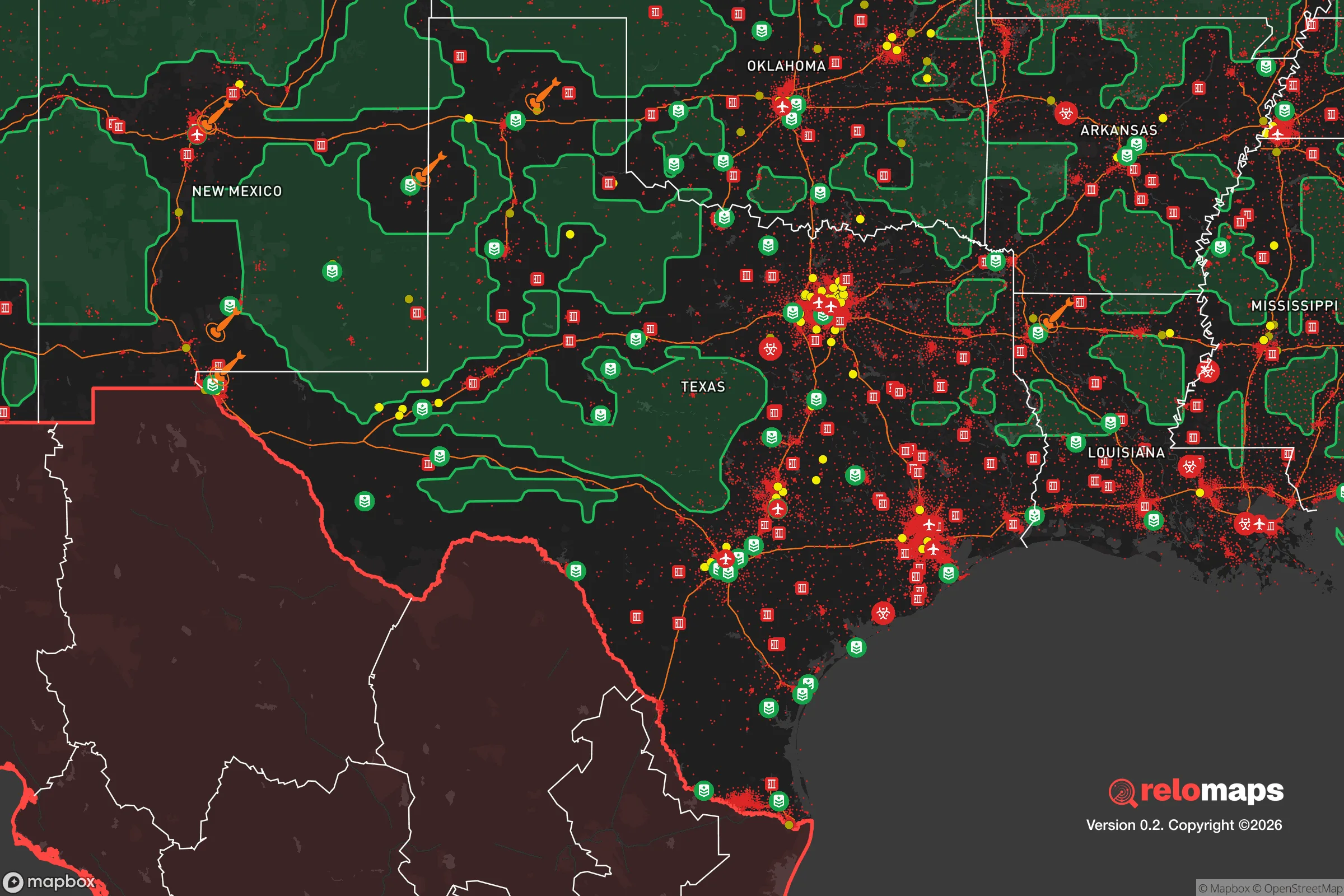


Important Note: For informational purposes only. This does not mean nothing bad ever happens in the green zones. Please use common sense. This is based on public data and modeled with AI. We tried to take a conservative approach but mistakes happen. We update this regularly as new information becomes available.
Solar Generator Recommendations
Backup power matters more here than in safer locations. We've picked three solar generators across budgets and capacity tiers — start with the budget unit if you only need a few essentials, or step up if you want to run a fridge and HVAC for days at a time.

Jackery Portable Power Station Explorer 300
Budget OptionPower on the Go: Weighing only 11 lbs, it's convenient to set up and store with book-sized foldable solar panels

BLUETTI Portable Power Station AC180
Designed for both indoor and outdoor scenarios, AC180 is highly capable as it has a robost capacity and continuous output power.

EF ECOFLOW DELTA Pro Ultra Power Station
Upgraded PickEcoFlow DELTA Pro Ultra is a whole-home energy system designed to grow with your family. Integrated with the Smart Home Panel 2, it scales to meet your evolving energy needs — keeping your home powered, intelligent, and secure through every stage of life.
We earn a commission, at no additional cost to you.
Strategic Assessment Analysis
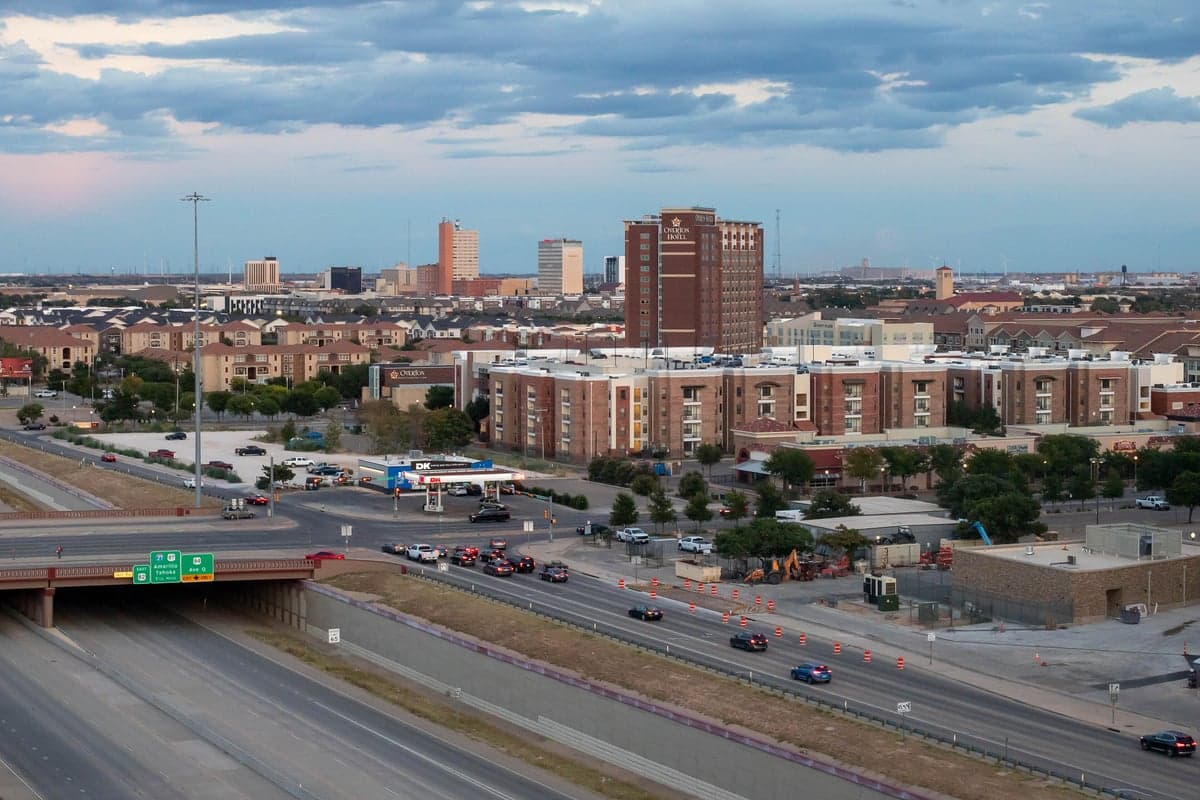
Lubbock, Texas, offers a compelling strategic position for those prioritizing resilience and self-sufficiency, sitting at the southern edge of the High Plains with a population of roughly 260,000. Its distance from major coastal targets and dense urban corridors like Dallas-Fort Worth or Houston reduces exposure to the immediate fallout of a mass casualty event or large-scale civil unrest, while its status as a regional hub for agriculture and energy provides a buffer against supply chain disruptions. The city’s location along Interstate 27 and proximity to the Texas-New Mexico border also gives relocators a practical escape route into sparsely populated ranchland if the situation deteriorates further.
Geographic position and natural advantages for long-term survival
Lubbock sits on the Llano Estacado, a vast, flat plateau that offers 360-degree visibility—a tactical advantage for monitoring threats, whether from weather or human activity. The area’s semi-arid climate means fewer natural disasters like hurricanes or floods, though tornadoes are a real risk during spring and early summer. The Ogallala Aquifer lies beneath much of the region, providing a deep groundwater source that is less vulnerable to surface contamination than rivers or reservoirs near industrial zones. This water security is critical for a prepper mindset, as surface water sources in more populated areas are often compromised by upstream chemical plants or wastewater treatment failures. The surrounding agricultural land—cotton, sorghum, and cattle operations—means local food production is robust, with the South Plains Food Bank and regional farms offering a buffer against grocery store shortages. The flat terrain also makes solar and wind energy installations practical, though the grid here is tied to the ERCOT system, which has shown vulnerability during winter storms; a backup generator or off-grid solar setup is advisable.
Risks, exposures, and proximity to fallout-relevant landmarks
The primary strategic risk for Lubbock is its proximity to Cannon Air Force Base in Clovis, New Mexico, about 100 miles to the west, and the Pantex nuclear weapons assembly plant near Amarillo, roughly 120 miles north. While these are not immediate fallout zones for a conventional attack, a major incident at either site—or a targeted strike during a broader conflict—could produce a contamination plume that reaches the South Plains depending on wind patterns. The city itself hosts Texas Tech University, a large public institution that could become a focal point for civil unrest or resource competition during a breakdown, given its student population of over 40,000. Lubbock’s reliance on a single major highway (I-27) for north-south travel is a chokepoint; a gridlock scenario during an evacuation would leave residents exposed on open farmland. The area also sits within Tornado Alley, with an average of 10-15 tornado warnings per year, meaning a weather-related disaster could compound other crises. On the plus side, the lack of major military bases, nuclear power plants, or high-value industrial targets within 50 miles reduces the likelihood of Lubbock being a primary strike or sabotage target.
Practical resilience for a relocator: food, water, energy, and defensibility
For a single individual or family looking to establish a resilient homestead, Lubbock’s practical assets are strong. The Ogallala Aquifer allows for private well drilling, though permits and depth (often 200-400 feet) require upfront investment; rainwater catchment is less viable here due to low annual precipitation (around 18 inches). Local food production is feasible with hoop houses or greenhouses to extend the growing season, and the city’s farmers’ markets and co-ops provide a network for barter and trade outside of corporate supply chains. Energy resilience is achievable with solar panels, as the region averages 260 sunny days per year, but battery storage is essential given grid instability. Defensibility is mixed: the flat terrain offers clear sightlines but limited natural cover, so a rural property with a perimeter fence and a well-stocked root cellar would be more secure than a suburban subdivision. The local gun culture is strong, with multiple ranges and gun shops, and Texas’s constitutional carry law means no permit is needed for open or concealed carry—a practical consideration for self-defense during civil unrest. The city’s medical infrastructure is decent for its size, with University Medical Center and Covenant Health providing trauma care, but specialized services may require a drive to Dallas or Oklahoma City in a prolonged crisis.
Overall, Lubbock presents a balanced strategic picture for the prepper-minded relocator: it avoids the high-risk density of coastal metros and major target zones while offering access to water, food, and energy resources that are scarce in more arid parts of the West. The trade-offs are real—tornado risk, grid vulnerability, and a single evacuation route—but for someone willing to invest in off-grid infrastructure and maintain a low profile, it’s a solid base of operations. The surrounding rural counties (Crosby, Lubbock, Hale) offer even more isolation if city proximity becomes a liability, and the region’s conservative political culture aligns with a self-reliant, community-oriented approach to crisis management. For those serious about long-term preparedness, Lubbock is worth a hard look, but it’s not a bug-out location—it’s a place to build a life that can weather the storm, whatever form it takes.

* Values derived from national, state, county, city and local statistics and may differ in a specific area. Last updated: 2026-04-14T20:02:39.000Z
Narrative content on this page is AI-generated and may contain mistakes. Verify any details that matter before acting on them.
ReloMaps may earn a commission from affiliate links at no extra cost to you.

