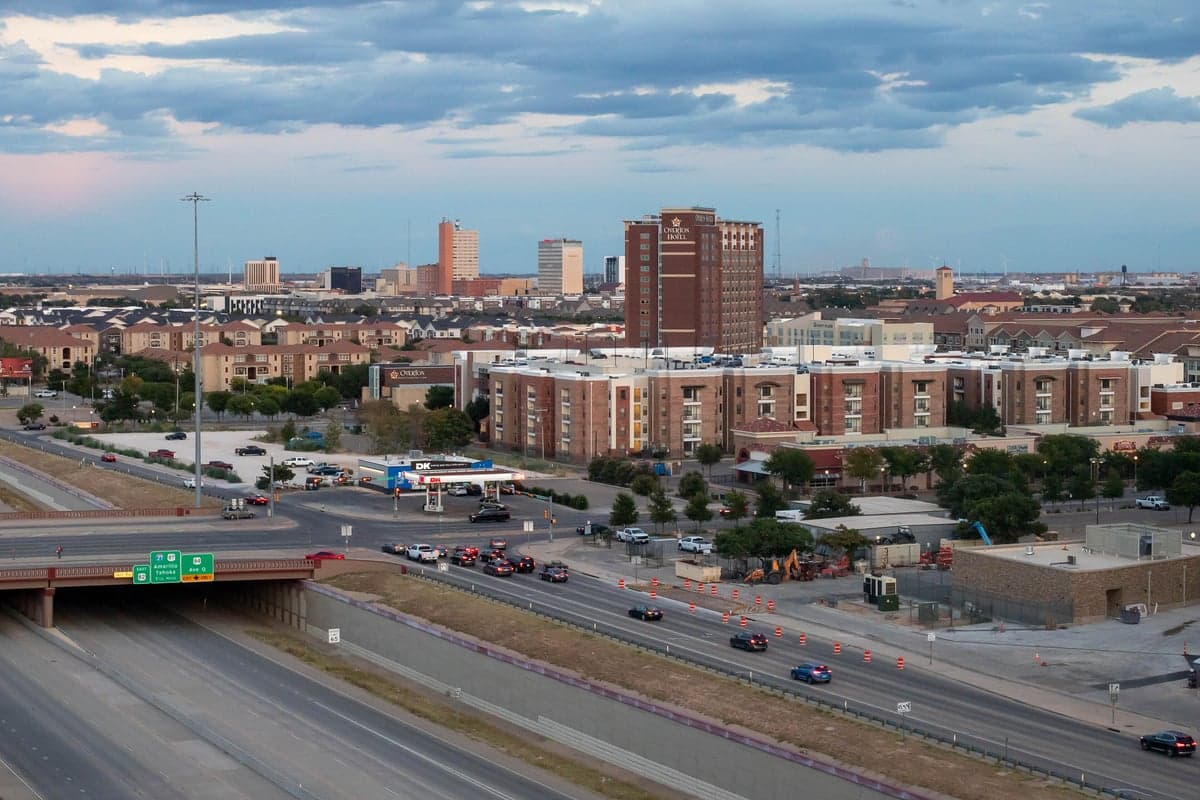
Photo: Wikipedia
Political ClimatePolitical Climate in Lubbock, TX
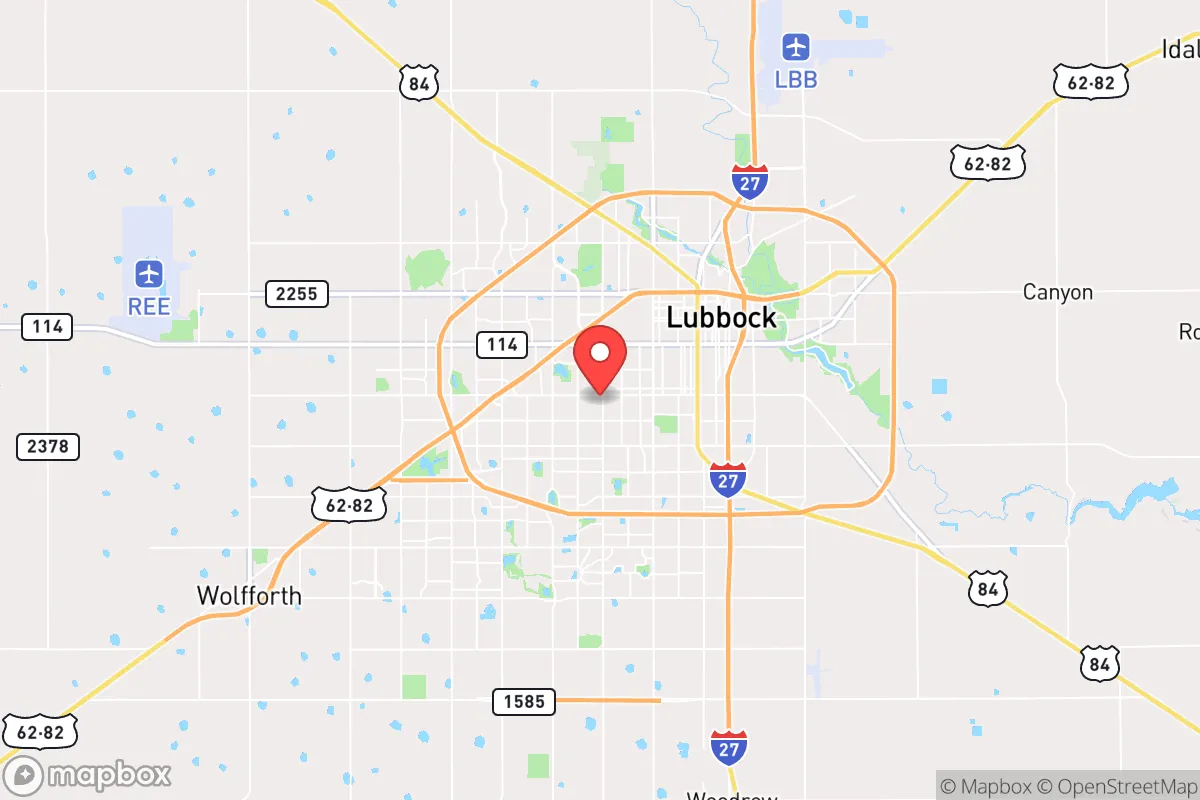
District shown is the primary district for this city’s centroid. Cities may span multiple districts.
Local Political AnalysisPolitical Analysis of Lubbock, TX
Lubbock has been a rock-solid conservative stronghold for as long as anyone can remember, and the numbers back that up with a Cook PVI of R+25. That means the city and surrounding Lubbock County vote about 25 points more Republican than the national average, which is a pretty clear signal that folks here value limited government, personal responsibility, and traditional freedoms. But I’ve lived here long enough to see the winds shifting a bit, and while the area still leans hard right, there are some subtle changes that have me keeping an eye on things—especially when it comes to how much the government is poking its nose into our daily lives.
How it compares
If you drive just 30 minutes south to places like Brownfield or Levelland, you’ll find even deeper red territory—those towns are practically poster children for conservative values, with fewer of the creeping progressive influences you might spot in Lubbock proper. On the flip side, head east about two hours to Abilene, and you’ll see a similar conservative vibe, though Abilene’s politics feel a bit more tempered by its military and university presence. The real contrast comes when you compare Lubbock to cities like Austin or Dallas—those places have swung hard left in recent years, with policies that feel like they’re designed to restrict personal freedoms rather than protect them. Lubbock, thankfully, hasn’t gone that route, but I’ve noticed a few local initiatives that make me wonder if some folks are trying to import those big-city ideas. For instance, there’s been chatter about expanding city ordinances that could touch on property rights or business regulations, and that’s the kind of government overreach that used to be unthinkable around here.
What this means for residents
For the average Lubbockite, the political climate means you can still live your life without a lot of bureaucratic hassle—for now. Property taxes are a sore spot, as they are across Texas, but the local government has generally kept its hands off things like zoning and business licensing compared to more progressive areas. You’ll find that most folks here are fiercely independent, and that shows in how they vote and how they run their lives. But I’d be lying if I said I wasn’t a little concerned about the long-term trajectory. There’s a growing push from some corners to adopt policies that sound good on paper—like “equity” initiatives or environmental mandates—but in practice, they often lead to more red tape and less freedom. If that trend continues, Lubbock could lose the very character that makes it a great place to raise a family or start a business.
One thing that sets Lubbock apart culturally is its deep-rooted sense of community and self-reliance. You don’t see a lot of hand-wringing over national politics here; instead, people focus on what they can control—their churches, their schools, their small businesses. That said, the university (Texas Tech) brings in a younger, more diverse crowd every year, and with that comes a slow but steady shift in local attitudes. I’ve seen some city council races get a little more competitive lately, with candidates who talk about “inclusion” and “sustainability” in ways that make me raise an eyebrow. It’s not a crisis yet, but if you value personal freedoms and limited government, it’s worth paying attention to how Lubbock votes in the next few cycles. The foundation is still solid, but the cracks are starting to show.

State Political ClimatePolitical Climate in Texas
State Political AnalysisPolitical Environment in the State
Texas has been a reliably Republican state for over three decades, with the GOP dominating every statewide office and both chambers of the legislature since the mid-1990s. The state’s political lean is driven by a coalition of suburban conservatives, rural voters, and a growing number of Hispanic and working-class defectors from the Democratic Party. However, the margin has tightened in presidential elections: Donald Trump won Texas by 9 points in 2016, 5.5 points in 2020, and roughly 5 points in 2024, signaling a slow but real drift toward competitiveness. The 10-20 year arc shows a state that remains solidly red at the state level but is seeing its urban centers and fast-growing suburbs become battlegrounds for control of the legislature and congressional delegation.
Urban vs. rural divide
The political map of Texas is a study in stark contrasts. The major metros — Houston, Dallas-Fort Worth, San Antonio, and Austin — are the engines of Democratic votes, with Harris County (Houston) and Travis County (Austin) delivering margins of 15-25 points for Democrats in recent cycles. Meanwhile, the rural and exurban counties that ring these cities — like Collin County (north of Dallas), Montgomery County (north of Houston), and Comal County (north of San Antonio) — are among the most Republican in the nation, often voting 65-75% for the GOP. The Rio Grande Valley, historically a Democratic stronghold, has been shifting right: Starr County, which voted for Hillary Clinton by 60 points in 2016, flipped to Trump in 2024 by a narrow margin. The Panhandle and West Texas — places like Lubbock and Midland — remain deeply conservative, with Republican margins exceeding 40 points. This urban-rural chasm means that while Democrats can win city halls and a few congressional seats, they struggle to break the GOP’s stranglehold on the state legislature and statewide offices.
Policy environment
Texas’s policy environment is defined by a low-tax, low-regulation posture that appeals to conservatives. There is no state income tax, and property taxes are high but capped by a 2023 law that limits appraisal increases to 10% annually. The state’s regulatory climate is business-friendly, with minimal zoning in many cities and a right-to-work law that weakens union power. On education, Texas has a school choice voucher program (passed in 2023) that allows parents to use state funds for private or homeschool expenses, a major win for parental rights advocates. Healthcare policy is mixed: the state refused Medicaid expansion under the ACA, but has expanded telemedicine and direct-primary-care models. Election laws have tightened: the 2021 Senate Bill 1 restricted mail-in voting, added ID requirements, and banned 24-hour and drive-through voting. The state also passed a 2023 law requiring voter approval for any county to extend voting hours beyond what state law allows. For conservatives, the policy environment is generally favorable, though property tax burdens and rising insurance costs are persistent concerns.
Trajectory & freedom
On balance, Texas has been moving toward more personal freedom in several key areas, but with notable exceptions. The 2021 permitless carry law (HB 1927) allows any law-abiding adult to carry a handgun without a license, a significant expansion of Second Amendment rights. The 2023 school choice law (HB 1) empowers parents to direct their children’s education. The 2021 Heartbeat Act (SB 8) banned abortion after six weeks and created a private enforcement mechanism, effectively ending most abortions in the state. However, freedom has contracted in other areas: the 2023 drag ban (SB 12) restricts public performances deemed “sexually explicit” in the presence of minors, and the 2023 DEI ban (SB 17) eliminated diversity, equity, and inclusion offices at public universities. Medical freedom took a hit with the 2021 vaccine passport ban (HB 1687), which prohibited businesses from requiring proof of vaccination, but that was a win for bodily autonomy. The trajectory is mixed: Texas is becoming freer on guns, education, and abortion, but less free on speech and expression in certain contexts. A new resident should expect a state that values individual liberty in traditional conservative areas but is willing to regulate social and cultural matters.
Civil unrest & political movements
Texas has seen its share of political flashpoints. The 2020 Black Lives Matter protests in Austin and Houston were large and occasionally violent, leading to property damage and a lasting rift between city leaders and the state government. The 2021 power grid collapse during Winter Storm Uri sparked widespread anger and a brief, bipartisan push for grid reform, but the issue has since faded. Immigration politics are a constant source of tension: Governor Greg Abbott’s Operation Lone Star (2021-present) has deployed state troopers and National Guard to the border, bused migrants to Democratic-led cities, and installed razor wire along the Rio Grande. This has created a visible, ongoing confrontation with the Biden administration and immigrant-rights groups. Secession rhetoric, while not mainstream, has a vocal fringe: the Texas Nationalist Movement has pushed for a 2024 ballot referendum on secession, though it lacks legislative support. Election integrity remains a hot-button issue: the 2020 and 2022 cycles saw allegations of fraud in Harris County (Houston), leading to a 2023 law that abolished the county’s elections administrator position. A new resident will notice the heavy police presence at the border, the constant political ads, and the palpable divide between urban and rural areas on issues like immigration and policing.
Projection
Over the next 5-10 years, Texas will likely remain Republican at the state level, but the margin will continue to narrow. In-migration from California and other blue states — roughly 1,000 people per day — is slowly shifting the suburbs: Collin County and Williamson County (north of Austin) are becoming more competitive, with Democrats winning local offices in 2022 and 2024. The Hispanic vote, which is trending right, may offset some of this, but the overall trend is toward a purplish hue. The state legislature will likely stay in GOP hands due to gerrymandering, but the congressional delegation could flip to an even split by 2032. Policy-wise, expect continued fights over school choice expansion, property tax relief, and border security. A new resident moving in now should expect a state that is still conservative but increasingly contested, with a growing urban-liberal bloc that will make state politics more volatile. The freedom trajectory will depend on which faction of the GOP wins: the libertarian-leaning wing (lower taxes, less regulation) or the social conservative wing (more cultural restrictions).
For a new resident, the bottom line is this: Texas offers a low-tax, business-friendly environment with strong gun rights and school choice, but it is not a libertarian paradise. The state government is active in social and cultural matters, and the political climate is increasingly polarized between urban and rural areas. If you value personal freedom in the traditional conservative sense — low taxes, property rights, gun rights, and parental control over education — Texas is a good fit. But if you expect a hands-off government across the board, you may find the state’s willingness to regulate speech, drag shows, and medical decisions to be a surprise. The key is to choose your location wisely: the suburbs of Dallas-Fort Worth and San Antonio offer a more balanced political environment, while Austin and El Paso are firmly blue.
* Values derived from national, state, county, city and local statistics and may differ in a specific area. Last updated: 2026-04-14T20:02:39.000Z
Narrative content on this page is AI-generated and may contain mistakes. Verify any details that matter before acting on them.
ReloMaps may earn a commission from affiliate links at no extra cost to you.

