 Popular
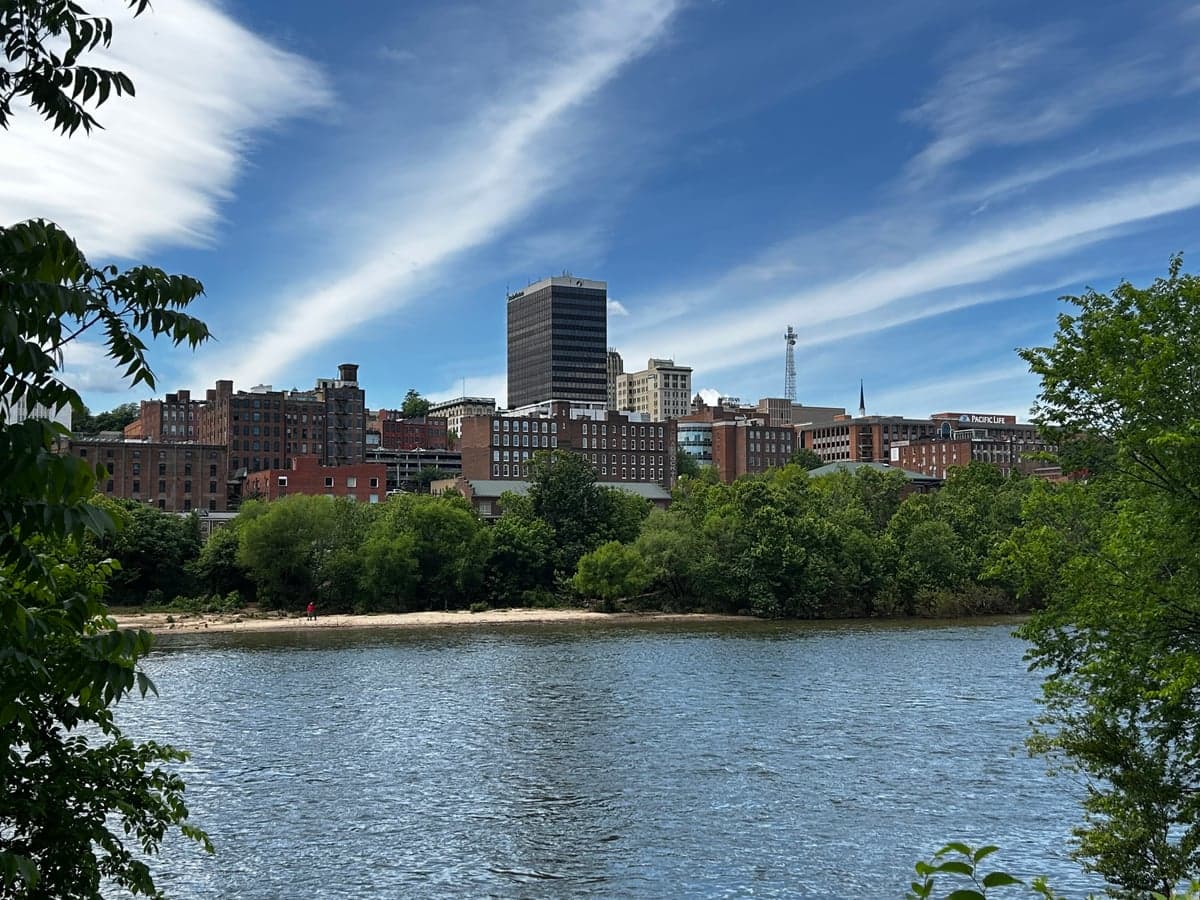
Photo: Wikipedia
Demographics of Lynchburg, VA
Affluence Level in Lynchburg, VA
A middle-class area roughly in line with national averages across income, home values, education, and employment.
People of Lynchburg, VA
The people of Lynchburg, Virginia today number 79,255, forming a city that is predominantly white (60.6%) with a significant Black population (27.4%) and a small but growing Hispanic community (4.9%). The city’s identity is shaped by its historic role as a manufacturing and railroad hub, its concentration of Christian colleges, and a population that is notably more educated than the national average, with 38.5% holding a bachelor’s degree or higher. Lynchburg is a place of distinct, historically rooted neighborhoods, where the legacy of each settlement wave remains visible in the city’s social and physical geography.
How the city was settled and grew
Lynchburg’s population history begins with its founding in 1757 by John Lynch, who established a ferry across the James River. The city’s early growth was driven by the tobacco trade, with warehouses and docks concentrated along the riverfront in what is now Downtown Lynchburg. By the early 19th century, the city became a major slave-trading and tobacco-processing center, drawing a mix of white merchants, enslaved Black laborers, and free Black artisans. The arrival of the railroad in the 1850s transformed Lynchburg into a manufacturing hub, attracting waves of European immigrants, particularly Irish and German workers, who settled in the Diamond Hill neighborhood. After the Civil War, freedmen established communities in Garland Hill and Daniels Hill, areas that remain historically Black neighborhoods today. The early 20th century saw the rise of the textile and shoe industries, drawing white Appalachian migrants from surrounding counties into working-class areas like Fort Hill.
Modern era (post-1965)
The post-1965 era brought significant demographic shifts to Lynchburg, though the city’s foreign-born population remains low at just 2.7%. The Immigration and Nationality Act of 1965 opened doors for new arrivals, but Lynchburg’s inland location and declining manufacturing base limited large-scale immigration. The small East/Southeast Asian community (1.7%) is concentrated in the Boonsboro and Timberlake areas, many of whom are professionals employed by local hospitals or the University of Lynchburg. The Indian subcontinent population (0.4%) is even smaller, with families typically settling near the city’s medical centers. The most notable domestic shift has been the suburbanization of the white population, with many families moving from historic neighborhoods like Diamond Hill to newer subdivisions in the Wyndhurst and Forest areas. Meanwhile, the Black population has remained concentrated in the Garland Hill and Daniels Hill neighborhoods, though some middle-class Black families have moved to the Boonsboro area. The Hispanic population (4.9%) has grown steadily since 2000, with families settling in the Fort Hill and Downtown areas, often working in construction, landscaping, and food service.
The future
Lynchburg’s population is slowly diversifying, but the city remains relatively homogeneous compared to Virginia’s larger metros. The white population is aging and declining slightly, while the Hispanic and Asian communities are growing from a small base. The Black population is stable, with some out-migration to suburban areas like Campbell County. The city is not tribalizing into distinct ethnic enclaves; rather, it is experiencing a gradual, low-level diversification driven by employment at Liberty University, Centra Health, and local manufacturing firms. The foreign-born population is expected to rise modestly, but Lynchburg lacks the economic pull factors—large immigrant networks, high-tech jobs, or a major university research hub—to attract rapid growth. The next 10-20 years will likely see Lynchburg become slightly more Hispanic and Asian, but it will remain a predominantly white and Black city with a conservative, religiously influenced culture.
For someone moving to Lynchburg today, the city offers a stable, family-oriented environment with strong community ties and a low cost of living. The population is not undergoing rapid transformation, so newcomers can expect a place where historic neighborhoods retain their character and new arrivals are absorbed gradually. The city’s future is one of modest, manageable change—not a demographic revolution, but a slow evolution toward greater diversity.

* Values derived from national, state, county, city and local statistics and may differ in a specific area. Last updated: 2026-05-01T08:01:16.000Z
Narrative content on this page is AI-generated and may contain mistakes. Verify any details that matter before acting on them.
ReloMaps may earn a commission from affiliate links at no extra cost to you.

