 Popular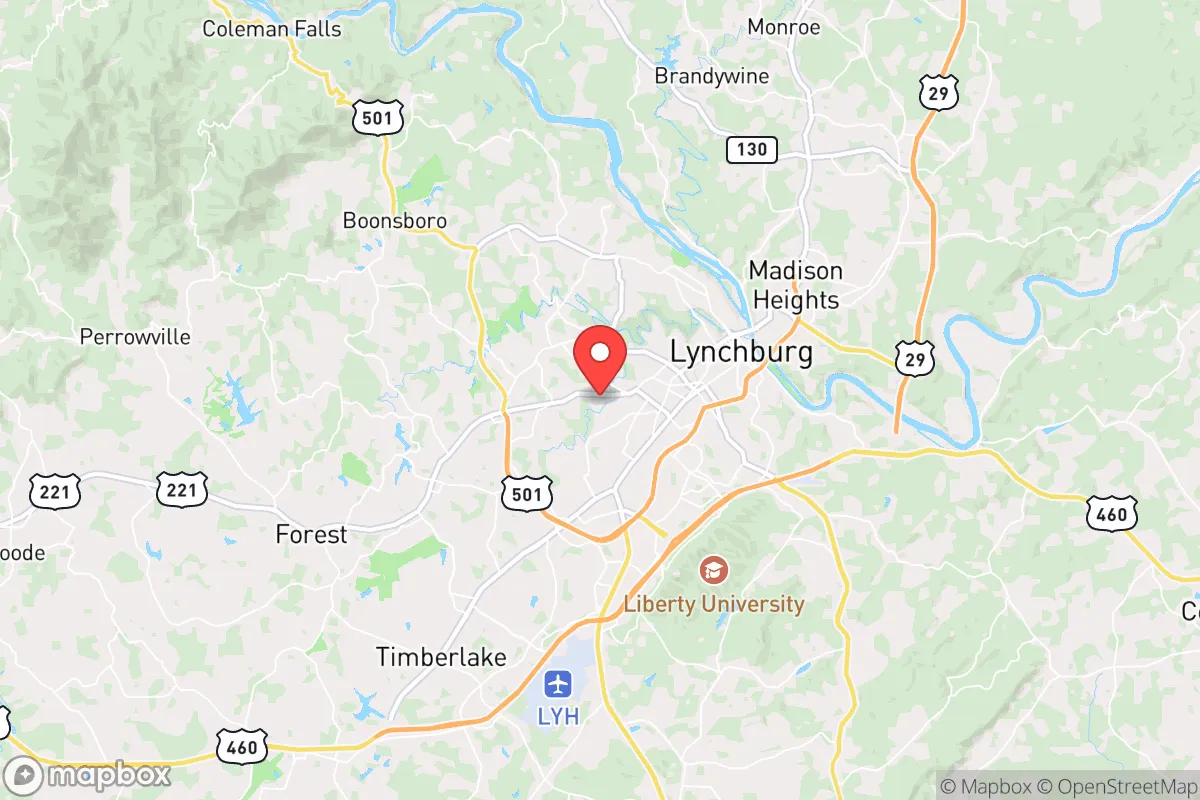

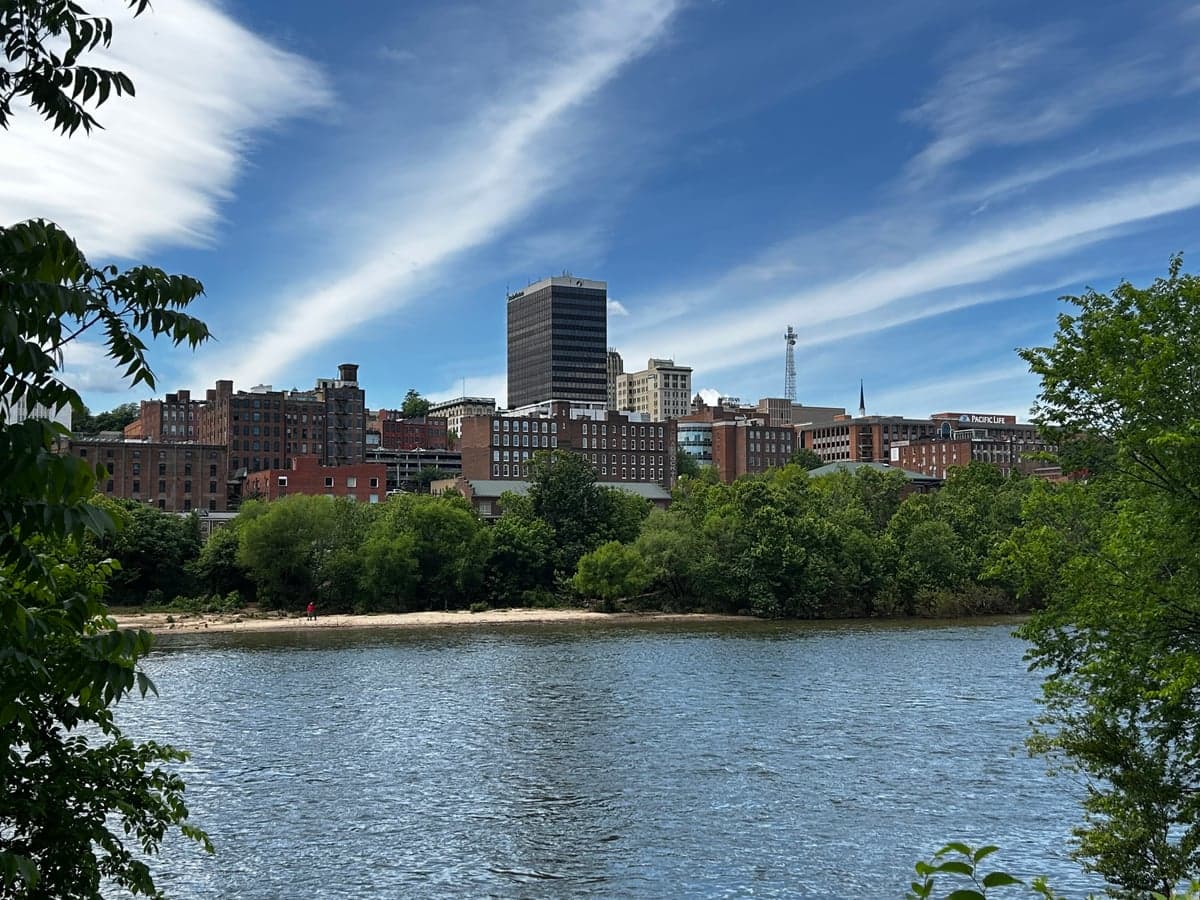
Photo: Wikipedia
Political ClimatePolitical Climate in Lynchburg, VA
District shown is the primary district for this city’s centroid. Cities may span multiple districts.
Local Political AnalysisPolitical Analysis of Lynchburg, VA
Lynchburg is a reliably conservative stronghold in central Virginia, with a Cook PVI of R+6 that reflects decades of consistent Republican voting patterns. The city and surrounding areas have long leaned right, but the political climate here isn't just about party labels—it's about a deep-seated belief in limited government, personal responsibility, and local control. Over the past few years, you've seen a noticeable shift: the old guard of "country club" Republicans is slowly giving way to a more populist, liberty-minded crowd that's increasingly skeptical of federal overreach and mandates from Richmond. That said, there's a growing undercurrent of progressive activism, especially around Liberty University's campus and in some downtown circles, which has some of us watching the local elections a little closer than we used to.
How it compares
If you drive 20 minutes north to Charlottesville, you're in a completely different world—a deep blue college town where city council debates often center on defunding police and expanding government housing programs. That contrast is stark, and it's why many Lynchburg residents feel like they're holding the line against a tide of progressive policies that are creeping into the rest of the state. Compare us to Roanoke, about 45 minutes west, which is more of a purple-to-blue mix, or to the rural counties like Bedford and Campbell that surround us—those areas are even more conservative than Lynchburg proper. The city itself is a bit of a bellwether: we've got a strong evangelical presence from Liberty University, a growing number of young families moving here for lower taxes and better schools, and a working-class base that remembers when the city was a manufacturing hub. The tension isn't between left and right so much as between those who want to keep Lynchburg a place where government stays out of your business and those who think we need more "equity" initiatives and zoning changes that feel like a backdoor to control.
What this means for residents
For the average person living here, the political climate translates into a few concrete realities. First, you're not going to see mask mandates or business shutdowns being enforced by local officials—the city council and school board have been pretty clear about pushing back on state-level overreach, especially since 2020. Second, property taxes are kept relatively low compared to Northern Virginia or even Richmond, because the local government understands that people move here to escape that kind of fiscal pressure. Third, and this is the one that gets under my skin, there's a growing push from a small but vocal group to adopt "equity" policies in the school system and city hiring—things like DEI training and race-based hiring targets. That's a red flag for a lot of us, because it's the same playbook that turned places like Charlottesville into a bureaucratic mess. The good news is that most of those efforts have been voted down or watered down so far, but you have to stay engaged. If you're the kind of person who values your Second Amendment rights without a bunch of hoops to jump through, or who thinks your paycheck should stay in your pocket, Lynchburg is still a safe bet—but it's not a guarantee forever.
Culturally, Lynchburg has a few quirks that set it apart. The city is dry on Sundays in many precincts, a holdover from the old blue laws that most folks don't mind because it keeps the downtown quiet and family-friendly. There's also a strong tradition of church involvement in local politics—not in a theocratic way, but more like a "we look out for each other" kind of way. The biggest policy distinction you'll notice is the lack of a city income tax, which is a big deal compared to places like Richmond or Norfolk. And while there's been talk of adding more bike lanes and "complete streets" projects, those usually get scaled back when residents point out that they're often funded by state grants that come with strings attached. The long-term trajectory here depends on who shows up to vote in the next few city council elections. If the liberty-minded folks stay active, Lynchburg will remain a place where you can live your life without a lot of government interference. If the progressive wave gains ground, well, we'll start looking a lot more like the places people are trying to leave.

State Political ClimatePolitical Climate in Virginia
State Political AnalysisPolitical Environment in the State
Virginia has shifted from a reliably purple swing state to a solidly blue one over the past two decades, driven largely by explosive growth in the Washington, D.C. suburbs. The state’s overall partisan lean now favors Democrats by about 5-7 points in statewide races, but that number masks a deep and widening chasm between a handful of densely populated urban corridors and the rest of the commonwealth. For a conservative considering relocation, the key takeaway is that Virginia is effectively two states in one: the northern and eastern crescent votes like New Jersey, while the south and west votes like Tennessee.
Urban vs. rural divide
The political map of Virginia is a textbook case of metropolitan dominance. Fairfax County, Prince William County, and Arlington alone deliver roughly 30% of the state’s vote, and they vote Democratic by margins of 30-40 points. These jurisdictions are home to federal employees, defense contractors, and a highly educated, transplant-heavy population that imports D.C. political culture. Richmond and Norfolk are also deep blue, while Virginia Beach remains a competitive swing city with a strong military and veteran presence. Outside the I-95 corridor, the story flips: Lynchburg, Roanoke, and the Shenandoah Valley counties like Augusta and Rockingham vote Republican by 20-30 points. The rural southside, stretching from Danville to Martinsville, is ancestrally Democratic but has trended hard red since 2012, mirroring the broader realignment of white working-class voters. The divide is so stark that a Republican running for statewide office can win 90 of 95 counties and still lose the election, as happened in 2021 when Glenn Youngkin won the governorship by flipping key suburbs but still lost the popular vote in the D.C. exurbs.
Policy environment
Virginia’s policy environment is a mixed bag that tilts increasingly progressive at the state level. The state income tax is a flat 5.75%, which is moderate, but property taxes are set locally and can be steep in high-demand areas like Loudoun County, where effective rates approach 1.2% of assessed value. The regulatory posture is business-friendly on paper—Virginia is a right-to-work state and has a strong economic development apparatus—but the General Assembly has passed a slew of mandates that raise costs for employers, including a $15 minimum wage (phased in) and mandatory paid sick leave. Education policy is a flashpoint: the state eliminated public charter school caps in 2022, but local school boards in blue counties remain hostile to school choice and parental oversight. The 2021 election of Governor Youngkin was largely a referendum on parental rights in education, and he did deliver on banning critical race theory in K-12 classrooms and expanding lab schools. However, the Democratic-controlled Senate has blocked most of his subsequent agenda, including a proposed 1% income tax cut and a ban on transgender athletes in girls’ sports. Election laws are moderately secure: Virginia requires photo ID to vote, but also offers no-excuse absentee voting and same-day registration, which conservatives view as a vulnerability. The state has no right-to-carry permit law—you still need a concealed handgun permit—and in 2020, the legislature passed a package of gun control measures including universal background checks and a red flag law, which remain deeply unpopular in rural counties.
Trajectory & freedom
On the freedom index, Virginia is trending downward. The most significant contraction of personal liberty in recent years was the 2020 gun control package, which included a one-handgun-per-month limit and the red flag law that allows courts to temporarily seize firearms without a criminal conviction. These laws were passed on a party-line vote and have not been repealed despite Republican control of the governor’s mansion. On medical freedom, Virginia was an early adopter of COVID-19 vaccine mandates for state employees and contractors, though those have since been rescinded. The state also expanded Medicaid under the Affordable Care Act in 2018, which locked in a large government healthcare footprint. On the positive side, Governor Youngkin signed a parental rights bill in 2022 that requires school districts to notify parents of sexually explicit instructional materials and allows them to opt their children out. He also issued an executive order banning the use of critical race theory in public schools, though enforcement has been uneven. Property rights are generally strong, but the state’s land use laws in blue counties are increasingly restrictive, with Loudoun County and Albemarle County imposing downzoning and growth boundaries that limit new housing and drive up costs. The trajectory is clear: as the D.C. suburbs continue to grow, the legislature will become more Democratic, and the policy agenda will shift further left on guns, taxes, and education.
Civil unrest & political movements
Virginia has been a battleground for political movements on both sides. The 2017 Unite the Right rally in Charlottesville was a national flashpoint that galvanized left-wing activism and led to the removal of Confederate statues across the state. That event also triggered a backlash: the 2021 election saw massive turnout from suburban parents angry over school closures and critical race theory, with groups like the Virginia Parents for Education organizing school board takeovers in Loudoun County and Spotsylvania County. Immigration politics are relatively quiet compared to border states, but the Democratic-controlled legislature passed a law in 2020 that prohibits local law enforcement from cooperating with federal immigration authorities in most circumstances, effectively making Virginia a sanctuary state. This has created friction in rural counties where sheriffs have publicly refused to comply. Election integrity remains a live issue: the 2020 election saw no major fraud in Virginia, but the state’s use of drop boxes and universal mail-in ballot applications during the pandemic led to a push for tighter laws, which the Democratic Senate blocked. The most visible political flashpoint for a new resident will be the constant tension between the state government in Richmond and the conservative-leaning counties that feel increasingly ignored. Several counties have passed resolutions asserting Second Amendment sanctuary status, and there is a growing secessionist movement in the western part of the state, with groups like the “West Virginia-style” separation advocates pushing for a breakaway state called “New Virginia.”
Projection
Over the next 5-10 years, Virginia will continue to drift leftward as the D.C. suburbs absorb more high-income, college-educated transplants. The 2030 census redistricting will likely lock in Democratic control of the General Assembly for a generation, making it nearly impossible for a Republican governor to pass significant conservative legislation. The rural and exurban areas will become more Republican in response, but their population share will shrink. The practical effect for a conservative moving in now is that you can expect state-level policies on guns, taxes, and education to become more restrictive over time, even as local control in red counties provides some buffer. The best-case scenario is a continued split government where a Republican governor can veto the worst bills, but that depends on winning statewide races in a state that is trending blue. If you’re looking for a state where your vote will reliably move policy in a conservative direction, Virginia is not that place. But if you’re willing to live in a red county and fight local battles, you can still carve out a good life here—just don’t expect Richmond to have your back.
Bottom line for a new resident: Virginia offers a high quality of life, strong schools in the suburbs, and beautiful geography, but the political climate is increasingly hostile to conservative values at the state level. If you move here, you’ll be living in a blue state with red pockets. Your best bet is to settle in a county like Augusta, Rockingham, or Bedford, where local government is still responsive to conservative concerns, and accept that state-level elections will be an uphill battle. The days of Virginia as a swing state are over; it’s now a blue state with a strong red minority, and that minority is losing ground every census cycle.
* Values derived from national, state, county, city and local statistics and may differ in a specific area. Last updated: 2026-05-01T08:01:16.000Z
Narrative content on this page is AI-generated and may contain mistakes. Verify any details that matter before acting on them.
ReloMaps may earn a commission from affiliate links at no extra cost to you.

