 Popular
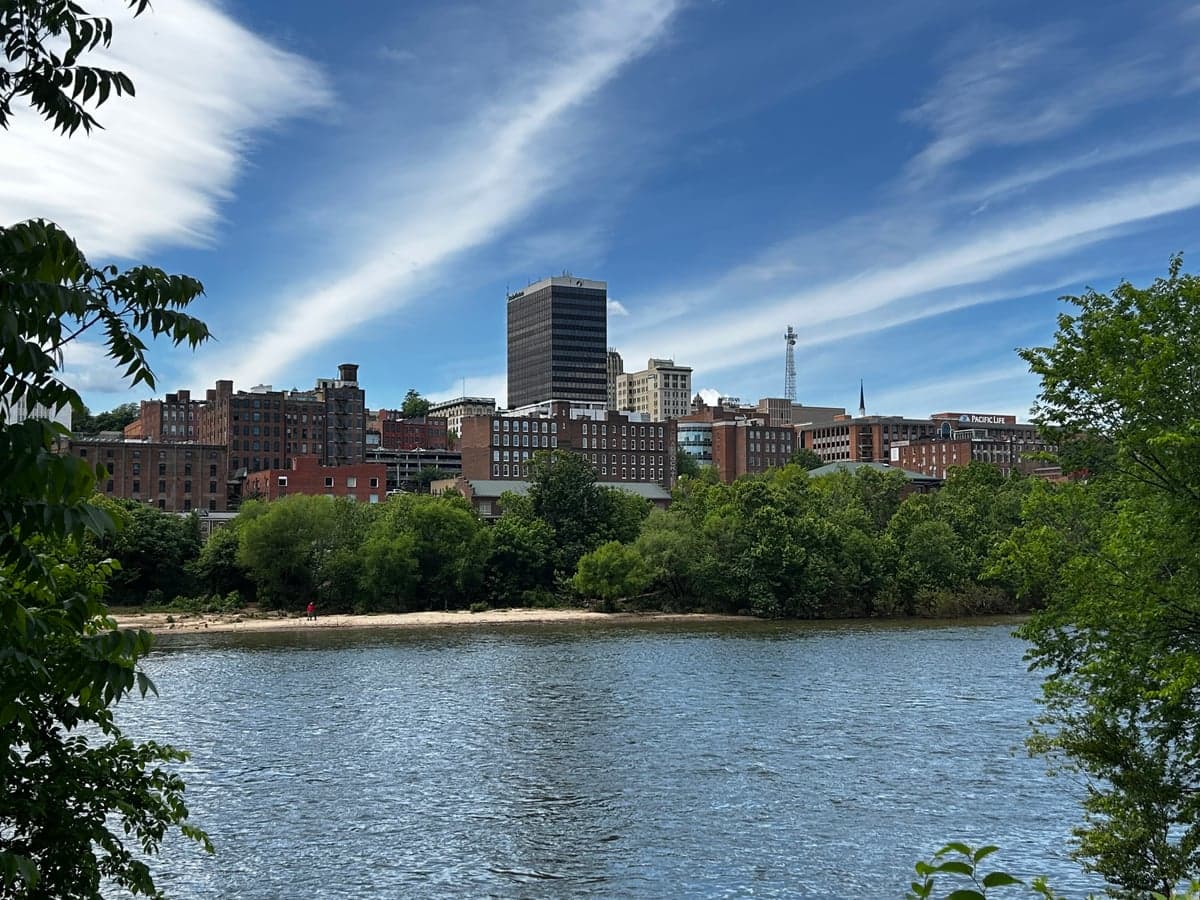
Photo: Wikipedia
Personal Sovereignty in Lynchburg, VA
Viable for self-reliance. Generally workable, though some barriers may limit total independence.
What does Personal Sovereignty tell us?
Personal Sovereignty measures your capacity for self-reliance and independence with minimal government friction. Higher scores mean fewer barriers between you and the way you want to live... but it assumes you have the space you need and good neighbors.
What does this tell us?
Personal Sovereignty measures your capacity for self-reliance and independence with minimal government friction. Higher scores mean fewer barriers between you and the way you want to live... but it assumes you have the space you need and good neighbors.
State Policy
Energy independence: Importer (20% of energy produced in-state)
Personal Liberty
Homesteading

Personal Liberty Analysis
For the individual or family prioritizing personal sovereignty above all else, Lynchburg, Virginia, offers a notably favorable environment compared to most of the urbanized Northeast and West Coast, though it is not a libertarian utopia. The city sits in a state that, while trending blue in recent statewide elections, still maintains a legal and cultural foundation that respects individual autonomy in key areas like firearms, property rights, and local governance. The key for the survivalist or prepper is understanding that Lynchburg’s strength lies in its regional culture and practical freedoms, not in any formal legal protections against future federal or state overreach. You can live a largely self-determined life here, but you must remain vigilant about the creeping influence of Richmond’s regulatory appetite.
Tax burden and regulatory posture: How Virginia’s fiscal policies affect your autonomy
From a tax perspective, Virginia is a mixed bag for the sovereignty-minded. The state income tax is a flat 5.75% on all income over $17,000, which is moderate but not low—a clear drain on your ability to retain your own earnings for self-reliance projects. Property taxes in Lynchburg are reasonable, typically around $0.85 to $1.10 per $100 of assessed value, which is lower than Northern Virginia but higher than deep-red states like Tennessee or Texas. The real advantage here is the lack of a state-level sales tax on groceries and prescription drugs, and the fact that Virginia does not impose a separate state estate tax, meaning your property can pass to your heirs without the state taking a cut. On the regulatory front, Virginia’s business climate is generally business-friendly, but the state has been tightening environmental and land-use regulations, particularly around water rights and wetland development. For the prepper, this means you can own land and build a home without excessive red tape, but you should expect to navigate state-level permits for any significant earth-moving or well-drilling. The city of Lynchburg itself is more permissive than the state average, with a zoning code that allows for accessory structures and home-based businesses without endless bureaucratic hurdles.
Self-defense and gun law specifics: What the Second Amendment looks like in Lynchburg
Virginia’s gun laws have become a battleground, and Lynchburg sits firmly in the pro-Second Amendment camp. The state is a “shall-issue” jurisdiction for concealed carry permits, meaning if you pass a background check and complete a basic safety course, the sheriff’s office must issue your permit. There is no permit required to open carry in Virginia, and the state preempts local governments from enacting their own gun bans—so Lynchburg cannot pass its own AWB or magazine restrictions. However, the state legislature in Richmond has passed several restrictions in recent years: universal background checks for all firearm transfers (including private sales), a “one-handgun-a-month” law, and a red flag law that allows courts to temporarily seize firearms from individuals deemed a threat. These laws are actively enforced in Lynchburg, though local law enforcement is generally more restrained than in Northern Virginia. For the survivalist, the key takeaway is that you can own and carry virtually any firearm you want, including NFA items like suppressors and short-barreled rifles, as long as you comply with federal law. The state does not ban standard-capacity magazines, and there is no state-level assault weapons ban. Ammunition purchases require a background check for in-person sales, but online orders shipped to your door are still legal. The culture here is overwhelmingly pro-gun, and you will find multiple gun shops, ranges, and training facilities within a 30-minute drive.
Self-reliance and homesteading viability: Lot sizes, zoning, and off-grid feasibility
For those looking to build a self-sufficient homestead, Lynchburg’s surrounding area offers genuine opportunity, but the city limits themselves are less accommodating. Inside the city, most residential lots are a quarter-acre or smaller, and zoning restricts things like keeping livestock, building large sheds, or installing solar panels without permits. The real potential lies in the unincorporated areas of Bedford and Campbell counties, which surround Lynchburg. Here, you can find rural parcels starting at 2 to 5 acres for $15,000 to $30,000 per acre, with many properties offering well water, septic suitability, and minimal HOA restrictions. Zoning in these counties is generally permissive: you can keep chickens, goats, and even a few head of cattle without special permits. Off-grid living is legally feasible, but you must comply with state building codes for septic systems and well water testing. Virginia does not have a state-level ban on rainwater collection, and you can install solar panels with net metering through Appalachian Power. The biggest hurdle for the prepper is the state’s building code, which requires permits for any structure over 200 square feet, and the local health department’s strict septic requirements. That said, you can live largely off-grid in a cabin or tiny home on your own land, as long as you meet basic sanitation standards. The climate is temperate enough for year-round gardening, and the region has abundant natural water sources.
Personal liberties: Parental rights, medical autonomy, speech, and property
On the broader front of personal liberties, Lynchburg offers a strong foundation for the conservative individualist. Parental rights are well-respected here, with a robust homeschooling community and multiple private Christian schools. Virginia law allows parents to homeschool with a simple notice of intent and annual assessment, and there is no state-level mandate for vaccine passports or forced medical procedures on children. Medical autonomy is a mixed picture: Virginia does not have a state-level right-to-try law for terminally ill patients, but it does allow for medical marijuana use with a doctor’s recommendation. The state has not enacted any broad vaccine mandates beyond those for school attendance, and the local health systems in Lynchburg (Centra Health) have generally respected patient choice during public health emergencies. Free speech is protected under the First Amendment, and Lynchburg’s public spaces are open for protest and assembly without the heavy-handed permitting seen in larger cities. Property rights are strong, with Virginia’s “right to farm” laws protecting agricultural operations from nuisance lawsuits, and the state’s eminent domain laws are more restrictive than the federal standard. The biggest threat to personal sovereignty here is the potential for future state-level overreach, particularly on environmental regulations and gun control, but the local culture and elected officials in Lynchburg consistently push back against Richmond’s encroachments.
In the broader landscape of American personal sovereignty, Lynchburg ranks as a solid B+ for the survivalist or prepper. It is not the free-for-all of rural Idaho or Montana, but it offers a realistic balance of legal protections, cultural alignment, and practical affordability. The city’s location in a purple state means you must stay politically engaged and prepared for future battles over your rights, but the day-to-day reality is that you can own guns, build a homestead, homeschool your kids, and live largely as you see fit without constant government interference. For the strategic relocator who values autonomy but needs access to jobs, healthcare, and infrastructure, Lynchburg is one of the better options in the Mid-Atlantic region. Just keep one eye on Richmond and the other on your property line.

* Values derived from national, state, county, city and local statistics and may differ in a specific area. Last updated: 2026-05-01T08:01:16.000Z
Narrative content on this page is AI-generated and may contain mistakes. Verify any details that matter before acting on them.
ReloMaps may earn a commission from affiliate links at no extra cost to you.

