 Popular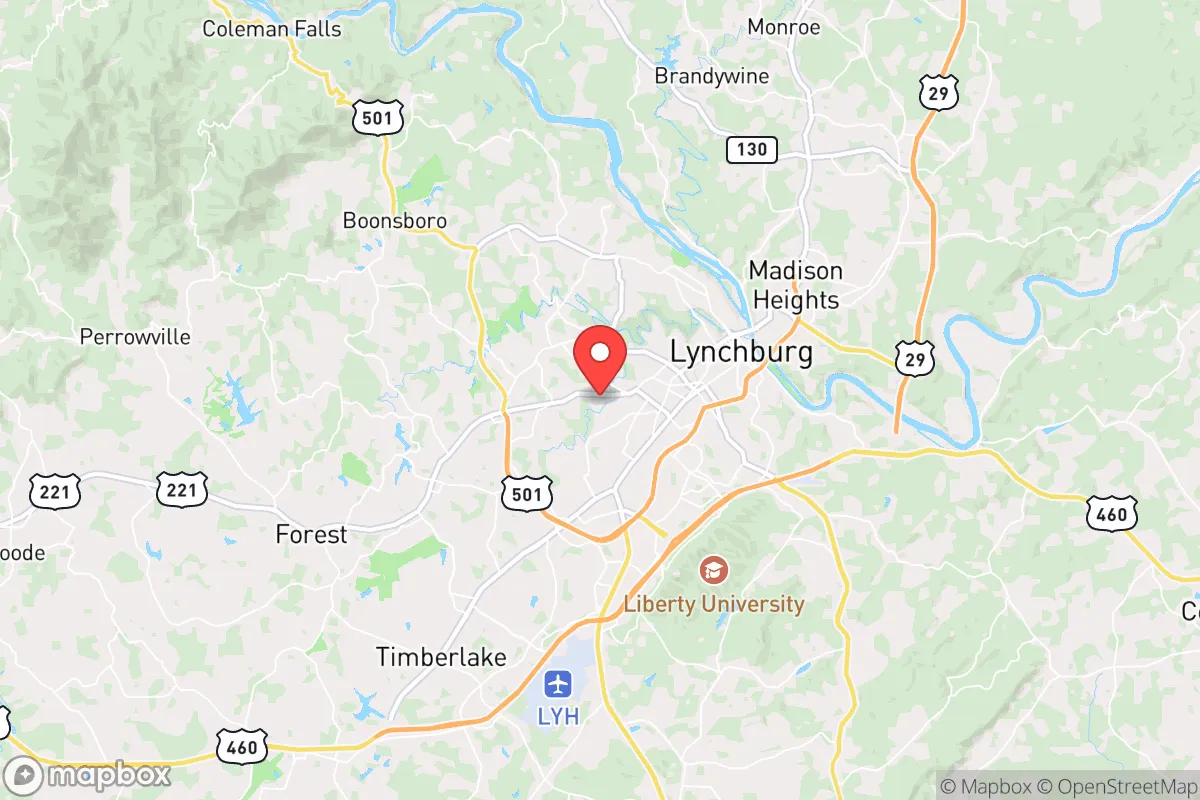
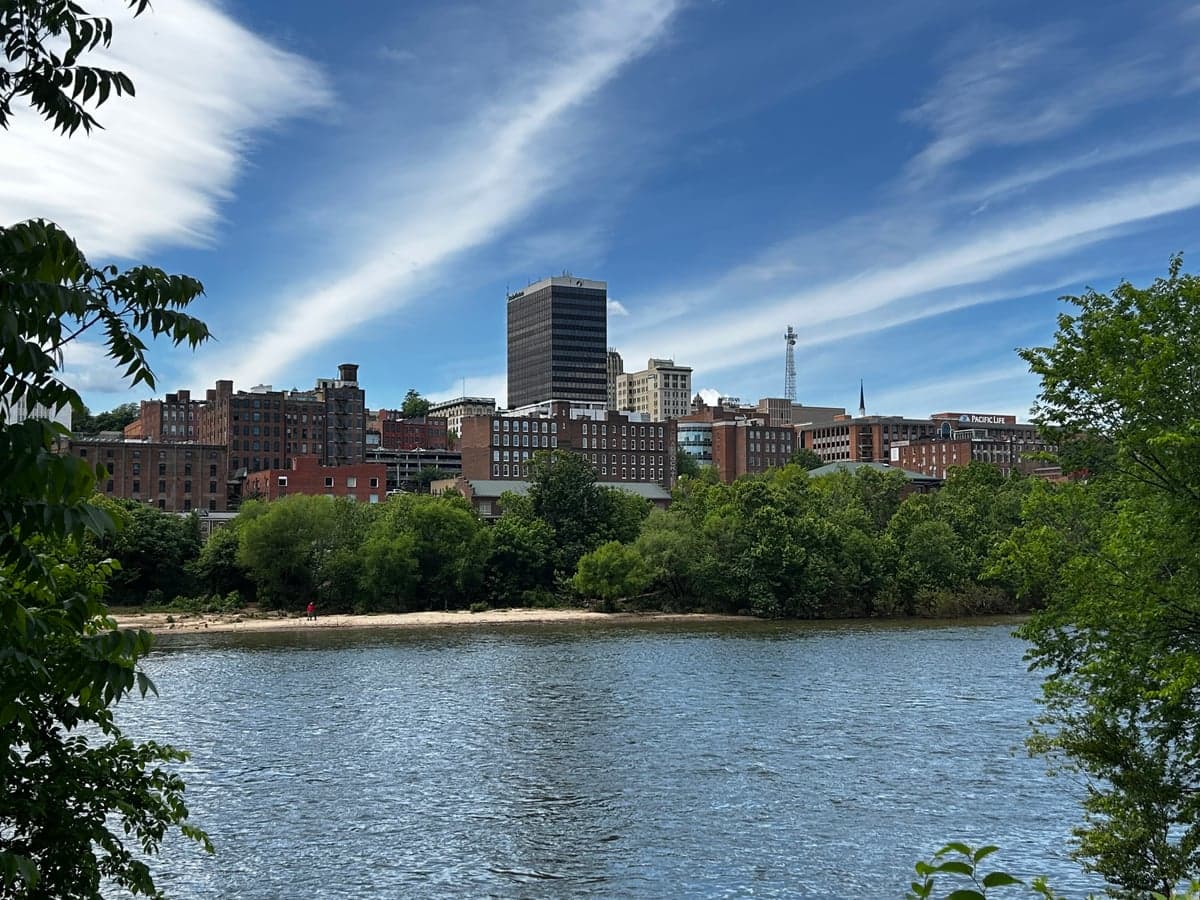
Photo: Wikipedia
Strategic Assessment of Lynchburg, VA
Meaningful friction. Expect exposure to either population pressure, blast zones, or natural disaster risk. Consider buying a retreat property.
What does the Strategic Assessment tell us?
Our Strategic Assessment grades tactical survivability of an area. Major population centers, military targets, fallout zones, natural disasters, and border exposure all drive risk — lower exposure means a more defensible position in a crisis.
This is heavily inspired by Joel Skousen's Strategic Relocation book. Highly recommended you checkout the book ($)What does this tell us?
Our Strategic Assessment grades tactical survivability of an area. Major population centers, military targets, fallout zones, natural disasters, and border exposure all drive risk — lower exposure means a more defensible position in a crisis.
This is heavily inspired by Joel Skousen's Strategic Relocation book. Highly recommended you checkout the book ($)Strategic Pillars

Key Distances
Regional Safe Places
Below is our recommended "safe zones" in Virginia and the surrounding area based on our strategic heuristics. For most people, it's unrealistic to live in a “safe zone” full-time due to work, family or other personal reasons. They tend to be more rural. However, many of these areas are perfect for second homes and retreat properties that double as a vacation home or even a short-term rental.
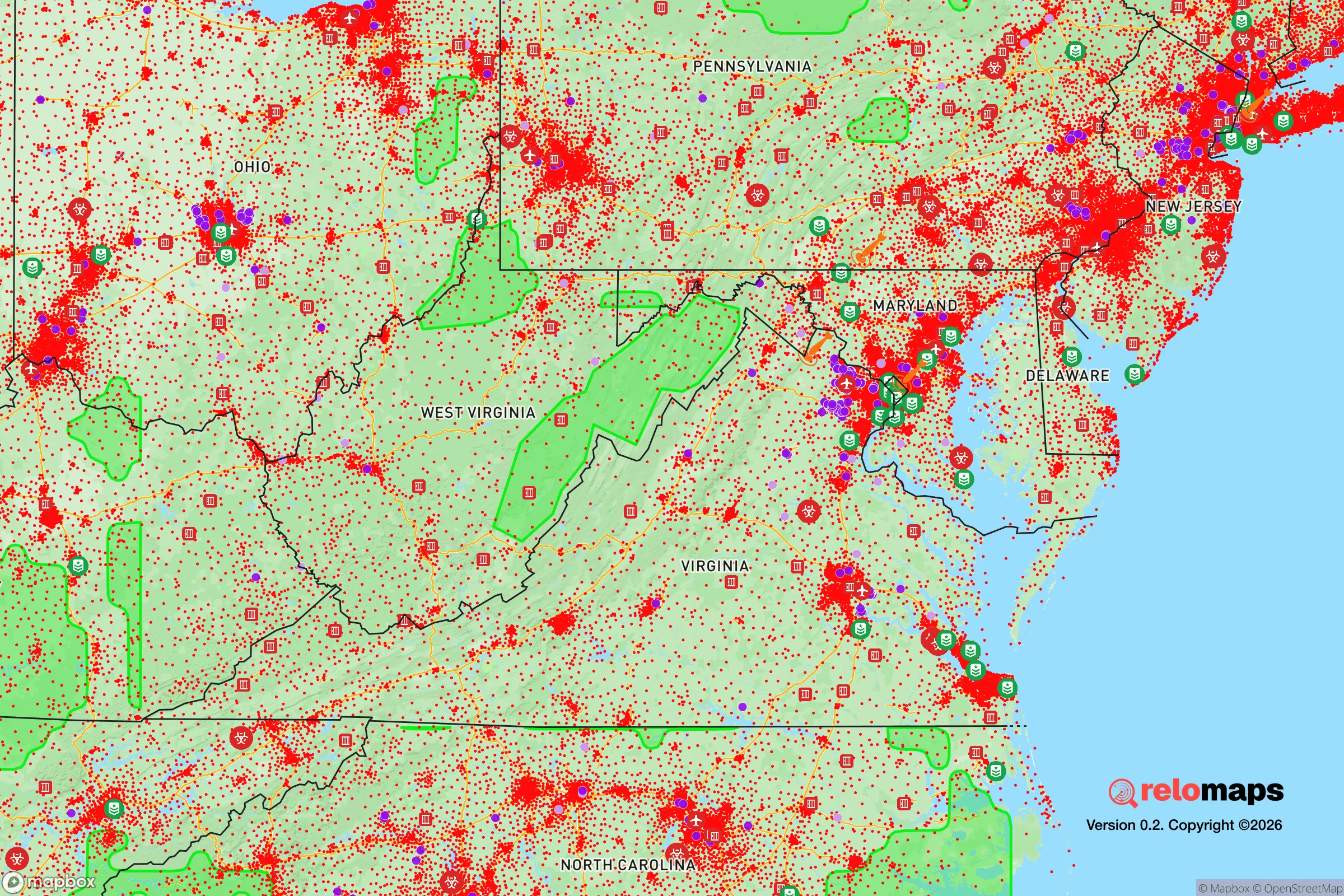
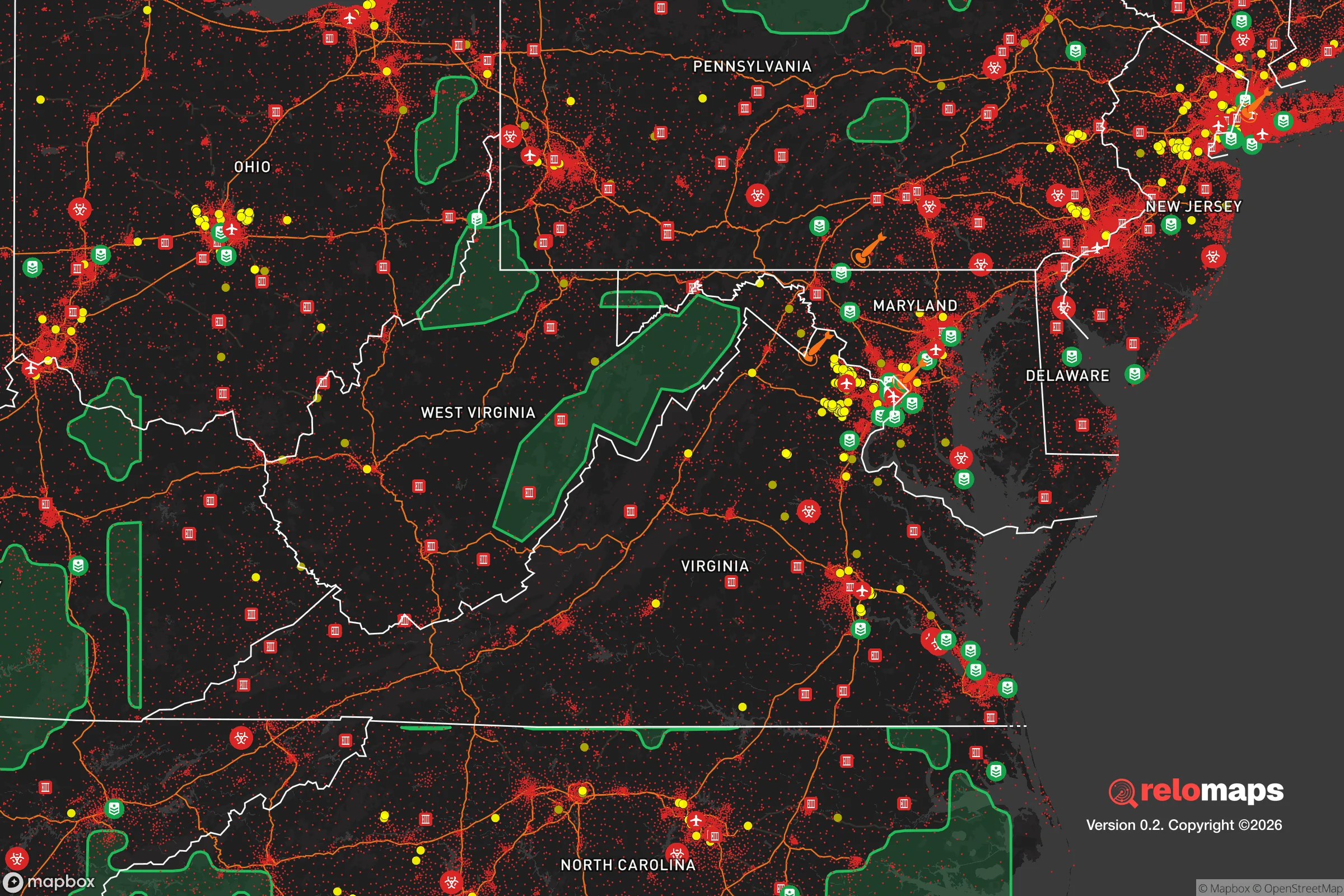


Important Note: For informational purposes only. This does not mean nothing bad ever happens in the green zones. Please use common sense. This is based on public data and modeled with AI. We tried to take a conservative approach but mistakes happen. We update this regularly as new information becomes available.
Solar Generator Recommendations
Backup power matters more here than in safer locations. We've picked three solar generators across budgets and capacity tiers — start with the budget unit if you only need a few essentials, or step up if you want to run a fridge and HVAC for days at a time.

Jackery Portable Power Station Explorer 300
Budget OptionPower on the Go: Weighing only 11 lbs, it's convenient to set up and store with book-sized foldable solar panels

BLUETTI Portable Power Station AC180
Designed for both indoor and outdoor scenarios, AC180 is highly capable as it has a robost capacity and continuous output power.

EF ECOFLOW DELTA Pro Ultra Power Station
Upgraded PickEcoFlow DELTA Pro Ultra is a whole-home energy system designed to grow with your family. Integrated with the Smart Home Panel 2, it scales to meet your evolving energy needs — keeping your home powered, intelligent, and secure through every stage of life.
We earn a commission, at no additional cost to you.
Strategic Assessment Analysis
Lynchburg, Virginia, sits as a quietly strategic outlier in the Blue Ridge foothills—a city that combines the logistical advantages of a mid-sized regional hub with the physical insulation of a smaller, less-dense population center. For the conservative relocator thinking in terms of long-term resilience, Lynchburg offers a rare balance: it is close enough to major supply corridors and medical infrastructure to be practical, yet far enough from the immediate blast zones and chokepoints of the East Coast megalopolis to offer genuine breathing room. The city’s historical role as a manufacturing and rail center, paired with its modern status as a growing conservative stronghold (home to Liberty University and a deeply rooted evangelical and military-veteran community), makes it a place where the cultural and logistical pieces for a prepared lifestyle already exist in the ground.
Geographic position and natural advantages for long-term security
Lynchburg’s location in the Piedmont region, just east of the Blue Ridge Parkway and the Appalachian Trail, gives it a layered defensive geography. The city sits on the south bank of the James River, which provides a reliable water source and a natural barrier to the north. The surrounding terrain is rolling hills and forested ridges—not mountainous enough to isolate you from supply routes, but rugged enough to slow down any unorganized movement. The city itself is tucked into a series of valleys, meaning that most approaches require navigating elevation changes and limited road corridors. For a prepper, that translates to natural chokepoints: I-81 runs about 30 miles west, I-95 is 90 miles east, and the main arteries into Lynchburg (US-29, US-460, and US-501) all pass through narrow, easily observable terrain. The local climate is moderate—humid subtropical with four distinct seasons—which supports year-round gardening, livestock, and timber management without the extremes of deep winter or desert heat. The growing season runs roughly April through October, and the area’s average annual rainfall of 43 inches means water catchment is viable without relying on deep wells alone. For a relocator, this is not a bug-out location; it is a live-in-place environment where you can build a self-sufficient homestead within a 20-minute drive of a hospital and a hardware store.
Risks, exposures, and proximity to fallout-relevant landmarks
No location is risk-free, and Lynchburg has specific exposures that a serious prepper must account for. The most obvious is the city’s proximity to the Lynchburg Regional Airport (LYH), which is a small commercial field but also hosts a Virginia Army National Guard aviation facility. In a major conflict scenario, that facility could become a target for stand-off weapons or a staging point for military movements—meaning the immediate 2-mile radius around the airport carries elevated risk. Additionally, the James River runs through the city center, and while it is a water asset, it also creates a floodplain. The 2018 and 2020 flood events caused localized damage in low-lying areas like the Waterfront District and parts of Madison Heights. For a relocator, that means avoiding properties in the 100-year flood zone is non-negotiable. More broadly, Lynchburg sits about 120 miles southwest of Washington, D.C., and 90 miles west of Richmond. In a national-scale event—whether a nuclear exchange, a coordinated cyber-attack on the grid, or a cascading civil unrest scenario—those cities would be primary targets or epicenters. Lynchburg is far enough to avoid the immediate blast and thermal effects of a ground burst on D.C., but fallout patterns depend entirely on wind direction. Prevailing winds in this region are from the west and southwest, which is favorable: fallout from a D.C. strike would most likely drift east-northeast, away from Lynchburg. However, a strike on Richmond or the Norfolk naval base (about 150 miles southeast) could push fallout up the James River valley under certain conditions. The prudent move is to have a basement or interior shelter with at least two weeks of supplies, and to know your prevailing wind patterns for the season. On the positive side, Lynchburg has no nuclear power plants within 50 miles (the closest is North Anna, 70 miles northeast), no major chemical storage facilities, and no large-scale military bases inside the city limits. The biggest industrial risk is the local concrete and asphalt plants, which are minor compared to the petrochemical complexes near Richmond or the Shenandoah Valley.
Practical resilience for a relocator: food, water, energy, and defensibility
For the individual or family looking to establish a resilient household, Lynchburg scores well on the basics. The city’s water supply comes from the James River and the Pedlar Reservoir, treated by the Lynchburg Regional Water Authority. In a grid-down scenario, the city’s water treatment plants have backup generators, but those are diesel-powered and would run out of fuel within days. A relocator should plan for a private well or a rainwater catchment system—both are feasible in the surrounding county (Campbell, Bedford, Amherst) where well depths average 150-300 feet and yield 5-15 gallons per minute. The local soil is loamy clay, which drains well enough for raised-bed gardening but requires amending for deep-root crops. The area has a strong agricultural tradition: there are dozens of small farms within a 30-minute drive selling beef, pork, poultry, eggs, and produce directly to consumers. The Lynchburg Community Market, operating since 1783, is one of the oldest continuously running markets in the country and a reliable source for local food even in normal times. For energy, the region is served by Appalachian Power, which draws from a mix of coal, natural gas, and hydro. The grid is moderately reliable—outages happen during ice storms and summer thunderstorms, typically lasting 2-6 hours. For a prepper, solar is viable: the area averages 4.5 peak sun hours per day, and there are no HOA restrictions in the unincorporated areas of Campbell and Bedford counties that would prevent panel installation. Defensibility is where Lynchburg shines for a small group or family. The city’s layout is compact—about 50 square miles with a population density of 1,600 per square mile—meaning you can live on the rural fringe and still be 15 minutes from a grocery store or urgent care. The surrounding counties are heavily wooded, with numerous dead-end roads, private lanes, and hollows that provide natural screening. The local law enforcement presence is professional but not overwhelming; the Lynchburg Police Department has about 200 officers, and the sheriff’s offices in the surrounding counties are smaller. In a prolonged crisis, you would be largely responsible for your own security, which is exactly the mindset this analysis assumes. The local gun culture is strong and legal—Virginia is a shall-issue state for concealed carry, and there are multiple gun shops and ranges within a 20-minute drive. The community is also heavily church-oriented, which provides a ready-made mutual-aid network for those who integrate.
The overall strategic picture for Lynchburg is that of a solid B+ location for the conservative prepper. It lacks the extreme isolation of, say, the Montana Rockies or the high desert of Nevada, but it compensates with proximity to medical care, supply chains, and a like-minded community. The risks are manageable with basic preparation: a well, solar panels, a basement shelter, and a few acres outside the floodplain. The cultural environment is one where preparedness is not seen as eccentric but as prudent—Liberty University alone has over 15,000 students, many of whom come from military and evangelical backgrounds that align with self-reliance. The biggest downside is the potential for refugee flow from the I-81 and I-95 corridors in a major crisis, but Lynchburg’s position off the main interstate grid means that flow would be manageable compared to cities like Roanoke or Harrisonburg. For a single individual or a family looking to plant roots in a place that can weather the next decade of instability, Lynchburg offers a realistic, defensible, and livable option—not a fantasy bunker, but a working base for a prepared life.

* Values derived from national, state, county, city and local statistics and may differ in a specific area. Last updated: 2026-05-01T08:01:16.000Z
Narrative content on this page is AI-generated and may contain mistakes. Verify any details that matter before acting on them.
ReloMaps may earn a commission from affiliate links at no extra cost to you.

