Photo: Wikipedia
Personal Sovereignty in Lynn, MA
Viable for self-reliance. Generally workable, though some barriers may limit total independence.
What does Personal Sovereignty tell us?
Personal Sovereignty measures your capacity for self-reliance and independence with minimal government friction. Higher scores mean fewer barriers between you and the way you want to live... but it assumes you have the space you need and good neighbors.
What does this tell us?
Personal Sovereignty measures your capacity for self-reliance and independence with minimal government friction. Higher scores mean fewer barriers between you and the way you want to live... but it assumes you have the space you need and good neighbors.
State Policy
Energy independence: Importer (5% of energy produced in-state)
Personal Liberty
Homesteading

Personal Liberty Analysis
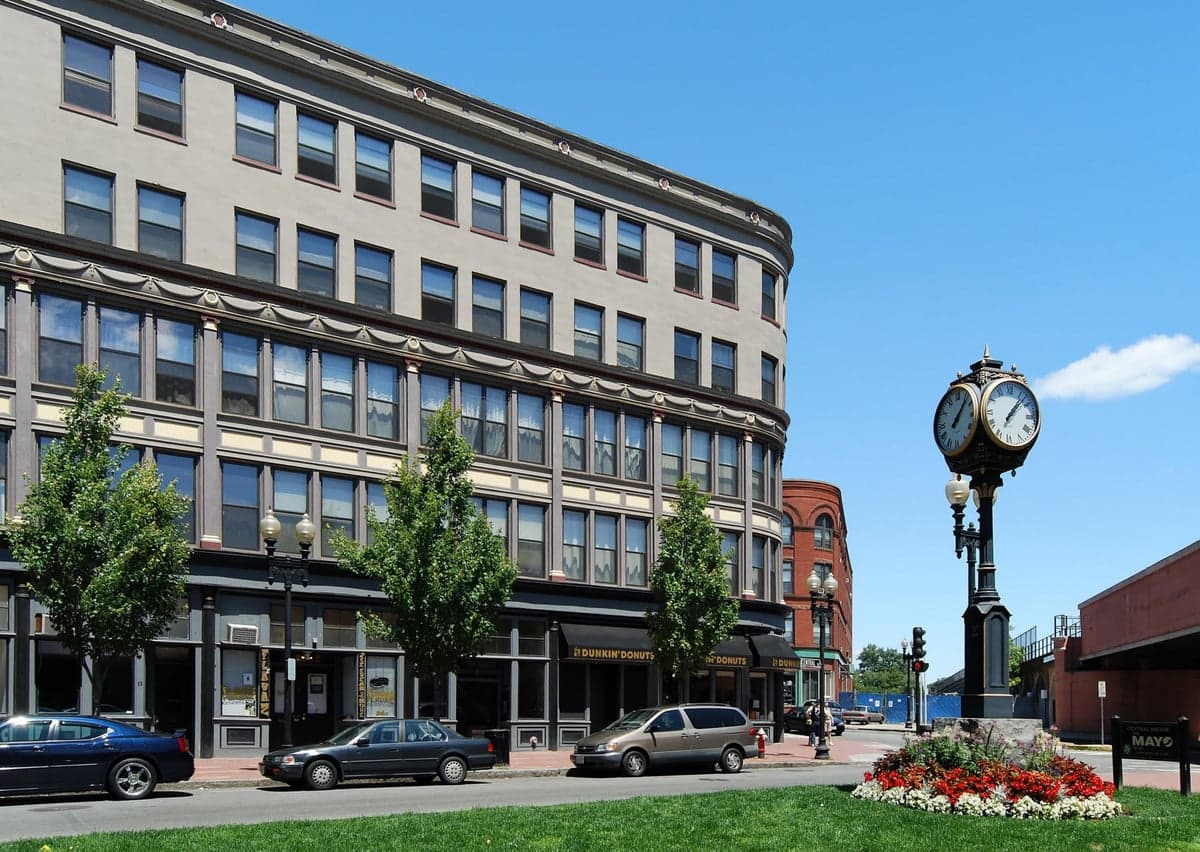
Lynn, Massachusetts presents a challenging environment for personal sovereignty, where state-level policies significantly constrain individual autonomy despite the city's working-class character. For those prioritizing self-reliance and minimal government interference, the Commonwealth's dense regulatory framework—covering everything from firearm ownership to property use—creates a landscape where strategic compliance is necessary rather than optional. While Lynn offers lower housing costs than Boston proper, the trade-offs in personal freedom are substantial, making it a location that demands careful calculation for anyone with a survivalist or prepper mindset.
Tax burden and regulatory posture: what you pay for limited freedom
Massachusetts imposes one of the heaviest tax burdens in the nation, and Lynn residents feel it directly. The state's income tax rate sits at a flat 5.0% as of 2026, with no local income tax, but property taxes in Lynn average around $4,200 annually on a median home value of roughly $450,000—moderate by state standards but high nationally. Sales tax is 6.25%, applied to most goods, and the state's estate tax kicks in at just $1 million, a low threshold that can catch middle-class families who've built equity. Regulatory posture is equally restrictive: Massachusetts has a strict building code with energy efficiency mandates that can add 10-15% to construction costs, and environmental regulations under the Massachusetts Environmental Policy Act (MEPA) can delay or block property modifications. For preppers, this means any significant off-grid infrastructure—solar panels, rainwater collection, or septic system upgrades—requires permits and inspections that often reject DIY approaches. The state's Chapter 40B affordable housing law also gives developers leverage to override local zoning, potentially increasing density in your neighborhood without your input. In short, you pay high taxes for a regulatory environment that actively discourages self-sufficient living.
Self-defense and gun law specifics: navigating a restrictive regime
Massachusetts has some of the strictest gun laws in the country, and Lynn residents must navigate them carefully. The state requires a License to Carry (LTC) for any handgun possession, which involves a background check, fingerprinting, a firearms safety course, and a fee of around $100. Local police chiefs have significant discretion in issuing LTCs, and in Lynn, the process is generally professional but can take 60-90 days. "May issue" language means the chief can deny a license if they deem you "unsuitable," a subjective standard that has led to lawsuits. Assault weapons are banned under state law, including many common semi-automatic rifles, and magazines are limited to 10 rounds. The state's Red Flag Law allows family members or police to petition for temporary firearm removal without a criminal conviction, a tool that critics argue can be abused in domestic disputes. For home defense, a pump-action shotgun or a handgun with a 10-round magazine is the most practical option. Stand Your Ground does not exist in Massachusetts; instead, you have a duty to retreat if safely possible before using deadly force, even in your own home. Castle Doctrine is limited—you can defend your home, but the burden of proof falls on you to show you had no safe retreat. For preppers, this means self-defense planning must account for legal constraints that could turn a justified defensive act into a criminal charge. Ammunition purchases also require a firearms identification card, and online sales are effectively banned due to state-level restrictions. If personal sovereignty includes the right to defend yourself with the tools you choose, Lynn falls far short of ideal.
Self-reliance and homesteading viability: lot sizes, zoning, and off-grid feasibility
Lynn's urban density makes traditional homesteading nearly impossible. The city's zoning is predominantly R1 (single-family residential) and R2 (two-family), with minimum lot sizes of 5,000 to 10,000 square feet—enough for a small garden but not for livestock or significant food production. Chickens are allowed with a permit, but no roosters, and only up to six hens. Goats, pigs, or larger livestock are prohibited in residential zones. Off-grid living is effectively illegal: Massachusetts requires connection to municipal water and sewer where available, and solar panels must be grid-tied with net metering approval from National Grid. Rainwater collection is allowed but limited to two 55-gallon barrels per property, and any larger system requires a permit from the Department of Environmental Protection. Composting toilets are not permitted as primary sanitation. For preppers, this means you cannot achieve true self-sufficiency within city limits. The nearest rural areas with larger lots—like Peabody, Saugus, or Middleton—are 15-30 minutes away, but even there, zoning restricts homesteading. Essex County has some agricultural zoning, but land prices start at $200,000 per acre. If self-reliance is your goal, Lynn is a base for stockpiling supplies and building skills, not a place to live off the land. The city's community gardens offer limited plots (typically 10x10 feet) for $25 per season, but they're a supplement, not a survival strategy.
Personal liberties: parental rights, medical autonomy, speech, and property
Massachusetts is a blue state with policies that often conflict with conservative values on personal liberties. Parental rights are under pressure: the state's Chapter 71, Section 32A requires schools to adopt policies that support LGBTQ+ students, including allowing them to use chosen names and pronouns without parental notification. In practice, Lynn Public Schools follows this guidance, meaning parents may not be informed if their child changes gender identity at school. Medical autonomy is similarly constrained: Massachusetts has mandatory vaccination laws for school attendance, with only medical exemptions allowed (no religious or philosophical exemptions). The state's COVID-19 emergency orders have expired, but the precedent for government-mandated medical interventions remains. Speech protections are generally strong under the First Amendment, but Massachusetts has a hate crime law that enhances penalties for speech deemed to target protected groups, and local ordinances in Lynn can restrict public demonstrations near schools or places of worship. Property rights are limited by the state's wetlands protection act, which restricts development on any land within 100 feet of a wetland, and by Chapter 40B, which can override local zoning for affordable housing projects. For preppers, this means your ability to build a bunker, install a fence over six feet, or even cut down trees on your own property may require permits and face neighbor appeals. The Massachusetts Supreme Judicial Court has also ruled that the state's right to shelter law creates a legal obligation to house homeless individuals, which can lead to emergency shelters opening in residential neighborhoods without local consent. In summary, personal sovereignty in Lynn is a patchwork of constrained choices, where state-level mandates often override local preferences.
Overall, Lynn offers a low-to-moderate level of personal sovereignty compared to other parts of the country. It ranks below most of the South and Midwest, where lower taxes, fewer gun restrictions, and more permissive zoning allow for greater self-reliance. Within Massachusetts, it's comparable to other Gateway Cities like Lowell or Brockton—urban environments with high taxes and strict regulations but lower costs than Boston. For a prepper or survivalist, Lynn could serve as a temporary base for building skills and networks, but long-term self-sufficiency would require relocation to a less restrictive state. The city's proximity to New Hampshire (45 minutes north), with its no income tax, constitutional carry, and looser zoning, makes it a potential staging area for those planning an eventual move. If you value personal sovereignty above all, Lynn is a place to pass through, not to put down roots.

* Values derived from national, state, county, city and local statistics and may differ in a specific area. Last updated: 2026-05-01T18:57:10.000Z
Narrative content on this page is AI-generated and may contain mistakes. Verify any details that matter before acting on them.
ReloMaps may earn a commission from affiliate links at no extra cost to you.

