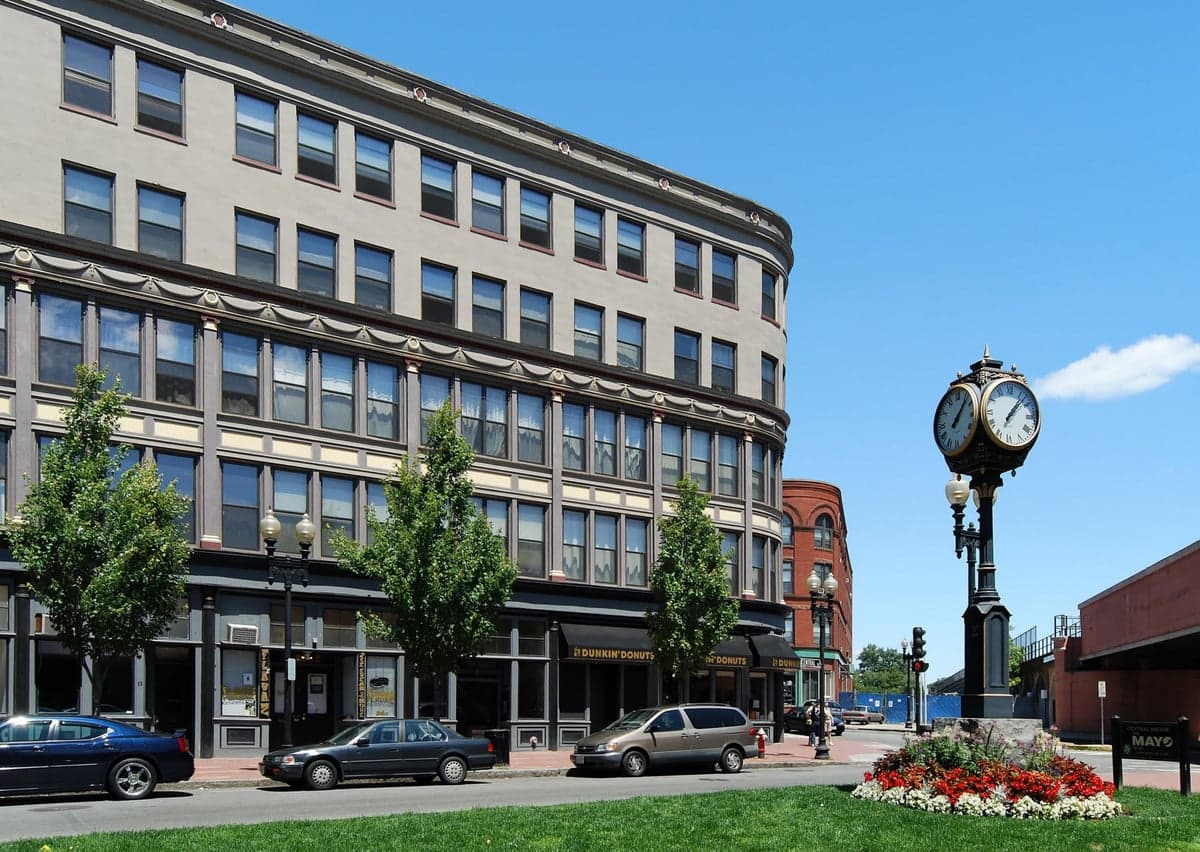
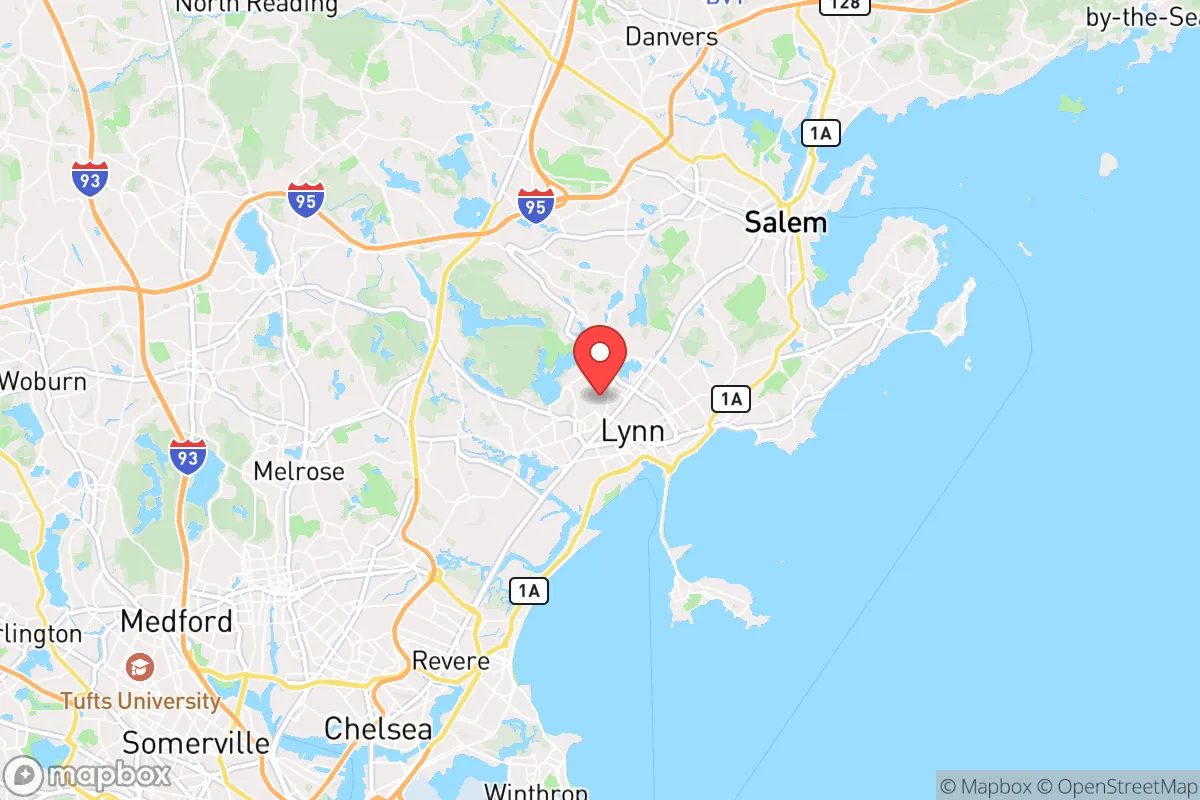
Photo: Wikipedia
Demographics of Lynn, MA
Affluence Level in Lynn, MA
A middle-class area roughly in line with national averages across income, home values, education, and employment.
People of Lynn, MA
The people of Lynn, Massachusetts today form one of the most ethnically diverse urban populations in New England, a dense city of 100,905 residents where no single group holds a majority. The city is majority-minority, with a Hispanic or Latino population of 42.5%, a White non-Hispanic population of 36.0%, a Black population of 10.3%, and an East/Southeast Asian population of 4.9%, alongside a smaller Indian-subcontinent community at 1.0%. Lynn is a working-class city with a distinctive identity: it is simultaneously a historic industrial hub, a gateway for successive immigrant waves, and a more affordable alternative to Boston, 10 miles to the south, yet it struggles with a low college attainment rate of 23.3% and a reputation for fiscal and social challenges that conservative-leaning readers should weigh carefully.
How the city was settled and grew
Lynn was first settled in 1629 by English Puritans, who were drawn by the area's abundant water power and salt marshes. The original settlement centered on the Common and downtown area, where the first meeting house and farms were established. By the early 19th century, Lynn became the world's leading shoe-manufacturing center, a boom that drew massive waves of immigrants. The first major non-English group were Irish immigrants, who arrived in large numbers during the 1840s Great Famine and settled in the Brickyard and Diamond District neighborhoods, building the city's first Catholic churches and parochial schools. French-Canadians followed in the late 1800s, taking factory jobs and forming a tight-knit community in West Lynn, where French was spoken on the streets well into the 20th century. By 1900, Lynn's population had swelled to over 68,000, with a growing presence of Italian immigrants in the Wyoma Square area and Eastern European Jews in the Central Square district. The shoe industry collapsed after World War II, but General Electric's Lynn River Works (now GE Aviation) kept the city's industrial base alive, employing thousands of workers from these older ethnic groups through the 1960s.
Modern era (post-1965)
The 1965 Hart-Celler Act reshaped Lynn's population dramatically. The first major post-1965 wave was Puerto Rican migration, beginning in the 1970s, as families sought manufacturing jobs that were still available at GE and other plants. They initially concentrated in the Downtown and Brickyard neighborhoods, areas that had been vacated by upwardly mobile Irish and Italian families moving to the suburbs. By the 1990s, Dominican and Central American immigrants joined the flow, and the Hispanic population grew from under 5% in 1980 to over 42% today. Simultaneously, a smaller but significant wave of East/Southeast Asian immigrants — primarily Vietnamese and Cambodian refugees — arrived in the 1980s and 1990s, settling in the East Lynn and Pine Hill areas, where they established small businesses and Buddhist temples. The Black population, historically small, grew from 3% in 1980 to 10.3% today, driven by African American families moving from Boston and by a smaller influx of Haitian and Cape Verdean immigrants. The Indian-subcontinent community (1.0%) is a very recent arrival, mostly professionals working in Boston's tech and healthcare sectors, and is scattered rather than concentrated in a single neighborhood. The White population, which was over 95% in 1960, has declined to 36.0%, with many older ethnic families moving to Peabody, Salem, or the North Shore suburbs.
The future
Lynn's population is trending toward a more homogenized Hispanic-majority city, though not without internal diversity. The Hispanic population is itself fragmented: Puerto Ricans, Dominicans, Salvadorans, and Guatemalans each maintain distinct social networks and often live in different blocks within the Downtown and Brickyard areas, with limited intermarriage between subgroups. The East/Southeast Asian population (4.9%) appears stable, sustained by chain migration but not growing rapidly, as younger generations often leave for lower-cost suburbs. The Indian-subcontinent community remains tiny and transient, unlikely to become a major demographic force. The White population is aging and declining, though a small influx of young professionals and artists — drawn by Lynn's relatively affordable housing and proximity to Boston — has stabilized the number in the Diamond District and Ocean Park areas near the waterfront. The city's low college attainment rate (23.3%) and high poverty rate suggest that Lynn is not gentrifying rapidly, unlike neighboring Salem or Somerville. The next 10-20 years will likely see Lynn become a solidly Hispanic-majority city, with a growing but still minority Black population and a shrinking White presence, while the East/Southeast Asian community remains a small but stable enclave.
For a conservative-leaning individual or family considering a move, Lynn is a city in demographic transition — increasingly Hispanic and working-class, with a struggling public school system and a tax base that has not fully recovered from the loss of manufacturing. It offers genuine diversity and urban energy, but also the challenges of a city where poverty, crime, and low educational attainment are persistent. The neighborhoods that retain the strongest sense of stability and community — such as the Diamond District or Ocean Park — are those where older ethnic groups have held on, but even these areas are changing. Lynn is not a place for those seeking a homogeneous, low-crime, high-amenity suburb; it is a gritty, authentic, and evolving city that rewards those who understand its history and are prepared for its realities.

* Values derived from national, state, county, city and local statistics and may differ in a specific area. Last updated: 2026-05-01T18:57:10.000Z
Narrative content on this page is AI-generated and may contain mistakes. Verify any details that matter before acting on them.
ReloMaps may earn a commission from affiliate links at no extra cost to you.

