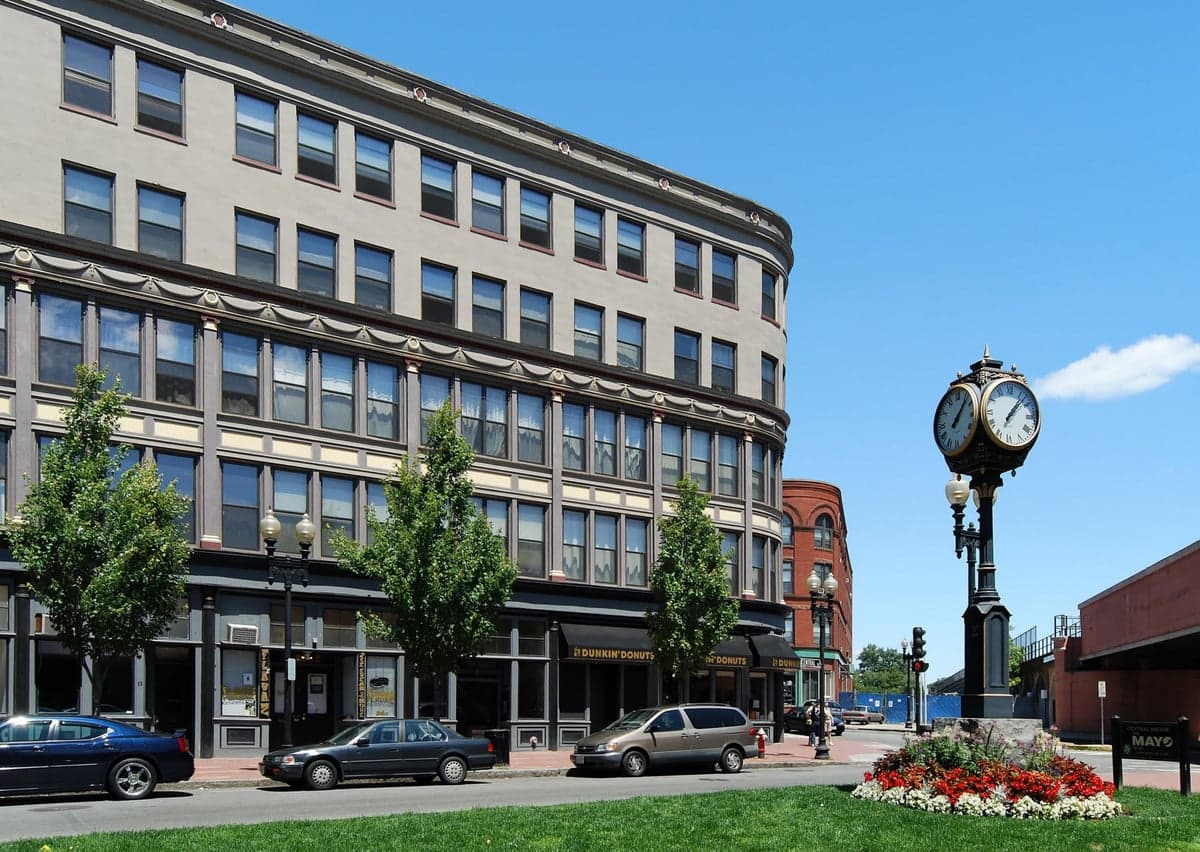
Photo: Wikipedia
Political ClimatePolitical Climate in Lynn, MA
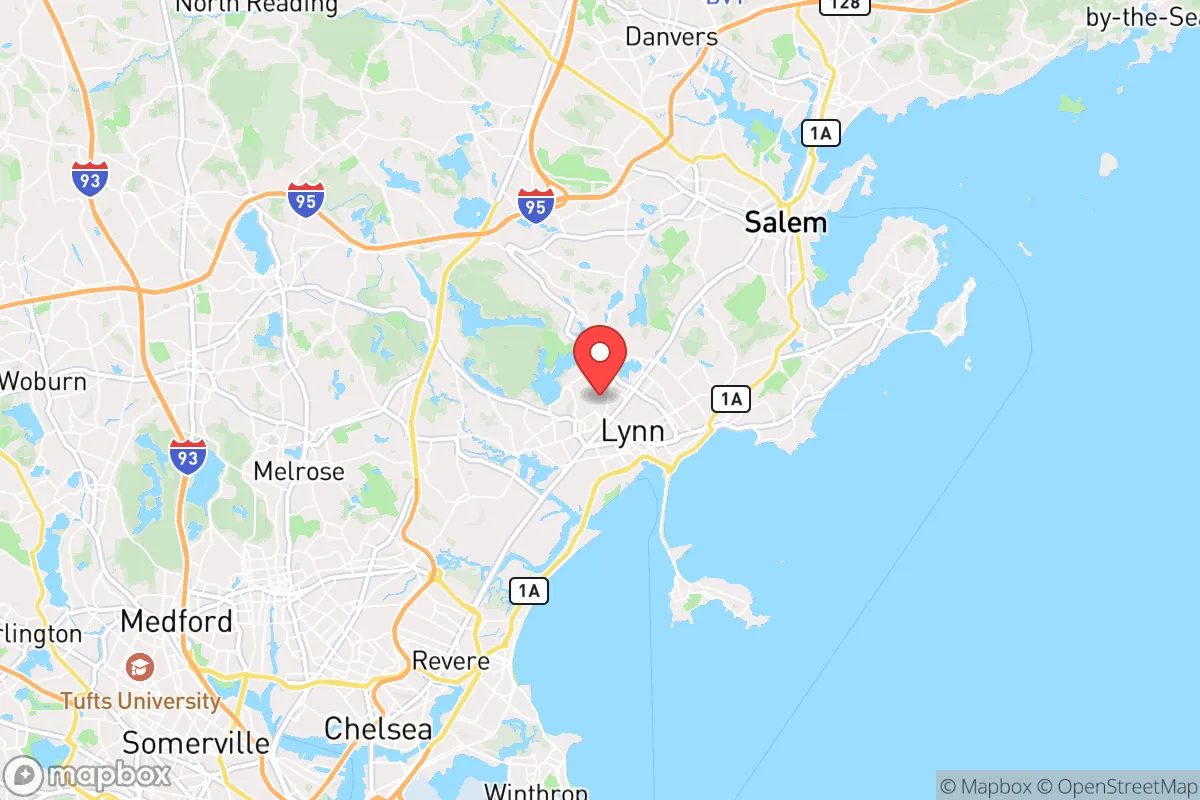
District shown is the primary district for this city’s centroid. Cities may span multiple districts.
Local Political AnalysisPolitical Analysis of Lynn, MA
Lynn, Massachusetts, is a deep blue city that has gotten bluer over the last decade, with a Cook PVI of D+11 that puts it well to the left of the state average. Back in the 1990s and early 2000s, this was a working-class, union-heavy town where a lot of folks split their tickets—you’d see Reagan Democrats and plenty of fiscally conservative, socially moderate voters. That’s mostly gone now. The shift toward progressive ideology has been steady, and it’s accelerated since 2020, with the city council and school committee now dominated by activists who prioritize identity politics and government-led social engineering over the kind of practical, neighborhood-level concerns that used to drive local elections. If you’re a conservative or even a moderate who values personal freedoms and limited government, you’ll feel the squeeze here.
How it compares
Lynn’s political climate stands in sharp contrast to the surrounding North Shore towns. Drive 10 minutes north to Swampscott or Marblehead, and you’ll find communities that still lean blue but have a much stronger independent streak—those towns regularly push back on state mandates and have more balanced school boards. Head west to Peabody or Salem, and you’ll see a similar pattern: still Democratic, but with a pragmatic, live-and-let-live attitude that’s missing in Lynn. The real contrast is with towns like Middleton or Topsfield, about 20 minutes inland, where you’ll find a mix of conservative and moderate voters who actually vote for lower taxes and against overreaching zoning laws. Lynn, by comparison, has become a laboratory for progressive experiments—from sanctuary city policies to rent control proposals—that make it feel increasingly disconnected from the rest of Essex County.
What this means for residents
For the average person living here, the political tilt translates into real, daily frustrations. Property taxes have climbed steadily as the city expands its budget for social programs and DEI initiatives, while basic services like snow removal and road repair lag behind. The school system has become a battleground over curriculum content and parental rights, with the school board pushing policies that limit what parents can opt their kids out of. Small business owners face a growing web of regulations—from paid leave mandates to strict licensing requirements—that make it harder to operate without a lawyer on retainer. And if you value Second Amendment rights, you’re out of luck: Lynn has some of the strictest local firearm ordinances in the state, going beyond even Massachusetts’ already restrictive state laws. The city’s leadership is openly hostile to any pushback, framing dissent as bigotry or resistance to “progress.”
Looking ahead, there’s little sign of a course correction. The progressive machine here is well-funded and organized, with strong ties to state-level politicians in Boston. Young families and professionals moving in tend to be drawn to the city’s affordability relative to Boston, but they bring the same urban-left values that are reshaping the city. Longtime residents who remember when Lynn was a place where you could raise a family without constant political battles are either leaving or retreating into their homes. The cultural vibe is one of enforced conformity—you’re expected to display the right lawn signs, use the right language, and support the right causes. If you’re looking for a community that respects individual liberty and doesn’t treat every local election as a moral crusade, Lynn is probably not the right fit anymore.

State Political ClimatePolitical Climate in Massachusetts
State Political AnalysisPolitical Environment in the State
Massachusetts has long been one of the most reliably Democratic states in the union, but don’t let the blue veneer fool you—the political landscape here is more fractured than the national headlines suggest. Over the past 20 years, the state has shifted from a moderate, business-friendly Democratic stronghold to a progressive laboratory, with the legislature and governor’s mansion firmly in left-of-center hands. The 2020 presidential election saw Joe Biden carry the state by over 33 points, and every statewide office is held by a Democrat. But beneath that surface, a real urban-rural war is brewing, and the state’s policy trajectory is raising eyebrows for anyone who values personal freedom, fiscal sanity, or parental rights.
Urban vs. rural divide
The political map of Massachusetts is a tale of two worlds. The Boston metro area—including Cambridge, Somerville, and Brookline—is the engine of the state’s progressive dominance. These cities vote 80-90% Democratic and drive the legislative agenda on everything from rent control to sanctuary policies. Western Massachusetts, particularly the Berkshires and the Pioneer Valley around Northampton and Amherst, is also deep blue, but with a more rural, activist flavor. The real contrast comes in the central and southeastern parts of the state. Places like Worcester County, Plymouth County, and the Cape Cod towns of Barnstable and Yarmouth have become battlegrounds, with many precincts flipping Republican in recent cycles. In 2024, Donald Trump actually improved his margins in Fall River and New Bedford, two old industrial cities that feel left behind by the Boston-centric economy. The rural towns of the Hill Towns—like Alford, Egremont, and Sheffield—vote Republican by 2-to-1 margins, but their population is too small to offset the urban vote. The divide isn’t just about party; it’s about culture. Boston’s suburbs like Lexington and Newton are hyper-educated and socially liberal, while towns like Taunton and Attleboro are more working-class and skeptical of the state’s one-party rule.
Policy environment
Massachusetts has a reputation for high taxes and heavy regulation, and it’s earned. The state has a flat income tax rate of 5% (recently reduced from 5.15% via a 2022 ballot question), but a 2022 surtax on income over $1 million—known as the “Millionaire’s Tax”—added a 4% surcharge, pushing the top rate to 9%. Property taxes are moderate compared to New Hampshire, but the state’s regulatory posture is aggressive. The Massachusetts Environmental Policy Act (MEPA) can stall any development for years, and the state’s building codes are among the strictest in the nation. On education, Massachusetts is a national leader in K-12 test scores, but the system is heavily centralized, with the state Board of Education controlling curriculum and teacher certification. Parents have limited school choice; charter schools are capped, and homeschooling is legal but requires annual approval from local school districts. Healthcare is dominated by the state’s 2006 health reform law, which served as a model for the Affordable Care Act. The state has a near-universal coverage rate, but premiums are high, and the state-run Health Connector is a bureaucratic maze. Election laws are among the most progressive: no-excuse mail-in voting, same-day registration, and automatic voter registration are all in place. Critics argue this creates vulnerabilities, but the system has been in place since 2020 with no major scandals.
Trajectory & freedom
If you value personal liberty, Massachusetts is heading in the wrong direction. The state has some of the strictest gun laws in the country, including a 2024 law that bans “ghost guns,” expands the state’s assault weapons ban, and requires fingerprinting for all firearm purchases. The law also gives local police chiefs broad discretion to deny licenses, a practice that has been challenged in court. On parental rights, the state passed a 2023 law that prohibits school districts from notifying parents if a child changes their gender identity or pronouns—a direct blow to family autonomy. Medical freedom took a hit in 2021 when the state mandated COVID-19 vaccines for all schoolchildren, a policy that remains in place despite the end of the public health emergency. Property rights are under pressure from the state’s 2024 “tenant protection” law, which limits rent increases to 10% annually and makes it harder for landlords to evict non-paying tenants. The state’s highest court also ruled in 2023 that the “right to shelter” for homeless families is a constitutional mandate, forcing the state to spend hundreds of millions on hotel rooms for migrants. On the plus side, Massachusetts has no death penalty and has legalized recreational marijuana, but the state’s regulatory grip on that industry is tight. The trend is clear: more government control, less individual discretion.
Civil unrest & political movements
Massachusetts has a long history of activism, but the flashpoints have shifted. The 2020 Black Lives Matter protests in Boston were large but largely peaceful, though property damage occurred in the Downtown Crossing area. The state’s sanctuary status—codified in a 2017 law that limits local police cooperation with ICE—has become a major flashpoint. In 2023, a surge of migrant arrivals overwhelmed the state’s shelter system, leading to waiting lists and tensions in working-class towns like Quincy and Lynn. The “right to shelter” lawsuit mentioned earlier has become a rallying cry for both sides. On the right, the Massachusetts Fiscal Alliance and the Commonwealth Beacon have organized against the state’s tax and spending policies, but they remain a minority voice. The state’s 2024 ballot question to repeal the new gun law failed, but it energized Second Amendment supporters in places like Worcester and Springfield. Election integrity has been a low-level concern; the state’s 2020 election was secure, but the lack of voter ID laws and the expansion of mail-in voting have led to calls for reform from conservative groups. The most visible political movement is the “Massachusetts Republican Party,” which has been in disarray since 2018, but local town committees in places like Shrewsbury and Franklin are rebuilding with a more grassroots, liberty-minded focus.
Projection
Over the next 5-10 years, Massachusetts will likely become even more progressive, but with a growing rural backlash. Demographic trends favor the left: the state’s population is aging, but in-migration from other states is dominated by young professionals drawn to Boston’s tech and biotech sectors. The state’s high cost of living is driving some families to New Hampshire and Rhode Island, but the core urban areas will continue to vote blue. The wild card is the state’s fiscal situation. The migrant crisis and the shelter mandate are straining the budget, and the Millionaire’s Tax revenue has been volatile. If the economy turns, expect a push for tax relief from the business community. The rural-urban divide will widen, with more towns in central and southeastern Massachusetts flipping to the GOP in local races, but the state legislature will remain firmly Democratic due to gerrymandered districts. A new resident moving in now should expect a state where government plays a large role in daily life—from housing to healthcare to education—and where individual freedoms are increasingly subject to state approval. The cultural environment is tolerant of diversity but intolerant of dissent on core progressive issues.
For a conservative-leaning individual or family, Massachusetts is a tough sell. The taxes are high, the regulations are thick, and the political culture is hostile to traditional values. But if you’re in a specialized field like biotech, finance, or academia, the economic opportunities are unmatched. The key is to pick your town carefully. Places like Shrewsbury, Franklin, or the rural Hill Towns offer a more conservative community within a blue state. Just know that the state government will be working against your values at every turn, and you’ll need to be politically engaged just to hold the line. If you value freedom above all else, look to New Hampshire. If you’re willing to fight for your rights in a blue state, Massachusetts can work—but it’s not for the faint of heart.
* Values derived from national, state, county, city and local statistics and may differ in a specific area. Last updated: 2026-05-01T18:57:10.000Z
Narrative content on this page is AI-generated and may contain mistakes. Verify any details that matter before acting on them.
ReloMaps may earn a commission from affiliate links at no extra cost to you.

